



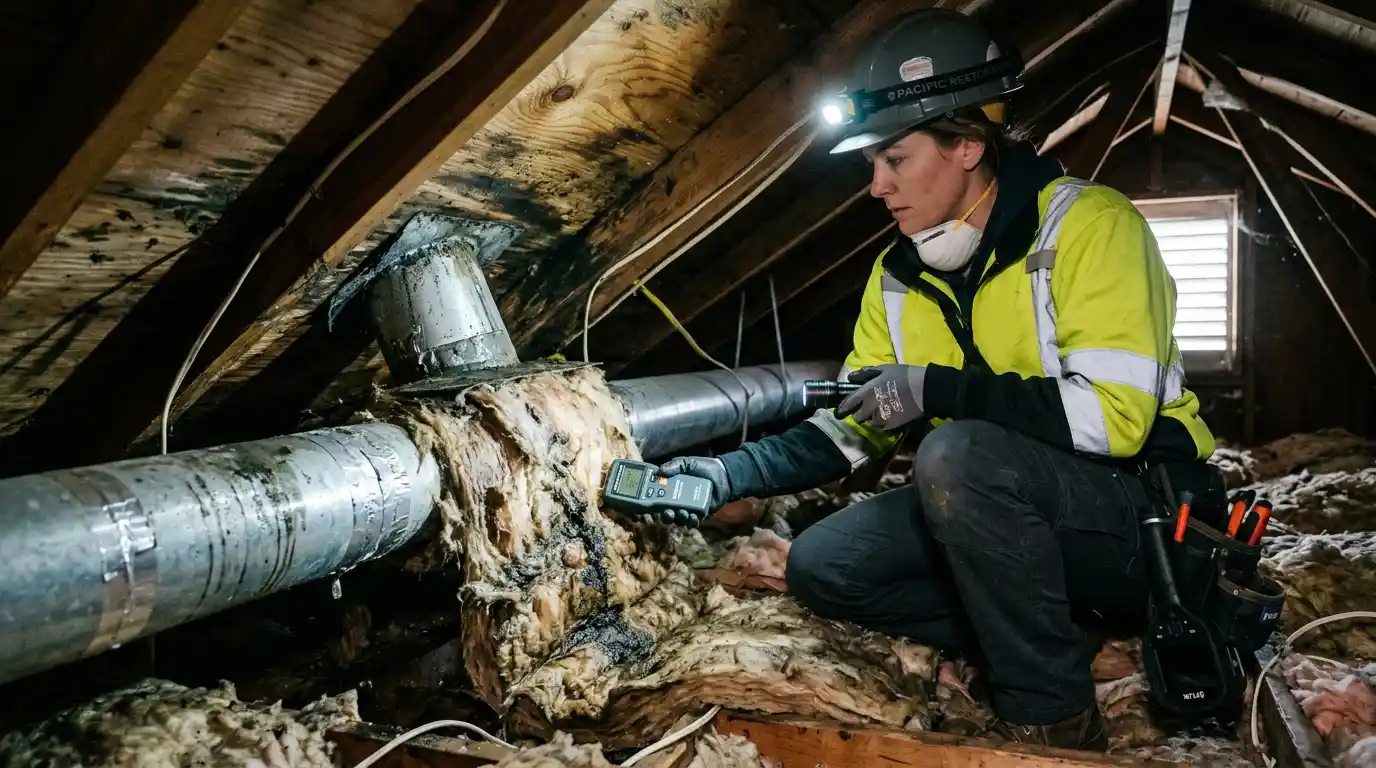
Bathroom exhaust fans look simple, but in Oregon homes, they can drive hidden moisture damage. During the wet season, Portland-metro properties already face wind-driven rain, damp crawlspaces, and slow-drying materials.
Add daily showers, a weak fan, or a duct that dumps humid air into the attic, and moisture can collect out of sight.
It may start as a foggy mirror or peeling bathroom paint. It can become stained drywall, wet insulation, attic mold, and costly repair decisions.
Why Oregon Bathrooms Push Moisture Into Attics
Bathroom fan problems become attic problems when warm, humid air reaches cold building materials instead of the outdoors.
The fan is not the finish line
A bathroom fan should move humid air outside. If the duct is disconnected, crushed, blocked, or aimed into the attic, the fan only relocates moisture. It pulls steam out of the bathroom and deposits it against cooler roof sheathing, framing, and insulation.
That is why common bathroom water damage is not limited to tub leaks, toilet overflows, or sink supply lines. Poor ventilation can keep a bathroom damp while damage develops overhead.
Damp-season condensation makes defects worse
Cool attic surfaces can turn bathroom vapor into liquid water. Condensation may show up as wet insulation, dark staining on wood, rusted fasteners, or water droplets near the fan housing.
Oregon’s damp months make the issue harder to ignore. Materials dry slowly, windows stay closed, and attics stay cooler. A bath fan that barely worked in summer may fail in winter.
Warning Signs Moisture Has Moved Beyond the Bathroom
These clues help you separate normal shower humidity from moisture that has reached ceilings, insulation, or attic materials.
Bathroom clues
Watch for steam that lingers after showers, peeling paint, swollen trim, recurring mildew on ceilings, and musty odor near the fan. These signs suggest the fan may be undersized, dirty, blocked, or not running long enough.
Attic and ceiling clues
Ceiling stains below a bathroom, water dripping from a fan or light fixture, damp insulation, and dark staining on roof sheathing all deserve attention. A guide to mold in attics identifies dripping water, dark stains on wood, wet insulation, and a hot, stuffy attic as signs worth checking.
- Use caution before entering an attic.
- Avoid walking on ceiling drywall.
- Do not touch wet electrical fixtures.
- If water is near wiring, fixtures, or a breaker panel, keep away and contact the appropriate qualified professional.
What To Check Before Damage Spreads
Focused checks can help you find the moisture source before cleanup and repairs expand.
Confirm the fan vents outdoors
Trace the duct from the fan housing to an exterior roof cap or wall cap. It should not terminate under insulation, near a roof vent, or loose inside the attic. Look for disconnected joints, crushed duct, missing clamps, and blocked exterior caps.
A fan also needs enough run time. Use it during bathing and long enough afterward for surfaces to dry.
Look for wet insulation and roof leaks
Bathroom fan moisture can mimic a roof leak. A roof leak can also mimic a fan problem. Check the roof deck near vents, valleys, skylights, and bath fan penetrations. Wet insulation below the duct may point to condensation, duct separation, or a dripping roof cap.
Track humidity and drying time
The Oregon Health Authority recommends keeping indoor humidity at 30 to 60 percent and using exhaust fans to pull moisture outside. A small hygrometer can show whether a bathroom returns to that 30 to 60 percent range after use.
If a leak or overflow has wet drywall, insulation, or flooring, the EPA recommends that water-damaged areas and items dry within 24 to 48 hours to help prevent mold growth. Those 24 to 48 hours matter when attic moisture drips into finished rooms.
Cleanup and Restoration Decisions After Attic Moisture
The right response depends on whether you have maintenance, wet materials, visible growth, contamination, or repair needs.
When simple maintenance may be enough
- If the bathroom only stays humid, start with fan maintenance.
- Clean the grille.
- Confirm airflow at the exterior vent.
- Use the fan during showers.
- Keep the bathroom door open after use when privacy and building rules allow.
- Repair missing caulk or small plumbing leaks before moisture reaches the ceiling.
When water damage restoration belongs on the table
Water cleanup becomes more serious when materials are wet beyond the surface. Ceiling drywall, insulation, subflooring, and attic sheathing can retain moisture even when they look dry from below.
Water damage restoration may involve water removal, drying and dehumidification, cleaning, sanitizing, and repair steps when those services fit the damage.
When mold remediation becomes the right question
Visible mold, musty odors, repeated staining, or damp porous materials can shift the conversation from drying to remediation. Mold remediation is relevant when the cleanup must address mold growth, affected materials, and the moisture condition that allowed growth.
A related guide on mold after water damage reinforces the same practical point: drying, airflow, leak repair, and ventilation all matter. Cleaning without fixing the moisture source invites the same problem back.
Prevention for Homes, Rentals, and Commercial Properties
Prevention depends on daily fan use, seasonal inspection, and drying wet materials within 24 to 48 hours.
Residential and older-building habits
- Use the fan every time you bathe.
- Clean the grille.
- Keep towels and bath mats from staying damp.
- Watch for paint bubbles, soft drywall, and stains near the fan.
- Older homes may have bath fans added after original construction, so ducts may be long, uninsulated, or poorly terminated.
Property manager and facility priorities
In rentals, mixed-use corridors, offices, gyms, salons, and multifamily buildings, ventilation problems can repeat across many rooms. Maintenance teams should document complaints, inspect fan performance, and check attics or ceiling cavities after repeated stains.
Seasonal maintenance rhythm
Before the wet season, inspect roof penetrations, exhaust terminations, attic ventilation paths, and bathroom fan operation. After storms or freeze events, check for new ceiling stains, roof leaks, or thaw-related water damage.
A post-cleaning mold problem often means moisture remains. Guidance on why mold comes back after cleaning points back to the same priorities: fix moisture, improve airflow, and monitor the 30 to 60 percent range.
Make the Fan Part of Your Moisture Plan
Bathroom ventilation supports broader property-risk awareness and better restoration decision-making.
Bathroom exhaust fans protect ceilings, insulation, framing, and attic spaces from repeated moisture exposure. That protection matters most when cool weather, closed windows, and daily indoor humidity overlap.
- Check the duct.
- Watch the ceiling.
- Keep the bathroom dry after use.
When staining, dripping, wet insulation, sewage contamination, storm damage, or visible mold appear, shift from routine maintenance to damage assessment.
Frequently Asked Questions
1. Why would a bathroom fan cause attic moisture?
A bathroom fan can cause attic moisture when the duct does not vent outdoors. Warm, humid shower air may enter the attic and condense on cooler wood, insulation, or roof sheathing. Over time, repeated moisture can create stains, odors, and hidden damp materials.
2. How can you tell if a bathroom fan vents into the attic?
You can often trace the duct from the fan housing in the attic to see where it ends. A proper route should lead to an exterior wall cap or roof cap. If the duct ends loose in the attic, under insulation, or near a passive attic vent, moisture may not be leaving the building.
3. Is a ceiling stain below a bathroom always a plumbing leak?
No. A ceiling stain can come from a plumbing leak, a roof leak, condensation, or a bathroom fan duct issue. The pattern matters, but visual clues are not always enough. Wet insulation, stains near the fan, or water dripping after showers can point toward a ventilation problem.
4. What should you do if water drips from a bathroom fan?
- Keep people away from the wet area, especially if water is near lighting or wiring.
- Do not remove electrical parts or stand under dripping fixtures.
The next step is to identify whether the source is condensation, a roof leak, a duct issue, or plumbing-related water damage.
5. Can attic moisture lead to mold?
Yes, mold can grow when moisture remains available on building materials. The key issue is not only cleaning visible growth, but also fixing the moisture source. If the bathroom fan, roof leak, or condensation issue remains, the same conditions can return.
6. How long should a bathroom exhaust fan run after a shower?
The fan should run long enough to clear steam and allow surfaces to dry. In damp months, a short run may not be enough. A timer, humidity control, or consistent household routine can help reduce moisture that would otherwise linger.
7. What indoor humidity level should you watch for?
A 30 to 60 percent indoor humidity range is a useful reference point for mold prevention and moisture awareness. If a bathroom stays above that range after use, the fan may not be working well. A simple hygrometer can help you spot a repeated pattern.
8. When does attic moisture become a restoration issue?
It becomes a restoration issue when moisture affects drywall, insulation, flooring, framing, or other porous materials. Active dripping, ceiling staining, musty odor, or visible mold should not be treated as normal bathroom humidity. The source and affected materials both need attention.
9. Should wet attic insulation be left to dry on its own?
Wet insulation can hold moisture and reduce drying around surrounding materials. It may also hide staining or damp framing. The safer decision is to determine why it is wet, how long it has been wet, and whether nearby materials are also affected.
10. What should property managers check after repeated bathroom complaints?
Property managers should check fan operation, duct routing, exterior terminations, ceiling stains, tenant reports, and any shared attic or ceiling cavity. Repeated complaints from one area may point to a building-wide ventilation pattern. Documentation helps connect maintenance history to damage decisions.
11. Can wildfire smoke or storm damage make this problem worse?
Smoke and storm damage are separate issues, but they can overlap with moisture decisions. Storms may expose roofs, break windows, or drive water into ceilings. Smoke odor or residue may require a different cleanup approach than attic condensation, so the damage type should be identified clearly.
12. What should you avoid after finding attic mold or wet ceiling materials?
- Avoid disturbing moldy or wet porous materials without understanding the source.
- Do not paint over stained or moldy surfaces as a shortcut.
- Avoid electrical areas with moisture, and do not enter attic spaces that lack safe walking surfaces or appear structurally unsafe.


