



Wildfire smoke can make a clean property feel stale overnight. In Portland-metro properties, west-side communities, east-county corridors, mixed-use buildings, and outlying homes, smoke-prone periods often overlap with other seasonal restoration risks. A property may face smoky air in late summer, damp-season moisture soon after, then windstorms, roof leaks, crawlspace moisture, ceiling leaks, or burst pipes when colder weather arrives.
That overlap matters. Normal dust is part of everyday housekeeping. Wildfire smoke residue is different. It can contain fine particles, odor compounds, ash, and soot-like film that settles on surfaces, fabrics, filters, vents, and hidden corners. Some light residue may be safe to clean yourself. Heavier residue, recurring odor, HVAC involvement, or contamination concerns may need a more careful restoration plan.
Why wildfire smoke residue behaves differently than dust
Smoke residue can look harmless at first, but its source, texture, odor, and movement through the property change the cleanup approach.
Dust usually sits on surfaces
Normal dust often comes from skin cells, lint, soil, pet dander, pollen, tracked-in debris, and fibers from daily use. It tends to collect on shelves, baseboards, electronics, vents, blinds, and horizontal surfaces. A microfiber cloth, damp mop, and routine vacuuming can usually manage it.
Dust also returns in a predictable pattern. If you clean a shelf and it looks dusty again a week later, that is usually normal housekeeping. It does not always point to damage.
Smoke residue can cling, smear, and re-release odor
Wildfire smoke behaves differently because particles can enter through windows, door gaps, vents, attic bypasses, crawlspace openings, and mechanical systems. Fine smoke particles can settle on surfaces and into porous materials. The smell may fade on a cool dry day, then return when humidity rises, the HVAC runs, or the property warms up.
That is why wildfire smoke cleanup should start with the pathway. Did smoke enter through open windows? Was the HVAC running? Do vents smell smoky? Did ash settle near doors, window tracks, or supply registers? Those answers help separate routine cleaning from smoke odor removal needs.
For smoke residue that keeps returning after basic cleaning, PNW Restoration can help you sort visible soot, odor pathways, affected materials, and next-step cleanup needs. Call Now: (503) 352-5209.
What you can safely clean yourself
Light, surface-level residue may be manageable when the property is safe, the smoke event is over, and no structural, electrical, or contamination hazards are present.
Light settled dust on hard surfaces
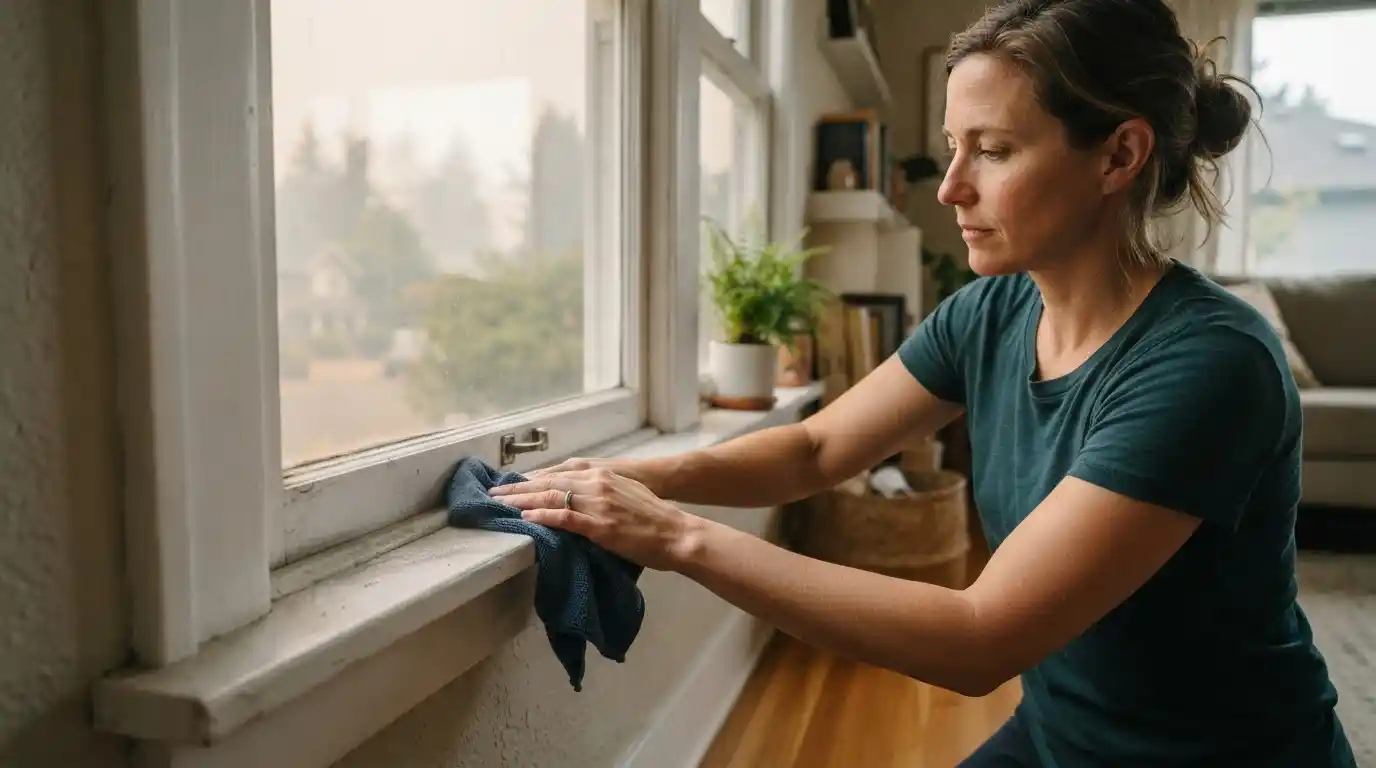
Start with gentle methods. Use a damp microfiber cloth on sealed hard surfaces. Work from high areas to low areas so particles do not fall onto already-cleaned surfaces. Use clean water often. Avoid dry sweeping ash or dusty smoke residue because it can send particles back into the air.
Use extra caution around unfinished wood, painted walls, textured ceilings, electronics, and delicate finishes. If residue smears, stains, or leaves a greasy film, stop. That is a sign the material may need a different method.
Washable textiles and small items
Curtains, washable blankets, removable covers, and lightly affected clothing may be cleaned if care labels allow it. Keep smoky items separate from clean laundry. Do not overload the washer. Avoid strong fragrance products that only mask odor.
For upholstery, rugs, mattresses, acoustic panels, and soft goods with sentimental or business value, document them before cleaning. Smoke particles can settle deep into fibers and padding. Heat, steam, or excessive moisture may set odor or create a new damp-material problem.
Filters, vents, and air movement
Replace accessible HVAC filters only when it is safe and you can do so without disturbing soot or ash. Do not open ductwork or internal HVAC components unless you are qualified. During active wildfire smoke, closed windows, reduced outdoor air entry, and attention to wildfire smoke and indoor air quality can help limit new residue indoors.
If odor blows from vents after cleaning, the problem may not be surface dust. It may involve air pathways, filters, duct dust, or residue in connected spaces.
When smoke residue needs a restoration scope
Professional input becomes more important when residue affects multiple rooms, keeps returning, or overlaps with water, mold, soot, or property-use disruption.
Odor returns after cleaning
A smoky smell that returns after wiping surfaces often points to trapped residue. Common holding areas include curtains, upholstery, rugs, vents, ceiling corners, attic spaces, crawlspaces, and contents stored near exterior openings. For deeper context, see why smoky indoor air can leave residue even when flames never touched the building.
Soot smears or stains
Smoke residue is not always dry and powdery. It may smear on painted walls, trim, cabinets, or plastic surfaces. It may also discolor ceilings near vents or upper corners. Scrubbing too soon can push residue deeper or spread it across a larger area.
If you see dark tracking around vents, streaking on walls, sticky film, or residue on contents, document it before cleaning. The difference between light smoke exposure and nearby fire smoke cleanup priorities often comes down to how smoke moved.
Commercial, rental, or mixed-use disruption
Smoke residue can affect tenant comfort, customer access, inventory, furniture, records, common areas, and shared HVAC systems. Facility managers and property managers should document room-by-room conditions, odor complaints, HVAC status, visible residue, and affected contents before moving items.
Choosing help based on the actual damage
The right response depends on what entered the property, where it settled, and whether smoke is the only issue.
Match the service path to the damage. Light residue may need careful cleaning and filter changes. Recurring odor may need odor-focused evaluation. Visible soot, affected contents, or smoke-tracked surfaces may call for fire and smoke damage work. If smoke exposure overlaps with roof leaks, broken windows, storm damage, ceiling leaks, basement water, sewage, or damp materials, the cleanup plan should address moisture and contamination too.
Scope also matters. A single room with light odor is different from a whole-property issue, a rental turnover, a commercial loss, or a tenant-occupied building. The right plan should protect unaffected materials, limit cross-contamination, and keep clear records.
What a strong smoke-residue cleanup plan should cover
A good plan makes the next step clear before cleaning starts, especially when residue is subtle or spread across several areas.
Signs the cleanup plan may miss key issues
Be cautious if a plan only deodorizes the air without identifying residue sources. Watch for plans that ignore HVAC pathways, skip soft contents, clean walls before documenting them, or treat smoke odor as a normal dust problem. Also pause if water damage, damp insulation, crawlspace moisture, or attic odor appears after a smoke event. For hidden spaces, wildfire smoke in attics and crawlspaces can explain why odor may linger outside the main living area.
What to ask before you commit to a scope
- Which rooms, vents, contents, and hidden spaces are included?
- Is this light dust, smoke residue, soot, ash, or a mixed condition?
- What should be cleaned first to avoid spreading residue?
- What items should be documented, separated, cleaned, or left alone?
- What follow-on repairs, odor work, drying, or reconstruction decisions may come next?
A strong plan should also include photos, room-by-room notes, visible damage mapping, affected-content lists, and clear next-step communication. It should explain what can be cleaned, what needs further evaluation, and what may need repair or replacement. Regular cleaning may not solve smoke odor when residue remains in porous materials, hidden spaces, or air pathways, which is why regular cleaning may not be enough for smoke odor.
Clean what is safe, then stop before you spread residue
Your first goal is not to make every surface look clean. Your first goal is to avoid making the damage harder to evaluate.
You can usually handle light dust on sealed hard surfaces, washable textiles, and basic housekeeping after smoke clears. Stop when residue smears, odor returns, ash is present, vents smell smoky, or multiple rooms are affected. Also stop when the smoke event overlaps with water intrusion, damp materials, electrical concerns, structural damage, or contaminated debris.
Protect yourself from unnecessary exposure while handling ash or smoky residue. Ash can irritate eyes, skin, nose, and throat, so review practical wildfire cleanup safety guidance before cleanup. Keep work calm and methodical. Photograph first. Clean gently. Separate affected items. Avoid fans when particles are present.
If smoke residue has reached fabrics, vents, walls, ceilings, contents, or hidden spaces, Call PNW Restoration at (503) 352-5209. We can help with fire and smoke damage, smoke odor removal, water damage restoration, mold remediation services, storm damage restoration, and related cleanup needs when the actual damage calls for them.
Frequently Asked Questions
How can I tell wildfire smoke residue from normal dust?
Normal dust usually wipes away without a strong smell or smearing. Wildfire smoke residue may leave a smoky odor, gray film, dark tracking near vents, or stains on high corners and surfaces. If the smell returns after cleaning, residue may still be present in fabrics, air pathways, or hidden spaces.
Can I wipe smoke residue with a damp cloth?
You can use a damp microfiber cloth on sealed hard surfaces when residue is light and does not smear. Stop if the surface streaks, stains, or feels sticky. Painted walls, textured ceilings, unfinished wood, and delicate finishes may need a more careful approach.
Is wildfire ash safe to vacuum?
Avoid using a standard vacuum on ash or fine smoke residue. It can send particles back into the air or spread material through the room. If ash is present indoors, use safer cleanup methods and protective precautions, or get professional guidance when residue is widespread.
Why does my home still smell smoky after cleaning?
Smoke odor can remain in upholstery, curtains, rugs, vents, filters, attic spaces, crawlspaces, and porous building materials. The odor may fade, then return when humidity changes or air systems run. That pattern usually means cleaning needs to address the source, not just the air.
Should I run my HVAC to clear the smell?
Do not run the HVAC if soot, ash, or smoke residue may be present in the system or near returns. Air movement can spread particles into cleaner areas. Replace accessible filters only when safe, and get help if smoky odor comes from vents.
What surfaces are most vulnerable to smoke residue?
Soft goods, carpets, curtains, upholstery, unfinished wood, painted walls, textured ceilings, electronics, and HVAC filters can be vulnerable. Porous materials hold odor more easily than sealed hard surfaces. Delicate contents should be documented before cleaning.
Can smoke residue affect a rental or commercial space differently?
Yes. Rental and commercial properties often have shared HVAC, larger open areas, ceiling tiles, inventory, tenant improvements, and occupancy concerns. Documentation matters before contents move. A room-by-room record helps separate routine cleaning from damage-related cleanup.
When should I stop DIY cleaning?
Stop when residue smears, odor returns, stains appear, ash is present, vents smell smoky, or multiple rooms are affected. Also stop if you see water damage, damp materials, electrical concerns, broken openings, storm damage, or contaminated debris. Those conditions can change the cleanup scope.
Can wildfire smoke residue lead to mold?
Smoke residue itself does not create mold. Moisture does. Mold concern rises when smoke exposure overlaps with roof leaks, wet insulation, crawlspace dampness, flooding, sprinkler water, or delayed drying. If materials are damp, drying decisions become part of the response.
Should I document smoke residue before cleaning?
Yes. Take photos of visible residue, vents, windows, door gaps, ceiling corners, fabrics, contents, and odor patterns. Note which rooms smell strongest and whether the HVAC ran during the event. Documentation helps you compare conditions after cleaning and plan next steps.
Can smoke odor removal work without replacing materials?
Sometimes. The answer depends on the material, residue type, exposure level, and whether odor sources are accessible. Light surface residue may clean well. Heavily affected porous materials, hidden spaces, or mixed smoke and water damage may need a broader restoration plan.
What should property managers do first after smoke exposure?
Start with safety, occupant communication, and documentation. Note odor complaints, HVAC status, affected rooms, visible residue, and any water intrusion. Keep affected contents separate when possible, avoid spreading residue, and get professional input when smoke affects shared systems or multiple units.


