



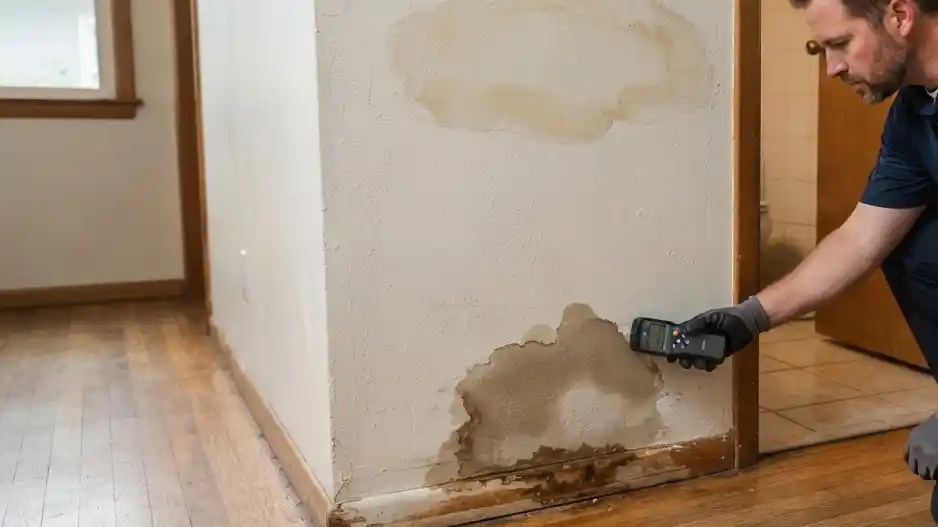
Wet-season leaks, burst pipes after freeze events, storm-driven roof exposure, basement water, and smoke-season odor complaints all create the same first question: did this just happen, or has it been building for weeks?
That question matters because age affects urgency, material salvage, odor control, documentation, and follow-on repairs. A fresh ceiling stain from an active roof leak may need source control, water extraction, drying, and ceiling leak repair.
An older stain with soft drywall, peeling paint, and musty odor may point to repeated moisture, hidden wall damage, or mold remediation needs.
If you are unsure whether you are looking at an old condition or a new loss, contact PNW Restoration for help evaluating the next step. We handle water, mold, fire, smoke, storm, biohazard, and related cleanup needs for homes and businesses.
Fresh loss signs restoration pros look for
New damage usually leaves active clues, especially when water, smoke, or storm exposure is still affecting the property.
A new water loss often feels damp, cool, or actively wet. You may see dripping, spreading stains, standing water, fresh swelling, lifted flooring, or a ceiling bubble that changes over minutes or hours.
In commercial spaces, a new loss may appear after an overnight plumbing failure, sprinkler discharge, roof leak, or storm-related opening.
Fresh smoke or soot damage can also feel immediate. Odor may be sharp, surfaces may show recent residue, and sensitive contents may need separation from unaffected areas.
For storm damage, broken windows, damaged roofing, debris impact, and water entering through the building envelope usually signal an active condition.
The safest first step is to stop the source when you can do so safely, avoid electrical hazards, document visible damage, and keep people away from contaminated water or unstable materials.
For larger events, water damage restoration may include cleanup, drying, and repair planning based on the affected area.
Old damage clues that change the scope
Older damage often shows cycles: wet, dry, stain, repeat, then material breakdown.
Old damage usually has a history written into the materials. Look for layered staining, yellow or brown rings, peeling paint, warped trim, crumbly drywall, buckled flooring, rusted fasteners, musty odor, or recurring spots that return after each rain. These signs can mean the property has gone through repeated wetting and drying.
Moisture control is central to mold prevention, so an older damp area should not be treated as just a cosmetic stain. Drying the surface without finding the moisture source can leave damp insulation, subflooring, wall cavities, or cabinetry untreated.
That is why old damage often shifts the scope from simple cleanup to investigation, material removal, odor control, mold remediation, or reconstruction planning.
For deeper context on visible surfaces, review how water-damaged walls and ceilings can show early warning signs before a larger issue becomes obvious.
How pros separate one-time damage from repeat moisture
Restoration evaluation is not based on one stain alone. It compares patterns, materials, source clues, and property conditions.
Moisture pattern
A single fresh stain near an active pipe or roof opening may point to a recent loss. Repeated rings, staining in several connected areas, or dampness below older finishes may suggest a longer moisture history. Moisture can travel, so the visible spot is not always the source.
Material behavior
Drywall, wood, insulation, carpet pad, cabinets, and baseboards respond differently. A firm damp ceiling may indicate newer exposure.
Soft drywall, swollen trim, delaminated flooring, and persistent odor can suggest longer absorption. In basements and crawlspace-adjacent areas, hidden moisture may remain after the surface looks dry.
Source context
The question is not only “how old is the stain?” It is also “what fed it?” Storm-driven water, roof leaks, plumbing failures, sewage backups, lower-level flooding, smoke residue, and recurring humidity all require different decisions.
A one-time clean-water leak is different from contaminated water or a repeated building-envelope failure. Learn more about water removal and mitigation when the goal is to stop further damage after water enters.
Choosing help based on the actual damage
The right scope depends on damage type, urgency, property use, and what must happen after cleanup.
What to ask before you commit to a scope
- Is the source active, stopped, or still unknown?
- Does the damage involve clean water, floodwater, sewage, smoke residue, or possible biohazard material?
- Which rooms, contents, walls, floors, ceilings, or lower-level areas need review?
- Will cleanup likely require drying, odor removal, material removal, repair, or reconstruction?
- How will photos, room notes, affected-material lists, and next steps be communicated?
Use the answers to match the service path. Water damage restoration, basement water removal, flood damage restoration services, sewage cleanup services, mold remediation services, fire and smoke damage, smoke odor removal, storm damage restoration, biohazard and hazmat cleanup, and reconstruction can each fit different conditions.
For overlapping situations, review the types of water damage restoration services that may apply.
Signs the cleanup plan may miss key issues
Be cautious if the plan only paints over stains, dries the visible surface, ignores odor, skips adjacent rooms, overlooks basement or crawlspace moisture, or treats contaminated water like a small clean spill. When floodwater or disaster debris may be involved, follow safe cleanup after disasters and use qualified help for hazards.
What a strong restoration plan should cover
A useful plan gives you clarity before work expands, pauses, or moves into repair.
A strong plan starts with the source and safety conditions. It should identify what is known, what still needs checking, and which areas are affected. It should separate surface cleanup from hidden moisture concerns and explain why some materials may dry while others may need removal.
Documentation matters, especially when you are comparing old damage with a new loss. Photos, room-by-room notes, content observations, and visible damage mapping help everyone understand the timeline and scope.
For lower-level flooding, the plan may also need to address basement flood cleanup services if standing water, contaminated water, or soaked materials are present.
After mitigation, some properties still need repair or reconstruction. That next step may involve drywall, flooring, trim, ceilings, cabinetry, paint, or other affected finishes.
When uncertainty should trigger a closer look
Do not wait for damage to become obvious if the clues already point to hidden moisture or contamination.
You do not need to know the full history before asking for help. You only need enough concern to pause, document, and avoid making the problem worse.
A small stain can be recent. It can also be the first visible sign of a repeated leak. A faint odor may be leftover dampness, smoke residue, or a hidden material issue.
For homeowners, renters, property managers, facility managers, and commercial owners, the safest approach is to treat uncertain damage as worth evaluating.
If the loss affects access, tenants, customers, electrical areas, ceilings, lower levels, sewage, smoke, or multiple rooms, the decision becomes more urgent.
When old damage and new loss signs overlap, we can help you sort the damage type, cleanup path, and next steps without relying on guesswork. Reach out for restoration help that fits what actually happened, not just what is visible on the surface.
Frequently Asked Questions
Can old water damage still be wet?
Yes. Old water damage can stay wet if the source is ongoing, hidden, or repeatedly triggered by rain, plumbing use, or lower-level moisture. A stain that looks old can still hide damp drywall, trim, insulation, or subflooring. That is why touch, odor, material condition, and source clues all matter.
Is a ceiling stain always a new leak?
No. A ceiling stain may come from a current roof leak, an old plumbing issue, a previous overflow, or repeated wetting and drying. Fresh stains often look darker and damp. Older stains may show rings, softened texture, peeling paint, or discoloration that no longer feels wet at the surface.
How do restoration pros tell if damage is from one event or repeated leaks?
They compare the source, stain pattern, material condition, odor, room layout, and surrounding areas. A single wet area near an active leak may point to a recent loss. Multiple stains, warped materials, recurring odor, or damage at different heights can suggest repeated moisture.
Why does the age of damage matter for cleanup?
Age changes what may be salvageable and what needs removal, drying, cleaning, odor control, or reconstruction. New damage may be easier to stabilize if the source is stopped quickly. Older damage may involve hidden moisture, weakened materials, microbial concerns, or repeated source problems.
What should I document before cleanup starts?
Take photos and videos of the source, affected rooms, ceilings, walls, floors, contents, and any visible staining or debris. Write down when you first noticed the issue and what changed afterward. Do not disturb unsafe materials, contaminated water, or electrical areas to get better photos.
Can painting over an old stain solve the problem?
Paint can hide discoloration, but it does not solve moisture, odor, mold, or material damage. If the source is still active, the stain may return. If the material is damaged behind the surface, cosmetic repair can delay the real cleanup and make the next inspection harder.
When does a water loss become a mold concern?
Mold concern increases when materials stay damp, hidden moisture remains, or the same area gets wet repeatedly. Musty odor, visible growth, staining, and soft materials deserve closer attention. The key step is finding and correcting the moisture condition, not just cleaning the visible spot.
Is old damage handled differently in rental or commercial properties?
Often, yes. Rental and commercial spaces can involve tenant access, customer areas, business interruption, shared walls, contents, records, and responsibility questions. Clear documentation, affected-area mapping, and communication help reduce confusion while cleanup and repair decisions are made.
What if the damage involves sewage or floodwater?
Avoid direct contact and keep people away from affected areas when sewage, floodwater, or unknown water may be involved. These situations can involve contamination beyond visible staining. Cleanup may require sewage cleanup services, material removal, sanitation, odor control, and careful disposal decisions.
Can smoke odor be old damage rather than a new loss?
Yes. Smoke odor can linger after a previous structure fire, nearby smoke exposure, or residue trapped in soft goods, cavities, or porous finishes. A sudden odor may also appear when humidity changes or HVAC airflow moves residue. Odor source, residue pattern, and affected materials guide the response.
What if old damage and new damage are both present?
That happens often. A property may have an old roof stain that becomes active during a new storm, or an older basement moisture issue that worsens after heavy rain. The cleanup plan should separate pre-existing clues from new wet areas and document both as clearly as possible.
Do I need reconstruction after old or new damage?
You may need reconstruction if mitigation leaves the area open, unfinished, or missing damaged materials. Drywall, flooring, ceilings, trim, cabinetry, and paint may need repair after drying, removal, or cleanup. The need depends on the material condition and the final scope.


