



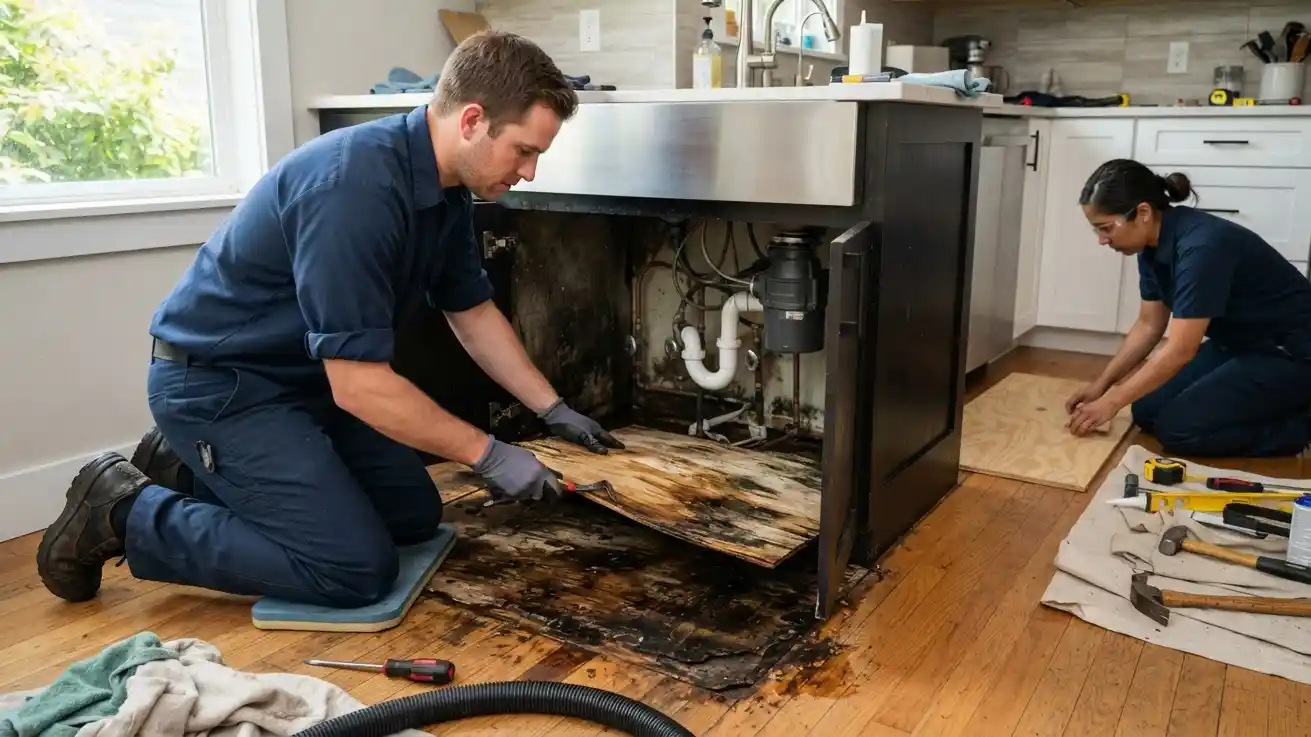
A kitchen remodel should reveal cabinet lines, flooring choices, and better storage. It should not reveal a wet subfloor.
Yet under-sink leaks are easy to miss until old cabinets come out or vinyl is lifted. In summer, warm indoor conditions, closed cabinets, and limited airflow can turn a slow drip into swelling, odor, staining, and hidden moisture.
Across Portland-metro properties, west-side communities, east-county corridors, and river-adjacent neighborhoods, water problems often have more than one source.
Wet seasons bring leaks and lower-level moisture. Winter freezes can weaken plumbing after thaw. Summer renovation work then exposes damage that started earlier.
Why a Small Sink Leak Becomes a Summer Renovation Problem
Hidden water can reshape the whole project.
The cabinet hides the leak
A kitchen sink base is a perfect hiding place for water. Supply lines, drain connections, disposal fittings, and dishwasher lines all sit in a dark cabinet. Stored cleaners, trash bags, and bins can block your view. Water may drip into particleboard, cabinet backs, wall plates, or flooring before it reaches the visible floor.
The subfloor tells the real story
The subfloor sits below the finished floor and supports the kitchen assembly. When it absorbs water, it may swell, soften, stain, or hold odor. If renovation crews install new flooring over wet material, the finished kitchen can trap the problem instead of solving it.
For more detail on moisture clues behind small plumbing issues, review these hidden plumbing leak signs.
The Subfloor Clues to Check Before You Remodel
Early clues help prevent covered-up damage.
A renovation gives you a chance to inspect layers that daily use keeps covered. Look before new materials go in.
Cabinet base and toe-kick warning signs
Start at the sink base. Check for rippled cabinet bottoms, swollen side panels, dark staining, loose laminate, rusted fasteners, musty odor, and soft spots near the back wall. A cabinet floor that bends under hand pressure may only be the top layer of the issue. Water may already have reached the subfloor below.
Flooring signs beyond the sink
Moisture does not always stay in the cabinet. It can spread under plank flooring, sheet vinyl, hardwood, tile underlayment, or baseboards. Watch for cupping, buckling, hollow sounds, stains along seams, or a spongy floor near the sink, dishwasher, or refrigerator line.
Guidance on water damage to wood floors can help you understand why flooring may change after even a small leak.
Immediate Response Checklist for Sink Leak Water Damage
Safety and source control come first.
The priority is to stop more water from entering the assembly. Then slow the spread of damage and avoid unsafe cleanup choices.
Stop water and protect access
Turn off the sink shutoff valves if you can do so safely. If the leak continues, use the main water shutoff and call a licensed plumber.
Remove stored items. Keep people from stepping on soft flooring. Do not use electrical devices in standing water, and do not run fans if contamination or visible mold could be disturbed.
Document before demolition
Take photos and short videos before removing damaged materials. Capture the sink base, plumbing connections, adjacent flooring, wall base, and any rooms or units below. This helps you compare what was visible at discovery with what appears after cabinets or flooring come out.
Know when contamination changes the plan
Clean-water sink leaks are different from drain backups, dishwasher discharge, or water mixed with food waste. If water came from a drain line, backed-up disposal, sewage source, or exterior floodwater, avoid direct contact. Porous materials may need removal.
When Cleanup Needs More Than Towels
Hidden moisture can outlast visible water.
When water has moved under cabinets, under flooring, into walls, or into lower levels, professional drying and restoration may be the safer decision.
For sink leaks that reach flooring, wall bases, or subfloor materials, schedule water damage restoration before renovation work continues. A timely assessment can help separate simple cabinet repair from deeper moisture, demolition, drying, or repair needs.
Why Dry Is Not Always Dry Enough
Surface dryness can hide damp layers.
A common mistake is assuming that visible dryness means the problem is over. Building materials can hold moisture out of sight.
Porous materials hold water
Particleboard, plywood, OSB, drywall, trim, insulation, and some underlayments absorb water. The top surface may feel dry while the underside stays damp.
Floor coverings can also slow evaporation. That is why a sink leak found during demolition deserves a layer-by-layer inspection before new cabinets, flooring, or baseboards go in.
Mold risk after delayed drying
Mold prevention starts with moisture control. If a kitchen sink leak sat unnoticed for days or weeks, the concern is not only the visible stain.
It is the damp cavity behind the cabinet, wall plate behind the sink, and underside of flooring where air movement is poor. If growth or odor is present, mold remediation may need to be part of the recovery plan.
For sink-specific mold concerns, this guide to mold under your kitchen sink explains why under-sink areas are so vulnerable.
Renovation Decisions: Repair, Replace, or Pause
The water source should guide the scope.
The right next step depends on the water source, wet time, and whether the structure still feels firm.
Older kitchens and layered flooring
Older kitchens often have multiple flooring layers. A leak may travel between vinyl, underlayment, old adhesive, and wood subfloor. Removing only the top layer can miss trapped moisture below.
Be careful with older materials that could contain substances needing qualified handling. Stop work and ask the right professional before sanding, cutting, or disturbing unknown layers.
Commercial kitchens and rental properties
In commercial suites, multifamily units, and rental homes, a kitchen leak can affect tenants, staff, customers, or neighboring spaces. A sink base leak may drip into a ceiling below or spread into shared walls.
Managers should document conditions, control access, keep communication clear, and avoid reopening a space before wet materials are addressed.
If staining or softness appears beyond the cabinet, this guide to water damage in walls can help frame what to inspect next.
Prevention Before Cabinets Go Back In
Small upgrades can reduce repeat leaks.
The best time to reduce future sink-leak risk is before the kitchen is closed up again.
Use the renovation window
Replace worn supply lines, tighten connections, check the drain assembly, and confirm the dishwasher line is routed correctly. Install a simple leak alarm under the sink. Keep shutoff valves accessible. Avoid packing the cabinet so tightly that small drips stay hidden.
Watch the regional moisture cycle
Summer remodels often follow months of damp weather. A kitchen may already be carrying moisture from crawlspace humidity, winter pipe stress, or earlier storm intrusion. Before installing finish materials, make sure the work area is not just clean, but dry enough for the next layer.
Final Takeaway
Pause long enough to find the full path.
A kitchen sink leak is not always a plumbing-only problem. Once water reaches the cabinet base, finished floor, wall plate, or subfloor, the renovation plan should pause long enough to find the full moisture path. Careful drying, selective removal, and honest repair choices help keep a summer project from turning into a repeat water problem.
Frequently Asked Questions
Why do kitchen sink leaks often show up during summer renovations?
Cabinets and flooring can hide a slow leak for months. When renovation work removes those layers, staining, swelling, odor, or soft subflooring becomes visible. Summer heat and closed cabinets can also make damp materials smell stronger.
Is a wet cabinet bottom always a subfloor problem?
Not always. Sometimes the damage stays in the cabinet floor. But if the cabinet base is soft, the flooring nearby feels spongy, or odor continues after surface drying, moisture may have reached lower layers.
What should you do first after finding water under a kitchen sink?
Stop the water source if it is safe. Use the shutoff valves or main water shutoff when needed. Remove stored items, avoid unsafe electrical use, take photos, and check whether water has spread beyond the cabinet.
Can you keep renovating if the sink leak looks minor?
You should pause long enough to confirm the materials are dry. Installing cabinets, underlayment, or flooring over damp materials can trap moisture. That can lead to odor, swelling, staining, and possible mold concerns later.
When does a sink leak become more than a DIY cleanup?
It becomes more serious when water reaches the subfloor, walls, insulation, lower levels, or shared spaces. You should also be cautious if there is a musty odor, visible growth, soft flooring, drain backup, or contaminated water.
How can a sink leak affect wood or plank flooring?
Water can move under flooring seams and stay trapped below the visible surface. Wood may cup, buckle, darken, or separate. Plank flooring may lift, click differently, or hide moisture beneath the finished layer.
Should you use fans under the sink after a leak?
Only use fans when the water is clean, electricity is safe, and you are not disturbing visible mold or contaminated material. Fans can help airflow, but they do not prove the subfloor, wall base, or underlayment is dry.
Can mold grow under a kitchen sink after a slow leak?
Yes, moisture, darkness, and limited airflow make under-sink areas vulnerable. Mold risk increases when damp materials stay wet or when the leak repeats. Fixing the water source matters as much as cleaning visible growth.
What makes summer sink-leak damage different from wet-season damage?
Summer often reveals older moisture during remodeling. The original leak may have started during wet weather, a freeze-thaw plumbing issue, or normal daily use. Warm conditions can make trapped moisture and odor more noticeable.
What should property managers do if a tenant reports a sink leak?
Document the report, control the water source, and inspect adjacent flooring, walls, and any lower-level spaces. Keep affected areas accessible for evaluation. Avoid closing the repair until hidden moisture and material damage are understood.
How can you prevent another sink leak after renovation?
Keep shutoff valves visible and usable. Replace worn supply lines, inspect drain connections, avoid overcrowding the cabinet, and consider a leak alarm. Check under the sink regularly after the kitchen is back in use.


