


A lot of homeowners assume a newly built home is “too new” for water damage. Then the rainy season arrives, storms bring wind-driven rain, and a small moisture issue turns into a ceiling stain or a soft spot near a baseboard.
In the Pacific Northwest, that surprise is common enough that we plan for it. At PNW Restoration, we respond year-round, but we see demand rise when strong winds and heavy rainfall accompany storms, because those conditions can quickly expose weak points in roofs, windows, and exterior detailing.
So, is water damage in newly built homes common? In short, it’s common enough that builders and building-science organizations treat moisture control as a core durability issue, and it’s common enough that we regularly restore properties affected by everything from plumbing failures to weather intrusion.
Here’s what to know, what to watch for, and what proper restoration should look like.
Is water damage in newly built homes actually common?
“Common” doesn’t mean “inevitable,” and it doesn’t mean the home was built poorly. It means this: water intrusion remains one of the most common drivers of building repair, even with modern materials and better construction methods.
The National Association of Home Builders (NAHB) notes that despite advances in design and construction practices, water intrusion remains one of the most common causes of building repair, and that even minor omissions during design or construction can lead to significant water damage.
Insurance research points in the same direction. The Insurance Institute for Business & Home Safety (IBHS) describes interior water damage to residential construction as one of the most consistent and ever-present sources of insurance claims and losses, driven by factors ranging from winter weather to appliance failures and human factors. (IBHS)
Translation: a home can be brand-new and still experience water damage, because water-related risk comes from many places, not just “old house problems.”
Why new homes still get water damage
1) Weather finds the smallest weak point
New roofs and exterior cladding can still be vulnerable at transitions: flashing details, roof penetrations, window/door seals, and edge drainage.
Storms often bring strong winds and heavy rainfall, and our team may secure damaged areas like roofs or broken windows to prevent further damage. That applies whether your home is 30 years old or 30 days old.
2) Plumbing and appliance issues don’t wait for a home to “age.”
New builds often have brand-new supply lines, fixtures, and appliances, yet leaks can still happen from loose connections, small installation errors, or early component failures.
Our water damage restoration identifies common sources we handle, including plumbing issues and burst pipes, along with floods and sewage backups. Even a small leak can become a big problem if it stays hidden.
3) Moisture gets trapped behind finishes
Modern homes are often built to be energy efficient and tight. That’s good for comfort and utility bills, but it also means moisture can linger if it gets inside assemblies and isn’t managed with targeted drying and dehumidification.
Drying alone isn’t enough: as water evaporates, indoor humidity rises, and without dehumidification, that moisture can re-condense elsewhere and contribute to mold.
Early detection: what to look for in a new home
New builds can hide moisture behind spotless paint and fresh trim. Here are the most useful “early clues” to catch problems before they expand.
Visual signs
- New or growing stains on ceilings or upper walls
- Paint bubbling, peeling, or “orange peel” changes near the trim
- Warping at flooring edges or around baseboards
- Discoloration around windows, skylights, or vents
Smell and comfort clues
- Musty odors (especially after doors/windows stay closed overnight)
- Rooms that feel persistently humid even when the HVAC is running
“After a storm” is the time to check
If you’ve had a period of heavy rain or a windstorm, do a quick scan of attic access points, the top-floor ceilings, and any exterior-facing corners. Storm patterns are a common trigger for newly noticed leaks in the region.
What happens if you don’t address moisture quickly
Water damage is rarely static; it spreads and compounds.
Mold risk increases when materials stay wet
Public guidance commonly cites a narrow window for drying. The EPA recommends drying water-damaged areas and items within 24 to 48 hours to help prevent mold growth. (US EPA)
The CDC similarly notes that if you couldn’t dry a flooded home and contents within 24 to 48 hours, you should assume mold growth and address drying and the moisture problem thoroughly.
Materials weaken, and repairs get bigger
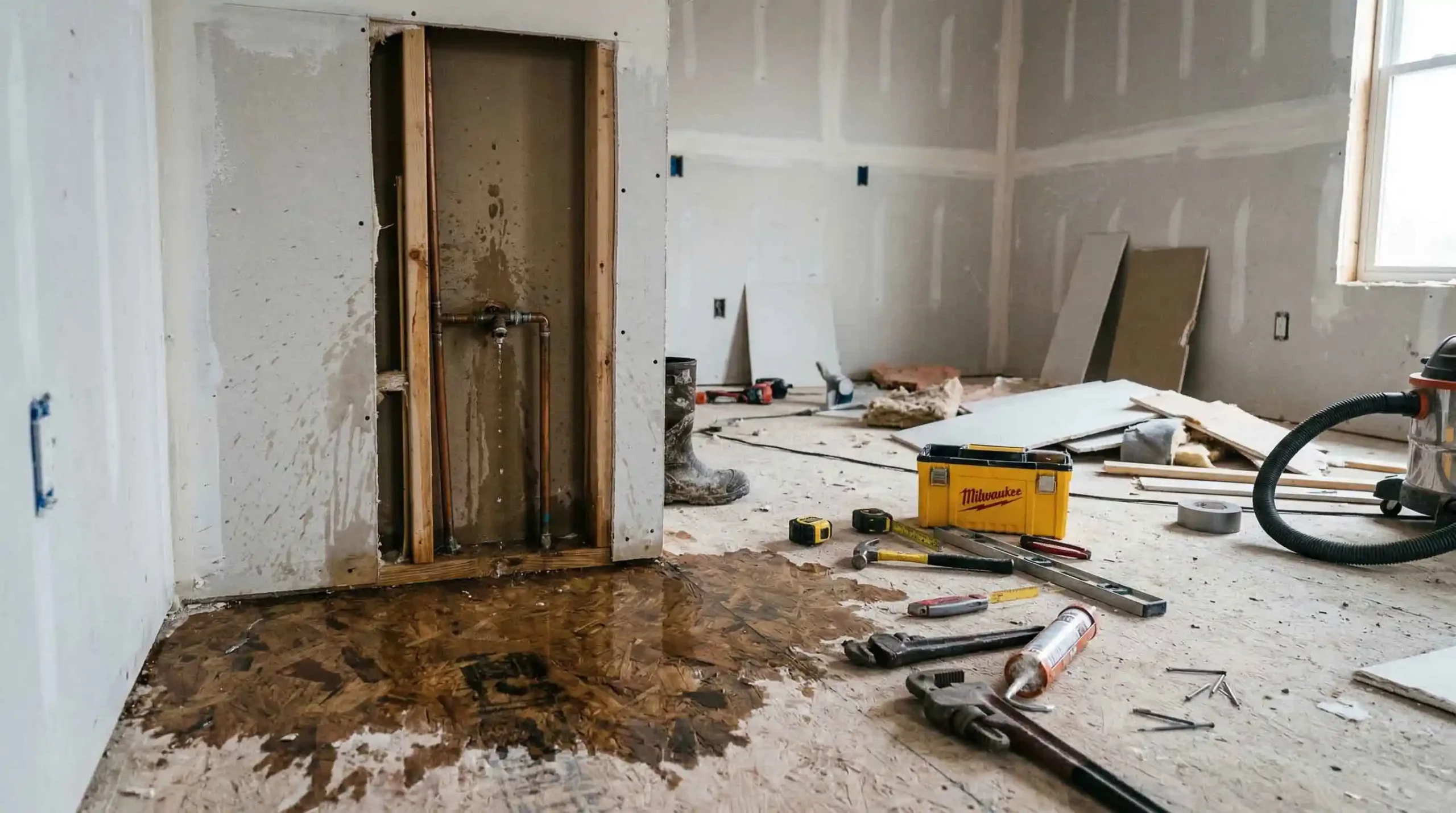
When flood water gets into walls, it can weaken sheetrock, requiring removal and replacement to stop further damage. The longer moisture stays in wall cavities or under floors, the more likely you are to see swelling, warping, and deterioration.
Hidden moisture can linger even after “surface drying.”
Household equipment often lacks the power to dry deep within walls, floors, and hidden cavities, and that hidden moisture is often detected using tools like moisture meters and thermal imaging.
Restoration steps that matter in a newly built home
When the home is new, people often want the least invasive solution possible. That’s reasonable, but “minimal disruption” only works if the drying is complete and verified.
Here’s what proper water damage restoration should include, based on how we outline our process:
1) Inspection and damage assessment
We arrive to inspect the water damage and evaluate the cause and extent to develop a prompt restoration plan.
2) Water removal (when there’s standing water)
We extract standing water using powerful pumps and industrial-strength vacuums to minimize the risk of mold and deterioration of structural integrity.
3) Drying and dehumidification
Even after water removal, dampness can persist in walls and floors. We use industry-grade dehumidifiers and specialized drying techniques to eliminate trapped moisture.
4) Cleaning and sanitizing
We thoroughly clean and sanitize affected areas using antibacterial and antimicrobial treatments, and assess impacted items to determine what can be restored.
5) Mitigation and restoration (repairs)
We restore affected areas to pre-damage condition by repairing items like drywall installation, noting that significant structural damage may require a contractor.
Practical checklist: what to do if your new home has water damage
Do this immediately
- Stop the water source if safe (shut off supply, pause appliance use)
- Document damage with photos for your records
- Start gentle drying if it’s a small, clean incident (airflow + dehumidification)
- Call a professional if the leak is in walls/ceilings, keeps recurring, or you suspect hidden moisture
Don’t do this
- Don’t paint over stains or re-caulk and “wait it out.”
- Don’t reinstall insulation or close walls before drying is verified
- Don’t rely on household fans alone if moisture likely entered cavities
How we help at PNW Restoration
At PNW Restoration, we’re available 24/7 and respond quickly to prevent further damage. We’re an IICRC-certified team, and our process is built around moisture detection, controlled drying/dehumidification, cleaning, and restoration, so the structure is addressed, not just what you can see.
If you want to understand what full-service response includes, start here: water damage restoration services.
If you’re seeing stains, damp odors, or signs of hidden moisture in a newly built home, request an estimate through our contact page.
Frequently Asked Questions
1) Is water damage in a newly built home “normal”?
It’s not something you should accept as normal, but it can happen. Building organizations note that water intrusion remains a common cause of building repair, and small omissions can lead to significant damage. The key is catching it early and drying correctly.
2) What causes water damage in new homes most often?
Weather intrusion during stormy periods and plumbing/appliance issues are common triggers. PNW Restoration handles losses from plumbing issues and burst pipes, as well as storm-driven problems.
3) How fast can mold become a concern after a leak?
The EPA and CDC both reference a 24 to 48-hour window for drying to reduce mold risk after water exposure. If you can’t dry thoroughly in that timeframe, consult qualified professionals.
4) Why do new homes still get hidden water damage?
Because moisture can move into wall cavities, under floors, and into insulation without obvious signs. Hidden moisture is often detected with specialized tools like moisture meters and thermal imaging.
5) Can I dry a small leak myself?
Sometimes, small clean-water incidents can be manageable. But the PNW Restoration team cautions that household equipment often lacks the power to dry deep within walls, floors, and hidden cavities. If water entered assemblies, professional drying is safer.
6) What should I inspect after heavy rain or a windstorm?
Check ceilings, attic access points, exterior-facing corners, and around windows/roof penetrations. Storms in the region often bring strong winds and heavy rainfall, conditions that can expose weak points quickly.
7) What does proper professional drying include?
Inspection, water removal (if needed), controlled drying and dehumidification, and ongoing verification. We use industry-grade dehumidifiers and specialized drying techniques, which explains why dehumidification matters alongside drying.
8) Will repairs happen right away?
Repairs should come after moisture control is complete. Our process includes mitigation and restoration to pre-damage condition (such as drywall installation), while noting that significant structural issues may require a contractor.
9) What if the damage involves a sewage backup?
Treat it as urgent and avoid contact with contaminated areas. We have sewage backups among the situations we handle, and advise calling emergency cleanup services for sewage backup situations.
10) How quickly can PNW Restoration respond?
Our water damage team is available 24/7 and ready to respond quickly to prevent further damage. For emergency help, use our contact options and call the number above.


