



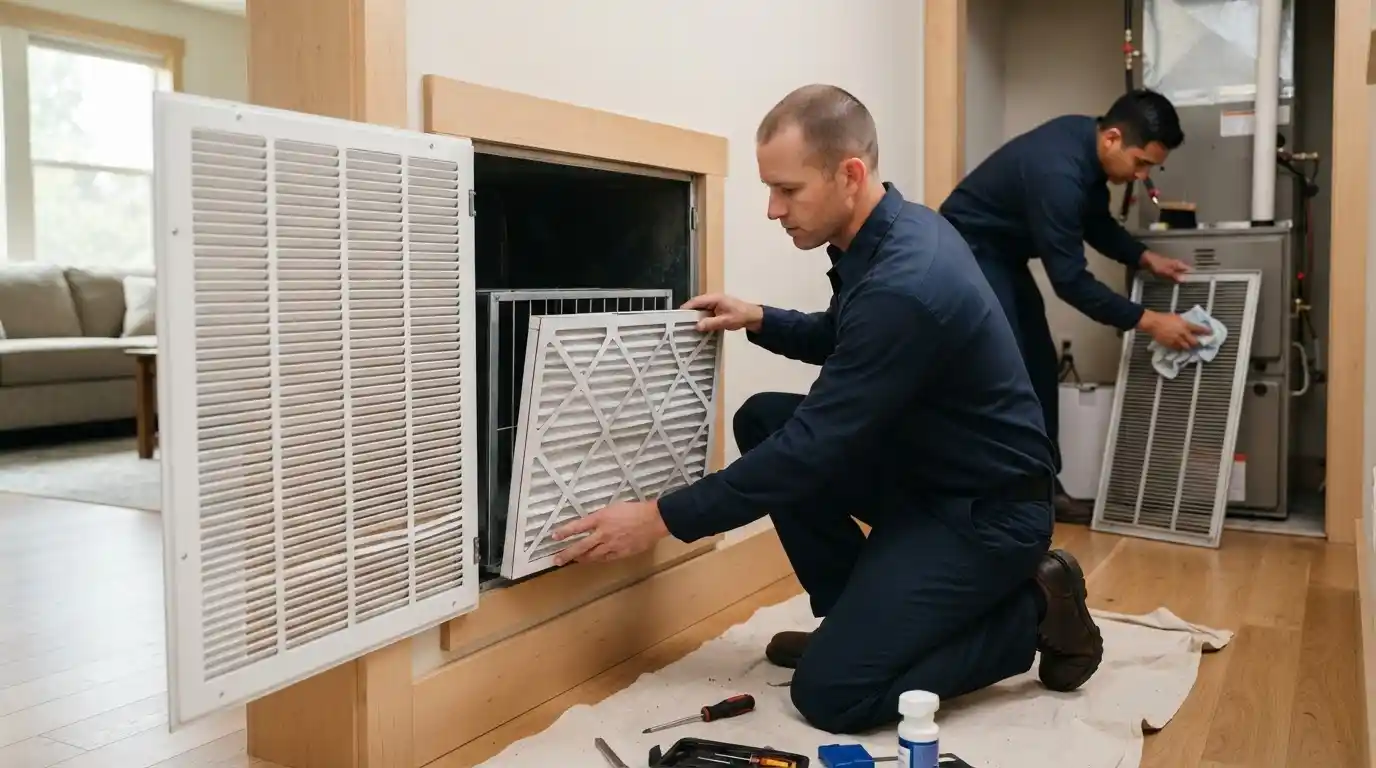
In Portland-metro properties, wildfire smoke season can leave a building feeling stale after the sky clears. Smoke does not need flames at the property to create a problem. It can move through fresh-air intakes, bathroom fans, leaky window frames, attic gaps, crawlspace pathways, and small openings around the building shell. After smoky weeks, your HVAC system may be holding odor in filters, returns, grilles, dust, and nearby porous materials.
A proper reset is not just pressing a button on the thermostat. It means stopping new smoke entry, replacing loaded filtration, checking airflow pathways, cleaning residue, and deciding whether odor has moved beyond normal housekeeping.
Why Smoke Changes Your HVAC Priorities
Wildfire smoke changes the way a building breathes. This section explains why the HVAC system should be checked before you treat the problem as stale air.
Smoke enters through more than open windows
Closed windows help, but they do not seal every pathway. Outdoor air can enter through mechanical ventilation, HVAC fresh-air intakes, exhaust fans, and infiltration around gaps and joints. During active smoke, check current wildfire smoke indoor air quality guidance before airing out.
Once smoke gets indoors, it can settle into dust, fabrics, filters, closets, wall cavities, and return-air pathways. That is why a room may smell better after ventilation, then smell smoky again when the system runs.
Filters can become a residue source
Filters protect the system, but they are not permanent storage for smoke particles. A dark or smoky-smelling filter can release odor each time air moves through it. Use the highest-efficiency filter your HVAC system can safely handle. If unsure, check the owner’s manual or ask an HVAC professional.
For compatibility, fit, and maintenance frequency, follow MERV 13 filter guidance and the manufacturer’s instructions.
Step 1: Shut Down Fresh Air and Check Filters
Your first reset step is to reduce new smoke entry and remove the most obvious smoke-loaded component. Do this before aggressive cleaning.
Set the system to recirculate
If outdoor air is still smoky, do not flush the building with outside air. Set the system to recirculate when that option exists. Close fresh-air intakes if your system allows it and if doing so does not create a safety problem. Avoid long use of exhaust fans because they can pull smoky outdoor air through leaks.
For commercial spaces, check whether rooftop units or make-up air systems drew outdoor air during smoke days.
Replace smoke-loaded filters safely
Turn the system off at the thermostat before changing the filter. Wear gloves if the filter is dirty, place it in a bag, and avoid shaking it indoors. Install the correct size so air cannot bypass the frame. Write the replacement date on the filter edge or maintenance log.
After replacement, run the fan only when conditions and settings support filtration. If odor gets stronger when the fan runs, the problem may involve returns, ducts, coils, nearby dust, or porous materials.
Step 2: Inspect Air Pathways Before Deep Cleaning
A careful inspection helps prevent you from spreading residue. This section shows where smoke odor often reappears after the first filter change.
Start with returns and grilles
Check return grilles, supply registers, filter slots, nearby walls, windowsills, shelves, and horizontal trim. Use a clean white cloth to test small hidden areas. If the cloth picks up gray or brown residue, avoid dry sweeping or aggressive scrubbing. Damp wiping on hard surfaces is usually safer than stirring dust into the air.
Do not open mechanical equipment, electrical panels, or duct interiors unless you are qualified. If you smell burning plastic, see scorch marks, notice electrical problems, or hear abnormal equipment sounds, stop and contact the appropriate professional.
Watch attic and crawlspace airflow
Smoke odor can move from hidden spaces into living or work areas. Vented attics, crawlspaces, duct chases, utility penetrations, and storage rooms can hold odor in dust, insulation, framing, and stored contents. For hidden-space warning signs, use this guide to wildfire smoke in attics and crawlspaces.
Avoid entering tight areas if you see unsafe access, electrical hazards, animal contamination, sewage, heavy debris, or structural movement.
Step 3: Clean the Building Around the HVAC System
The HVAC reset works better when surrounding rooms are cleaned in the right order. This section separates cleaning from restoration decisions.
Remove settled particles carefully
Start with cleanable hard surfaces near air pathways. Wipe vent covers, windowsills, door trim, shelves, and smooth floors with lightly damp microfiber cloths. Launder washable textiles that smell smoky. Replace or isolate heavily odor-holding disposable items when safe.
Avoid air freshener as the main fix. It can mask the problem and add more odor compounds. If you are deciding between air pathways, walls, and soft goods, use this sequence for nearby fire smoke cleanup.
Separate smoke odor from water or mold odors
A later rainstorm, roof leak, clogged drain, wet crawlspace, basement water, or plumbing failure can create musty odor that gets confused with smoke.
If you notice staining, warped flooring, damp carpet, ceiling discoloration, or a musty-smoke odor, treat moisture as a separate problem. Where smoke and water damage overlap, fire and smoke damage restoration may need to be considered alongside drying and repair decisions.
Commercial and Older-Building Considerations
Larger, older, or more complex buildings need more documentation. This section helps owners and managers avoid treating every room the same way.
Document by HVAC zone
For offices, retail suites, apartments, and shared buildings, log odor by room and HVAC zone. Note which units ran, which filters were replaced, and where odor returns. Save photos of filters, grilles, residue, and affected contents.
Older buildings can hide airflow paths
Older homes and commercial spaces may have leaky returns, unsealed chases, disconnected ducts, attic bypasses, and crawlspace openings. Smoke can follow those same paths later used by cold air, damp air, or odors from lower levels.
If a smoky smell keeps returning after filter changes and light cleaning, compare the odor pattern with this guide on whether smoky homes have residue inside.
When Restoration Help Makes Sense
Not every smoke event requires restoration. This section explains when the decision should move beyond routine maintenance.
Professional judgment is appropriate when odor persists after filter changes, smoke affected multiple rooms, the HVAC ran for days during heavy smoke, residue appears around vents, or odor returns from attics, crawlspaces, contents, walls, or duct pathways. It also matters when smoke exposure overlaps with sewage, storm damage, basement water, mold concerns, or repairs.
CTA: If your property still smells smoky after filter changes, careful cleaning, and safe ventilation, call (503) 352-5209 to discuss smoke odor removal or fire and smoke cleanup for your home, rental, office, or commercial space.
Smoke residue and soot are not the same in every situation. Wildfire smoke, cooking smoke, plastic smoke, and structure-fire smoke can behave differently on walls, contents, filters, and mechanical pathways. For a clearer cleanup decision, compare smoke and soot damage before using stronger cleaners or disturbing sensitive materials.
Frequently Asked Questions
Should I reset my HVAC system immediately after wildfire smoke clears?
Yes, but treat “reset” as a maintenance and inspection process, not just a thermostat action.
Check outdoor air first, then replace dirty filters, inspect vents, and note any recurring odor.
If smoke smell returns when the fan runs, the issue may be beyond the filter.
Can wildfire smoke damage an HVAC system?
Wildfire smoke can load filters, settle on grilles, and leave residue in dust near air pathways.
In heavier or prolonged events, odor may also appear near returns, ducts, attics, or crawlspaces.
Mechanical concerns should be evaluated by an HVAC professional.
Should I run the HVAC fan after replacing the filter?
Run the fan only when outdoor air, system settings, and filter fit support filtration.
If the system has a fresh-air intake, make sure it is not pulling in smoky air.
If odor becomes stronger, stop and inspect vents, returns, and nearby residue sources.
Is a higher-efficiency filter always better after smoke?
Not always. A filter that is too restrictive can reduce airflow or strain the system.
Use the highest-efficiency filter your system can safely handle.
Check the owner’s manual or ask an HVAC professional before changing filter type.
Why does my house still smell smoky after I changed the filter?
The odor may be in dust, fabrics, return grilles, attic pathways, crawlspaces, or porous materials.
A filter change removes one source, but it does not clean the whole building.
Track where the smell is strongest and whether it returns when air moves.
Should I clean air ducts after wildfire smoke?
Do not assume duct cleaning is automatically needed after every smoke event.
Start with filters, grilles, accessible surfaces, and odor patterns.
Consider further evaluation if the HVAC ran through heavy smoke or odor comes from vents.
What should property managers document after a smoke event?
Document affected rooms, HVAC zones, filter changes, odor complaints, visible residue, and any tenant disruption.
Photos of filters, vents, and residue can help show the pattern.
This helps separate one affected zone from a building-wide issue.
Can smoke odor mix with mold or damp-material smells?
Yes. Wet basements, roof leaks, crawlspace moisture, and plumbing leaks can create musty odors.
Those odors may overlap with wildfire smoke residue and make the source harder to identify.
Moisture concerns should be handled as a separate property-damage issue.
Should I open windows to clear smoke smell?
Only open windows when outdoor air has improved.
Opening windows too early can bring more smoke particles into the property.
Use controlled ventilation after outdoor conditions improve, then monitor whether odor returns.
What should I avoid doing after weeks of smoke?
Avoid dry sweeping ash or dust, shaking dirty filters indoors, and masking odor with heavy fragrance.
Do not open electrical panels, mechanical components, or duct interiors unless qualified.
Avoid entering attics or crawlspaces with unsafe access, contamination, or visible hazards.
When does smoke odor become a restoration issue?
It becomes more serious when odor remains after filter changes, light cleaning, and safe ventilation.
Residue near vents, smoky odor in multiple rooms, or hidden-space odor can point to a deeper issue.
Smoke combined with water damage, sewage, or storm exposure needs extra caution.


