



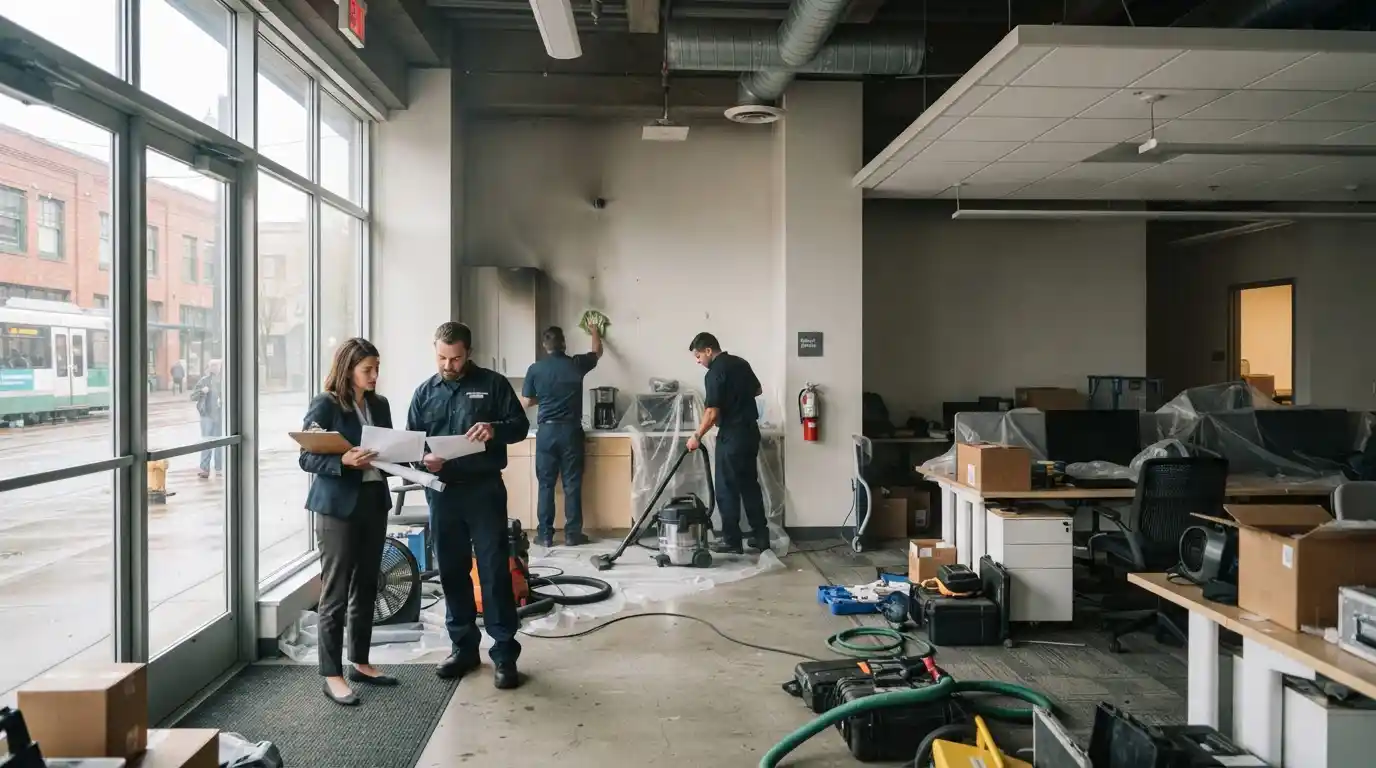
Portland-metro offices and retail spaces face more than flame damage after a small fire. A kitchen flare-up in a breakroom, an electrical event near a sales counter, a trash-bin fire outside a back door, or smoke from a nearby commercial corridor incident can disrupt operations fast.
Regional property risks can also overlap. Wet-season roof leaks, wind-driven rain, broken windows, winter pipe failures, and summer smoke exposure can complicate what looks like a simple cleanup.
For business continuity, your first moves should protect people, stop secondary damage, document conditions, and separate urgent recovery tasks from later repairs.
Start With Life Safety and Site Control
A small fire still needs a controlled response before cleanup begins.
Wait for clearance before re-entry
Do not re-enter just because the flames are out. Firefighters, property managers, or building officials may need to clear the space first.
Watch for electrical hazards, unstable shelving, wet floors, damaged ceiling tiles, broken glass, and smoky air. In mixed-use buildings, smoke may move into shared corridors, restrooms, storage rooms, and neighboring suites.
Protect employees, customers, and tenants
Account for staff and visitors. Keep people away from affected rooms, loading areas, and back-of-house spaces until conditions are reviewed.
If the fire happened during business hours, assign one person to communicate next steps. Clear communication reduces confusion and helps prevent staff from moving inventory, turning on systems, or cleaning too soon.
Preserve your emergency plan
A workplace emergency action plan should guide evacuation, communication, and role assignments. After the incident, update the plan with what worked, what failed, and which contacts were missing. That improvement matters before the next alarm, storm, leak, or smoke event.
Document Damage Before Anyone Cleans
Good documentation supports better decisions and cleaner recovery sequencing.
Photograph the full path of smoke
Take photos and short videos before moving items. Capture the fire source, walls, ceilings, floors, vents, doors, inventory, computers, files, signage, registers, ceiling tiles, stockrooms, and customer-facing areas. Include lightly affected rooms too. Smoke can travel farther than the burn area.
Separate fire, smoke, water, and access damage
A small fire can cause several types of damage. Flames may affect one counter or fixture. Smoke may affect soft seating, displays, packaging, and HVAC filters. Firefighting water or sprinkler discharge may wet flooring, baseboards, cabinets, inventory, and lower walls. Forced entry, board-up needs, or broken windows may create another repair track.
Do not throw away business property too quickly
Keep damaged contents available for review unless they create a safety concern or officials direct removal. This includes inventory, records, electronics, furniture, samples, signage, and tenant improvements. Label affected items by room. Keep heavily smoky items away from clean rooms if they can be moved safely.
Prioritize Business Continuity by Function
Recovery should focus on the operations that let you reopen safely and realistically.
Identify critical functions first
List the tasks that keep your office or retail space running. For an office, that may include laptops, phones, servers, records, conference rooms, and secure access.
For a retail space, it may include payment systems, front-entry access, inventory, fitting rooms, refrigeration, displays, and restrooms.
A simple business continuity plan should identify essential roles, vital records, communication procedures, alternative work arrangements, and supplier contacts. Keep it accessible outside the damaged building.
Decide whether partial operations are realistic
Partial reopening may work if the affected area is isolated, essential systems are safe to use, and customers or employees will not pass through damaged zones. It may not work if smoke odor reaches public areas, firewater spreads under flooring, electrical systems need review, or shared HVAC moves odor through the suite.
Plan temporary workarounds
Cloud files, remote work, temporary checkout stations, alternate pickup areas, off-site storage, and short-term signage can reduce downtime. Keep these decisions separate from restoration decisions. A workaround may help operations continue, but it does not replace proper cleanup of soot, odor, water, or damaged materials.
Handle Smoke, Soot, and Odor in the Right Order
Cleaning out of order can spread residue or set stains.
Start with air movement
If smoke reached vents or the HVAC was running during the incident, avoid using the system until it can be evaluated. Air movement can push odor and fine residue into cleaner rooms. For broader cleanup sequencing, review Nearby Fire Smoke Cleanup: What to Clean First?.
Treat odor as a clue, not just a smell
Smoke odor can settle into upholstery, carpet, ceiling tiles, papers, cardboard, displays, and wall cavities. Do not rely on candles, sprays, or fragranced cleaners.
Masking odor can delay the real decision: where did smoke travel, and what materials absorbed it? When odor remains after surface cleanup, smoke odor removal may be relevant.
Avoid wet wiping soot too soon
Soot can smear on painted walls, textured ceilings, metal fixtures, shelving, and electronics. Dry assessment should come before scrubbing.
The distinction between smoke and soot affects cleanup choices, especially in offices with electronics and retail spaces with display surfaces. Use Difference Between Smoke and Soot Damage as a useful companion topic.
Mid-Recovery CTA: Get the Right Scope Before Reopening
If smoke, soot, odor, firewater, or damaged building materials affect your office or retail space, get a qualified restoration scope before staff, customers, or tenants return. Fire and smoke damage restoration may include smoke and soot cleanup, odor removal, item cleaning, structural cleaning, and repair planning when those services fit the loss.
For help with a Portland-area commercial fire, smoke, or odor issue, call (503) 352-5209 and describe what burned, where smoke traveled, whether water was used, and which business functions need protection first.
Watch for Water Damage After the Fire
Fire recovery often includes water decisions, even after a small event.
Check floors, lower walls, and cabinets
Sprinklers, extinguishers, hoses, and rain through damaged openings can leave wet materials behind. Look near baseboards, under counters, below display fixtures, inside cabinets, around shared walls, and beneath mats or rugs. Wet flooring may trap moisture below the visible surface.
Protect records and inventory
Move dry records and unaffected stock away from damp or smoky areas if it is safe. Do not stack wet cardboard against clean walls. Do not place smoky items into clean storage. Keep separate zones for dry clean items, smoke-affected items, wet items, and items awaiting review.
Watch for delayed mold concerns
Portland-area damp conditions can make delayed drying more complicated. Moisture behind walls, under flooring, or inside cabinets may not look urgent on day one. If water, smoke, and closed interior spaces overlap, document the moisture source and evaluate drying needs before rebuilding or restocking.
Commercial Property Decisions That Often Get Missed
Small fires disrupt operations through details that are easy to overlook.
Shared systems and neighboring suites
Smoke can move through shared walls, ceiling voids, restrooms, storage corridors, and mechanical systems. Property managers should check adjacent spaces, especially in mixed-use buildings and retail strips. A smoky smell in a neighboring suite may indicate a pathway that needs attention.
Electronics and point-of-sale equipment
Do not power on electronics that were exposed to smoke, soot, heat, or water until they are reviewed by the right professional. This includes registers, routers, monitors, printers, servers, security panels, refrigeration controls, and chargers. Even light residue can complicate decisions.
Repair sequencing
Cleanup and repairs should follow the damage pattern. Burned materials, smoke residue, odor, wet materials, and structural surfaces may need different steps. Fire and smoke damage restoration can be part of a broader recovery plan when soot, odor, contents, and structural surfaces need coordinated attention.
Build a Better Continuity Plan After Cleanup
The best recovery lesson is the one you capture before normal operations resume.
Update contacts and responsibilities
Write down who called emergency services, who communicated with staff, who had building access, who handled vendors, and who tracked photos. Add missing phone numbers, alarm contacts, landlord contacts, utility contacts, and backup decision-makers.
Reduce repeat risk
After cleanup, review outlet loads, extension cord use, storage near heat sources, kitchen appliances, trash areas, smoking policies, and access to extinguishers. Keep exits clear and train staff on reporting smoke, odors, leaks, and electrical concerns early.
Include seasonal overlap
A Portland business continuity plan should not treat fire as a standalone issue. The same property may face wind-driven roof exposure, wet-season leaks, basement water, winter pipe failures, and summer smoke.
For odor decisions during smoke-prone periods, When Portland Homes Smell Smoky, Is There Residue Inside? and Wildfire Smoke in Attics & Crawlspaces: Hidden Odors? explain how smoke can move into hidden spaces.
The First Day Sets the Recovery Path
A small fire can become a larger business interruption when cleanup starts too fast, documentation is thin, or smoke pathways are missed. Start with safety. Keep people out until the space is cleared. Document every affected area.
Separate smoke, soot, water, contents, and repair decisions. Then focus on the business functions that matter most.
Fast reopening should not mean rushed cleanup. A careful first day gives Portland offices and retail spaces a clearer path back to safe, organized, and realistic operations.
Frequently Asked Questions
Can a small office fire still interrupt business operations?
Yes. A small fire can affect more than the burn area. Smoke odor, soot, water from suppression, damaged wiring, broken windows, or contaminated inventory can disrupt operations. Treat it as a business continuity issue, not just a cleaning task.
What should I do first after a fire in a Portland retail space?
Make sure everyone is safe, wait for clearance, and keep people out of affected areas. Then document the damage with photos and notes before anything is moved or cleaned. Focus on smoke pathways, water exposure, inventory, customer areas, and access points.
Should I run the HVAC to clear smoke odor?
Avoid running HVAC if smoke, soot, or odor may have entered the system. Air movement can spread residue into rooms that were less affected. Keep the system off until the smoke pathway is understood and the right professional has reviewed the situation.
Can employees return if only one room burned?
Maybe, but only after the space is cleared and the affected area is controlled. Smoke can move into shared halls, ceiling spaces, vents, and nearby rooms. Reopening should depend on entry safety, odor, soot, water exposure, electrical concerns, and business use of the affected area.
What items should a business document after a small fire?
Document the fire source, smoke staining, odor locations, HVAC status, water use, wet flooring, damaged fixtures, inventory, electronics, files, displays, and access damage. Include unaffected areas nearby too. Clear records help separate cleaning, replacement, drying, and repair decisions.
Is smoke odor enough reason to delay reopening?
It can be. Odor may point to residue in fabrics, ceiling tiles, vents, stored contents, or porous materials. If staff or customers notice odor after airing out, identify the source before reopening fully. Masking the smell can delay proper cleanup.
What if sprinklers or hoses caused water damage?
Treat it as a combined fire and water event. Check flooring, lower walls, cabinets, stockrooms, rugs, and stored inventory. Wet materials can hide moisture below the surface, so drying decisions should happen before restocking, repainting, or closing walls.
Can smoke damage affect retail inventory?
Yes. Packaging, textiles, paper goods, upholstered items, displays, and stored products can absorb odor or collect residue. Keep questionable items separated from clean inventory. Photograph and label affected stock before moving or discarding it.
What should property managers check after a small tenant fire?
Check shared corridors, adjacent suites, vents, ceiling spaces, restrooms, electrical rooms, back doors, and common storage. Smoke can travel beyond one tenant space. Communicate clearly with affected tenants and document the building-wide conditions before cleanup begins.
Should I clean soot myself to reopen faster?
Be careful. Wet wiping soot too soon can smear residue and make staining worse. Soot on painted walls, ceilings, electronics, metal, and porous finishes may need a specific cleaning sequence. Document first, then match the cleanup method to the surface.
How does wildfire smoke change the recovery plan?
Wildfire smoke can enter through vents, doors, windows, attic gaps, crawlspaces, and fresh-air intakes. It may affect many rooms lightly instead of one room heavily. In offices and retail spaces, check filters, soft contents, stored materials, and odor changes when the building warms up.
What belongs in a business continuity plan after a fire?
Include emergency contacts, staff roles, building access steps, supplier contacts, vital records, alternate work options, customer communication, technology recovery, inventory controls, and reopening criteria. Update the plan after each incident so the next response is faster and clearer.


