



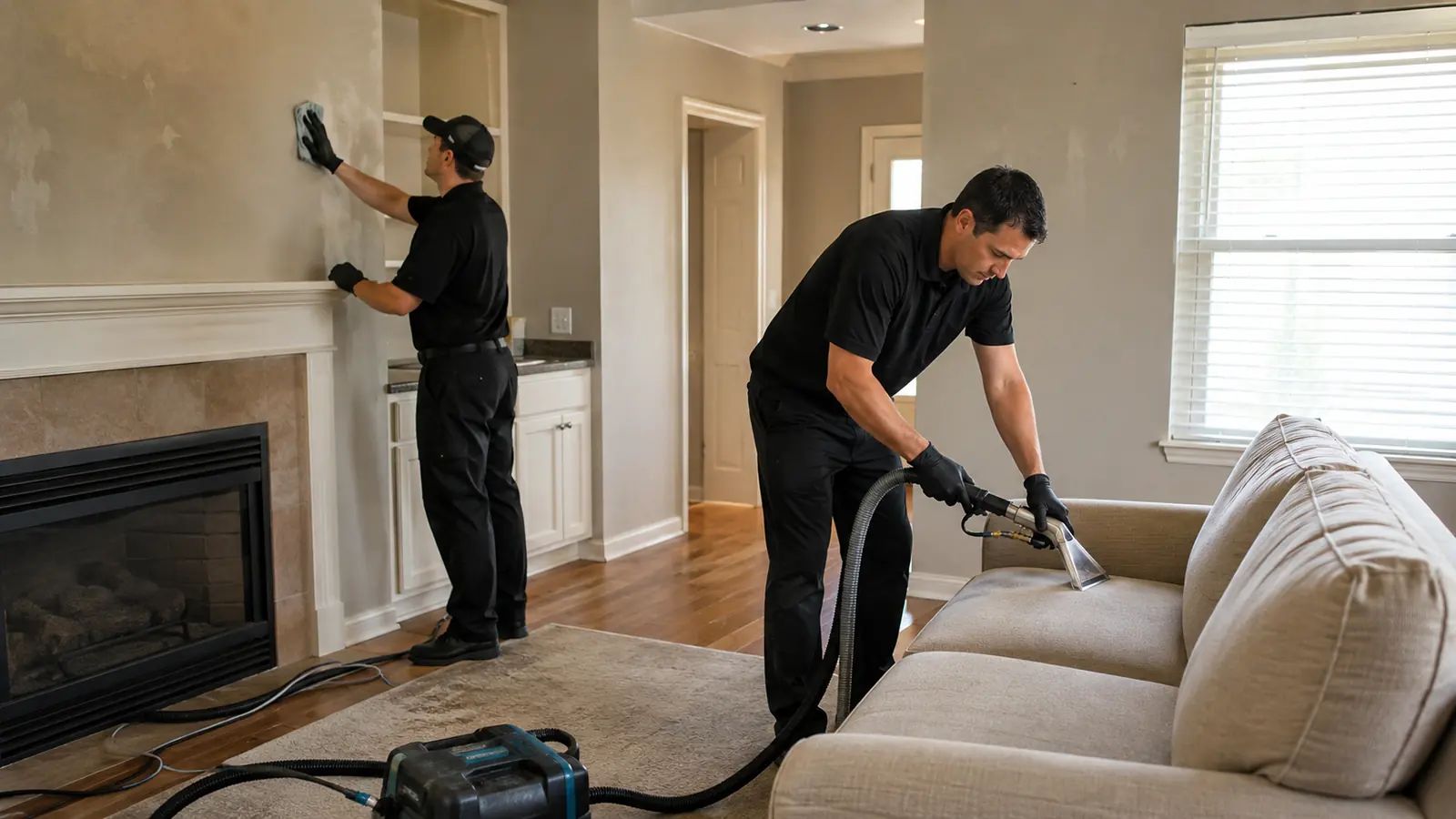
Preparing a rental for a new tenant or getting a property ready to sell often exposes problems that were easy to overlook while the space was occupied. Cigarette smoke odor is one of them.
A property may look clean after furniture is removed, yet still smell smoky when doors and windows have been closed overnight. Walls can appear freshly painted while closets, carpeting, cabinets, unfinished wood, and other materials continue releasing odor.
The issue can become even more noticeable during seasonal property transitions. Damp weather, closed buildings, wildfire smoke periods, and property repairs can create overlapping odor concerns throughout the region.
Rental turnovers and sales also put more attention on how a property smells when someone enters it for the first time.
The important question is not simply whether the property smells like cigarettes. You need to determine how deeply tobacco residue has affected the building and whether ordinary turnover cleaning is enough.
When Cigarette Smoke Odor Signals a Bigger Cleanup Problem
Persistent odor can indicate that cigarette smoke affected more than the room air.
Cigarette smoke does not disappear simply because smoking stops. Tobacco smoke can leave chemical residue on indoor surfaces long after airborne smoke has cleared, which is commonly described as thirdhand smoke.
That residue helps explain why opening windows or spraying fragrance may improve the smell temporarily without solving the underlying problem.
You should consider a professional smoke odor removal service when:
- Odor returns after the property has been aired out.
- Multiple rooms smell smoky.
- Closets, cabinets, carpet, upholstery, or wood retain odor.
- Walls or ceilings have visible smoke-related discoloration.
- The smell becomes stronger when the property warms up or remains closed.
- Routine turnover cleaning has already been completed without resolving the odor.
The longer indoor smoking occurred, the more surfaces and contents may need evaluation. Cleaning the obvious room while overlooking adjoining spaces can allow odor to remain.
Need help determining whether turnover cleaning is enough? At PNW Restoration, we offer smoke odor removal as part of our restoration services.
Our smoke odor removal process begins with an assessment of the smoke damage and odor severity so the cleanup plan can reflect the type of smoke and affected items.
Why Painting Over Cigarette Odor May Not Solve It
Cosmetic improvements cannot automatically correct odor sources beneath or around them.
Painting is an understandable first step before a listing or new tenancy. But paint should not be treated as a substitute for identifying where cigarette residue remains.
Smoke can affect walls, ceilings, fabrics, carpets, furniture, and HVAC-related areas. Porous and textured materials can be particularly frustrating because odor may remain after ordinary surface cleaning.
The same principle applies to flooring replacement. Removing carpet may address one significant odor reservoir, but it does not prove that walls, trim, doors, cabinetry, closets, or other materials are unaffected.
If you are deciding whether individual materials can be cleaned or require a different approach, understanding why regular cleaning may not resolve smoke odor can help frame that decision.
A useful turnover sequence is:
- Identify where the odor is strongest.
- Inspect surfaces and affected contents.
- Remove obvious odor sources.
- Clean materials according to their condition and type.
- Reassess the property before cosmetic repairs or final turnover work.
This avoids investing in new finishes before understanding what is producing the smell.
Rental Turnovers Require a Room-by-Room Odor Check
An empty rental can reveal smoke pathways that were hidden by furniture and daily activity.
Start where smoking occurred, but do not stop there.
Check bedrooms, closets, hallways, cabinets, utility areas, storage spaces, and adjoining rooms. In multifamily or mixed-use properties, pay attention to odor patterns near shared walls, doors, returns, and corridors.
Soft goods deserve separate consideration because smoke odor can cling to fabrics. Guidance for removing smoke smell from clothing illustrates why fabric-related odor needs a different approach than hard-surface cleaning.
Wood presents another challenge. Grain, unfinished areas, joints, and absorbent materials may hold odor differently than painted surfaces. Property owners evaluating cabinets or furnishings can review approaches to smoke odor in wood furniture.
Document what you find before deciding on the scope. Photos, room-by-room notes, odor locations, visible staining, and a list of affected materials provide a clearer starting point for cleanup decisions.
Home Sales Make Lingering Smoke Odor Hard to Ignore
Odor can become part of a buyer’s first impression before they evaluate finishes or improvements.
A seller may become accustomed to cigarette odor after living with it for years. Someone entering the property for the first time may notice it immediately.
That makes pre-listing evaluation useful. Walk through the home after it has remained closed for several hours. Check closets and smaller rooms separately instead of judging the property from an open-window walkthrough.
Do not assume that absence of visible soot means there is no smoke-related residue. Smoke can move into areas where visible staining is limited. A closer look at how smoke residue affects belongings and different materials can help you decide which contents deserve closer evaluation.
For a sale, the goal should be clarity about the condition of the property before you invest in paint, flooring, staging, or other finishing work.
Choosing Help Based on the Actual Damage
The right scope depends on where the odor is coming from and how much of the property is affected.
A localized cigarette odor problem differs from widespread smoke contamination across several rooms. It also differs from fire and smoke damage involving soot, fire-related residue, damaged materials, or repair needs.
Consider damage type, affected square footage, residential or commercial use, occupant disruption, contaminated materials, and whether cleanup must be followed by repairs or reconstruction.
What to ask before you commit to a scope
Ask five practical questions:
- Which rooms and materials appear to be contributing to the odor?
- Does the scope address the odor source rather than only masking the smell?
- Which materials are candidates for cleaning, and which may need removal or repair?
- How will affected areas and decisions be documented?
- What should be evaluated again before painting, flooring, staging, or occupancy?
Signs the cleanup plan may miss key issues
Be cautious when a plan focuses entirely on fragrance, ventilation, or one visible surface while persistent odor exists elsewhere.
A narrow scope may also deserve another look when the smell returns after the property has been closed, different rooms have noticeably different odor levels, soft materials remain untreated, or cosmetic work is scheduled before the odor source has been evaluated.
What a strong restoration plan should cover
A strong plan should define affected rooms and materials, clarify the intended cleanup outcome, document visible conditions, and explain the next decisions.
You should understand what is being addressed now, what requires further evaluation, what may need repair or material removal, and what should happen before the property advances to final turnover or sale preparation.
Clear communication matters because smoke odor projects often involve several types of surfaces rather than one isolated cleaning task.
Make Odor Removal Part of the Property Recovery Plan
Resolve the underlying smoke problem before treating the property as finished.
Cigarette smoke odor deserves more attention when ordinary cleaning does not hold, multiple materials smell smoky, residue appears visible, or the property is approaching a rental turnover or sale.
Do not let a fresh coat of paint become the test for whether the problem is resolved. Evaluate the source, affected rooms, porous materials, contents, and any follow-on repair needs first.
At PNW Restoration, we provide residential and commercial smoke odor removal and assess the severity of the odor before developing a targeted plan based on the smoke and affected items.
Preparing a property for its next occupant or owner? Contact our team to discuss persistent cigarette smoke odor and determine whether professional smoke odor removal should be part of your turnover or pre-sale restoration plan.
Frequently Asked Questions
When do I need a cigarette smoke odor removal service?
Consider professional help when cigarette odor remains after normal cleaning and ventilation, returns after the building has been closed, affects several rooms, or appears embedded in materials. Persistent odor before a rental turnover or sale deserves evaluation before cosmetic work begins.
Can normal house cleaning remove cigarette smoke odor?
Light, limited odor may improve with cleaning and ventilation, but long-term indoor smoking can leave residue on multiple surfaces. If odor keeps returning, additional source-focused cleaning or restoration may be needed instead of repeating general housekeeping.
Why does cigarette smell return after I air out the property?
Ventilation can remove some airborne odor without removing residue deposited on surfaces and in dust. Research on thirdhand tobacco smoke shows that residual tobacco pollutants can remain after smoking stops. NIH information on tobacco smoke residue explains this persistence.
Should I paint before professional smoke odor removal?
It usually makes more sense to identify and address the odor source before treating paint as the solution. Otherwise, you may complete cosmetic work while smoke-related residue remains on other surfaces, materials, contents, or adjoining areas.
Can cigarette smoke odor stay in carpet and upholstery?
Yes. Fabrics and other porous materials can retain smoke odor. Evaluate carpeting, upholstered furniture, curtains, stored textiles, and similar materials separately instead of assuming that cleaning walls alone will resolve a whole-room odor problem.
Can cigarette odor remain inside closets and cabinets?
Yes. Enclosed spaces can hold odors that become especially noticeable after doors remain shut. During turnover inspection, open closets, cabinets, storage areas, and smaller rooms and evaluate them separately from the property’s main living spaces.
Is cigarette smoke odor removal different from fire damage restoration?
It can be. Cigarette odor may involve accumulated tobacco residue without structural fire damage. A fire loss can include soot, damaged materials, smoke residue, odor, and repair needs, which can create a broader restoration scope.
Should landlords document cigarette smoke odor at turnover?
Documentation can support clearer cleanup decisions. Take photos of visible staining, note where odors are strongest, identify affected materials, and keep room-by-room observations so the planned work is tied to actual property conditions.
What should property managers check before new occupants move in?
Check whether odor returns after the property stays closed, whether individual rooms or closets smell different, and whether carpeting, cabinetry, walls, ceilings, fabrics, or contents remain affected. Complete the odor evaluation before considering turnover work finished.
Can cigarette smoke residue remain after the smoker moves out?
Yes. Research has examined thirdhand smoke remaining in former smokers’ homes even after occupants moved out. Research on residual tobacco smoke in housing supports evaluating persistent residue rather than relying solely on whether active smoking has stopped.


