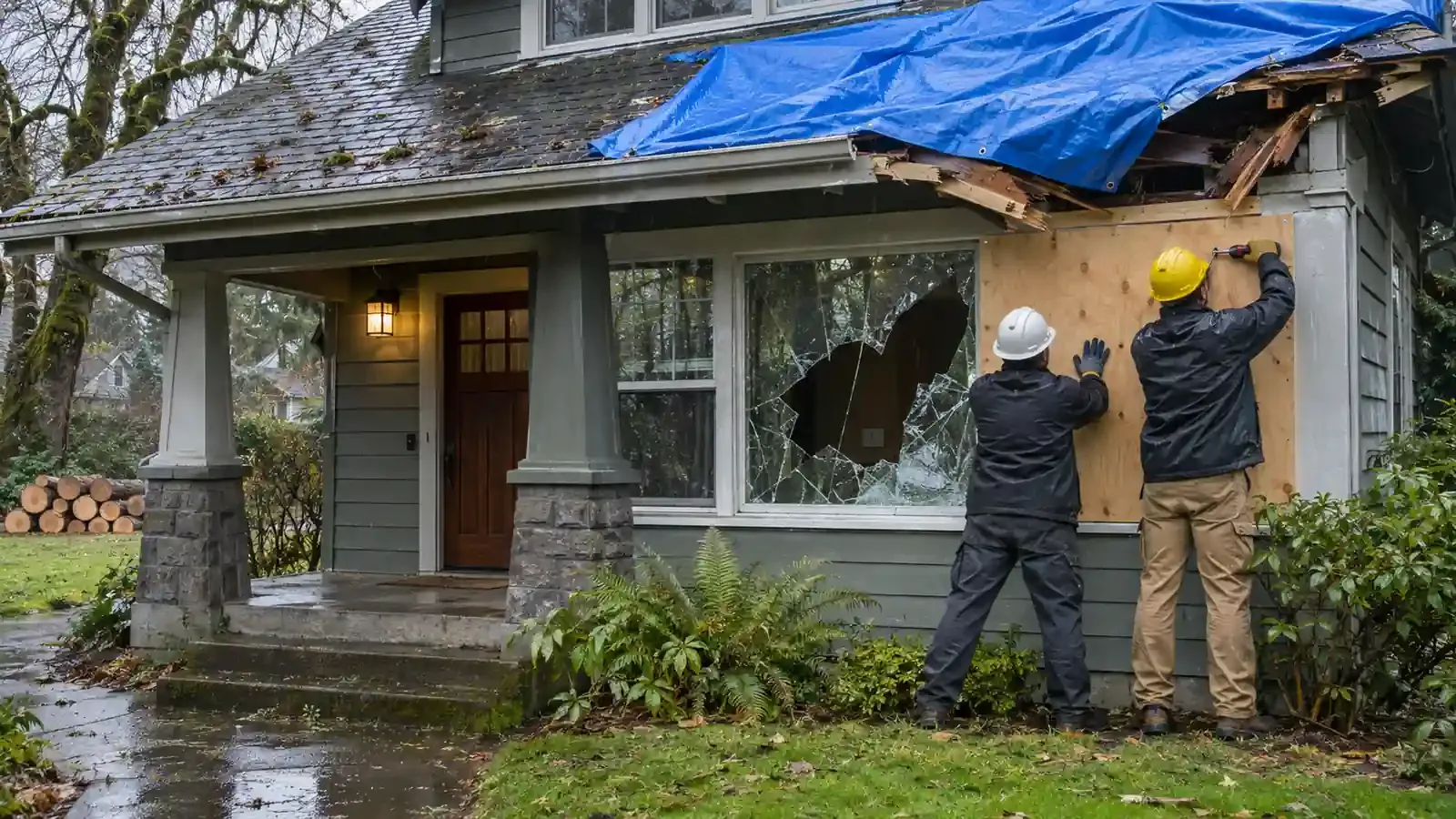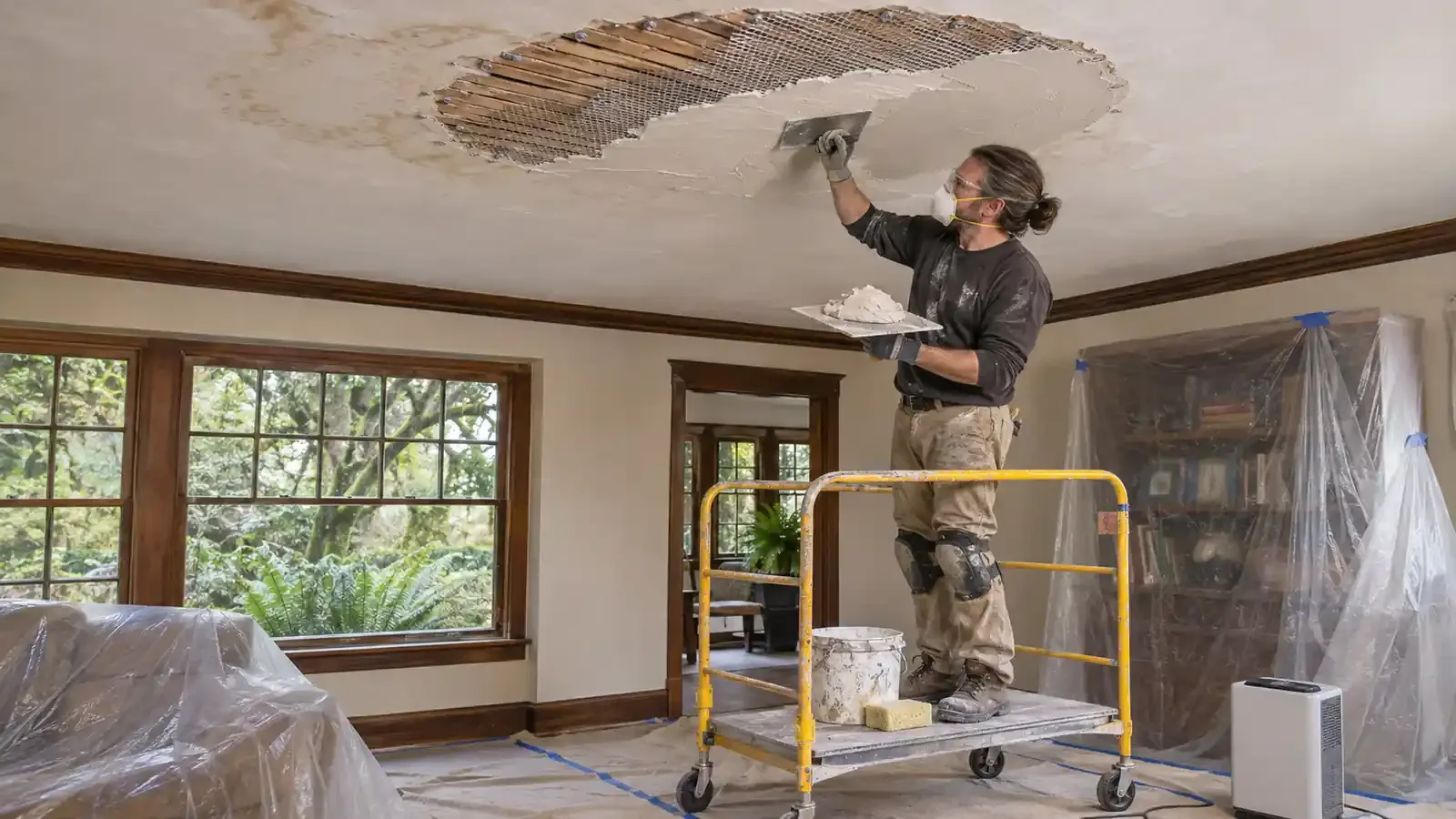


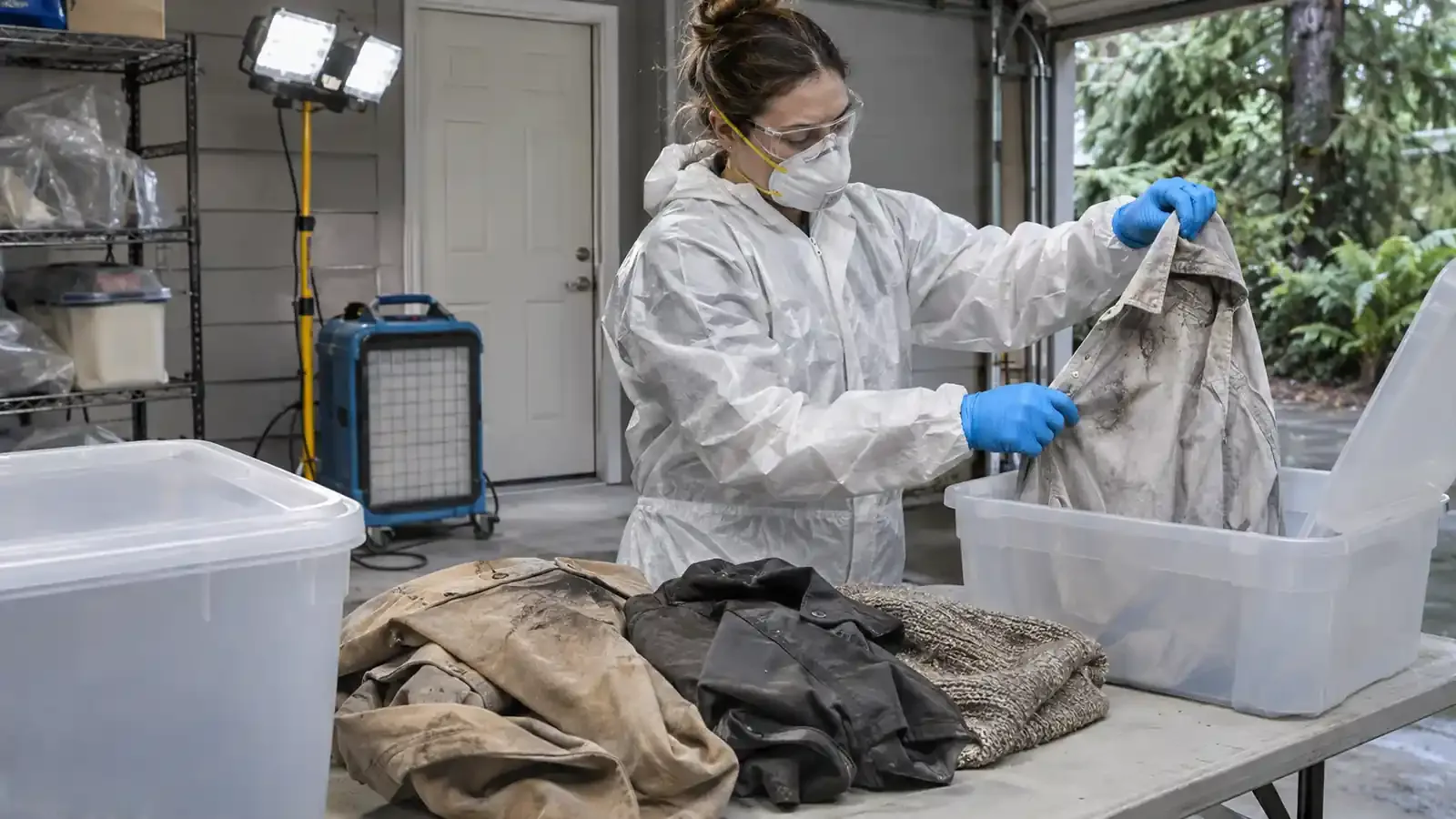
Don’t carry uncleaned, smoke-damaged clothing into a clean home. Fabric can hold ash, soot, oily residue, and odor compounds, then release or transfer them to floors, furniture, laundry equipment, and unaffected clothes.
That does not mean every smoky shirt or blanket must be thrown away. Many washable textiles can be salvaged when the exposure is limited, and the cleaning method fits the fabric.
So, are smoke-damaged clothes dangerous? They can be a source of avoidable exposure and cross-contamination until they have been assessed and cleaned. The practical decision is not simply to keep or discard. First decide whether an item can be moved without spreading residue. Then decide whether it is clean enough to store, wear, or place near unaffected belongings.
Start With the Exposure, Not the Smell
Smoke is not one substance. What burned, how close the clothing was to the fire, whether ash settled on it, and whether water or chemicals reached it all affect the decision. Odor matters, but it cannot identify every contaminant or prove that a heavily exposed garment is clean.
| Condition | What It Usually Means | Safer Next Move |
| Light smoke odor, no visible ash or soot, no heat or water damage | Often a candidate for careful laundering if the source and exposure are understood | Keep separate from clean laundry, follow the care label, and reassess after washing and full drying |
| Visible dry ash or loose soot | Particles can transfer or become airborne when disturbed | Contain the item and avoid shaking, brushing, or sorting it inside the clean home |
| Greasy, sticky, or heavy soot; unknown chemical residue | The residue may be difficult to remove, and the fire source may add hazards | Use a fire-content or textile-cleaning professional before bringing the item into living areas |
| Charred, melted, brittle, or structurally damaged fabric | Heat has damaged the material, not just soiled it | Document the item and plan for disposal unless a qualified specialist advises otherwise |
Use Two Thresholds Before Clothes Reenter the Home
A garment may be safe to transport in a closed container while still being unsuitable for a closet, dresser, or washing machine. Separating those thresholds prevents a rushed move from turning one damaged group of belongings into a whole-home cleanup problem.
Threshold 1: Safe to Move
The item is dry enough to move, packaged so residue cannot escape, and handled without shaking or compressing it. Dry affected clothing can travel in a sealed bag or a washable lidded bin. Damp clothing needs prompt drying or cleaning and should not remain sealed, because trapped moisture creates a separate deterioration and odor problem.
Threshold 2: Ready to Store or Wear
The garment has received the cleaning method appropriate to its fabric and exposure, is fully dry, has no visible residue, and no longer has a persistent smoke odor. Heavy structural-fire exposure, unknown chemicals, or suspected asbestos or lead requires professional judgment even if the garment smells better afterward.
A Five-Step Clean-Home Reentry Sequence
Treat the clean home as the final destination, not the sorting room. This sequence keeps documentation, containment, cleaning, and reentry in the right order.
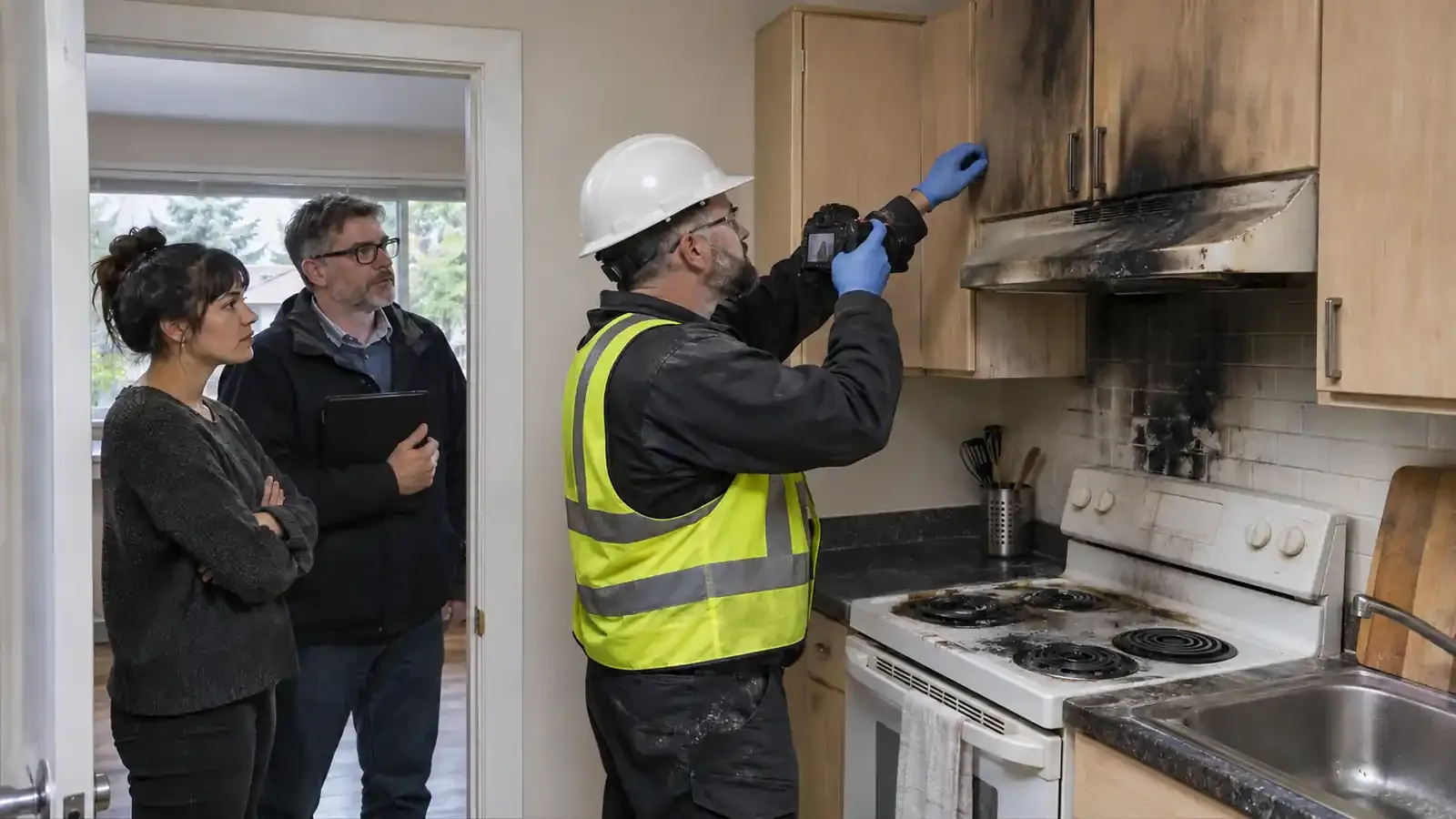
- Document before moving. Photograph affected rooms and clothing, and make an inventory before cleaning or discarding anything. Ask the insurer what records it needs before altering damaged items.
- Create a staging area. Use a location outside clean living and storage areas. Keep children, pets, and people with respiratory or cardiovascular conditions away from ash and sorting work.
- Package by condition. Separate dry items from damp items, washable garments from dry-clean-only pieces, and lightly smoky clothing from visibly sooted clothing. Label each container so it does not have to be reopened for identification.
- Match cleaning to the item. Follow the care label and the cleaner or manufacturer guidance. Tell a professional cleaner that the damage came from a fire, what burned if known, and whether the clothing contacted soot, ash, or firefighting water.
- Reassess before normal storage. Inspect clothing after it is completely dry. Do not move it into closets or mix it with unaffected garments while residue or smoke odor remains.
When Home Laundering Is a Reasonable First Step
Home laundering can be appropriate for a limited, understood exposure. It is most defensible when all of the following are true:
- The garment is machine washable and has no heat damage.
- There is no heavy, sticky, or visible soot and no unknown chemical residue.
- The clothing did not come from a debris field or a space with suspected asbestos, lead, burned electronics, fuel, pesticides, or other hazardous materials.
- The washer itself was not exposed to smoke, soot, heat, or contaminated water.
Wash affected items separately from clean laundry, use small loads, and follow the detergent and garment labels.
Do not improvise chemical mixtures or combine products unless their labels expressly allow it. Air-dry the first cleaned load when practical so you can reassess odor before applying dryer heat. Multiple cleanings may be needed for otherwise salvageable items.
Persistent odor after appropriate cleaning means the source has not been fully resolved. The same source-removal principle applies to clothing and to the wider property, as explained in our smoke odor removal overview.
When Professional Cleaning or Disposal Is the Safer Choice
Escalate the decision when the fire or fabric introduces uncertainty that a normal wash cycle cannot address. Professional evaluation is especially appropriate for:
- Heavy visible ash, thick soot, oily residue, or stains that transfer during handling.
- Clothing from a structural fire involving plastics, electronics, a garage, stored chemicals, or an unknown burn source.
- Items exposed to firefighting water, fuel, hazardous debris, or other contamination in addition to smoke.
- Dry-clean-only, tailored, leather, wool, silk, vintage, or sentimental garments that could be damaged by trial-and-error washing.
- Clothes with persistent smoke odor or visible residue after appropriate cleaning.
- Charred, melted, brittle, or heat-weakened garments.
Do not use smell as permission to keep an item that had high-hazard exposure. Conversely, a faint odor alone does not automatically require disposal when the garment was lightly exposed and can be cleaned appropriately. The exposure history, residue, fabric, and cleaning result belong in the same decision.
If clothing damage is part of a larger loss, our fire and smoke damage restoration team can assess affected contents alongside the rooms and surfaces where the exposure occurred before items are returned to clean areas.
What a Passing Result Actually Looks Like
For ordinary washable clothing with a limited exposure, reentry is reasonable after the correct cleaning process, complete drying, and a clean inspection with no visible residue or lingering smoke odor. Keep the first cleaned group separate for a short period instead of filling a closet immediately. That makes a recurring odor or missed residue easier to isolate.
If someone develops eye, skin, throat, or breathing irritation around a cleaned item, stop using it and seek appropriate medical advice. Do not conduct a wear test on clothing with heavy or unknown contamination. Public health guidance is more useful than odor alone in those cases, and a qualified environmental or restoration professional may need to evaluate the wider loss.
The bottom line is simple: smoke-damaged clothing should come back into a clean home only after it has crossed both thresholds. Contain it before transport, clean it according to the actual exposure and material, and return it to normal storage only when the result supports reuse.
Frequently Asked Questions
Are smoke-damaged clothes dangerous to touch?
Lightly exposed clothing is not the same as heavy structural-fire debris, but visible ash and soot can irritate skin and become airborne when disturbed. Wear appropriate gloves, avoid shaking affected clothing indoors, and use greater precautions when the fire involved burned building materials or unknown chemicals.
Can smoke-damaged clothes be cleaned?
Yes, many machine-washable garments can be cleaned when they are not charred, heat-damaged, heavily sooted, or exposed to hazardous materials. The correct method depends on the fabric, care label, residue level, and source of the smoke.
Can I wash smoky clothes in my regular washing machine?
A clean home washer may be suitable for lightly affected, machine-washable clothing. Keep loads small and separate from unaffected laundry. Do not use a washer that was itself exposed to smoke, soot, heat, or contaminated water until it has been evaluated and cleaned.
Can smoke residue transfer from clothes to a clean house?
Yes. Loose ash, soot, and odor-bearing residue can transfer to hands, floors, furniture, laundry equipment, and other fabrics. Move affected clothing in closed, labeled containers and open those containers only in a designated staging or cleaning area.
Does no smoke smell mean the clothes are clean?
Not always. The absence of odor is reassuring only when the exposure was limited, and the clothing has been cleaned appropriately. It does not rule out contamination after heavy structural-fire exposure or contact with hazardous debris.
Should children’s clothes be discarded after smoke exposure?
Not automatically. Base the decision on the exposure, visible residue, fabric, and ability to clean the item appropriately. Because children can be more sensitive to ash and smoke, use a lower threshold for professional advice when contamination was heavy or uncertain.
What should I do with dry-clean-only garments?
Keep them separate, avoid home spot treatments, and contact a cleaner experienced with fire-affected textiles. Explain that the item was exposed to smoke or soot before the cleaner accepts it.
Should I photograph clothes before cleaning or throwing them away?
Yes. Photograph the condition and create an inventory before cleaning or disposal. Confirm the documentation and approval process with your insurer, because policy requirements and coverage decisions vary.