



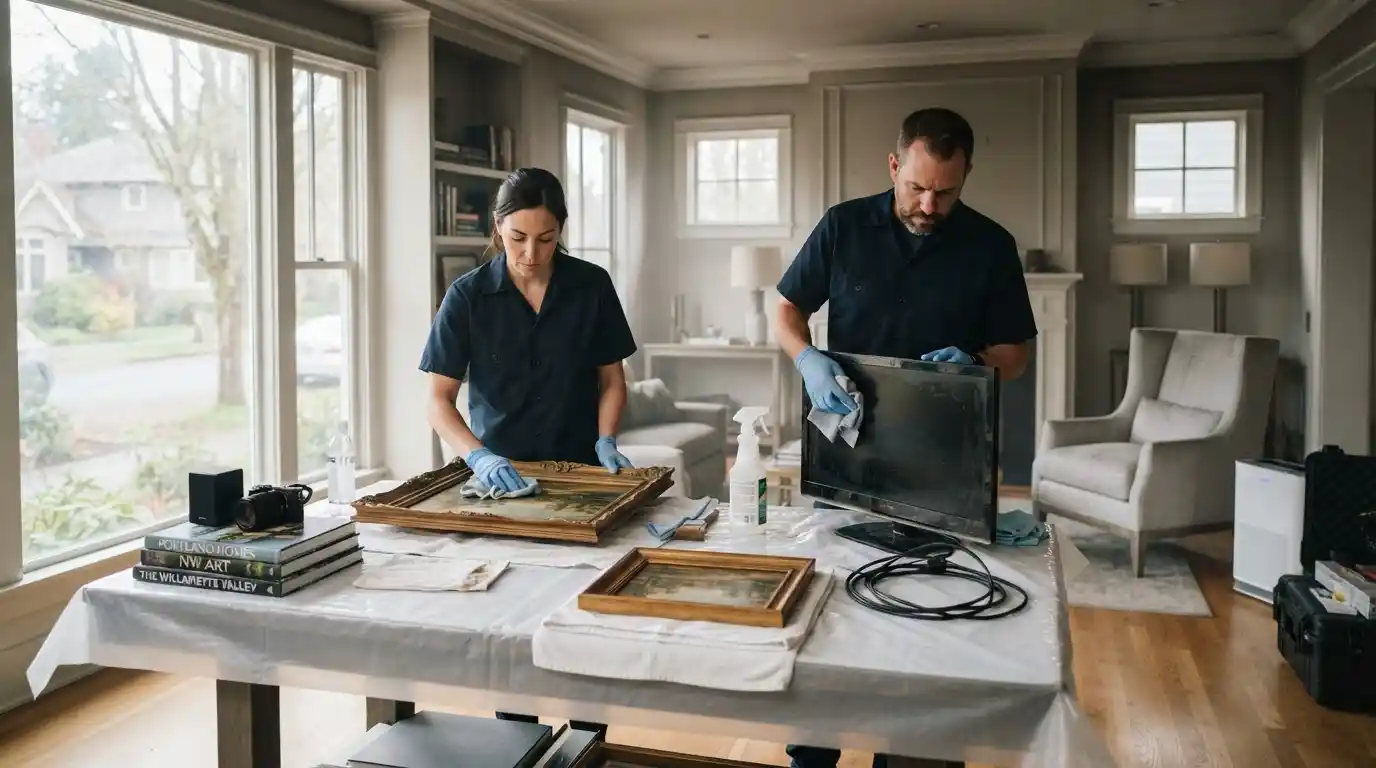
A kitchen fire can send soot into cabinets and soft furnishings. A garage flare-up can leave oily residue on tools, boxes, and electronics. During summer and early fall, wildfire smoke can enter through vents, gaps, open doors, and HVAC pathways.
That is why the question is not only, “Did it burn?” It is also, “What did smoke touch?” Electronics, artwork, furniture, clothing, rugs, and documents can all be affected. Some damage appears later as corrosion, staining, odor, malfunction, or surface deterioration. Careful decisions help protect what can be saved.
Why Smoke Residue Keeps Damaging Belongings
Smoke residue is not ordinary dust, and it behaves differently on each material.
Smoke carries fine particles, gases, oils, moisture, and odor compounds from whatever burned. Wood, plastics, wiring, food, insulation, fabrics, and painted surfaces all create different residues. A clean-looking room can still hold contamination in hidden places.
Soot can be acidic and clingy
Soot may discolor walls, ceilings, metals, finishes, plastics, fabrics, and painted surfaces. On metal parts, residue can support corrosion. On wood and artwork, it can settle into grain, cracks, canvas texture, paper fibers, and decorative finishes. On upholstery, it can bind with oils and moisture.
Odor points to particles and pathways
A smoky smell can indicate that particles or odor compounds moved through the property. Smoke may travel into closets, attic spaces, crawlspaces, HVAC returns, tenant corridors, storage rooms, and shared walls.
After a nearby fire or wildfire smoke episode, nearby fire smoke cleanup often starts by identifying where air moved first.
Electronics: Do Not Power Them On Too Soon
Electronics can look normal outside while smoke, moisture, and residue affect internal components.
Computers, televisions, servers, routers, appliances, chargers, security systems, point-of-sale equipment, and office printers all need cautious handling after smoke exposure. The biggest mistake is turning them on to “see if they still work.”
Smoke residue can affect circuits and metal contacts
Electronics contain small metal contacts, circuit boards, ports, fans, and vents. Smoke can move through those openings. If residue sits inside a device, it may contribute to corrosion or short-term function followed by later failure.
Moisture from firefighting water, sprinkler discharge, or humid smoke conditions can make the risk worse.
Document before moving or testing
Photograph residue, room conditions, device locations, cords, and serial numbers if you can do so safely. Unplug devices only when there is no shock risk. Do not open cabinets, remove back panels, or spray cleaners into vents.
Artwork, Photos, and Soft Goods Need Gentle Handling
Fragile and porous belongings can lose value when soot gets pushed deeper into the material.
Artwork, framed photos, albums, books, clothing, bedding, upholstery, rugs, curtains, and cushions need a different mindset than countertops or tile. The goal is to stabilize first, not scrub first. Soft goods have porous fibers, so smoke can settle into fabric, padding, seams, backing materials, and foam.
Avoid wiping soot across delicate surfaces
Dry soot can smear. Greasy soot can stain. Paper, canvas, unfinished wood, and textiles can absorb residue quickly. Do not use household sprays, wet cloths, disinfecting wipes, scented products, or baking soda on artwork or photos.
These items may need conservation-style handling, especially when they have sentimental value.
Washable does not always mean safely cleanable
Some clothing and linens can be laundered, but heavy soot, wet smoke, chemical residue, or contamination from a fire scene changes the decision.
Do not mix heavily affected items with clean laundry. Do not use high heat on smoky fabrics until residue and odor are addressed. Guidance on smoke smell from clothes can help explain why odor clings to fibers.
What to Do First After Smoke Reaches Contents
The first steps should reduce spread, protect documentation, and avoid unsafe handling.
After emergency officials say the area can be accessed, work slowly. Do not assume the safest choice is to start cleaning.
Stabilize the environment
Keep unnecessary foot traffic out of affected rooms. Shut doors to reduce transfer into clean areas.
Avoid running HVAC if smoke odor comes from vents or if smoke traveled through the system. Open windows only when outdoor conditions are safe and doing so will not pull more smoke, ash, humidity, or debris inside.
Photograph and inventory contents
Take wide-room photos first, then close-ups. Capture electronics, furniture, artwork, rugs, stored boxes, cabinets, closets, and commercial equipment. For rental or commercial spaces, record what belongs to tenants, customers, staff, or the business.
If smoke residue has reached electronics, artwork, upholstery, clothing, or business contents, avoid rushed cleaning and get a contents-focused damage review before powering on devices, wiping delicate surfaces, or mixing smoky items with unaffected belongings.
A careful inspection can help you decide what to clean, what to isolate, what to document, and what may need repair or replacement.
When Restoration Decisions Get More Complex
Some contents need cleaning, some need repair, and some should not be reused.
The right decision depends on the item, residue type, heat exposure, moisture, material, and value. Smoke cleanup may involve structure, contents, odor, and repairs. When walls, cabinets, insulation, flooring, or ceiling materials are also affected, fire and smoke damage restoration may need to be coordinated with contents decisions.
Replace items that cannot be cleaned appropriately
Food, medicine, cosmetics, baby items, and some porous goods may need disposal after smoke, soot, heat, or contaminated water exposure.
Do not rely on smell alone. Strong odor is a warning sign, but some residue may remain even when the odor fades. This is especially important when deciding what to throw away after smoke damage.
Consider odor control as part of the whole loss
Odor may remain in soft goods, unfinished wood, contents boxes, closets, and hidden cavities. If deodorizing focuses only on the air, residue on materials can keep releasing smell.
The principles behind smoke odor removal are most useful when paired with source removal, cleaning, drying, and material evaluation.
Commercial Properties Have Higher Stakes
Smoke residue can interrupt work even when the fire was small or nearby.
A small fire in a break room, storage area, neighboring suite, restaurant kitchen, or parking garage can affect inventory, office electronics, display merchandise, uniforms, documents, upholstered seating, and tenant belongings.
List what the property needs to function, then keep potentially affected electronics offline until reviewed.
In mixed-use corridors and shared commercial buildings, coordinate with property management before moving items through common areas. Fire scenes may also include water from hoses, sprinklers, or suppression systems.
If moisture remains, mold and odor issues can overlap. Content decisions may need to coordinate with drying, demolition, the science behind smoke odor removal, and later repair work.
The Bottom Line on Smoke-Damaged Contents
Smoke residue can damage belongings long after the smoke clears.
Electronics, artwork, and soft goods are vulnerable because they contain openings, pores, finishes, fibers, padding, and sensitive surfaces.
The safest first move is to stop the spread, document conditions, isolate questionable items, and avoid DIY cleaning that pushes soot deeper.
Some belongings can be cleaned. Some need specialized handling. Some should be replaced. Early separation helps protect valuable items and reduce disruption.
Frequently Asked Questions
Can smoke residue damage electronics even if they still turn on?
Yes. A device may power on after smoke exposure but still have residue inside ports, vents, fans, or circuit areas. Using it too soon can increase the chance of later malfunction, especially if moisture is also present. Keep affected electronics offline until they can be reviewed safely.
Should I wipe soot off a laptop, TV, router, or appliance?
Do not spray cleaners, use wet cloths, or open the device housing. Soot can move deeper into vents and seams when handled incorrectly. Photograph the item, unplug it when safe, and keep it isolated from clean contents.
Can artwork be cleaned after smoke exposure?
Some artwork may be recoverable, but the method depends on the material, finish, age, and amount of soot. Paper, canvas, photos, and unfinished wood can stain or smear if cleaned incorrectly. Avoid household cleaners and protect the item from rubbing, moisture, and high heat.
Why do clothes and upholstery smell smoky after the room is aired out?
Soft goods absorb odor because fabric fibers, foam, seams, and backing materials hold particles. Ventilation may reduce the smell in the air but leave residue in the material. Heavily affected items should be separated from clean laundry and reviewed before washing.
Can I wash smoke-exposed clothes in a normal washing machine?
Light smoke odor may respond to careful laundering, but heavy soot or wet smoke can be different. Do not mix smoky items with unaffected clothing. Avoid high heat until odor and residue are addressed, since heat may set smells deeper into fibers.
What belongings should I photograph after smoke damage?
Photograph electronics, artwork, furniture, clothing, rugs, books, stored boxes, cabinets, closets, and business equipment. Start with room-wide images, then capture close-ups of visible residue or staining.This creates a clearer record before items are moved, cleaned, discarded, or repaired.
Is smoke residue from a nearby fire still a concern?
Yes. A nearby fire can move smoke through vents, doors, windows, attic openings, crawlspaces, and shared walls. Residue may settle on surfaces even when flames never enter the building. Check HVAC pathways, upholstery, curtains, closets, and stored contents for odor or residue.
What if smoke damage overlaps with water from firefighting?
Treat it as a combined loss. Water can affect floors, walls, cabinets, rugs, documents, and stored contents. Moisture can also worsen odor and increase the risk of material deterioration.
Separate wet items, avoid sealing damp textiles in bags, and document both smoke and water damage.
Are commercial electronics more urgent after smoke exposure?
Often, yes. Servers, point-of-sale systems, routers, phones, printers, and access systems may be essential to operations. Keep affected equipment offline until it is reviewed. Document serial numbers, locations, and visible residue before moving anything.
How do I know whether to clean, save, or discard an item?
Look at material type, residue level, heat exposure, moisture, odor, sentimental value, and replacement practicality. Porous items, delicate keepsakes, and electronics need more caution than hard, washable surfaces. When in doubt, isolate the item and avoid DIY cleaning until the damage can be evaluated.


