

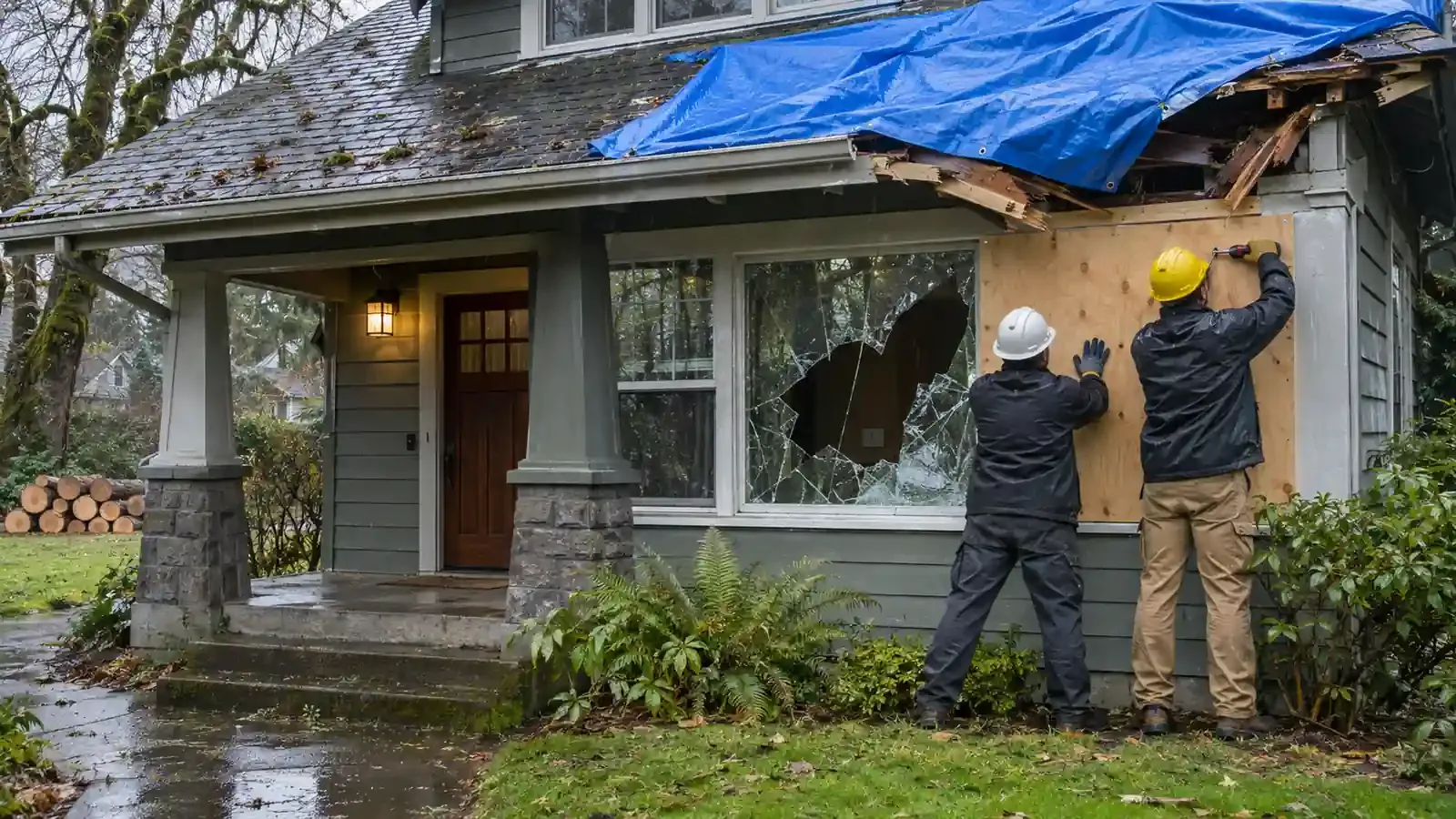
A tree strike can leave a building with more than one kind of opening. A limb may puncture the roof, glass may break several rooms away, and a shifted door or wall may no longer close.
Emergency board-up services are meant to reduce exposure while inspections and permanent repairs are arranged. They do not remove the tree, prove the structure is safe, or replace the damaged roof and framing.
The useful question is not simply, “Where should plywood go?” It is, “What must happen before this opening can be protected, what type of protection fits it, and what still needs attention afterward?”
The site must be released before it can be closed
Tree impact can combine unstable limbs, displaced framing, broken glass, gas damage, and electrical hazards in one area. The safest order begins outside the building envelope.
- Move people away from the affected area. Leave the building if there is visible structural movement, a damaged utility, the smell of gas, fire, or an immediate risk from the tree. Call 911 for a life-threatening emergency.
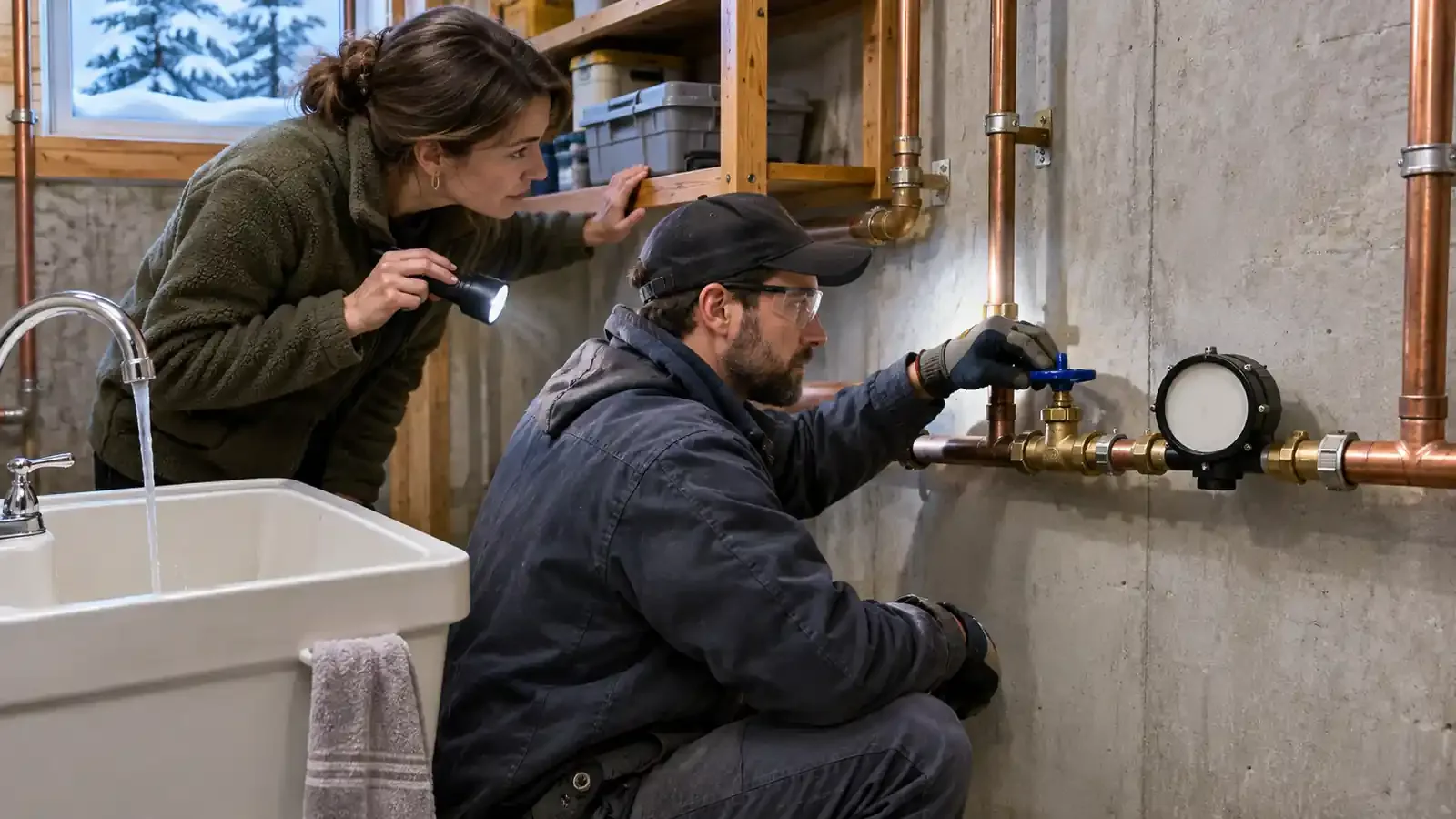
- Treat every fallen or low wire as energized. Do not approach a tree, branch, fence, or other object touching a power line. OSHA warns that a downed line may remain energized even when it is not sparking. Contact the utility or emergency services from a safe location.
- Wait for the appropriate release. Fire personnel, the utility, a building official, an arborist, or a structural professional may need to address different hazards. Board-up crews should not work beneath a suspended limb or use a roof whose capacity is uncertain.
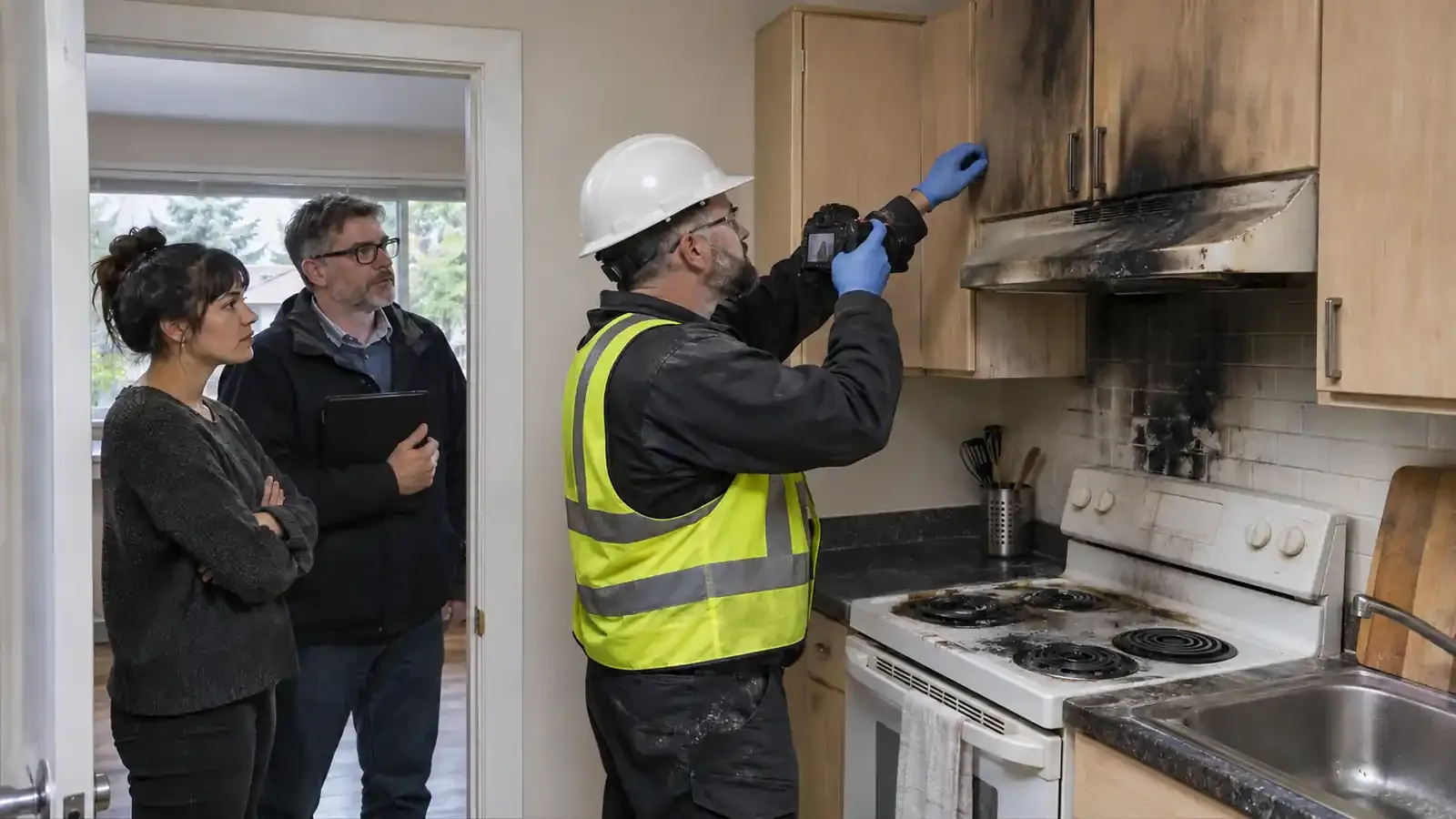
- Document conditions before temporary work obscures them. From a safe position, photograph the tree, points of impact, exterior openings, interior water entry, and damaged contents. Do not delay urgent safety work for photographs.
- Coordinate removal and stabilization. Taking weight off a damaged building can change how the tree and framing move. The work sequence should reflect the conditions found on site rather than assuming tree removal always comes first.
In Portland, emergency tree work and structural repairs can carry notice, documentation, and permit requirements. The City’s guidance on repairing storm-damaged property explains the local process. Requirements vary by jurisdiction, so property owners elsewhere should contact their local building and tree authorities.
Match the protection to the opening
“Board-up” is a useful umbrella term, but a roof puncture, a broken window, and an unattended building do not need identical treatment. Temporary protection should address both the shape of the breach and what it exposes.
Roof openings need water-shedding protection
A board may close a puncture, but the roof also has to direct rain away from the damaged area. Depending on roof type, impact damage, weather, and structural stability, temporary work may involve a secured cover or tarp that extends beyond the visible breach. It must not create a pocket that channels water beneath the covering.
Roof access is a major limitation. A tree-damaged deck can look intact while framing or sheathing beneath it has lost support.
Homeowners should not climb onto a wet, steep, debris-covered, or impact-damaged roof to improvise a cover. Temporary weather protection also needs monitoring after wind or further rain and remains a bridge to repair, not a finished roof.
Windows and doors need secure, reversible closure
Broken glazing presents an immediate cut hazard and leaves an easy access point. Temporary panels should cover the entire vulnerable opening and attach to sound material without depending on loose trim, shattered frames, or damaged masonry. The closure should resist ordinary weather and unauthorized entry while avoiding unnecessary damage to components that may still be repairable.
Door openings require an access plan. Occupants, inspectors, contractors, and emergency personnel may still need a controlled way into the building. Boarding every door without designating safe, authorized access can create a different problem.
Wall breaches need more than a flat panel
When a tree has displaced studs, masonry, siding, or a roof-to-wall connection, the visible hole may be only part of the damage. A cover can reduce exposure, but it cannot replace shoring or structural stabilization. If the material around the opening will not safely support temporary protection, a qualified professional must determine the next step.
Vacant buildings require an ongoing security plan
A secured opening is only the first checkpoint for a vacant property. Doors, windows, crawl-space openings, and accessible roof breaches should be evaluated together because one unprotected entry point can defeat the rest of the work. Local fire and property-maintenance rules may also require owners to prevent unauthorized entry and maintain safety systems.
Plan for periodic checks after severe weather and attempted entry. Confirm that temporary panels and roof coverings remain in place, water is not collecting inside, and approved access is still controlled. The U.S. Fire Administration likewise advises that a secured vacant building be checked regularly to ensure it remains secure.
If a tree has opened your home or commercial property, our team can assess the storm damage, secure affected openings when conditions allow, and identify the restoration steps that follow. Ask for storm damage restoration support once emergency authorities have released the site.
The handoff after board-up prevents a second loss
The best temporary closure preserves options for the people who come next. It should reduce immediate exposure without concealing the need for moisture work, structural evaluation, glass replacement, roofing, or reconstruction.
Check where water traveled
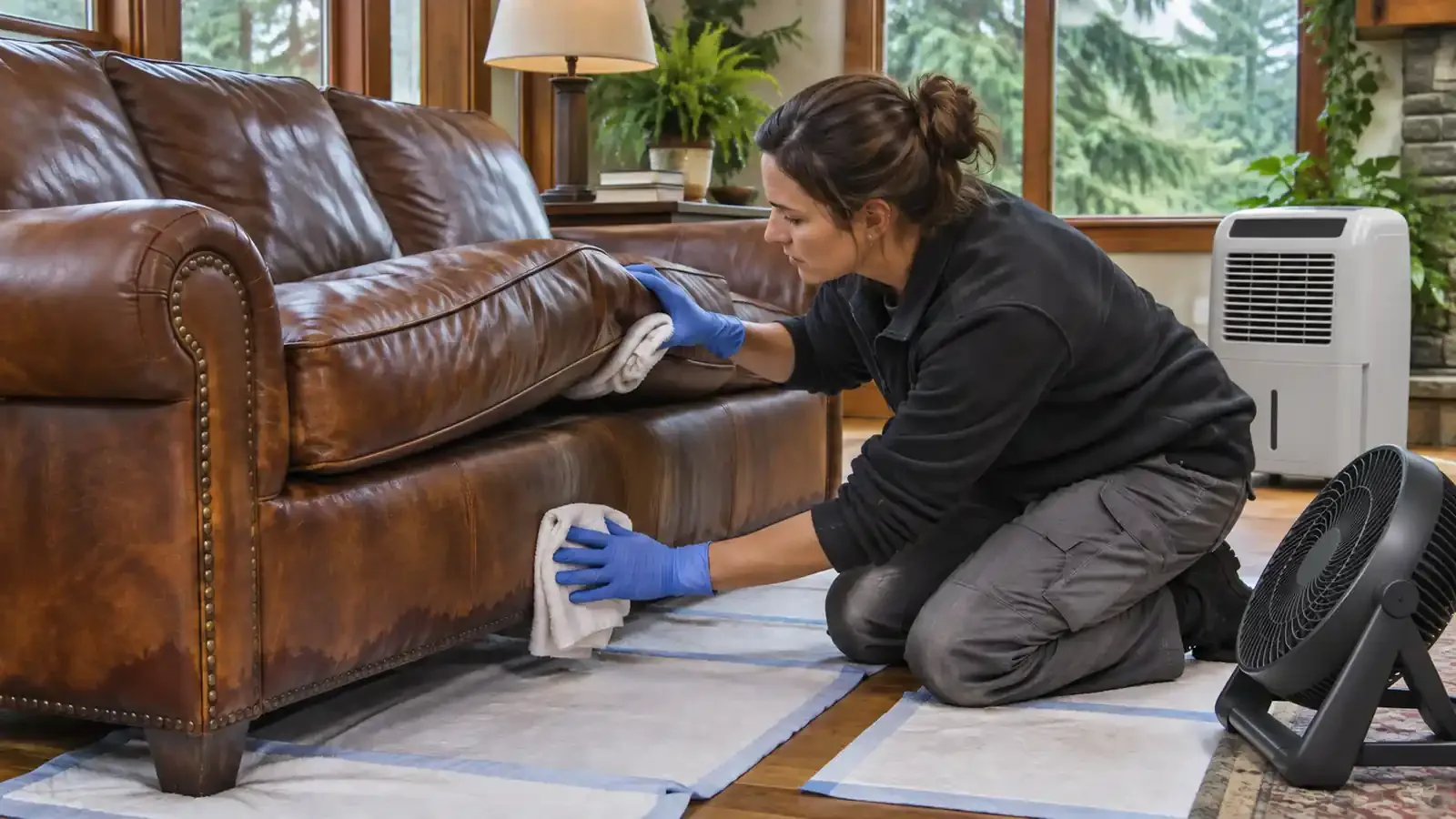
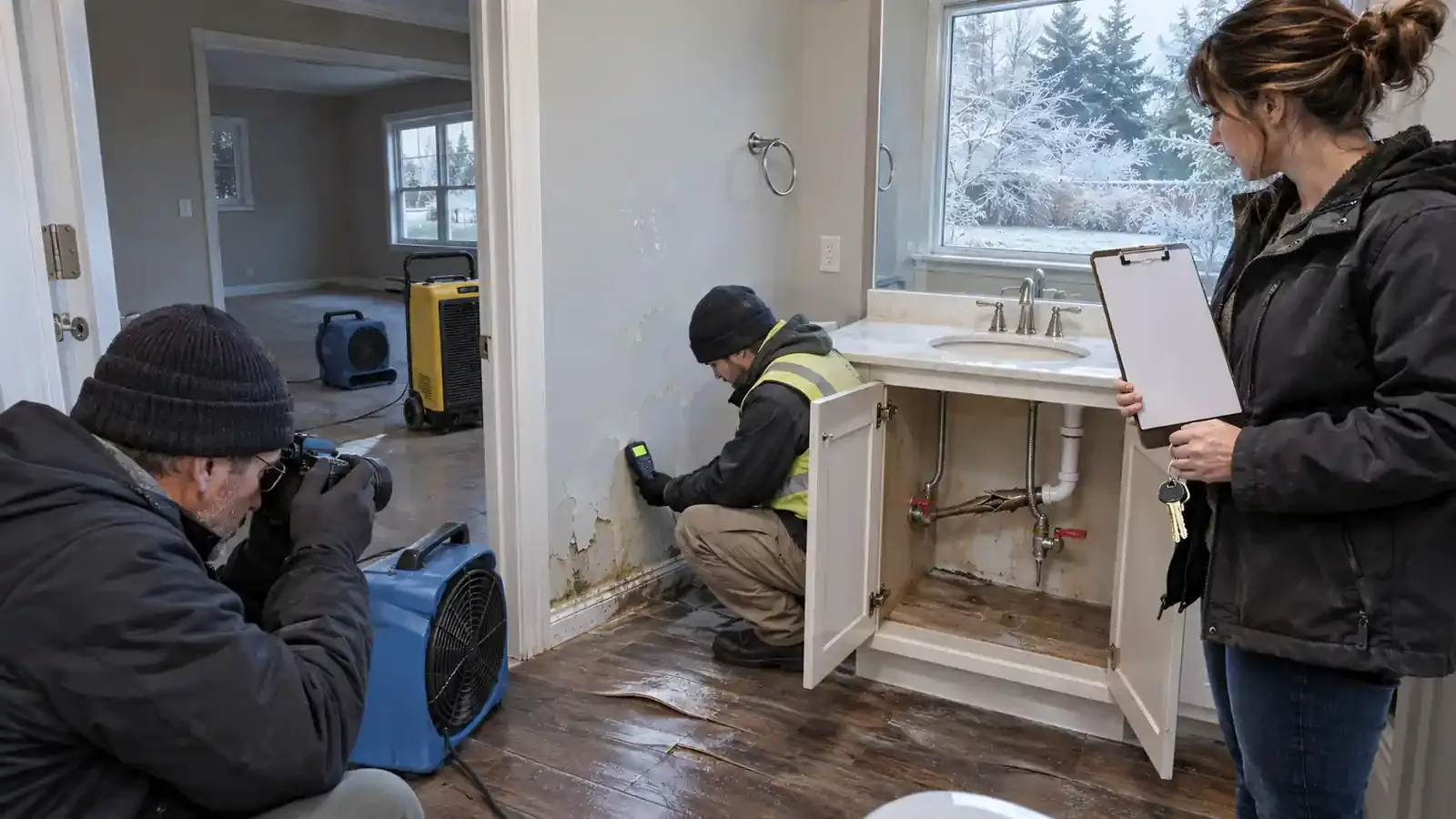
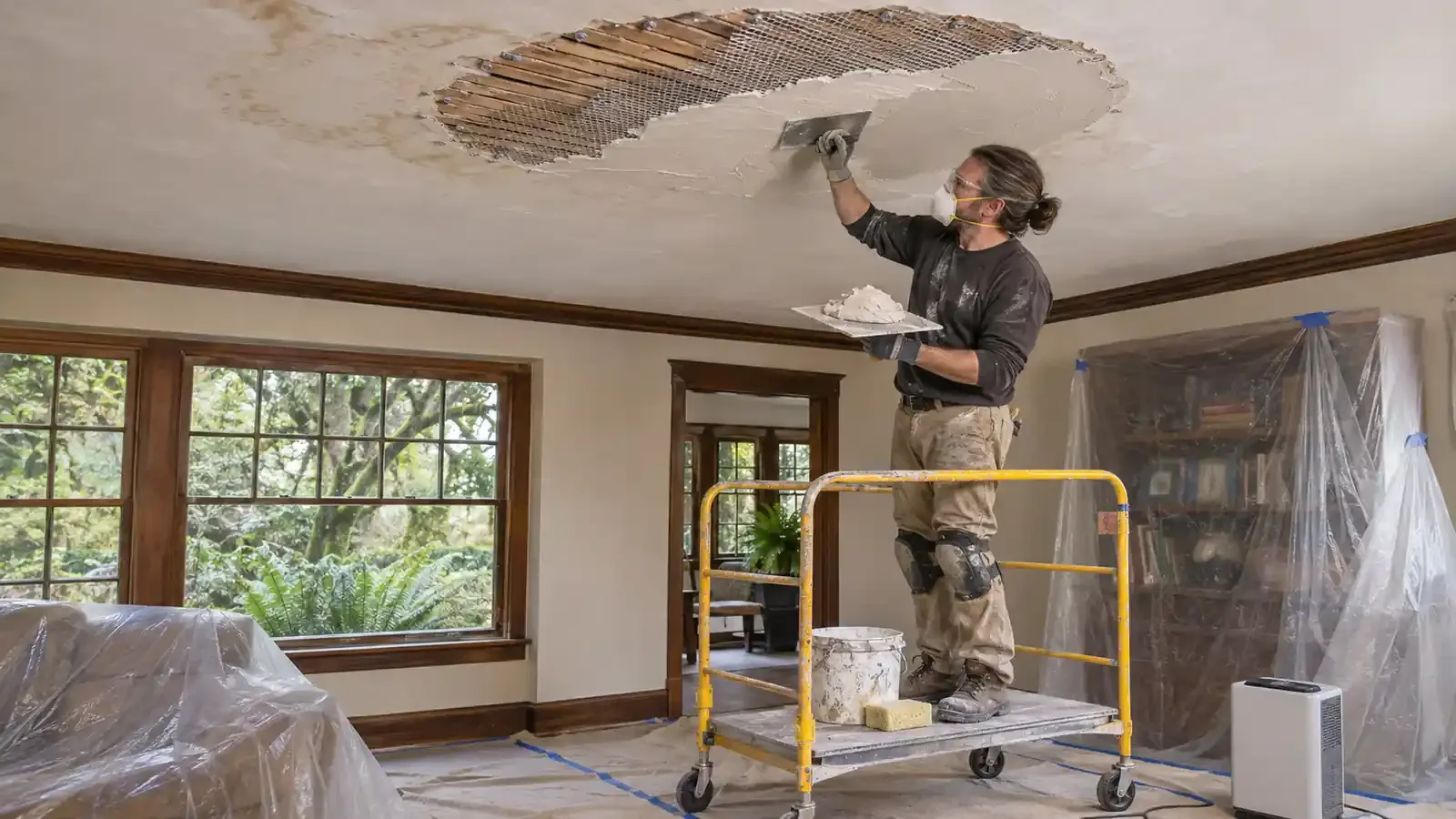
Rain can move beyond the room beneath a roof opening. Insulation, ceiling cavities, wall assemblies, and flooring may be wet even when surface water has been removed. A moisture assessment helps define whether materials can be dried or require removal.
When water intrusion is part of the loss, professional water damage restoration may need to begin while permanent exterior repairs are still being planned.
Separate temporary work from permanent repair
A board, tarp, or temporary brace has a limited purpose. The permanent scope may involve an arborist, structural engineer, roofer, glazier, electrician, general contractor, or restoration team. Responsibility should be assigned rather than assumed, especially when several trades are working around the same opening.
Revisit occupancy and access
Boarding an opening does not establish that the building is habitable. Structural condition, utilities, weather tightness, exits, and fire-protection systems can all affect whether people may safely return. Vacant commercial and multifamily properties may need a more formal access, inspection, and fire-safety plan than an occupied single-family home.
Build a useful record without delaying mitigation
Insurers commonly advise policyholders to prevent further damage when it is safe, document the loss, and retain receipts for temporary work. Coverage and claim duties depend on the policy, so confirm the process with the insurer rather than treating general advice as a coverage promise.
Keep a practical file containing:
- Wide and close photographs taken before and after board-up
- The date, cause, and known points of impact
- Areas that received rain or other water
- Reports from emergency responders, the utility, arborist, or building official
- Temporary-work estimates, invoices, and receipts
- A list of openings secured and materials used
- Dates when covers and panels were inspected
- Written recommendations for permanent repairs
Oregon’s Division of Financial Regulation advises property owners to photograph damage, protect property from further damage, save receipts, and avoid permanent repairs before the insurer has inspected the loss.
Washington’s Office of the Insurance Commissioner offers similar guidance and specifically identifies plywood for broken windows and tarps for damaged roofs as examples of temporary-repair materials.
Our team can help connect emergency securing with water mitigation and repair planning so the property does not stall at the plywood stage. Contact PNW Restoration Services when you need a condition-based scope for a tree-damaged building.
Secure the opening, then keep the recovery moving
After a tree strike, effective board-up follows a sequence: control the tree, utility, and structural hazards; choose protection that fits each opening; document the conditions; check for water migration; and define the next repair owner.
A building can look closed from the street and still have unstable framing, trapped moisture, or an unprotected access point. The temporary work succeeds when it reduces exposure without disguising what must happen next.
Frequently Asked Questions
What do emergency board-up services include after a tree strike?
The scope can include evaluating accessible openings, installing temporary protection over broken windows, doors, walls, or roof breaches, and documenting the work. Tree removal, structural stabilization, water mitigation, glass replacement, roofing, and permanent construction are separate needs unless the written scope specifically includes them.
Should the tree be removed before the roof is boarded?
Not automatically. A suspended or loaded tree can shift when it is cut, while damaged framing can move as weight is removed. The arborist, emergency responder, structural professional, and board-up crew may need to coordinate the sequence based on site conditions.
Is it safe to stay inside once the openings are boarded?
Boarding does not certify safe occupancy. Do not reenter or remain in a building that authorities have restricted or that has suspected structural, electrical, gas, exit, or fire-safety problems. Follow instructions from the local building official and emergency personnel.
Is plywood enough for a hole in the roof?
Not always. Closing the opening and shedding rain are different tasks. A roof breach may require a secured temporary covering beyond the visible damage, and an unstable roof may not be safe to access at all. The appropriate method depends on the roof and impact conditions.
Can I board up a broken window myself?
A small window at ground level may look manageable, but broken glass, damaged frames, nearby utilities, ladder use, and unstable walls can change the risk. Do not attempt the work when access is unsafe, or the surrounding structure is damaged. Keep people away and use professional help when conditions are uncertain.
How should a vacant tree-damaged building be monitored?
Use a documented inspection schedule and recheck it after wind, heavy rain, or signs of entry. Review every accessible opening, temporary roof covering, water condition, authorized entry point, and applicable fire or security system. Local code officials or the fire marshal may impose additional requirements.
Will insurance pay for emergency board-up?
Coverage depends on the cause of loss, policy terms, exclusions, deductibles, and the work performed. Notify the insurer promptly, ask what it needs before permanent repair, photograph safe-to-access damage, and keep temporary-work receipts. Do not rely on a general statement as confirmation of coverage.
How long can temporary board-up stay in place?
There is no universal safe duration. Weather, materials, attachment conditions, building use, local rules, and the condition of the structure all matter. Inspect temporary protection regularly and arrange permanent evaluation and repair rather than waiting for it to fail.