

A rental that smells fine with the windows open can tell a different story after it sits closed overnight. That rebound does not automatically mean the drywall is ruined, but it does suggest that opening the windows removed odor from the air without removing every source in the room.
So, can weed smoke damage walls? Yes. Repeated indoor smoking can leave particles and odor-producing compounds on painted surfaces, trim, ceilings, and dust.
The result may range from a washable film to discoloration or odor that survives cleaning. In heavier cases, the paint system or the material beneath it may need more than routine turnover work. The smell alone, however, cannot identify which condition exists.
Weed Odor Is Not the Same as Structural Wall Damage
The word “damage” covers several conditions that should not be priced or treated the same way.
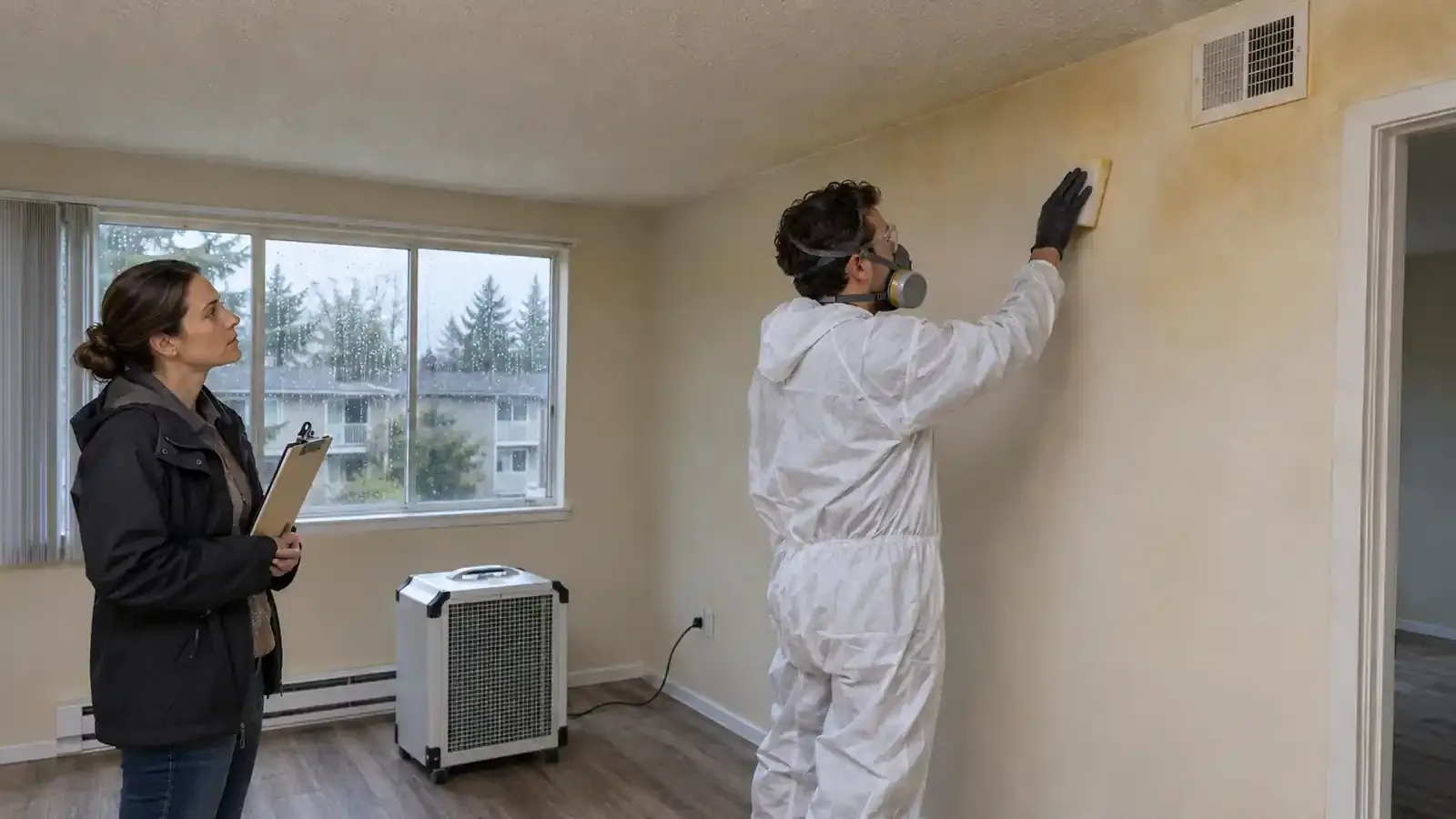
A wall may carry odor or light residue while remaining physically sound. Paint can also become stained, tacky, dulled, or difficult to clean even though the drywall below is intact.
Material replacement belongs at the far end of the range, when odor remains in a porous substrate, the surface is already deteriorated, or another problem such as moisture has damaged the assembly.
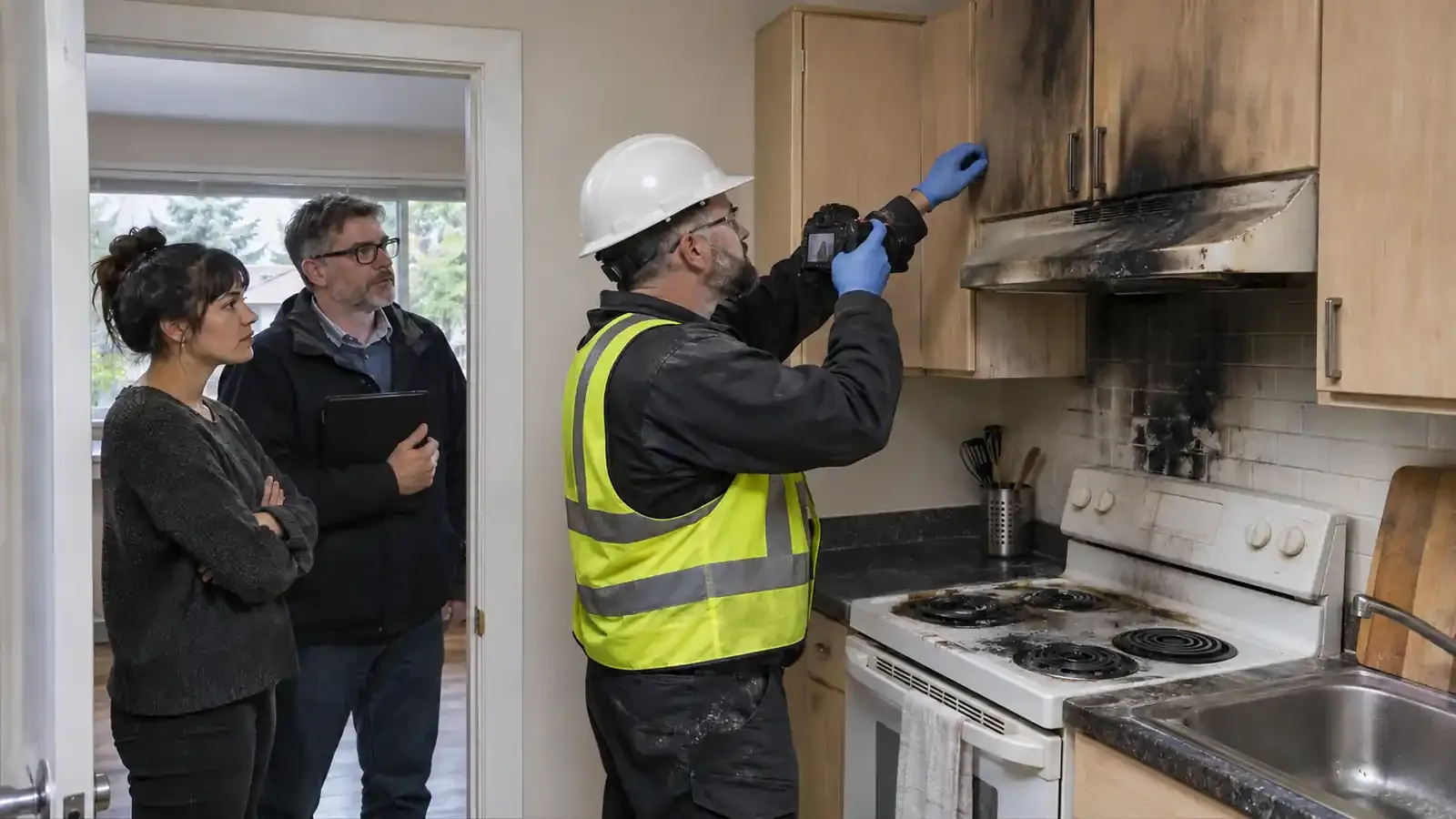
This is also different from fire and smoke damage, which may involve dense soot, heat, firefighting water, corrosion, and damaged building components. Cannabis smoke in a rental usually calls for an odor-and-surface assessment, not an assumption that the unit has sustained a fire loss.
Research on cannabis-specific surface residue is still developing. One indoor study detected THC on some hard surfaces after vaporizer use, and studies of smoked cannabis have measured fine particles and volatile compounds in indoor air.
Those findings support the possibility of deposition. They do not establish a universal number of smoking events after which paint or drywall must be replaced.
Why the Smell Returns When the Unit Is Closed
A closed-unit odor test is useful because it changes the balance between the room air and the materials surrounding it.
While doors and windows are open, outdoor air dilutes airborne odor. After the unit is closed, compounds held by dust, fabrics, cabinets, paint, and other surfaces can move back into the air. Lower ventilation also allows the odor to build to a detectable level.
The U.S. Environmental Protection Agency notes that how long smoking-related chemicals linger depends on the product, amount and duration of use, room size, ventilation, and the surfaces present.
Walls are only one possible reservoir. Carpet and pad, window coverings, upholstered items, unfinished wood, cabinet interiors, closets, HVAC filters, and accumulated dust may contribute.
If the odor is strongest near a return grille, inside a closet, or close to flooring, repainting the walls first may spend money without addressing the dominant source.
Use Four Conditions to Scope the Wall Work
Instead of treating odor as proof that every wall needs replacement, classify what the inspection actually shows. Move to a more invasive step only when the previous one fails or the material condition warrants it.
1. Mainly airborne odor
The smell falls substantially after ventilation and source removal, the walls show no visible film or discoloration, and the odor does not return strongly after the unit is closed. Cleaning exposed surfaces and replacing an affected HVAC filter may be enough, followed by another closed-unit check.
2. Removable surface residue
Odor returns, or a clean test cloth picks up grime from a representative wall area, but the coating remains sound. A surface-appropriate cleaner may remove the film. Test a discreet area first, follow the paint and cleaner manufacturers’ directions, avoid saturating drywall, and never mix cleaning chemicals.
3. The coating remains affected
The wall is sound, but staining or odor persists after proper cleaning and drying. At this point, surface preparation and a compatible stain- or odor-blocking primer may be appropriate before repainting.
Paint manufacturers advise cleaning smoke contamination as thoroughly as possible before sealing and topcoating. Applying ordinary finish paint over an unclean wall can hide the condition briefly without resolving it.
4. The substrate or assembly is involved
Odor survives source removal, cleaning, and an appropriate coating system, or it is strongest at gaps, penetrations, unfinished surfaces, or inside a wall cavity. Damaged drywall paper, crumbling material, heavy embedded odor, or separate moisture damage may justify selective removal and repair. This is a scoped material decision, not a reason to demolish every wall that smells smoky.
Inspect the Empty Unit Before Choosing a Treatment
An empty rental makes it easier to separate wall odor from contents, but the inspection should be repeatable rather than based on one quick walk-through.
- Photograph visible staining, sheen changes, dust lines, damaged paint, and pre-existing wall defects before cleaning.
- Remove trash and tenant-owned odor sources, then replace or inspect accessible HVAC filters according to the system’s requirements.
- Ventilate the unit, close it for a consistent period, and record where odor returns most strongly. Do not use fragrance before this check.
- Compare rooms, closets, cabinets, ceilings, flooring edges, and supply or return grilles. Note whether the smell is localized or unit-wide.
- Test any proposed cleaner in an inconspicuous spot. Stop if it softens the paint, changes the sheen, transfers color, or damages the surface.
- Reassess only after cleaned walls are fully dry. Moisture and cleaner fragrance can distort the result.
Tenants should report the condition before aggressive cleaning, priming, or painting. Owners and property managers should preserve dated notes, photos, invoices, and the lease or move-in condition record.
Cleaning, Priming, and Removal Solve Different Problems
The sequence matters because each step has a different job.
Cleaning removes accessible residue. Priming isolates stains or residual odor that remains after the surface is properly prepared. Finish paint supplies the final appearance.
Removal takes out material that cannot reasonably be restored. Skipping directly to paint can leave contaminated dust, fabrics, cabinets, or flooring untouched, while jumping directly to drywall replacement can turn a coating problem into an unnecessary construction project.
Avoid treating fragrance, candles, or a deodorizing spray as a clearance test. A HEPA filter can capture particles, but gases and odor compounds require different control, and an air cleaner does not remove residue already on surfaces.
Do not run a consumer ozone generator in an occupied unit. EPA identifies ozone as a lung irritant and says the concentrations used for odor reduction in unoccupied spaces can exceed levels generally considered safe for people.
If odor still rebounds after source removal, careful cleaning, and drying, review our professional smoke odor removal service before more finish work begins.
The Closed-Door Retest Is the Handoff Point
The best final check is not how the unit smells immediately after cleaning. It is whether the odor returns after the cleaned, dry rental has remained closed under ordinary conditions.
If the smell stays gone, the work may be complete. If it returns in one location, investigate that material or airflow path instead of repeating a whole-unit treatment. If it returns broadly, revisit overlooked reservoirs before approving paint or occupancy.
That approach answers the practical question behind weed-smoke damage: not merely whether smoke touched the walls, but what condition the walls are in now and what is actually required to restore the unit.
Frequently Asked Questions
Does weed smoke stain walls permanently?
It can stain or dull a coating after repeated or heavy indoor exposure, but permanent staining is not inevitable. Frequency, ventilation, paint type, room size, and other smoke sources all affect the outcome. Inspect and clean a test area before deciding that repainting or replacement is necessary.
How long can weed odor remain in an empty apartment?
There is no reliable universal timeline. Odor persistence depends on the amount and duration of smoking, ventilation, room volume, cleaning, and the materials in the unit. A closed-unit retest is more useful than estimating by days alone.
Can a landlord just paint over cannabis odor?
Finish paint alone may provide a temporary cosmetic change while residue remains on the wall or odor persists in other materials. Clean and dry affected surfaces first. If odor or staining remains, use a compatible primer and coating system selected for the surface and condition.
Are flat-painted walls more likely to hold odor?
Flat finishes are generally less scrub-resistant than glossier finishes and can be easier to mark or damage during cleaning. Whether odor remains depends on the coating, its condition, the exposure, and the material beneath it. Always patch-test the cleaning method.
Does weed smoke get into drywall?
Odor-producing compounds can settle on or be taken up by painted wall systems and porous materials. That does not mean all exposed drywall must be removed. Replacement becomes a consideration when odor remains in the substrate after less invasive steps, the surface is physically damaged, or another condition makes the material unrestorable.
Will an air purifier remove weed smell from walls?
An air purifier may reduce some airborne particles, and a unit with appropriate gas-phase media may reduce some odors. It cannot clean residue from walls, ceilings, fabrics, or dust. Source removal and surface cleaning still matter.
Is weed smoke damage the same as cigarette smoke damage?
Both are combustion-related indoor smoke, but their emission patterns and use histories are not identical, and the cannabis-specific evidence base is smaller. Do not assume a cannabis-exposed unit needs the same scope as a property with years of tobacco smoking. Assess the actual surfaces and odor reservoirs.
Should the HVAC ducts be cleaned after indoor cannabis smoking?
Not automatically. Start with accessible filters and determine whether odor changes when the system operates. Duct or equipment evaluation is more reasonable when odor repeatedly appears at grilles, visible residue is present, or evidence points to the air-handling system as a continuing source.