



Smoke season does not end when the sky clears. By school restart, properties may hold stale air, settled dust, smoky fabrics, and HVAC filters that worked hard through August. Late-summer smoke can overlap with the first roof leaks, damp basements, or crawlspace moisture.
That overlap matters. A smoky bedroom may be a ventilation issue. It may also point to residue in soft goods, return grilles, attic pathways, or moisture behind a wall. Before backpacks and homework corners take over again, use an indoor air quality check.
Start With the Air Pathways Your Family Uses Daily
Description: Begin with the routes smoke used to enter and circulate through the property.
Check doors, windows, and small gaps
Wildfire smoke can enter through open doors and windows, mechanical ventilation, fresh-air intakes, and small cracks around the building shell. Review areas that stayed open during smoky days. Look for dusty tracks near window sills, sliding doors, attic hatches, pet doors, mail slots, and garage-to-house entries.
Recurring odor is a clue. If the smell returns when the HVAC starts or when sun warms an upper room, smoke may have settled into a hidden pathway.
Review HVAC filters and settings
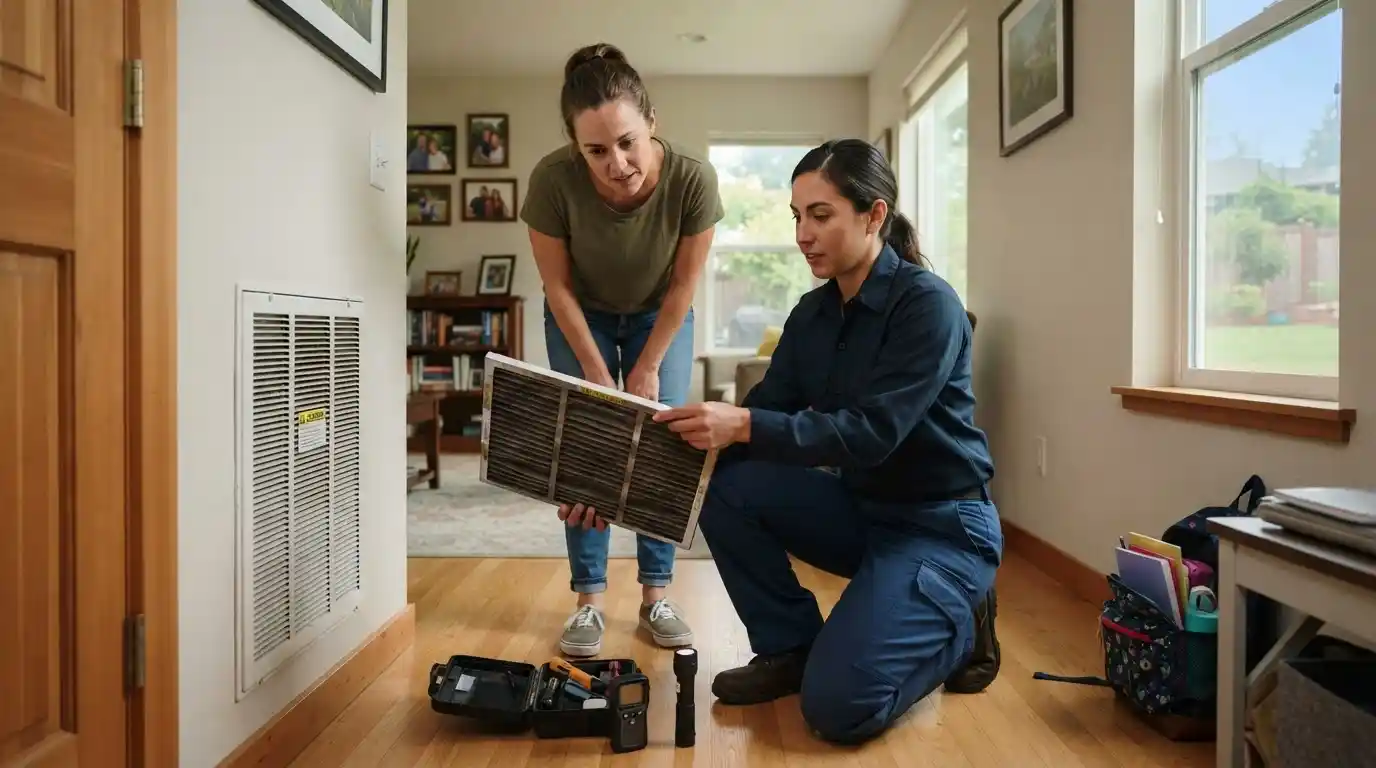
Your HVAC filter may have captured more fine smoke particles than usual. Replace a visibly dirty filter and confirm the replacement matches your system. Use the highest-efficiency filter your system can safely use, and ask an HVAC professional if you are unsure.
During future smoky periods, recirculation can reduce outdoor air intake when your system allows it. After smoke clears, inspect return grilles, filter slots, and supply registers. If smoke odor comes from vents, pause unnecessary fan use until the source is clearer.
Create one cleaner room for school nights
Choose a bedroom, study area, or family room with a closing door, limited exterior openings, and space for a portable air cleaner. Avoid candles, incense, wood burning, aerosol sprays, and heavy fragrance products when you are trying to reduce smoke odor.
Find the Places Smoke Residue and Odor Hide
Description: Move from air pathways to surfaces and contents that can hold smoke odor.
Start with bedrooms and soft goods
Children’s rooms collect fabrics, paper, books, plush toys, curtains, bedding, rugs, and backpacks. These items can hold odor after a smoky week. Wash washable fabrics. Vacuum rugs and upholstery carefully. Wipe hard surfaces with a damp cloth instead of dry dusting.
For stronger odor, separate items by material. A smoky backpack may need a different approach than curtains, upholstery, or unfinished wood.
Check attics, crawlspaces, and storage areas
Smoke odor often hides above and below living spaces. Vented attics, crawlspace entries, duct chases, stored boxes, luggage, and seasonal décor can hold stale smoke. Use the guidance in wildfire smoke in attics and crawlspaces to think through hidden odor sources without entering unsafe areas.
Do not climb into tight spaces if you see electrical hazards, structural movement, animal contamination, sewage, heavy debris, or unsafe access. Document what you notice from safe areas.
Look at walls, ceilings, and HVAC grilles
A clean-looking surface can still hold odor. Check ceiling corners, return grilles, door frames, high shelves, and rooms that stayed closed during the smoke event. If a nearby structure fire or heavy smoke episode affected the property, HVAC, upholstery, and walls may need different priorities depending on where residue moved.
Do Not Miss Moisture While Checking Smoke
Description: Late-summer smoke checks should also look for damp materials.
Watch for early wet-season leaks
The first rains after a dry spell can reveal roof weaknesses, gutter problems, window leaks, and foundation drainage issues. A smoky or musty room may have more than one cause. Check ceiling stains, damp carpet edges, swollen baseboards, soft drywall, and lower-level storage areas.
If a leak is active, stop the water source when it is safe. Move dry belongings out of the affected area. Avoid electrical devices near wet materials. Track what got wet and whether the odor changed.
Separate smoke odor from mold warning signs
Smoke odor often smells sharp, stale, tar-like, or ashy. Moisture odor often smells earthy or musty. The two can blend in porous materials. If you find damp drywall, wet insulation, repeated leaks, or visible growth, basic deodorizing will not solve the underlying problem.
Smoke residue may call for fire and smoke damage restoration when soot, odor, or affected materials go beyond normal cleaning. Moisture-related odor may require drying, repair, or mold evaluation before the space feels normal again.
Decide What You Can Clean and What Needs Support
Description: A calm cleanup plan helps you avoid spreading residue or masking hidden damage.
Use a simple immediate response checklist
Open windows only when outdoor air is good. Replace dirty HVAC filters. Wipe reachable hard surfaces with damp methods. Launder bedding, washable curtains, and soft items that smell smoky. Vacuum floors and upholstery carefully. Check bedrooms, homework areas, storage spaces, vents, and lower levels. Keep notes and photos if you see stains, residue, leaks, or damaged contents.
For deeper odor, compare the situation to fire cleanup versus smoke cleanup. Visible burning, soot, wet materials from firefighting, and persistent smoke smell are different problems.
If smoky odor keeps returning near vents, attic access, crawlspace entries, bedrooms, or commercial tenant areas, request help with smoke odor removal before repeated masking products make the source harder to understand.
Avoid cleanup steps that make conditions worse
Do not run an HVAC fan if smoke odor blasts from the vents. Do not dry-dust heavy residue. Do not use ozone devices in occupied spaces. Do not cover odor with perfume, plug-ins, or strong cleaners. Do not paint over smoky or musty surfaces until you understand whether residue or moisture remains underneath.
If ash or soot is heavy, avoid stirring it up. If sewage, chemical contamination, structural damage, or electrical hazards are present, step away and use qualified help.
Plan for Rentals, Businesses, and School Routines
Description: Shared properties need documentation and practical decisions that reduce disruption.
For rentals and managed properties
Property managers should check common hallways, laundry rooms, mechanical rooms, storage cages, and units near exterior openings. Ask tenants to report recurring smoky odor, ceiling stains, wet flooring, or visible residue. Note where the odor appears and whether the HVAC is running.
For offices, retail, and home study spaces
Commercial spaces need clean entries, dry floors, usable restrooms, and odor control before staff, customers, or tenants return to normal schedules. If smoke exposure follows storm damage, broken windows, roof exposure, or water intrusion, document both issues.
At home, review how to remove fire smoke smell from your home if odor keeps moving between surfaces, contents, and airflow pathways.
Final Takeaway
Description: Treat smoke as a building-pathway issue, not just a smell.
A smoky August can affect filters, fabrics, dust, vents, attics, crawlspaces, and damp materials. Begin with safe, visible checks. Improve filtration within your system’s limits. Clean thoughtfully. Watch for moisture as fall weather approaches. If odor returns, moisture appears, soot is visible, or access is unsafe, make a restoration decision before the problem spreads.
Frequently Asked Questions
Why does my home still smell smoky after outdoor air improves?
Smoke particles can settle into fabrics, dust, vents, stored items, and porous materials. Odor may fade during the day and return when the HVAC runs or a room warms up. Check air pathways, soft goods, attic access points, and rooms that stayed closed during the smoke event.
Should I replace my HVAC filter after a smoky August?
Replace the filter if it looks dirty, smells smoky, or ran heavily during poor outdoor air. Make sure the replacement fits your system and does not restrict airflow. If you want a higher-efficiency option, confirm that your HVAC system can handle it before upgrading.
Can wildfire smoke get into attics and crawlspaces?
Yes. Vented attics, crawlspace openings, roof penetrations, gaps, and duct chases can allow smoky air to enter. Odor may linger in dust, insulation, stored boxes, and unfinished materials. Inspect only from safe, accessible areas if the space is tight or damaged.
What should families check before school starts?
Check bedrooms, bedding, backpacks, rugs, curtains, return grilles, study areas, and storage zones. Replace dirty filters and clean reachable surfaces with damp methods. Also check for moisture because early leaks, damp basements, and crawlspace odor can mix with smoke smell.
Is a smoky smell always a sign of soot damage?
No. Regional smoke can leave odor without obvious black soot. You may only notice stale air, dusty surfaces, or odor near vents and access panels. Visible soot, greasy residue, or odor that returns after cleaning deserves closer attention.
What should I avoid when cleaning after smoke exposure?
Avoid dry-dusting residue, running the HVAC fan when vents smell smoky, and using strong fragrances to mask odor. Do not paint over smoky or musty surfaces before checking for residue or moisture. Avoid unsafe areas with electrical hazards, sewage, debris, or structural concerns.
Why does smoke odor seem worse in bedrooms?
Bedrooms often contain fabrics, bedding, curtains, rugs, books, and soft items that absorb odor. Closed doors can also trap stale air. If a bedroom sits near attic access, crawlspace pathways, or HVAC returns, odor may return even after basic cleaning.
Can smoke odor and mold odor happen at the same time?
Yes. Late-summer smoke can overlap with roof leaks, damp basements, window leaks, and crawlspace moisture. Smoke odor is often sharp or ashy, while moisture odor is often earthy or musty. If both appear, fix the moisture source before relying on deodorizing.
What should property managers check after a smoky period?
Check common hallways, mechanical rooms, storage spaces, exterior entries, laundry areas, and tenant units near air intakes or gaps. Ask tenants to report recurring odor, ceiling stains, wet flooring, or visible residue. Clear documentation helps separate odor complaints from water damage concerns.
When is professional smoke odor help worth considering?
Consider support when odor returns after cleaning, comes from vents, appears near attic or crawlspace access, or affects commercial areas. Visible soot, heavy ash, moisture overlap, sewage, or unsafe access also changes the decision. The goal is to identify the source before it spreads.
How can I prepare for the next smoke event?
Keep replacement HVAC filters on hand, choose one room that can close off from outside air, and limit indoor pollutant sources during smoky days. Check weather stripping, gaps, and known draft areas before smoke season. After each event, inspect filters, soft goods, vents, and storage spaces.


