



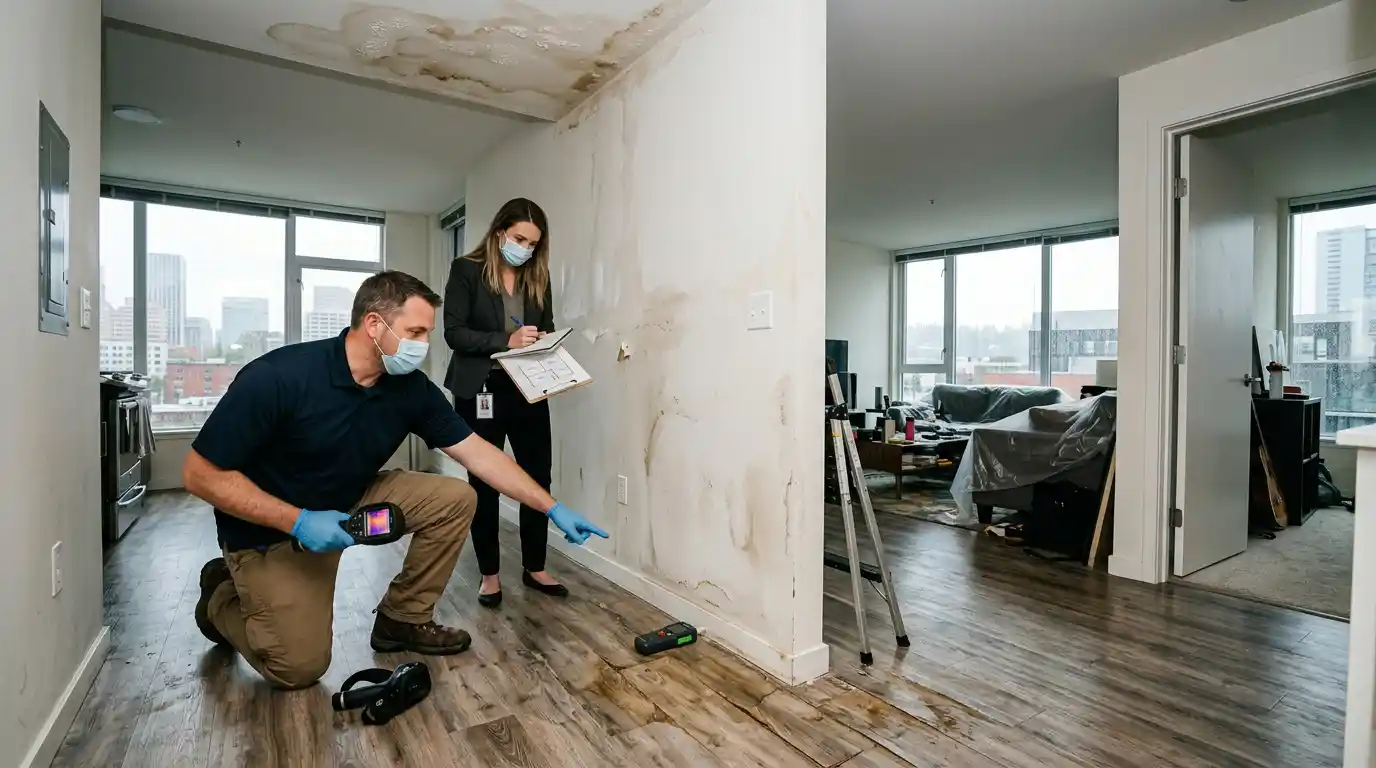
Wet-season leaks, freeze-related pipe failures, roof exposure, and lower-level moisture can turn a condo building into a shared problem fast. One unit sees a ceiling stain. Another has swollen flooring. A property manager gets three calls from different residents. No one knows whether the source is a private fixture, a shared wall, a roof assembly, or a common plumbing line.
That is why Portland condo water damage is rarely just a cleanup question. It is also a responsibility question. Who pays depends on where the water started, what it damaged, how the governing documents define unit boundaries, and which insurance policies apply.
Why condo water damage gets complicated quickly
In a condo, water does not respect ownership lines. It can move down through ceilings, sideways through wall cavities, under finished flooring, and into lower units. A leak that starts near a shower valve may affect the unit below. A roof issue may enter one top-floor unit, then travel into framing or insulation before showing up somewhere else.
For Portland-metro properties, seasonal moisture adds pressure.
- Long wet periods can expose roof and flashing issues.
- Windstorms can push rain into openings.
- Freezing weather can weaken pipes, then leaks appear after thawing.
- In lower-lying or river-adjacent properties, water exposure can also affect basements, parking levels, storage areas, and shared utility spaces.
If you are dealing with active water, spreading stains, soft drywall, wet flooring, or odor,
- Protect people and limit the damage.
- Move the contents if it is safe.
- Avoid wet electrical areas.
- Notify the unit owner, association, manager, landlord, or tenant contacts as appropriate.
- Then document what you see before materials are disturbed.
Who may pay when moisture moves between units?
A practical and non-legal framework for sorting out responsibility.
Where did the water originate?
- If the leak started from an in-unit appliance, private supply line, toilet overflow, sink, shower, or owner-maintained fixture, the unit owner’s policy and responsibility may come into play.
- If the source is a roof, exterior wall, main plumbing line, hallway, shared mechanical system, or common element, the association’s responsibilities may be involved.
The hardest losses are not obvious. A stain below a bathroom may look like a private plumbing leak, but the failed line could be inside a shared wall. A leak under a window may be tied to exterior maintenance, building movement, or poor drainage. That is why early source tracing matters.
What do the governing documents say?
Condo declarations, bylaws, maintenance rules, and insurance provisions often define the boundary between a unit, a limited common element, and a common element.
For Oregon condo properties, condominium insurance provisions address insurance for individual units and common elements, but the building’s documents and policies still drive the practical answer.
- Do not rely on hallway opinions.
- Ask for the declaration, bylaws, master policy information, deductible rules, and any maintenance responsibility charts.
These documents help determine whether the association, a unit owner, a renter’s policy, or more than one policy may be involved.
What was damaged?
Payment can be split by material.
- One party may address the source.
- Another may handle interior finishes.
- Personal property may fall under a different policy than drywall, flooring, trim, cabinets, or common-area materials.
That split matters when water crosses units. The upstairs source, downstairs ceiling, shared pipe, common wall, personal belongings, and hallway carpet may not all follow the same payment path.
Was the water clean, contaminated, or delayed?
A clean-water supply line is different from sewage, floodwater, or long-standing dampness. Contaminated water can change the cleanup approach. Delayed drying can raise mold concerns.
EPA moisture guidance stresses that moisture control is central to mold control and that water-damaged areas and items should be dried within 24 to 48 hours when possible to help prevent mold growth.
What to document before the scope is decided
Look into what information helps owners, managers, insurers, and restoration teams make better decisions.
Good documentation keeps the discussion grounded.
- Take wide photos of each affected room.
- Add close-ups of stains, wet flooring, damaged trim, swollen cabinets, dripping points, and any suspected source.
- Photograph the unit above or adjacent only with permission or through the right property-management process.
Write a simple timeline.
- Note when the leak was first noticed, whether water was active, which units were contacted, and what steps were taken.
- Save emails, texts, work orders, and association notices.
- Keep receipts for temporary protection, emergency purchases, and damaged items.
For restoration planning, room-by-room notes matter more than blame. A clear moisture path can help separate a ceiling leak from a wall-cavity issue, a flooring loss from a subfloor concern, and a localized cleanup from a broader water damage restoration need.
Choosing help based on the actual damage
Match the response to the type, scale, and risk of the loss.
The right help depends on what the water touches.
- A small, clean leak caught quickly may need targeted extraction, drying, and ceiling or wall repair.
- A multi-unit leak may need coordinated access, documentation, material removal, and reconstruction planning.
- A sewage backup or contaminated overflow calls for a different level of caution than a clean supply-line leak.
Property type also matters. Residential owners need clear answers about livability and finishes. Renters need communication through the proper owner or manager. Commercial condo units need access, customer disruption, inventory concerns, and downtime to be considered.
Ask these five questions before committing to a scope:
- What is the most likely source, and what evidence supports it?
- Which rooms, cavities, floors, and shared areas are affected?
- Is there any contamination, sewage contact, or odor concern?
- What gets documented before drying, removal, or repair starts?
- What follow-on repair or reconstruction decisions may still be needed?
For related planning, review handling water-damaged walls and ceilings, and spring ceiling stains in Portland homes if the first visible clue is above you.
Signs the cleanup plan may miss key issues
Be cautious if the plan focuses only on repainting stains before the source is understood. Watch for scopes that ignore the unit above, the unit below, wall cavities, insulation, baseboards, flooring layers, or shared areas.
A weak plan may also skip documentation. That creates problems later when owners, managers, or adjusters need to understand what was wet and why. Another concern is treating all water as the same. Clean water, gray water, sewage, and long-standing moisture do not call for the same decisions.
Finally, avoid relying on surface dryness alone. Materials can look dry while hidden areas remain damp.
For deeper context, see what equipment is used to dry water-damaged areas and what not to do after water damage.
What a strong restoration plan should cover
A strong plan starts with the source, the path, and the affected materials. It should explain what is known, what still needs access, and what decisions cannot be made until affected areas are checked.
It should separate immediate mitigation from repair planning. Cleanup, extraction, drying, material removal, odor control, mold-related concerns, and reconstruction are not always one step. Some losses need only localized work. Others need a phased plan because water crossed units, affected shared materials, or interrupted business use.
Communication is part of the work. You should understand what happens now, what gets documented, who needs access, which areas are being monitored, and what choices remain open.
Frequently Asked Questions
Who usually pays when water leaks from an upstairs condo?
Payment depends on the source, the governing documents, and the insurance policies involved. If the leak came from an in-unit fixture, the unit owner’s policy may be involved. If the source is a shared system or common element, the association’s responsibilities may come into play.
Should I call my insurance company or the HOA first?
In many cases, you should notify both promptly. The association or property manager may need to access shared systems, while your insurer may need early notice of unit damage. Keep communication factual and document the timing of every report.
What if the leak source is still unknown?
- Treat the situation as a moisture-control problem first.
- Stop active water if it is safe, document the visible damage, and arrange qualified help to trace the likely path.
- Do not assume blame before the source and affected materials are evaluated.
Can water damage move through a condo wall without being visible?
Yes. Water can travel through wall cavities, flooring layers, insulation, baseboards, and ceiling assemblies before stains appear. That is why a small mark on drywall can represent a larger hidden moisture path, especially after repeated leaks.
Is a condo association always responsible for roof leaks?
Not always. Roofs are often common elements, but the final answer depends on the building documents, maintenance duties, and insurance language. Review the declaration, bylaws, master policy, and any responsibility chart before assuming who pays.
What should a renter do after condo water damage?
A renter should notify the landlord or property manager, protect personal belongings if safe, and document visible damage. Renters should also contact their renters’ insurance carrier about personal property. Avoid making invasive repairs without authorization.
What if sewage or contaminated water enters my condo?
- Avoid contact with contaminated water and keep children, pets, tenants, and occupants away from the affected area.
- Notify the right property contacts and seek qualified cleanup help.
Contamination can change the scope, safety precautions, and material decisions.
Can mold become part of a condo water damage claim?
Mold concerns can develop when moisture remains in materials or the source is not corrected. Payment depends on policy language and responsibility documents. From a restoration standpoint, drying and source control should be addressed quickly to reduce further damage.
Should I start repairs before responsibility is settled?
Emergency mitigation is often different from final repairs. It may be important to stop further damage, remove standing water, and document conditions before finishes are rebuilt. Keep records so that later decisions are based on what actually happened.
What documents help resolve payment questions?
Useful documents include the declaration, bylaws, master insurance policy, unit owner policy, deductible rules, maintenance charts, photos, videos, written notices, work orders, and item lists. A room-by-room damage record can also make the scope clearer.


