



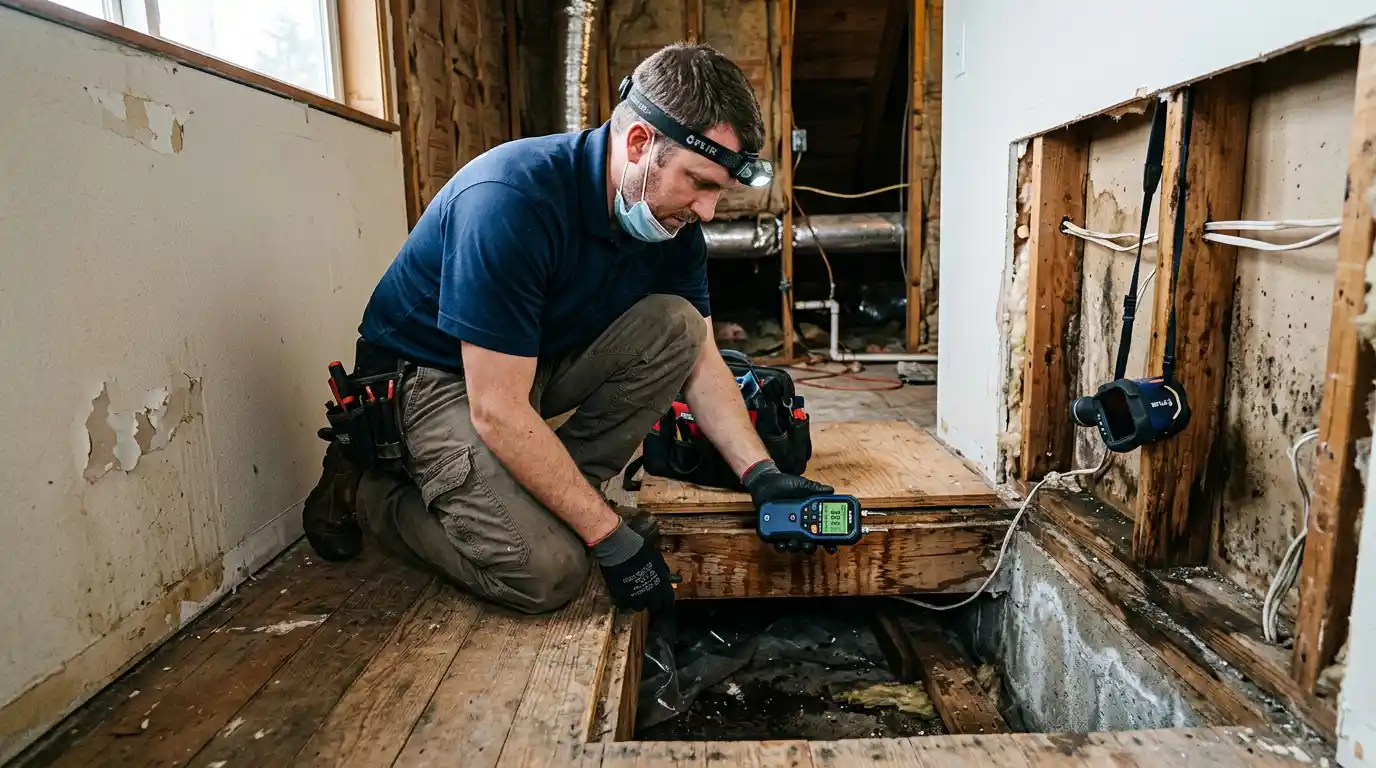
Wet-season water intrusion, roof and ceiling leaks, crawlspace dampness, freeze-thaw plumbing failures, and smoke-prone dry periods can all leave one stubborn clue: a musty smell that keeps coming back.
In Portland-metro properties, odor often travels farther than the damage itself. A damp crawlspace can push stale air into living areas. An attic roof leak can cause an odor in the insulation. A slow wall leak can hide behind paint.
The goal is not to perfume the room. The goal is to find the moisture path, identify affected materials, and decide whether the issue needs drying, cleanup, mold remediation services, odor removal, repair, or reconstruction.
Why musty smells get worse during regional moisture cycles
Musty odor usually means moisture has reached materials that can hold water, dust, soil, or organic residue.
After long rain, localized flooding, wind-driven leaks, or lower-level seepage, moisture can linger in places you do not check every day. The same pattern shows up after frozen pipes thaw or a ceiling leak runs down a wall cavity. Moisture control is the foundation of mold control, so recurring odor deserves more than surface cleaning.
- If the smell is stronger near the floor, start with the crawlspace, basement, or lower wall sections.
- If it is strongest upstairs after rain, look toward the attic, roof penetrations, bath fan routing, or ceiling cavities.
- If it appears in one room, one hallway, or near a shared plumbing wall, hidden water damage in walls becomes more likely.
How to trace the odor without tearing into everything?
A careful first pass can narrow the source before walls, insulation, or flooring are disturbed.
Crawlspace clues
A crawlspace odor often smells earthy, stale, or damp after rain. You may notice cold floors, cupped flooring, sagging insulation, standing water, staining on framing, or humidity in rooms above the space.
Exposed soil, damaged vapor barriers, clogged gutters, poor grading, and plumbing leaks can all feed the same odor cycle. If the space stays damp after rain stops, this guide on spring crawlspace moisture explains why hidden spaces can remain wet longer than finished rooms.
Attic clues
Attic odors often appear after roof leaks, condensation, blocked ventilation, wet insulation, or bathroom exhaust that does not vent outdoors. Look for darkened roof sheathing, damp insulation, rusty fasteners, staining around penetrations, or odor near ceiling fixtures.
Do not step onto uncertain attic framing or wet materials. If the smell follows wind damage or roof exposure, the plan may need moisture evaluation and repair planning.
Behind-the-wall clues
Wall-cavity odor usually feels more localized. It may sit near a baseboard, under a window, behind cabinets, around a shower wall, or under a ceiling stain. Bubbling paint, soft drywall, swollen trim, peeling wallpaper, warped flooring, or growing stains can point to trapped moisture.
Review the signs of hidden water damage in walls if odor seems to come from a specific wall or ceiling line.
Why the source changes the right cleanup path
The same smell can require different work depending on the water source, materials, and contamination risk.
A clean plumbing leak found early may need source control, targeted drying, and material evaluation. A flood, sewage backup, or dirty stormwater intrusion changes the risk. The CDC recommends that you dry out your home quickly after a flood and address soaked materials that cannot be dried right away.
Porous materials matter. Drywall paper, insulation, subflooring, wood framing, carpet pad, and stored contents can hold odor even after the surface feels dry. Crawlspace insulation and ground barriers are common examples. If they are wet, torn, sagging, stained, or contaminated, cleanup alone may not solve the smell.
This related guide on wet crawlspace materials explains when removal may be more practical than drying around failed materials.
Smoke odor can also complicate a musty smell. After structure fire damage or regional smoke exposure, soot residue and damp materials can produce layered odors. In those cases, fire and smoke damage cleanup, smoke odor removal, water damage restoration, and material repair may need to be planned together.
Choosing help based on the actual damage
Good decisions start with matching the scope to what is wet, contaminated, odor-loaded, or damaged.
Match the service to the damage
- Choose water damage restoration for active leaks, soaked materials, ceiling leak repair, or multi-room moisture.
- Choose basement water removal or flood damage restoration services when lower levels have standing water or stormwater intrusion.
- Choose sewage cleanup services when wastewater is involved.
- Choose mold remediation services when visible growth, persistent odor, or repeated dampness points to a mold concern.
Storm damage restoration, fire and smoke damage, smoke odor removal, biohazard & hazmat cleanup services, and reconstruction services may be necessary when the source involves debris, smoke, contamination, or repairs after removal.
What to ask before you commit to a scope
- What area is the likely odor source: crawlspace, attic, wall cavity, HVAC path, or contents?
- What materials are wet, stained, sagging, contaminated, or odor-loaded?
- What must be dried, removed, cleaned, deodorized, repaired, or monitored next?
- How will photos, room notes, and visible damage mapping be communicated?
- Does the plan fit tenant disruption, access limits, and business-use needs?
Signs the cleanup plan may miss key issues
A weak plan focuses only on fragrance, visible spots, or surface wiping. It may ignore the original leak, wet insulation, wall cavities, crawlspace soil moisture, attic condensation, or contaminated water. It may also skip documentation or leave unclear next steps.
What a strong restoration plan should cover
A stronger plan explains the source, the affected materials, the damage type, and the next decision point. It should clarify safety concerns, documentation, drying or removal needs, odor strategy, repair planning, and communication.
For rental, commercial, or facility-managed properties, it should also consider access, occupants, and downtime.
When to act now, and what to document
Musty odor becomes more urgent when it follows water, contamination, smoke, or building-use disruption.
- Act promptly if you see standing water, sewage, electrical concerns, sagging ceilings, soft floors, visible mold-like growth, spreading stains, heavy smoke odor, storm openings, or odor affecting tenants, customers, or staff.
- Keep people away from unsafe areas.
- Do not run fans across suspected contamination or disturb moldy materials without guidance.
- Document the smell location, when it worsens, recent rain or plumbing events, photos of stains, flooring changes, insulation condition, roof or window damage, and affected contents.
Good records help you compare cleanup options and understand the next step.
For additional context, review how a lingering musty odor after water damage can point to hidden moisture and odor-loaded materials.
Frequently Asked Questions
1. Why does my house smell musty after rain?
Rain can increase moisture around foundations, roof penetrations, windows, and lower-level spaces. If damp materials do not dry well, odor can move into living areas. Start by noting where the smell is strongest and whether it follows storms.
2. How can I tell if the smell is coming from the crawlspace?
Crawlspace odors often feel strongest near floors, vents, utility openings, or first-floor rooms. Cold floors, sagging insulation, standing water, or staining below the floor are warning signs. A crawlspace inspection can help separate surface dampness from material damage.
3. Can an attic create a musty smell inside the home?
Yes. Roof leaks, condensation, wet insulation, and poorly routed exhaust can create an attic odor. That smell may travel through ceiling openings, fixtures, closets, or HVAC pathways. Avoid stepping into unsafe attic areas if framing or insulation looks wet.
4. What does a wall-cavity musty smell usually mean?
A wall-cavity smell often points to a slow leak, window intrusion, roof leak, or plumbing issue. Look for soft drywall, bubbling paint, swollen trim, staining, or warped flooring nearby. The visible mark may be smaller than the wet area inside the assembly.
5. Is a musty smell always mold?
Not always. Musty odor can come from damp insulation, wet wood, soil moisture, dirty water, or odor-loaded contents. Mold becomes more likely when moisture remains long enough for growth conditions to develop. The right next step is source identification, not guessing by smell alone.
6. Should I use air fresheners or odor sprays first?
Air fresheners may hide the smell, but they do not remove moisture or damaged material. If the odor returns after ventilation, the source is still present. Focus on finding the water path, affected material, and contamination risk.
7. When is the issue urgent?
- Treat it as urgent if there is standing water, sewage, electrical risk, sagging ceilings, soft flooring, or spreading stains.
- Also, act quickly if odor affects tenants, customers, staff, or vulnerable occupants.
- Keep people away from unsafe areas until the situation is evaluated.
8. Can smoke odor mix with musty odor?
Yes. Smoke residue, soot, and wet materials can create layered odors after fire damage or smoke exposure. In those cases, drying alone may not address the full odor problem. Cleanup may need to consider water, soot, smoke odor, and material repair together.
9. What should property managers document first?
- Document odor location, timing, visible stains, recent leaks, occupant reports, and affected rooms.
- Take photos before moving materials when it is safe to do so.
Clear records support faster decisions about access, cleanup, tenant communication, and repairs.
10. What happens if wet materials are left in place?
Wet porous materials can continue to hold odor and moisture after surfaces appear dry. Insulation, drywall paper, carpet pad, subflooring, and contents are common odor reservoirs. Leaving compromised materials in place can make the smell return after each damp cycle.
11. When should I ask for professional help?
Call for help when the odor persists, the source is hidden, water is contaminated, or several rooms are affected. You should also escalate when mold-like growth, sewage, storm damage, or commercial disruption is involved. A clear scope should explain what needs drying, removal, cleaning, deodorizing, or repair.


