



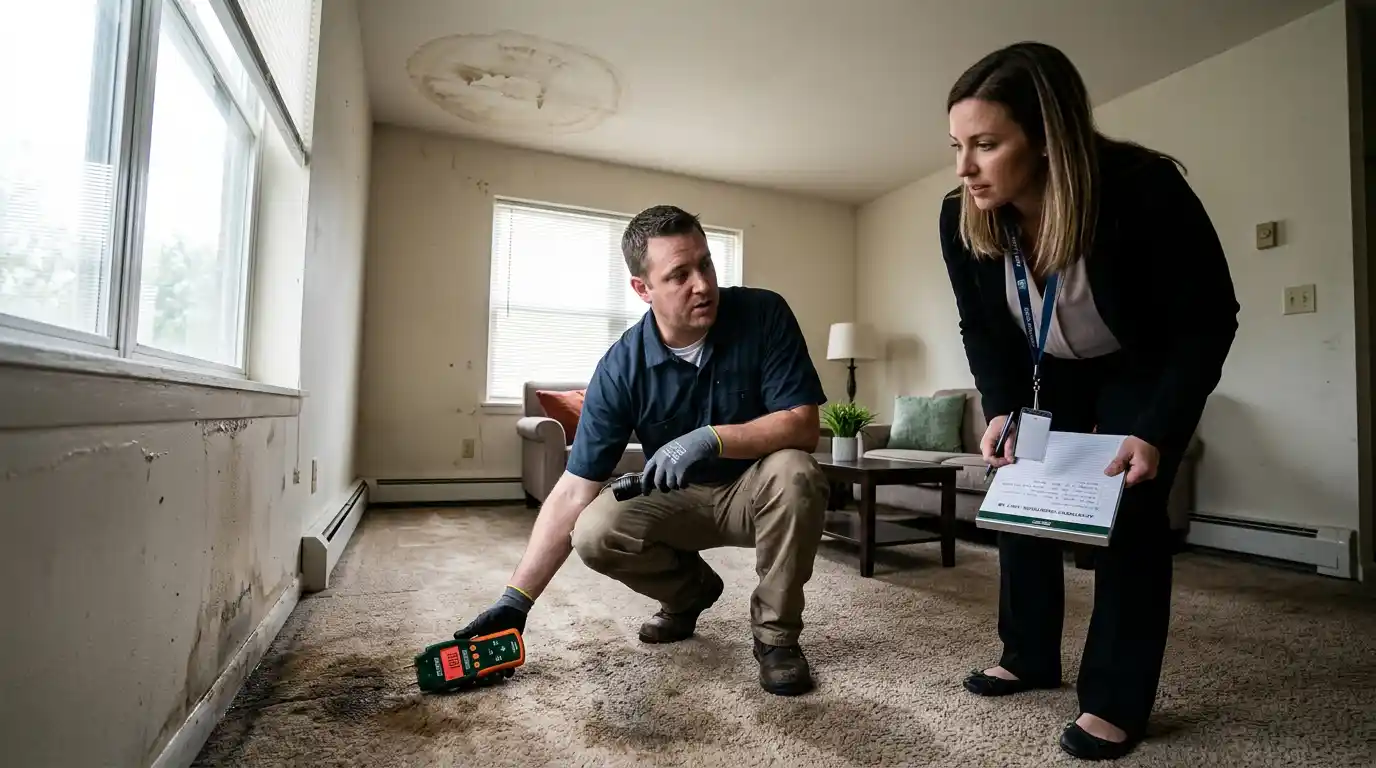
Wet-season rentals can turn small complaints into bigger property questions fast. A tenant may report damp carpet after heavy rain, a brown ceiling spot after a windstorm, or a musty odor that seems worse in the morning.
In Portland-metro properties, we often see lower-level moisture, roof exposure, plumbing leaks, crawlspace dampness, freeze-related pipe problems, and smoke odors that look minor at first.
For landlords, property managers, and commercial owners, the first goal is not blame. It is source control, tenant safety, documentation, and the right cleanup decision before moisture spreads behind finishes.
Treat the Complaint Like an Early Warning
A fast, organized response helps you protect people, records, and the property before the issue becomes harder to diagnose.
Ask for the basics right away: where the dampness is, when the tenant first noticed it, whether the area is growing, and whether there is dripping, standing water, sewage odor, smoke odor, or a sagging ceiling. Request photos or video before items are moved.
If there is standing water near outlets, wet light fixtures, ceiling bulging, sewage backup, or unknown contaminated water, keep the tenant away from the area and contact qualified help. Do not ask a tenant to pull carpet, open walls, use electrical equipment, or handle drain-backup water.
Water-damaged areas and items should be dried within 24 to 48 hours to help prevent mold growth. That is a practical management window. The first day should focus on safe access, stopping the source, documentation, and whether professional drying is needed.
Read the Signs Before You Choose the Fix
Damp carpet, ceiling spots, and odors can come from different sources, so the visible symptom should guide your next inspection.
Damp carpet
Damp carpet may come from a plumbing leak, appliance failure, stormwater at a door, basement seepage, or wet materials below the flooring. The biggest mistake is drying the surface while the pad, subfloor, tack strip, or wall base stays wet.
If the problem appears after rain, compare the wet area with grading, downspouts, thresholds, crawlspace access, and nearby plumbing. In lower-lying or river-adjacent properties, repeated wet-season saturation can push moisture into basements and ground-floor units.
For lower-level warning signs, this guide to basement seepage after spring rain can help you separate drainage pressure from a broader water damage issue.
Water spots
Water spots on ceilings or walls deserve source tracing before cosmetic repairs. A stain below a bathroom, laundry area, or mechanical room may point to plumbing. A stain that grows after rain may point to the roof, flashing, gutter, siding, or attic moisture. A spot that appears after a cold snap may involve a pipe that froze, split, and then leaked during thaw.
Do not repaint until the moisture path is understood. If you seal in a stain while materials remain damp, the complaint can return as bubbling paint, odor, soft drywall, or visible mold.
For upper-level stains, review spring ceiling stains before you assume the mark is only cosmetic.
Odors
Musty odor often means trapped moisture, but odors can also come from sewage, smoke residue, wet crawlspace insulation, damp carpet pad, microbial contamination, or debris after storm damage. Treat sewage or drain odor more cautiously than a clean-water spill. Keep tenants away from affected materials and do not ask them to clean contaminated water.
What to Document for Tenants, Owners, and Insurers
Good records reduce confusion and help every decision stay tied to evidence instead of assumptions.
Capture the first report
- Save the tenant’s message, photos, time of discovery, and any description of odors or active water.
- Note whether weather, plumbing use, appliance use, or maintenance work happened shortly before the complaint.
Photograph the path, not just the spot
Take wide shots of the room, close-ups of stains, carpet edges, baseboards, ceilings, closets, adjacent rooms, and the likely source area. Include affected contents only when needed.
Track what changed
Record when water was stopped, who inspected the area, and what materials were wet. If the unit is commercial or mixed-use, note customer access issues, tenant disruption, and any rooms that cannot be used.
The point for landlords is simple: shallow water can still affect flooring, walls, contents, and building systems.
Do Not Let a Small Complaint Become a Repeat Loss
The goal is to solve the moisture problem, not just make the room look normal for the next showing.
Avoid three common mistakes.
- First, do not rely on household fans alone. Drying requires source control, water removal, humidity control, and verification of what materials are still wet. The difference is explained in what actually dries water-damaged areas.
- Second, do not assign fault before the source is known. A tenant may notice the odor, but the cause may be a roof leak, crawlspace issue, drain backup, old supply line, window leak, or exterior water pressure.
- Third, do not ignore damp crawlspaces or lower-level cavities. Wet insulation, trapped ground moisture, and damaged vapor barriers can affect rooms above.
The 24-to-48-hour drying window matters again here because hidden wet materials can drive odor and mold concerns even when the carpet surface feels better.
When to Bring in Restoration Help
Professional help is most useful when the source is unclear, the water is spreading, or tenant disruption is becoming a property-use issue.
- Call for help when carpet stays damp after initial cleanup, odors return, stains grow, water reaches walls or ceilings, sewage is involved, or multiple rooms are affected.
- Keep health guidance general and encourage tenants to consult appropriate medical professionals for personal health concerns.
Water damage may also lead to repair planning after mitigation. If wet drywall, flooring, trim, cabinetry, or insulation must be removed, plan repairs before normal use resumes.
Build a Better Rental Response Process
A simple playbook helps tenants report earlier and helps you make faster, cleaner decisions.
- Give tenants clear reporting instructions for damp carpet, water spots, musty odors, roof leaks, appliance leaks, smoke odor, and drain backups.
- Ask them to report early, avoid unsafe areas, and send photos before cleanup when possible.
- During turnovers and routine visits, check under sinks, around toilets, near water heaters, behind laundry equipment, around windows, at ceilings below bathrooms, and along exterior-facing walls.
For lower levels, include crawlspace access, sump areas, stored contents, baseboards, and carpet edges.
Early documentation and drying are not overreactions. They are property protection.
Frequently Asked Questions
1. What should a landlord do first when a tenant reports damp carpet?
Start by asking where the carpet is wet, when it started, and whether water is still entering. Ask for photos before anything is moved. If water is near electricity, contaminated water, or a sagging ceiling, keep the tenant away and call qualified help.
2. Is damp carpet always a mold problem?
No. Damp carpet is a moisture warning, not an automatic mold diagnosis. The concern grows when the carpet pad, subfloor, wall base, or nearby drywall stays wet. Fast source control and drying help reduce the chance of a larger mold remediation issue.
3. Should you let a tenant use fans on wet carpet?
Only if the area is safe, the water source is clean, and there are no electrical or contamination concerns. Fans alone may not dry carpet pad, subflooring, or wall cavities. If the water source is unknown, professional evaluation is the safer choice.
4. Why does a rental unit smell musty even when no water is visible?
Odor can come from hidden moisture in carpet pad, drywall, crawlspaces, insulation, cabinets, or wall cavities. It can also follow repeated rain, old leaks, or poor drying after a previous water event. Treat odor as a clue that needs source tracing.
5. Are water spots on ceilings urgent?
They can be. A small spot may reflect a slow leak, but it can also hide wet insulation, softened drywall, or an active roof or plumbing issue. If the stain grows, drips, darkens, or appears near electrical fixtures, restrict access and get help quickly.
6. What if the tenant thinks the odor is mold?
- Take the concern seriously and avoid debating it before the inspection.
- Ask when the odor appears, where it is strongest, and whether dampness, staining, or visible growth is present.
- Keep health advice general and suggest appropriate medical guidance for personal symptoms.
7. How should landlords document tenant water complaints?
- Save written reports, photos, videos, dates, tenant messages, inspection notes, and repair actions.
- Photograph the full room, not just the stain.
- Track when the source was stopped, which materials were wet, and what areas were restricted.
8. When is sewage cleanup different from normal water cleanup?
Sewage and drain backups can involve contamination, so they should not be treated like clean-water spills. Keep tenants away from the affected area, avoid DIY cleanup, and use qualified cleanup support. Porous materials may require different decisions than a clean-water event.
9. Can a damp crawlspace affect a tenant’s living space?
Yes. Moisture under a property can contribute to musty odors, wet insulation, subfloor staining, and recurring indoor dampness. This is common in older, lower-level, and storm-prone properties. Check crawlspaces when odor or carpet dampness has no obvious indoor source.
10. Should you repair paint or flooring before the area is dry?
No. Cosmetic repairs should wait until the moisture source and wet materials are addressed. Repainting or replacing flooring too soon can trap moisture. That can lead to repeated odor, staining, soft materials, and another tenant complaint.
11. When should a landlord call for professional restoration help?
Call when water is spreading, the source is unclear, sewage is involved, odors return, multiple rooms are affected, or dampness reaches walls, ceilings, flooring layers, or crawlspaces. Professional help is also useful when tenant access, business use, or rental turnover depends on a clear recovery plan.


