



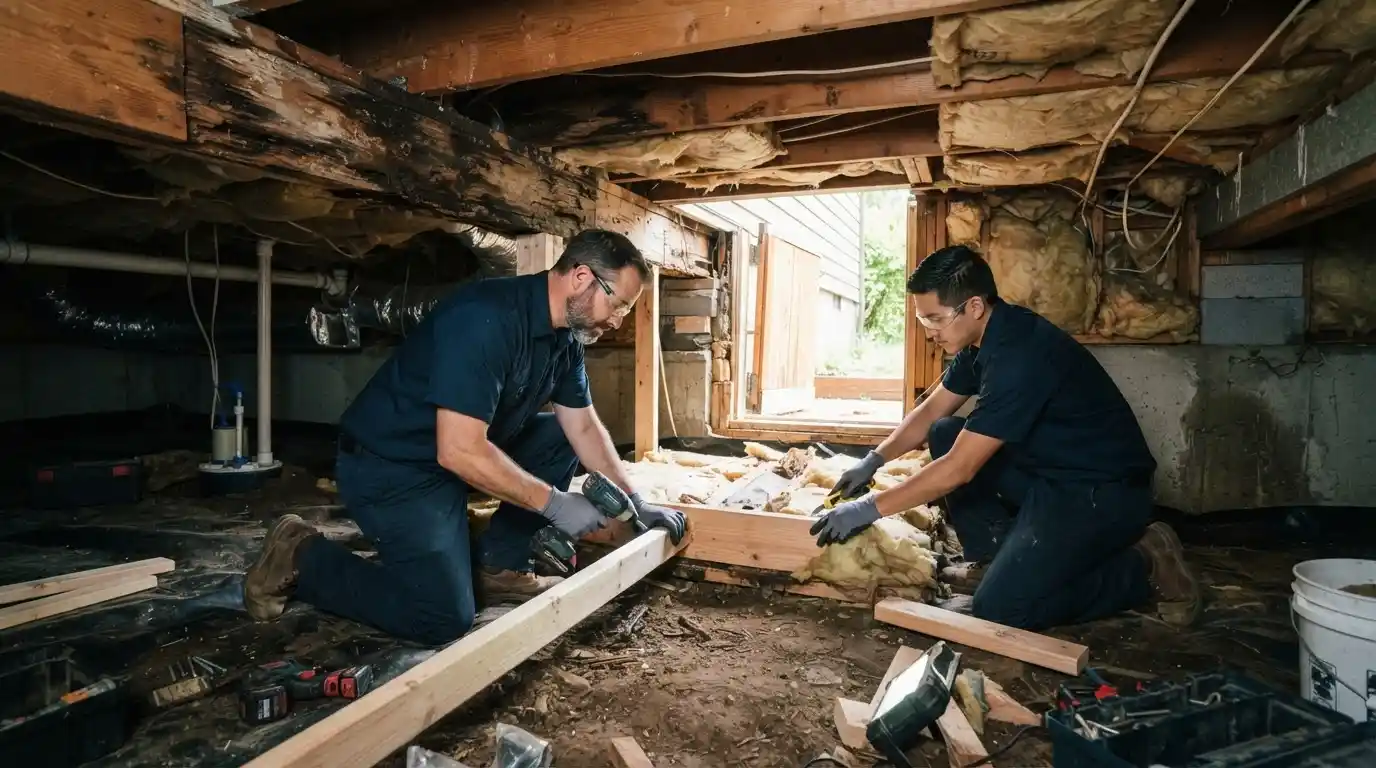
Fix Crawlspace Moisture While the Weather Is Still on Your Side
Wet-season property damage does not always announce itself upstairs. It often starts below the floor, where saturated soil, plumbing drips, storm runoff, freeze-thaw pipe problems, and poor ventilation keep a crawlspace damp after rain stops.
By summer, the rooms above may feel normal, but under-house materials may still hold moisture, odor, or microbial risk.
That is why dry-season crawlspace repair matters. Summer gives homeowners, renters, property managers, facility managers, and commercial owners a better chance to inspect, dry, remove damaged materials, and plan before heavy rain returns.
Across Portland-metro properties, lower-lying sites, west-side communities, east-county corridors, and river-adjacent neighborhoods face the same problem: moisture below the structure can become damage above it.
Why Summer Is the Smart Window for Crawlspace Repair
Summer reduces pressure that makes wet crawlspaces harder to diagnose. Use the drier stretch to find what failed and prepare the structure for the next wet season.
The source is easier to separate from the damage
During heavy rain, every symptom can look like one emergency. Water may come from runoff, seepage, a plumbing leak, wet soil, or a failed vapor barrier. During a drier period, it is easier to see whether new water is entering or older moisture remains trapped.
Access and repair decisions are more practical
Crawlspace work is slower when soil is saturated, and runoff is still feeding the problem. Summer can make it easier to remove damaged insulation, evaluate vapor barrier condition, check staining, and decide whether the next step is drying, replacement, drainage correction, or broader repair.
If you see standing water, sagging insulation, musty odor, or staining below the floor, contact PNW Restoration before the problem turns into a larger water damage restoration or mold remediation issue. We can help you understand whether the concern is simple cleanup, hidden moisture, contamination, or follow-on repair.
What Under-House Moisture Damage Usually Looks Like
Crawlspace moisture rarely stays neat or contained. It moves through air movement and contact with porous materials. Recognize the signs before the next storm.
Wet or sagging insulation
Insulation below the floor often absorbs moisture before you notice comfort changes inside. Once it sags, compresses, stains, or holds odor, drying around it may not solve the problem. Wet insulation can keep wood and subfloor materials damp after visible water is gone.
Torn, loose, or missing vapor barrier
A vapor barrier should help limit ground moisture. It cannot do much if it is ripped, bunched up, buried under debris, or no longer covering exposed soil. A damaged barrier can allow moisture vapor to keep rising into the crawlspace.
Musty odor or damp rooms above
Rooms above a wet crawlspace may develop musty odor, cold floors, cupped flooring, or recurring humidity. These signs do not prove a major structural problem, but moisture may be moving through materials or air pathways.
For a closer look at replacement decisions, review when a wet crawlspace may need barrier or insulation replacement.
Why Waiting Until Rain Returns Makes Repairs Harder
Dry-season repair reduces uncertainty before moisture returns. Once wet weather resumes, a crawlspace can take on new water while old damage is still unresolved.
Mold risk depends on moisture control
The key issue is not the calendar. It is how long materials stay damp. Public EPA mold and moisture guidance emphasizes moisture control and drying water-damaged materials within 24 to 48 hours.
That same timing matters below the house, where wet insulation, exposed soil, and wood framing can hold dampness out of sight.
Freeze-related leaks can start below the floor
Winter can add another layer of risk. Public guidance on how to prepare plumbing for winter weather warns that pipes can freeze or break at or below freezing. Under-house plumbing and poorly protected lines deserve attention before cold weather returns.
Secondary water damage can spread the scope
A crawlspace that looks “mostly dry” can still feed odor, swelling, staining, or microbial concerns upstairs. That is secondary water damage. It happens when moisture remains in materials or indoor air after the first cleanup.
A Practical Dry-Season Crawlspace Checklist
Use this checklist before the next wet season. Do not enter a crawlspace if there is standing water near electrical components, visible structural movement, sewage concern, sharp debris, animal waste, or unknown contamination.
Start outside the structure
Look at grading, downspouts, clogged gutters, splash discharge, and low spots that hold water near the foundation. Many crawlspace problems begin outside, then show up below the floor after soil stays wet.
Check visible crawlspace clues
Look for torn vapor barrier, exposed soil, wet or fallen insulation, staining on joists, condensation, rusted metal components, plumbing drips, and musty odor.
If you are comparing symptoms after rain, this guide on why a crawlspace can stay damp after rain can help you separate drainage pressure from lingering material moisture.
Treat contamination differently
Floodwater, sewage, runoff, animal waste, and debris change the cleanup decision. In those cases, drying alone may not be enough. Porous materials may need removal, and the work may require sewage cleanup services, biohazard and hazmat cleanup services, microbial contamination cleanup, or mold remediation services.
How a Strong Repair Plan Should Be Built
A good crawlspace plan connects the moisture source to the repair scope. It should not jump straight to cosmetic fixes while wet materials remain under the structure.
Identify what is wet and why
The first step is understanding whether moisture came from storm runoff, ground vapor, plumbing, basement water, floodwater, or repeated condensation.
For broader lower-level issues, professional water damage restoration may include inspection, water removal, area drying and dehumidification, cleaning and sanitizing, and restoration work when needed.
Decide what can stay and what should go
Not every damp crawlspace requires full replacement. But insulation that is wet, moldy, compressed, contaminated, or no longer attached may not be worth saving. A vapor barrier that is torn, shifted, or buried under silt or debris may also need replacement.
Plan for the rooms above
Crawlspace damage can affect flooring, trim, wall edges, and tenant spaces above. For occupied homes, rentals, mixed-use properties, and commercial buildings, the repair plan should consider access, disruption, stored contents, tenant communication, and whether reconstruction is needed.
For surface-level clues beyond the crawlspace, use these hidden moisture checks after spring rain before assuming the issue is isolated.
When to Bring in Restoration Help
Crawlspace moisture becomes a restoration issue when water has reached building materials, odor persists, contamination may be present, or the rooms above show damage. It also matters when the property is commercial, occupied by tenants, or tied to operations that cannot afford recurring disruption.
At PNW Restoration, we help with water damage restoration, basement water removal, mold remediation services, sewage cleanup services, storm damage restoration, and reconstruction services when material removal leads to repair work.
If the crawlspace is wet, musty, contaminated, or affecting the rooms above, request help before the next wet season resets the problem. For related next steps, review how to prevent secondary water damage after cleanup.
Frequently Asked Questions
Why is summer a good time to repair crawlspace moisture damage?
Summer often gives you a clearer view of what remains wet after the rainy season. It can be easier to separate active leaks from old trapped moisture. That helps you plan drying, material removal, vapor barrier work, and repair decisions before wet weather returns.
What are the most common signs of crawlspace moisture damage?
Common signs include musty odor, wet or sagging insulation, torn vapor barrier, exposed soil, staining, condensation, and standing water. Inside the property, you may notice cold floors, cupped flooring, damp smells, or recurring humidity. These clues can point to moisture below the floor system.
Does a damp crawlspace always mean the foundation is failing?
No. Crawlspace moisture can come from drainage problems, plumbing leaks, runoff, ground vapor, or condensation. A foundation crack can be involved, but it is not the only explanation.
The best next step is to identify the moisture path before choosing repairs.
Can wet crawlspace insulation be dried and reused?
Sometimes, but not always. Insulation that is sagging, compressed, contaminated, moldy, or holding odor may no longer perform properly. If it keeps nearby wood or subfloor materials damp, removal and replacement may be the better repair path.
When does a vapor barrier need replacement?
Replacement may make sense when the barrier is torn, loose, missing, bunched up, buried under debris, or no longer covering exposed soil. A barrier that no longer limits ground moisture can keep the crawlspace damp. Do not cover old damaged material without correcting the source of moisture.
Is crawlspace moisture a mold concern?
Moisture is the main condition that allows mold problems to develop. If wood, insulation, paper facing, or stored materials stay damp, the concern grows. Avoid disturbing suspected mold, and bring in qualified help when the affected area is large, hidden, or tied to water damage.
What should I do first if I find water under the house?
Keep people out if there is electrical risk, sewage concern, structural movement, or unknown contamination. Stop the water source if you can do so safely. Then document what you see and get the moisture source evaluated before starting repairs.
Can crawlspace water affect rooms above it?
Yes. Moisture below the floor can contribute to musty odor, humidity, cold floors, cupped flooring, and damage to subfloor materials. The crawlspace is connected to the rest of the building through framing, penetrations, and air movement. That is why under-house moisture should not be treated as isolated.
What makes crawlspace cleanup a contamination issue?
Floodwater, sewage, runoff, animal waste, chemical residues, and debris can all change the cleanup approach. In those situations, drying alone may not be enough. Porous materials may need removal, and specialized cleanup may be appropriate.
Should commercial property managers treat crawlspace moisture differently?
Yes. Commercial and rental properties add access, tenant disruption, customer use, storage, and operational continuity concerns. A repair plan should address the moisture source and the effect on occupied areas. Documentation and clear communication also matter when multiple parties use the property.
When should I call a restoration professional?
Call when moisture reaches building materials, odor persists, contamination may be present, or the rooms above show damage. You should also seek help if the source is unclear or if prior cleanup did not stop recurring dampness. Early evaluation can help prevent a small crawlspace issue from becoming a larger repair project.


