



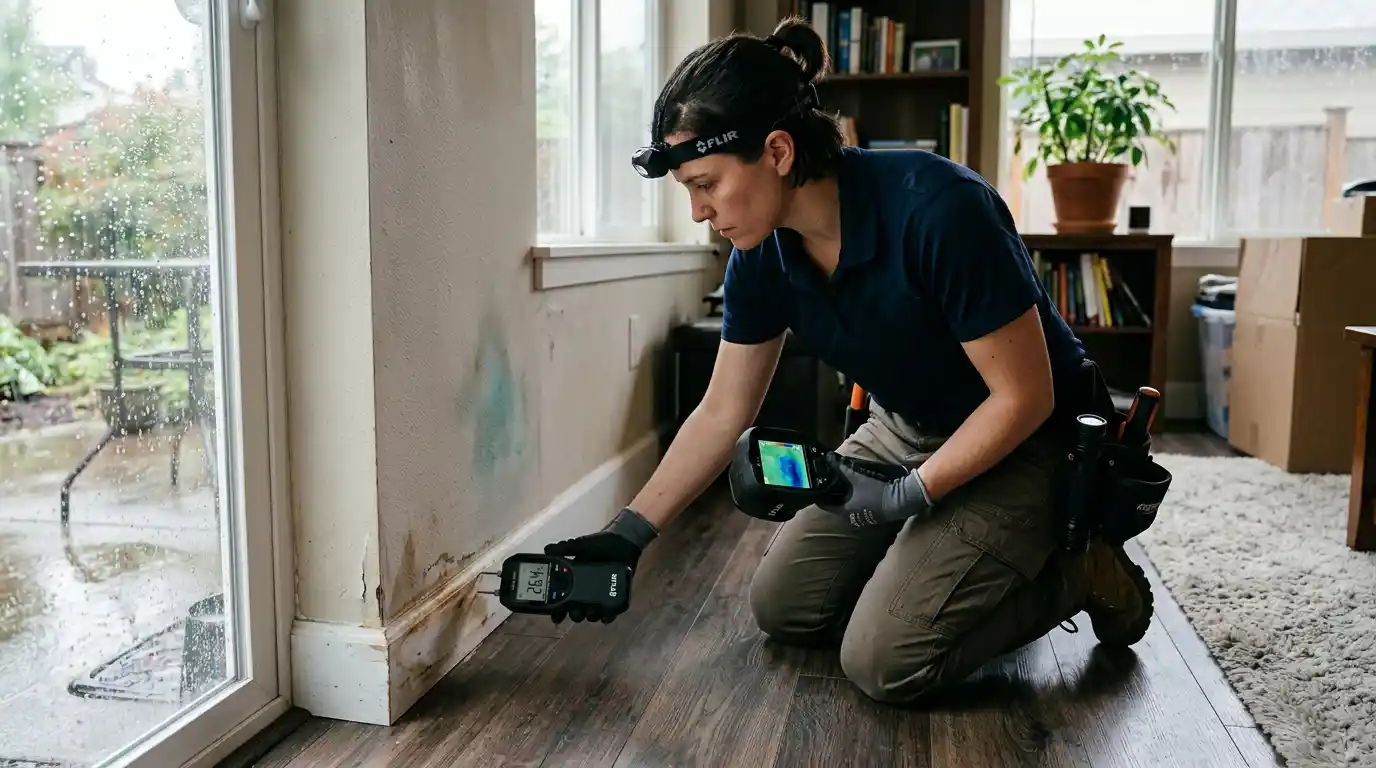
Spring rain does not always leave a dramatic mess. Sometimes it leaves a faint ceiling ring, a damp baseboard, a crawlspace smell, or a basement corner that feels colder than the rest of the room. That quiet moisture matters because summer heat can turn trapped dampness into odor, swelling materials, and mold concerns.
Across the region, wet-season water intrusion often starts with roof exposure, clogged drainage, saturated soil, lower-level seepage, wind-driven rain, or thaw-related pipe leaks. For homeowners, renters, business owners, property managers, and facility managers, the smartest time to check is before summer starts.
By then, spring rain has tested the structure, but warm weather has not yet hidden the warning signs behind ventilation, open windows, and busy turnover schedules.
Use this guide to inspect the places where moisture lingers after the visible puddle is gone.
Start With the Spring-to-Summer Moisture Clock
EPA guidance says it is important to dry water-damaged areas and items within 24 to 48 hours to help prevent mold growth. That window is the reason a spring rain check should not wait until the first hot week of summer. Water that slipped behind trim, under flooring, into insulation, or inside a ceiling cavity may still be active even when the surface looks dry.
If you already see staining, musty odor, bubbling paint, soft drywall, lifted flooring, or water near electrical components, treat the area as a damage question, not a cleaning chore.
For active leaks, lower-level water, soaked finishes, or business disruption, our water damage restoration services can help connect cleanup, drying, and repair decisions.
Interior Checks: Where Spring Moisture Hides
These rooms and surfaces often show subtle clues before a bigger repair is obvious.
Ceilings, attic edges, and upper walls
Look for yellow-brown rings, peeling paint, sagging texture, nail pops, or a stain that grows after each storm. A ceiling mark can come from a roof leak, attic condensation, plumbing above the room, or wind-driven rain. The key is pattern.
A stain that appears after rain points to a different source than a stain that appears after shower use or appliance operation. If you need a deeper roof-versus-plumbing comparison, review our guide to spring ceiling stains.
Baseboards, flooring edges, and wall bottoms
- Walk the perimeter of rooms that face exterior walls or sit over crawlspaces.
- Press lightly on trim and drywall.
- Look for swelling, separation, cupping, darkened seams, or a musty smell near corners.
These signs can mean water entered at grade, moved through a wall cavity, or wicked upward from flooring layers.
Cabinets, appliances, and utility areas
Check under sinks, behind dishwashers, near water heaters, around laundry machines, and below ice-maker lines. Spring rain is not the only source of hidden water damage. Plumbing failures and appliance leaks can overlap with seasonal dampness, which makes the source harder to identify later.
Lower-Level and Exterior Checks Before Heat Sets In
Basements, crawlspaces, foundations, and drainage paths decide how much spring water stays near the structure.
Basement corners and finished lower levels
A basement can look dry in the center while moisture remains behind base trim, stored boxes, insulation, or wall finishes. Check corners, stair bottoms, utility penetrations, and the wall-floor joint.
In lower-lying properties and river-adjacent neighborhoods, repeated rain and saturated soil can put pressure on the basement envelope. Our guide to basement seepage after spring rain explains how drainage, cracks, and recurring seepage can look similar at first.
Crawlspaces and subfloor clues
A damp crawlspace can affect the rooms above it.
- Watch for musty odor, cold floors, cupped flooring, sagging insulation, torn vapor barrier, or visible standing water.
- Do not enter if there is an electrical risk, structural movement, sewage concern, or unknown contamination.
For crawlspace material questions, see when a wet crawlspace may need barrier or insulation replacement.
Gutters, downspouts, grading, and foundation water
Walk the exterior after rain. Look for overflowing gutters, short downspouts, soil sloping toward the structure, ponding near foundation walls, and splash marks on siding. These are not cosmetic details. They show where water is being delivered.
Our guide to foundation water around gutters, downspouts, and grading can help you separate drainage pressure from interior symptoms.
When Moisture Becomes a Safety or Contamination Issue
Some water losses require more caution than towels, fans, and open windows can provide.
Floodwater, sewage, and dirty runoff
If water came from flooding, a sewer backup, runoff, or an unknown source, avoid contact and keep people out of the affected area. Moisture is not the only concern. Contaminants can remain in porous materials after the visible water recedes.
FEMA warns that one inch of floodwater can cause roughly $25,000 in damage, which is another reason shallow water should not be dismissed.
Smoke, soot, and odor after wet-season or dry-season events
Spring moisture checks can also reveal previous smoke or storm problems. Damp materials can hold odor, soot residue can settle into surfaces, and wildfire smoke can affect homes, rentals, mixed-use properties, and outlying communities during smoke-prone periods.
If odor returns when the air warms up, the issue may be trapped residue, damp porous materials, or both.
Commercial and rental properties
In commercial properties, moisture creates more than a repair issue. It can affect tenant communication, customer access, unit turnover, inventory, staff work areas, and reopening decisions.
Document affected rooms, source clues, photos, dates, and whether materials feel damp or soft. That record helps keep decisions organized if drying, removal, or reconstruction planning becomes necessary.
A Simple Hidden Moisture Checklist
Use this list before the summer heat makes odor and material damage harder to trace.
Look, touch, and smell
- Check ceilings, wall bottoms, flooring seams, closets, cabinets, crawlspace access points, and basement corners.
- Look for stains, swelling, bubbling paint, musty odor, soft drywall, cupped flooring, and damp storage items.
Track patterns
Ask what changed after the last rain. Did the stain grow? Did the smell return? Did one corner feel damp again? Repeating patterns often reveal a water path.
Know when to stop DIY cleanup
Stop and call qualified help if water is near electricity, if the ceiling is sagging, if materials are contaminated, if mold is visible, if the source is unknown, or if dampness keeps returning.
Remember the EPA 24 to 48 hour drying guidance and the FEMA one-inch floodwater damage warning. Small-looking water can still create a large recovery problem.
Frequently Asked Questions
1. What hidden moisture checks should I do after spring rain?
Start with ceilings, baseboards, flooring edges, basement corners, crawlspace access points, and cabinets near plumbing. Look for staining, swelling, peeling paint, soft drywall, musty odor, and damp stored items. A dry-looking surface does not always mean the wall, floor, or insulation behind it is dry.
2. Why does spring rain cause moisture problems that show up later?
Rain can saturate soil, overwhelm gutters, push water toward foundations, and expose roof or wall openings. Water may travel behind finishes before it becomes visible inside. By the time odor or staining appears, moisture may already be sitting in porous materials.
3. Is a musty smell after rain a warning sign?
Yes. A musty smell can point to damp materials, hidden water damage, or mold-supporting moisture conditions. The odor may come from a basement, crawlspace, wall cavity, closet, or soaked storage item. If it returns after every rain, treat it as a pattern that deserves closer inspection.
4. When should I avoid entering a wet basement or crawlspace?
Stay out if there is standing water near electricity, visible structural movement, sewage concerns, strong odor, or unknown contamination. Do not crawl into confined areas when you are unsure what caused the water. Qualified professionals can help evaluate the source and the safest next step.
5. Can a small amount of water still cause mold concerns?
Yes. Mold risk depends on moisture, time, and affected materials, not just water depth. Drywall paper, carpet padding, insulation, wood, and stored contents can hold dampness after the surface looks normal. Prompt drying and source control are important after even modest water intrusion.
6. What should property managers check before summer turnover?
Check tenant units, storage rooms, utility spaces, lower levels, ceiling stains, crawlspace odors, and areas around exterior walls. Document photos, dates, source clues, and recurring complaints. Early documentation helps separate maintenance issues from restoration needs.
7. How do I tell if a ceiling stain is from the roof or plumbing?
Look at when the stain changes. Rain-related stains often grow after storms or wind-driven rain. Plumbing-related stains may appear after bathroom use, appliance use, or supply-line activity. Either way, avoid painting over the stain until the moisture source is understood.
8. What should business owners do if moisture affects customer areas?
Prioritize safety, keep people away from wet materials, document affected areas, and protect inventory or equipment if it is safe. Moisture in customer-facing spaces can affect access, odor, appearance, and reopening decisions. A clear scope can help you decide whether drying, material removal, or repair planning is needed.
9. Is floodwater different from a clean-water leak?
Yes. Floodwater, sewage backups, and dirty runoff can carry contaminants. Porous materials may hold contamination even after the visible water is gone. Avoid contact and get qualified help when the water source is unknown or potentially contaminated.
10. What services may be relevant after hidden moisture is found?
Depending on the source and damage, water damage restoration, basement water removal, mold remediation, sewage cleanup, storm damage restoration, or reconstruction may be relevant. Smoke odor removal or fire and smoke damage work may also matter if odor or residue is part of the issue. The right scope depends on what is wet, what is contaminated, and what materials can be saved.
11. When should I call instead of continuing DIY drying?
Call when the source is unknown, dampness keeps returning, materials are soft or swollen, mold is visible, or water may be contaminated. Also call when moisture affects a rental, commercial space, shared wall, ceiling cavity, or crawlspace. The earlier the wet footprint is identified, the easier it is to make informed recovery decisions.


