



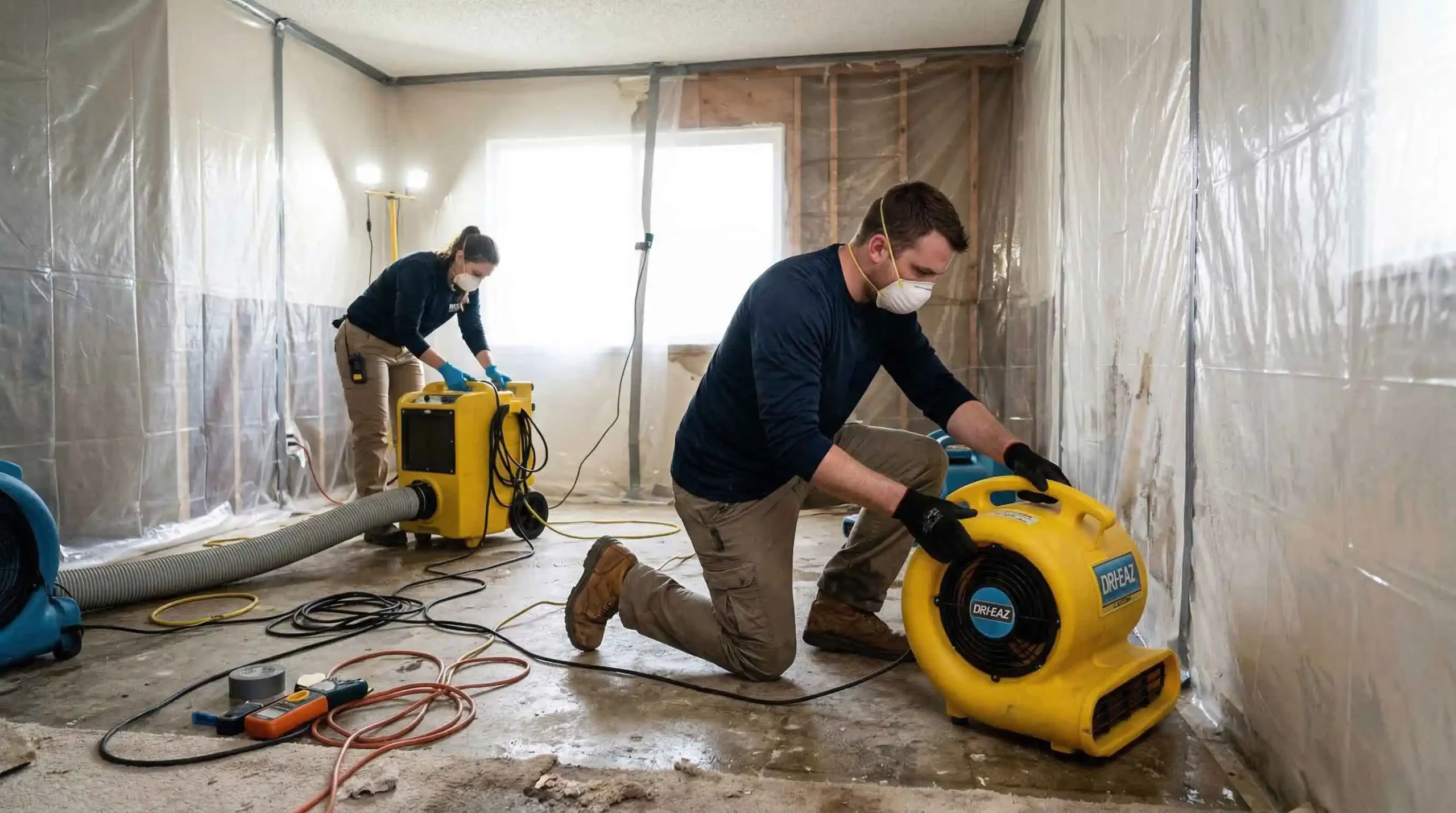
When storms bring strong winds and heavy rainfall to the Pacific Northwest, water damage calls spike fast. That’s not just because water gets in, it’s because the days after the first cleanup are when “secondary damage” starts stacking up.
At PNW Restoration, we see it all the time: the visible water is gone, towels are down, maybe a shop vac got most of it… and then a week later, there’s swelling, staining, lingering damp smells, or new damage showing up in the rooms next door. Storms don’t just create obvious problems; they create hidden ones.
Secondary water damage is what happens when moisture remains in materials or the indoor air after the initial cleanup. It can spread into wall cavities, under flooring, into insulation, and into adjacent rooms, expanding the scope and cost of the repair.
This guide walks through what secondary water damage is, why it happens even after “good cleanup,” and the practical steps you can take to prevent it.
What counts as secondary water damage?
Secondary water damage is damage caused after the initial event, not because new water entered, but because existing moisture wasn’t fully removed and controlled.
We recognize water removal and mitigation as more than cleaning up the mess; it’s about preventing secondary damage and protecting the property.
Common examples include:
- Warped floors or baseboards days later
- Bubbling paint or new ceiling stains
- Musty odors that weren’t there initially
- Mold growth risk increases when materials stay damp
- Damage spreading into rooms that “never got wet.”
Why initial cleanup often misses what matters most
Moisture hides where you don’t look
Water rarely stays on the surface. It travels and wicks into building assemblies, behind baseboards, beneath flooring, inside drywall seams, and through insulation.
That’s why our water damage process includes inspection and damage assessment, moisture detection and control, using tools to locate water on the property and remove it to help prevent mold and mildew growth and further damage.
Drying without dehumidification leaves a problem with the air
One of the biggest drivers of secondary damage is humidity. Drying alone isn’t enough: as water evaporates, indoor humidity rises, and without dehumidification, that moisture can re-condense elsewhere and contribute to mold.
This is why controlled drying and dehumidification need to happen together, not in sequence, not “if you have time.”
Household equipment isn’t built for structural drying
Fans help air move. But preventing secondary damage often requires targeted drying and moisture monitoring, especially when water reaches walls, floors, or ceilings.
We use professional-grade equipment such as LGR dehumidifiers, high-velocity air movers, HEPA filtration, and moisture detection tools to dry out properties after water damage.
The 24 to 48 hour reality (and why it matters)
Moisture left in place doesn’t just “wait politely.” Public guidance repeatedly highlights the need for rapid drying to reduce mold risk:
- The EPA recommends drying water-damaged areas and items within 24–48 hours to help prevent mold growth (see EPA’s mold and moisture guidance).
- If a flooded home and contents can’t be dried within 24 to 48 hours, you should assume mold growth and focus on thorough drying and fixing the moisture problem.
This doesn’t mean every incident becomes mold. It does mean the longer the materials stay wet, the more likely secondary complications become.
Preventing secondary water damage after initial cleanup
1) Stop the source completely
Secondary damage prevention starts with one question: Is the water actually entering the structure?
If it’s a roof intrusion, the weak point needs to be secured. If it’s plumbing, the line or fitting must be repaired before drying can succeed.
After storms, our process includes securing damaged areas (like roofs or broken windows) to prevent further damage.
2) Remove what can’t be “air-dried” in place
Some materials don’t recover well once saturated, especially if they trap moisture. If a material is holding water, it becomes a moisture reservoir that can keep feeding secondary damage.
We advise identifying and removing hidden moisture so it doesn’t linger behind finishes.
3) Don’t rely on airflow alone; control humidity
If you only use fans, you may speed up evaporation but leave humidity floating in the building, where it can re-condense in cooler areas.
Dehumidification is necessary because moisture can recondense elsewhere without it. That’s the heart of secondary damage prevention: remove moisture from materials and the air.
4) “Chase the moisture” into adjacent spaces
Secondary damage often shows up next door, not at ground zero. Check:
- Shared walls
- Rooms below/above the affected area
- Closets backing up to wet walls
- Flooring transitions
- Cabinets and toe-kicks
5) Keep a simple monitoring routine for 7 to 14 days
Even after professional drying, it’s smart to watch for:
- Odors that return after doors/windows are closed
- New stains after a humid day or rain event
- Flooring that starts to cup at the edges
- Paint or drywall texture changes
If anything changes, treat it as an alert, not a cosmetic issue.
6) Know when it’s time to call a pro
We recommend professional services for extensive water damage or situations involving contamination, such as sewage
If water reached walls, ceilings, or flooring layers, or if you suspect hidden moisture, professional moisture detection and controlled drying are the safer path.
Practical checklist: what to do (and what not to do)
Do this
- Document the damage early (photos help with records and insurance conversations)
- Remove standing water quickly if it’s safe
- Start drying and dehumidification as soon as possible
- Check adjacent rooms and hidden cavities
- Get a professional assessment if the water reached building assemblies
Don’t do this
- Don’t seal up wet materials behind paint, flooring, or drywall
- Don’t assume “no puddles” means “no moisture.”
- Don’t delay if odor or staining appears, secondary damage often accelerates after the first 48 hours
How we help at PNW Restoration
At PNW Restoration, we don’t treat cleanup as the finish line. We focus on the steps that prevent secondary damage: inspection, moisture detection, water removal, drying and dehumidification, and the follow-on restoration work needed to return the property to pre-damage condition.
To see what our full approach includes, visit our water damage restoration services page.
If you need an estimate or want us to check for hidden moisture and secondary damage risk, use our contact page.
Frequently Asked Questions
1) What is “secondary water damage”?
Secondary water damage is damage that develops after the initial cleanup because moisture wasn’t fully removed or controlled. It can show up as swelling, stains, odors, or damage spreading into adjacent rooms. Mitigation is a way to prevent secondary damage, not just remove water.
2) Why does secondary damage happen even after I removed the standing water?
Because moisture often remains inside walls, under floors, and in the indoor air. We recognize moisture detection tools and dehumidification as critical to removing hidden moisture and preventing further damage.
3) How quickly do I need to start drying to reduce mold risk?
Public guidance commonly references a 24 to 48-hour window for drying to help reduce mold risk. If you can’t dry thoroughly, call a qualified restoration team.
4) Are fans enough to prevent secondary damage?
Fans help airflow, but drying alone isn’t enough because humidity rises as water evaporates. Without dehumidification, moisture can recondense elsewhere and contribute to mold.
5) What equipment do professionals use that homeowners usually don’t have?
The PNW Restoration uses professional-grade LGR dehumidifiers, high-velocity air movers, HEPA filtration, and moisture detection tools as part of drying and dehumidification work.
These tools help reach moisture trapped in building materials.
6) Where should I look for hidden moisture after cleanup?
Check baseboards, flooring edges, cabinets/toe-kicks, closets adjacent to wet walls, and rooms above/below the affected area. Moisture detection + control is key because hidden moisture can lead to mold/mildew and further damage.
7) Why does humidity spike after water damage?
As wet materials evaporate, they release moisture into indoor air. Without dehumidification, moisture can recondense and create new wet zones. Controlling humidity is central to preventing secondary damage.
8) When should I call a professional instead of DIY?
If water reached walls/ceilings/flooring layers, if the affected area is large, or if there’s potential contamination. PNW Restoration recommends professional services for extensive water damage or situations involving sewage contamination.
9) What storm conditions tend to trigger repeat water problems?
Storms with strong winds and heavy rainfall can open up rooflines and exterior weak points and drive water into hidden spaces. These conditions often accompany storms and are part of why professional inspection and restoration matter.
10) How do I know if I successfully prevented secondary damage?
If dryness holds steady and you don’t see new staining, odor, warping, or humidity issues over the following days, that’s a good sign. For storm losses, PNW Restoration includes a final quality check and walkthrough to confirm restoration is complete. If anything changes, get it checked early.


