


In Portland-metro properties, water damage rarely stays limited to the place where it starts. A ceiling leak after weeks of rain, a burst pipe during a winter thaw, a lower-level flood in a water-adjacent property, or an appliance failure in a mixed-use building can all trigger the same problem: water moves fast, then hides.
It seeps into drywall, flooring, trim, insulation, and lower-level materials before the full damage is visible. Local guidance from Portland Water also notes that when temperatures are at or below freezing, pipes can freeze or break, which helps explain why interior water losses can escalate quickly in colder periods.
That is why water damage restoration is a process, not a single task. It is not just about removing puddles or drying the room that looks wet. The goal is to identify the source, limit further spread, dry the affected structure, address contamination concerns if present, and repair the materials that did not recover.
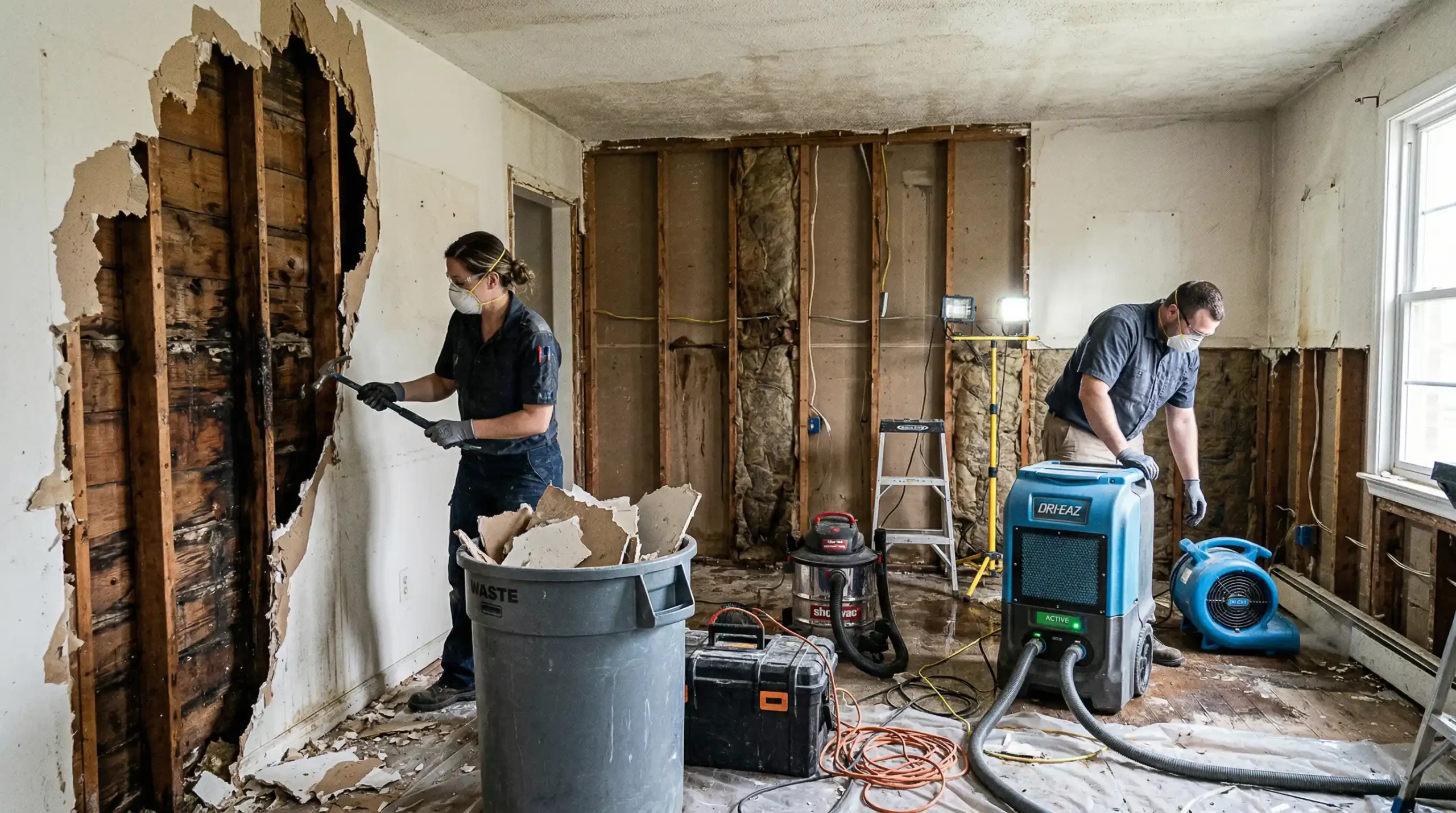
According to the general restoration guide, property restoration includes emergency mitigation, damage assessment, water extraction, drying, cleaning, mold remediation, smoke and odor removal, and structural repairs. It also includes inspection and damage assessment, water removal, drying and dehumidification, sanitization, and restoration.
Step 1: Inspection, Safety, and Source Control
The first part of water damage restoration is figuring out what kind of water event happened and whether the area is safe to enter. That includes identifying the source, checking how far the water spread, and looking for immediate concerns such as electrical hazards, contamination, or unstable materials.
You should turn off the water source if applicable, avoid flooded areas with electrical risks, and not attempt to clean up more contaminated water without proper equipment.
This early stage matters because two water losses that look similar can require different responses. A clean supply-line leak is not handled the same way as a sewage backup or outdoor floodwater entering the building.
What gets checked first
Water source and category
The response depends on whether the water came from a plumbing leak, an appliance failure, a storm-related intrusion, or a contaminated source.
Spread into hidden areas
Ceilings, wall bottoms, flooring layers, insulation, and lower levels often hold more water than the surface suggests.
Immediate hazards
Electricity, slippery surfaces, sewage exposure, and storm-damaged openings can all change what should happen next.
Step 2: Water Extraction and Removal
Once the area has been assessed, the next step is removing as much water as possible, as quickly as possible. Extraction is one of the core early tasks because standing water and saturated materials continue spreading damage while they remain in place.
This stage is more important than many people realize. Water removal is not only about what is visible on the floor. It is the first chance to reduce how much moisture reaches subfloors, trim, drywall, storage contents, and structural cavities. The EPA says water-damaged items should be dried within 24 to 48 hours to help prevent mold growth, which is one reason extraction and early drying move so quickly in professional restoration work.
Why fast extraction matters
It limits the spread
The faster water is removed, the less time it has to wick upward and outward into porous materials.
It reduces secondary damage
Swelling, staining, odor, and material breakdown all become more likely when standing water remains.
Step 3: Drying and Dehumidification
After extraction, the building still has to be dried. This is where many people underestimate the process. A room can look almost normal while moisture remains inside walls, under flooring, in insulation, or in lower levels. Drying and dehumidification are separate stages after water removal, which reflects how often hidden moisture is the real threat after the visible water is gone.
This is also where restoration becomes more than a cleanup job. Drying is what helps prevent a smaller leak from turning into a mold problem or a much larger rebuild. The EPA’s guidance is clear that moisture control is the key to mold control, and that water-damaged areas should be dried within 24 to 48 hours. In Portland-metro conditions, where wet seasons and lower-level dampness are common, that window matters even more.
Common drying targets
Floors and subfloors
Water often remains under surface materials after the top layer appears dry.
Walls and ceilings
Leaks from above can soak drywall paper, insulation, and framing behind the visible stain.
Basements and crawlspaces
These areas tend to stay wetter longer, which is why we also offer Basement Water Removal as a separate service.
If water has reached a ceiling cavity, lower level, finished floor, or wall assembly, the safest next step is to document the source, limit access to unsafe or contaminated areas, and get a clear restoration assessment before starting cosmetic repairs. Call now – (971) 247-3470.
Step 4: Cleaning and Sanitization
Once water is out and the structure is dry, restoration often moves into cleaning and sanitization. This step becomes especially important if the water was contaminated, if debris or residue was left behind, or if the affected area includes belongings, cabinets, finished surfaces, or lower-level materials. The water damage process explicitly includes sanitization and cleaning as part of the workflow.
This part of the process is also where decision-making changes based on the source water. Clean-water events may focus more on drying and material preservation. Dirty-water or sewage-related events may require more removal and cleanup because some porous materials cannot simply be dried and left in place. EPA flood guidance also notes that floodwater may contain raw sewage or other hazardous substances, which is why contaminated losses are treated more cautiously.
Step 5: Restoration and Repair
The last stage is the one most people picture first: repairing what was damaged. But in real restoration work, repairs come after the source has been addressed, the water has been removed, and the affected assembly has been dried and cleaned. Structural repairs are part of the process, and restoration is the final step after drying and sanitization.
Depending on the loss, this final phase may include replacing drywall sections, repairing flooring, restoring trim, addressing odor issues, or coordinating follow-on work if mold or contamination changed the scope. This is why we also distinguish mitigation, drying, and restoration as separate but connected phases. That framing is useful because it shows that the visible repair is only one part of the overall response.
Why the Process Changes by Property Type
The basic sequence stays consistent, but the details change depending on the building. Older homes may have hidden voids and layered materials that hold moisture longer. Commercial properties may have tenant disruption, staff access, customer-facing space, or shared walls to consider.
Lower-level properties may face repeated dampness or flood-related complications. In all of those cases, the process still follows the same logic: assess, remove, dry, clean, then repair. What changes is how much of the building was affected, and how careful the restoration team has to be when mapping the full damage.
What Water Damage Restoration Really Means
The simplest way to understand the process is this: water damage restoration is performed in stages because moisture problems grow in stages. First, the water enters. Then it spreads. Then it settles into materials. Then it creates bigger cleanup and repair decisions if it is not handled correctly. A proper restoration process is designed to interrupt that chain before a limited water event becomes a larger structural, contamination, or mold-related problem.
Frequently Asked Questions
1) What is the first step in water damage restoration?
The first step is usually inspection and source control. The affected area needs to be checked for safety, water source, spread, and contamination concerns before extraction and drying begin. Avoid flooded areas with electrical risks.
2) Is water damage restoration the same as water removal?
No. Water removal is only one step. The broader process also includes assessment, drying, sanitization, and final restoration or repair.
3) Why is drying separate from extraction?
Visible water can be removed while hidden moisture remains in walls, floors, ceilings, and lower levels. Drying and dehumidification address the moisture that extraction alone does not solve.
4) How quickly should drying begin?
As quickly as possible. EPA guidance says water-damaged areas and items should be dried within 24 to 48 hours to help prevent mold growth. That timeline is one reason professional restoration moves fast after extraction.
5) What happens if the water is contaminated?
The process becomes more cautious. More cleaning, sanitization, and material removal may be needed, especially if the water involved sewage or outside floodwater.
6) Do repairs happen before the area is fully dry?
They should not. Restoration and repair come after water removal, drying, and cleaning, not before. Repairing too soon can hide ongoing moisture and create bigger problems later.
7) Why can a small leak turn into a large project?
Because water spreads into hidden building layers. A stain or puddle may be only the visible part of the loss, while drywall, insulation, trim, and flooring underneath are still wet.
8) Is the process different for basements?
The sequence is similar, but lower levels often dry more slowly and may involve seepage, floodwater, or stored contents. That is why basement water removal is a separate service.
9) How does Portland’s weather affect the process?
Wet seasons and winter pipe breaks can create sudden indoor water losses, and local guidance notes that frozen pipes are more likely to leak or burst as temperatures thaw. That makes quick assessment and drying especially important in this region.
10) What should people avoid doing after water damage?
You should not enter flooded areas with electrical risks or attempt to clean up contaminated water without proper equipment. DIY action may make the situation less safe or less manageable.


