


When local weather patterns shift into wind-driven rain, heavy downpours, and storm season surprises, water damage calls tend to spike. Storms don’t just break shingles; they push water into rooflines, crawl spaces, and wall cavities, where damage can stay hidden until it becomes expensive.
That’s why, at PNW Restoration, we treat “who is doing the work” as seriously as “what needs fixing.” Our storm restoration process even includes a final quality check and walkthrough so you can confirm the job is done right before the case is closed.
If you’re researching water damage restoration, you’ll see a lot of companies claim experience. What often gets overlooked is the difference that certified technicians bring to a water loss, especially in the Pacific Northwest, where damp conditions can turn a minor leak into a bigger problem when drying is delayed.
Here’s what “certified” actually means in practice, why it matters, and how to make sure your restoration plan protects the structure, not just the surfaces you can see.
What does “certified technicians” mean in water damage restoration
In restoration, “certified” shouldn’t be a marketing word; it should signal formal training in water damage science and remediation steps.
For example, the IICRC’s Water Damage Restoration Technician (WRT) certification is designed to demonstrate knowledge of water damage effects and techniques for drying structures, including procedures for water losses and sewer backflows.
At PNW Restoration, we are IICRC-certified water damage restoration experts who evaluate the cause and extent of damage to build a prompt and effective restoration plan.
That matters because water damage isn’t one problem; it’s often a chain reaction involving moisture migration, material swelling, hidden wet zones, and (if not handled correctly) mold and microbial growth.
Why certified technicians reduce risk in a water loss
1) They’re trained to find moisture you can’t see
Water loves the path of least resistance, behind baseboards, under flooring, inside cabinets, and into drywall seams. If the inspection misses those areas, drying can look “complete” while moisture still sits in the assembly.
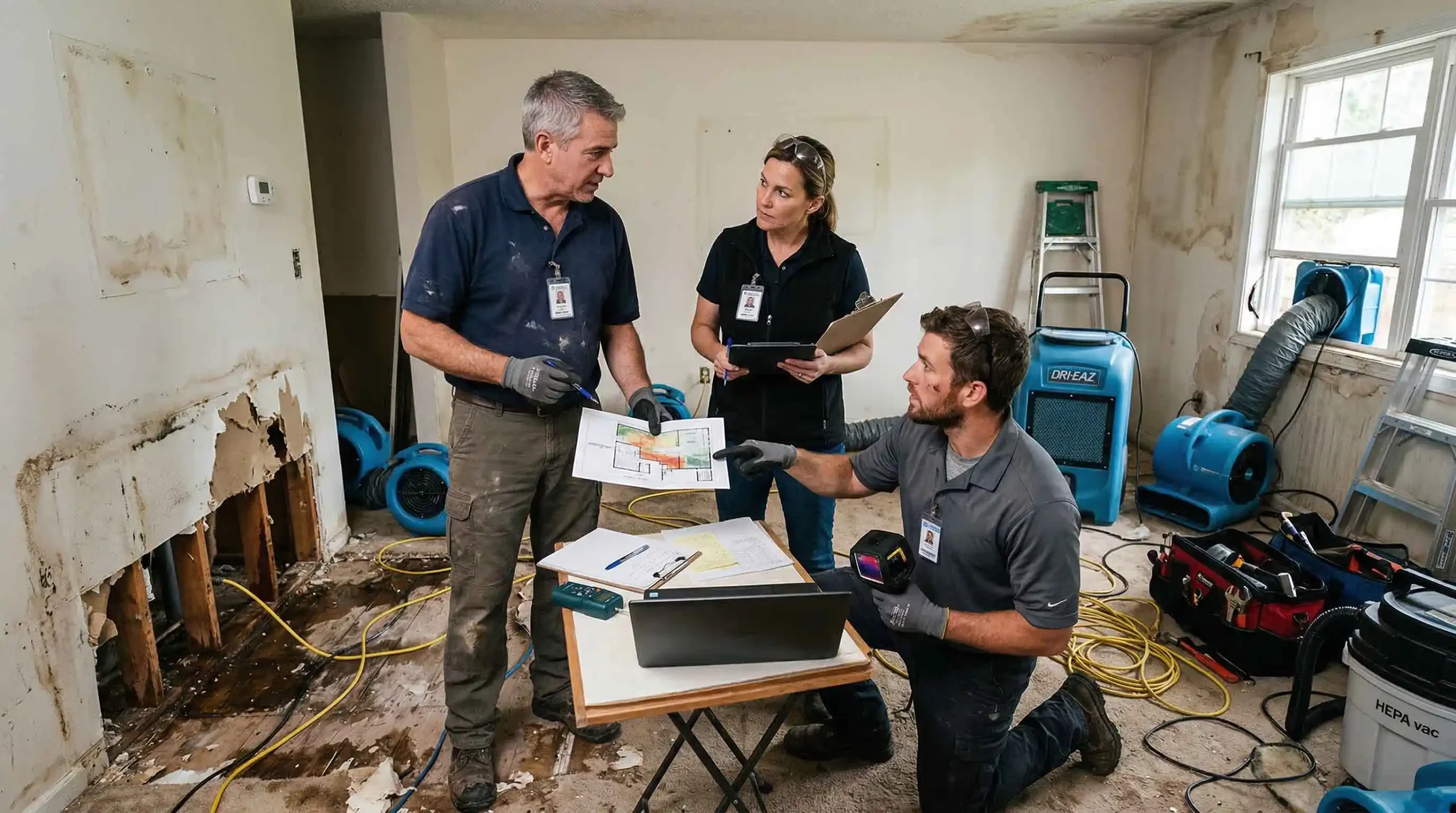
Our process includes inspection and damage assessment, followed by moisture detection and control, using special tools to find and remove water to help prevent mold and mildew growth and further damage.
A certified technician is more likely to treat moisture mapping as a must-do step, not an optional add-on.
2) They understand the clock you’re working against
The biggest danger after a leak or flood isn’t just the immediate mess; it’s what happens next if materials stay wet.
CDC guidance warns that if you cannot dry your home and contents within 24 to 48 hours, you should assume mold growth and focus on fully drying everything and correcting the moisture problem.
That time window is exactly why training matters: certified technicians are taught how to set up drying and dehumidification strategically to get ahead of secondary damage, not just respond to what’s obvious.
3) They’re prepared to adjust the plan when conditions change
Drying isn’t “set it and forget it.” Humidity, temperature, airflow, and material type all change how quickly a structure dries. Certification programs (like IICRC WRT) emphasize understanding water damage effects and drying techniques, so technicians can adapt when a loss is more complex than it looked on day one.
At PNW Restoration, we also use advanced drying equipment and expertise as part of professional mitigation, especially for extensive water damage or losses involving contamination.
4) They’re better equipped for higher-risk scenarios
Some water losses are “clean” supply-line leaks. Others involve backups, seepage, or water that has contacted contaminants. In those situations, the work may require more robust cleaning and sanitizing steps, not just drying.
Our water damage tips specifically recommend professional services for extensive losses or situations involving sewage contamination, noting our team of certified technicians and advanced drying equipment.
The real-world difference: drying the structure vs. “making it look normal.”
One of the biggest frustrations homeowners share is this: “Everything looks fixed…so why does it still smell damp?” That often happens when work focuses on visible finishes but doesn’t fully address hidden moisture.
We go beyond surface-level repairs, including moisture detection, mold/mildew prevention measures, and structural repair/restoration.
And our storm damage process explicitly includes a final inspection and walkthrough tied to quality and industry standards, because restoration should be verifiable, not assumed.
What to ask before hiring a water damage restoration company
Use these questions to quickly “screen” whether you’re getting certified expertise, or just a cleanup crew:
Training and certification
- Are your water damage technicians IICRC-certified?
- Who is responsible for the inspection and the restoration plan?
Equipment and approach
- How do you locate hidden moisture (tools + process)?
- What drying and dehumidification steps will you use?
Mold and secondary damage prevention
- What steps are taken to prevent mold/mildew growth if materials remain wet?
- How do you decide what needs cleaning/sealing/treatment?
Documentation and closeout
- Do you provide documentation and estimates for insurance coordination? (At PNW Restoration, we assist with insurance claims by providing documentation/estimates and working with the provider in storm restoration contexts; similar documentation discipline is a good sign for water losses as well.)
- Do you do a final walkthrough/quality check?
A quick seasonal note for the region
In the Pacific Northwest, storms often bring strong winds and heavy rainfall, exactly the combination that can drive sudden intrusions and hidden moisture issues. If you’re dealing with repeated wet weather, certification becomes even more important because drying strategy and moisture control are what stand between “a handled incident” and “a recurring problem.”
How we approach water damage restoration at PNW Restoration
When you call us, we don’t treat water damage like a one-size-fits-all job. We start with a rapid inspection and assessment, then use tools for moisture detection and control, followed by mitigation, drying, and restoration/repairs depending on what the structure needs. We use certified technicians and advanced drying equipment as part of doing the job thoroughly.
If you want to see our full approach, start here: water damage restoration services.
Frequently Asked Questions
1) What does “certified technician” mean in water damage restoration?
In restoration, certification typically means formal training in water damage science and drying methods. For example, IICRC’s WRT program focuses on understanding water damage effects and techniques for drying structures. Certification helps signal that the technician has studied standardized procedures, not just learned on the job.
2) Does certification matter for “small” leaks?
Yes, small leaks can still soak drywall edges, cabinets, or subfloors where moisture hides. PNW Restoration’s process includes inspection plus moisture detection tools to find and remove water you might not see. Certified training increases the odds that those hidden zones are checked and dried correctly.
3) How quickly can mold become a concern after water damage?
CDC guidance notes that if you can’t dry your home and contents within 24 to 48 hours, you should assume mold growth and focus on thorough drying and fixing the moisture problem.
4) What’s the biggest advantage of certified technicians during drying?
Drying isn’t just running fans; it’s balancing airflow, humidity control, and targeted drying based on materials. IICRC WRT certification emphasizes understanding drying techniques and water damage impacts, helping technicians make informed adjustments.
5) How do professionals find moisture inside walls or floors?
We use special tools for moisture detection and control to locate water on the property and remove it to reduce the risk of mold/mildew and further damage. During your estimate, ask what tools are used and where readings are taken.
6) If water damage involves a backup, should I always call a professional?
Situations involving sewage contamination are higher risk and typically need professional mitigation and sanitizing steps. PNW Restoration specifically recommends professional services for extensive losses or sewage contamination scenarios. When in doubt, consult qualified restoration professionals.
7) Will a restoration company help with insurance paperwork?
Insurance handling varies by provider and policy. For storm losses, we assist with insurance claims by providing documentation/estimates and working with the insurance provider to streamline the process. For water damage, ask what documentation you’ll receive and what coordination is offered.
8) What should be included in a proper restoration “closeout”?
A good closeout includes a final walkthrough and quality check, plus clarity on what work was completed. Our storm restoration process includes a final inspection and walkthrough before closing the case. You can request similar verification steps for water losses.
9) How do storms and rainy seasons change restoration priorities?
Storms can pair strong winds with heavy rainfall, increasing the chance of intrusion and hidden wet zones. In those periods, fast assessment plus measured drying matters more, because damp conditions can slow natural drying and increase risk.
10) When should I contact PNW Restoration for water damage help?
If you have standing water, visible damage, or suspect hidden moisture (musty smells, soft flooring, stains), it’s smart to get a professional assessment. Our team provides 24/7 emergency response and water damage restoration support.


