



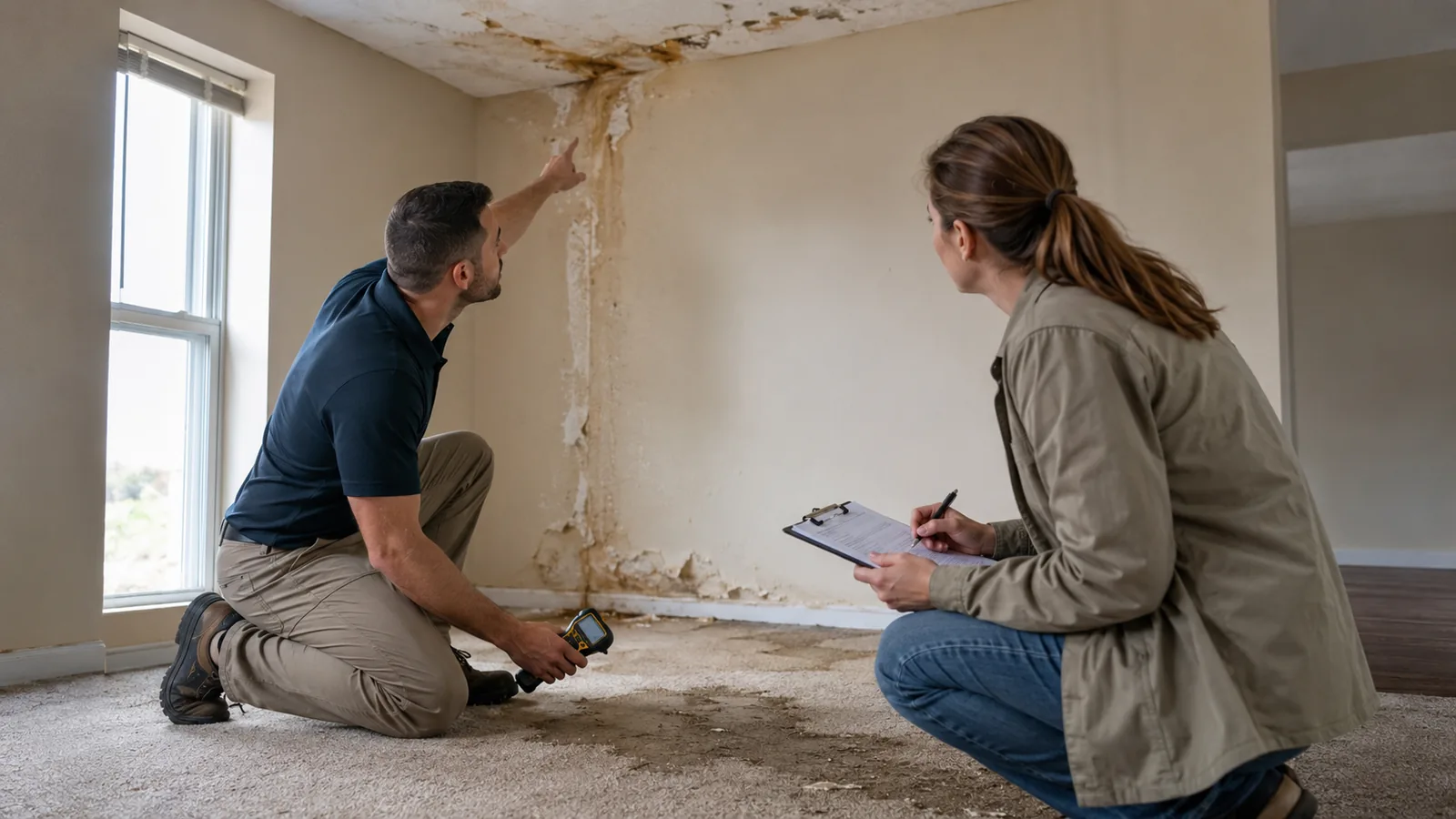
Wet-season rain, roof exposure, plumbing failures, and winter freeze events can create water problems quickly in Portland-metro rental properties.
A tenant may first notice damp carpet, a spreading ceiling stain, peeling paint, or a musty odor. What looks minor at first can involve moisture beneath flooring, inside drywall, or above a ceiling.
That raises an important question: how long does a landlord have to fix water damage?
There is no single deadline that applies to every rental, every type of leak, or every jurisdiction. The required response depends on where the property is located, how serious the condition is, what building systems are affected, and whether the problem affects habitability.
For landlords and property managers, the safest property-management approach is simpler than waiting for a legal deadline. Stop active water, identify what became wet, document the condition, begin appropriate drying, and coordinate necessary repairs.
How Long Does a Landlord Have to Fix Water Damage?
Legal deadlines and practical restoration timelines are related, but they are not the same thing.
A landlord’s obligation may involve several stages. Stopping the leak is one task. Drying wet carpet, walls, ceilings, or subflooring is another. Repairing damaged finishes may come later.
Washington rentals have specific repair-start timelines
For Washington rental properties, written notice plays an important role. Washington law sets deadlines for beginning remedial action after the landlord receives qualifying notice.
The landlord must generally begin action as soon as possible and no later than 24 hours when a condition removes hot or cold water, heat, or electricity, or creates an imminent hazard to life. The statute allows up to 72 hours for certain major fixtures and up to 10 days for other covered conditions, subject to circumstances beyond the landlord’s control.
These periods address when remedial action must begin. They do not mean wet building materials should simply remain untreated until the last available day.
Oregon focuses heavily on habitability and the condition
Oregon requires rental housing to meet habitability standards, including protection from water and weather and functioning plumbing and sewer systems.
Oregon rental repair guidance explains that landlords must keep rental units and common areas safe and in good repair.
Oregon does not create one simple universal water-damage deadline that fits every situation. Different notice procedures and tenant remedies can carry different timelines.
A serious active leak, loss of essential services, or unsafe condition should therefore be evaluated based on the actual circumstances rather than a generic number of days.
A legal deadline is not a drying schedule
Water keeps moving after the original leak. Damp carpet may mean the pad or subfloor is wet. A ceiling stain may involve insulation or drywall above the visible mark.
For that reason, water damage restoration should focus on the actual moisture footprint, not only the cosmetic evidence at the surface. The source should be controlled before painting, replacing flooring, or closing damaged areas.
What Wet Carpet, Mold, and Ceiling Leaks Can Tell You
Different warning signs point to different moisture paths and cleanup decisions.
Wet carpet may hide moisture underneath
A damp carpet complaint deserves more than surface drying. Water can reach the carpet pad, tack strips, baseboards, subfloor, or nearby drywall.
Start by determining whether the moisture came from plumbing, an appliance, exterior water intrusion, a drain problem, or another source.
The existing guide for landlords dealing with damp carpet, water spots, and odors explains why source tracing matters before cosmetic repair.
If water came from sewage, flooding, or another potentially contaminated source, avoid treating it like an ordinary clean-water spill.
Mold means the moisture source still matters
Visible mold after a leak changes the cleanup question. Removing surface discoloration without addressing the water source can leave the underlying moisture problem unresolved.
Mold remediation may become relevant when water damage has resulted in mold growth or affected materials require professional remediation.
For ceiling-related moisture, mold after a ceiling water leak is especially important because the visible area may not show the full extent of moisture above the finished surface.
Ceiling leaks require extra caution
A brown ring or small drip can look manageable, but a ceiling can collect water above drywall before the damage becomes obvious.
Do not stand beneath a ceiling that is sagging, bulging, cracking, or visibly holding water. Keep people away from the affected area, especially when electrical fixtures are nearby.
Qualified electrical or building professionals may be necessary when electricity or structural stability is in question.
The guide on what to do when water is leaking from the ceiling provides additional context for identifying the source and limiting further damage.
What Should Happen After a Tenant Reports Water Damage?
A consistent response process helps reduce property damage and confusion between tenants, owners, and managers.
Document the condition immediately
Record when the problem was reported and what the tenant observed. Photos of damp carpet, ceiling stains, visible water, damaged flooring, or affected belongings can help establish the initial condition.
Property managers should also document vendor visits, source-control work, drying activity, damaged materials, and subsequent repairs.
Stop active water when it is safe
A plumbing leak, overflowing fixture, roof opening, or appliance failure may continue adding water until the source is controlled.
Do not enter standing water when electrical hazards may exist. Do not ask occupants to clean sewage or unknown contaminated water.
Evaluate more than the visible surface
The surface may dry while moisture remains underneath. Carpeting, flooring, drywall, insulation, cabinets, and lower-level materials can all hold hidden moisture.
The guide to how professionals keep water damage from spreading indoors explains why controlling water movement and hidden moisture is central to the mitigation decision.
If wet carpet, a ceiling leak, or visible water damage is continuing to spread, call (503) 352-5209 to discuss appropriate water damage restoration or mold remediation options.
Keep occupants away from electrical hazards, unstable ceilings, sewage, or other potentially unsafe areas while qualified help is arranged.
When Does a Rental Need Professional Water Damage Restoration?
Professional help becomes more important when moisture extends beyond a small, controlled surface spill.
Consider professional landlord water damage restoration when standing water remains, carpeting and padding are saturated, drywall or ceilings are wet, moisture may have entered concealed areas, or the source involves a substantial plumbing or storm-related loss.
A small spill on a hard surface may require a very different response from water that entered walls, flooring, insulation, or a lower level.
Rental property water damage cleanup may also become more complicated when:
- The source is unknown.
- Water affected several rooms.
- A ceiling is sagging or deteriorating.
- Sewage or contaminated water is involved.
- Mold is visible after a leak.
- Wet materials have remained enclosed.
- A commercial tenant’s operations are disrupted.
For property managers overseeing multiple units, property manager water damage restoration should also account for neighboring units. Water from an upstairs bathroom, supply line, roof, or mechanical space can migrate vertically or laterally into another occupancy.
Separate Mitigation From Permanent Repair
Drying the structure and rebuilding damaged finishes are different stages of recovery.
One of the most common mistakes after rental water damage is repairing the appearance before confirming that the moisture problem has been resolved.
Paint can hide a ceiling stain. New carpet can cover a damp subfloor. Fresh drywall can conceal an unresolved plumbing or roof problem.
Instead, work in sequence:
Control the water source
Determine why the water entered and correct the active cause before closing damaged areas.
Address wet or contaminated materials
Water removal, drying, sewage cleanup, mold remediation, or other restoration work should match the type and extent of damage.
Coordinate necessary repairs
Once mitigation is complete, damaged drywall, flooring, trim, ceilings, or other building materials may require repair or reconstruction.
This distinction matters for tenants too. A stopped drip does not necessarily mean the water-damage issue has been fully addressed.
Water Damage Deadlines Should Not Become Waiting Periods
Fast property decisions can matter even when the legal rules allow more time for formal action.
If you are a tenant, report water damage in writing as soon as possible. Describe where the water is located, whether the leak is active, what rooms are affected, and whether there are conditions such as a sagging ceiling, loss of plumbing, sewage, or visible mold.
If you are a landlord or property manager, treat the report as a property-condition investigation rather than only a maintenance ticket. Determine the source, the moisture footprint, immediate hazards, cleanup needs, and repair sequence.
So, how long does a landlord have to fix water damage? The legal answer depends on the jurisdiction and the seriousness of the condition.
The practical restoration answer is clearer: active water, wet materials, contamination, ceiling damage, and mold concerns should be evaluated promptly so that a small leak does not become a larger restoration project.
This article provides general educational information and is not legal advice.
Frequently Asked Questions
How long does a landlord have to fix water damage in a rental?
There is no single nationwide deadline. State and local landlord-tenant rules determine repair obligations, and the timing may depend on the severity of the defect. Washington establishes specific periods for beginning remedial action after qualifying written notice. Oregon uses habitability rules and different notice and remedy procedures depending on the circumstances.
Is wet carpet considered water damage?
Yes. Wet carpet can be part of a larger water-damage problem, particularly when the padding, baseboards, subfloor, or adjacent drywall also became wet. The important question is where the water came from and how far it traveled. Surface drying alone may not address moisture underneath the carpet.
Does a landlord have to replace wet carpet?
Not every wet carpet automatically requires replacement. The decision depends on the water source, extent of saturation, material condition, contamination concerns, and whether the carpet and underlying materials can be appropriately addressed. A professional assessment may be useful when saturation is extensive, or moisture reached the pad or subfloor.
What should a renter do when a ceiling starts leaking?
Report the leak promptly and document the visible condition. Move belongings away if you can do so safely and keep away from sagging ceilings, wet electrical fixtures, or other hazardous areas. Do not puncture or disturb a bulging ceiling unless an appropriate professional has determined that doing so is safe.
Is a landlord responsible for mold after a water leak?
Responsibility depends on the cause, lease terms, applicable law, and the circumstances surrounding the moisture problem. When recurring mold is tied to a building leak, failed weather protection, or another property condition, the underlying moisture source must be addressed rather than treating only visible growth.
Can a landlord just paint over a water stain?
Painting may improve appearance, but it does not resolve an active leak or hidden moisture.
The water source should be identified first. Wet drywall, insulation, framing, or other materials may require drying or further repair before cosmetic work makes sense.
What if a burst pipe causes rental property water damage?
Control the water source if it can be done safely and report the damage immediately. Winter freeze and thaw events can create leaks that affect walls, ceilings, flooring, or several units.
Property managers should determine how far the water traveled rather than assuming the damage ends where water is visible.
Who handles water damage in a commercial rental?
Responsibility can depend on the lease, the damaged building component, and the cause of the loss. Regardless of responsibility, active water should be controlled and affected areas assessed quickly because water can interrupt employees, customers, tenants, equipment, inventory, and normal operations.
What if the water came from sewage or a drain backup?
Treat sewage and unknown contaminated water differently from an ordinary clean-water spill. Keep occupants away from affected areas and avoid unprotected cleanup. Professional sewage cleanup may be appropriate when contaminated water has entered flooring, walls, contents, or occupied areas.
Can mold develop behind a ceiling after a leak?
Yes. Moisture can remain above drywall or inside enclosed ceiling assemblies even when the visible surface appears relatively dry. A persistent stain, musty odor, peeling finish, or recurring moisture can justify further evaluation of the source and affected materials.
Should a tenant stop paying rent until water damage is repaired?
Do not assume that withholding rent is automatically allowed. Tenant remedies vary by state and often require specific notices, procedures, or other conditions. Review current local landlord-tenant rules or seek qualified legal guidance before withholding rent, deducting repairs, terminating a tenancy, or taking similar action.
When should a property manager bring in restoration professionals?
Professional restoration becomes more relevant when water has spread beyond a small surface spill, entered walls or flooring, saturated carpet, affected several units, or involved sewage, mold, or extensive ceiling damage. The goal is to identify affected materials, reduce continuing damage, and determine what cleanup, drying, remediation, or repair work is appropriate.


