



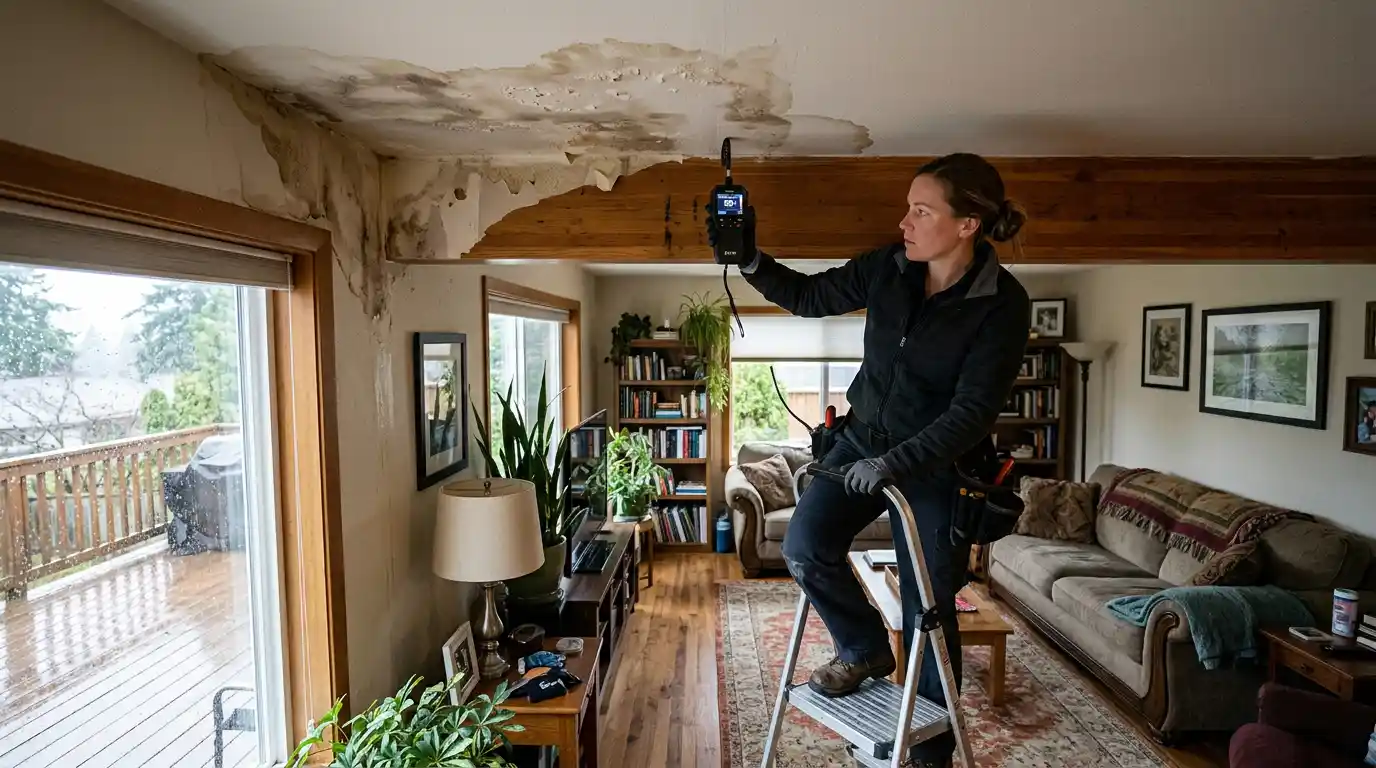
Late spring can make an upstairs deck leak easier to spot and harder to ignore. After months of wet weather, wind, clogged drains, and temperature swings, a deck over a finished room may finally show what has been happening underneath the surface. The first sign may be a ceiling ring, soft drywall seam, musty odor, or drip that appears after rain has already stopped.
That timing matters across Portland-metro properties, river-adjacent neighborhoods, west-side communities, east-county corridors, and mixed-use buildings. Seasonal rain can overload exterior drainage, and freezing weather can leave plumbing or building-envelope weaknesses that show up later.
A deck leak is not only an exterior maintenance issue. When the room below is finished, water can move into drywall, insulation, framing, flooring, fixtures, and stored contents.
Why Late Spring Exposes Deck-Over-Room Leaks
Late spring often reveals moisture paths that developed slowly during the wet season.
The deck is also part of the roof system
An upstairs deck over a bedroom, office, retail suite, or lobby must shed water while protecting the room below. The surface, slope, membrane, drains, thresholds, and flashing all matter.
When one part fails, water may run along the framing, collect above the drywall, travel through insulation, and appear several feet from the actual entry point.
Wet-season stress may not show right away
Short, intense rain and long wet periods can push water toward weak points, especially where drainage is slow or the surface holds standing water. Regional flood guidance ties water problems to heavy rain, already-wet ground, frozen ground, and low-lying areas.
That is why a late-spring leak may be the result of repeated wetting, not one storm. The ceiling may look dry between rain events while materials above it remain damp.
Warning Signs Inside the Room Below
Interior clues often reveal deck leaks before the deck surface looks obviously damaged.
Ceiling stains, rings, or bubbling paint
A brown ring below the deck is a clear warning sign. Bubbling paint, cracked seams, and sagging drywall also deserve attention. If the stain grows after rain, the deck surface, drains, door panel, or deck-to-wall transition should move higher on the suspect list.
For a deeper look at similar moisture patterns, the guide to spring ceiling stains in Portland homes explains how roof, attic, plumbing, and seasonal moisture clues can overlap.
Musty odor, damp trim, or delayed drips
A musty smell below an upstairs deck often means moisture has been trapped long enough to affect porous materials. Baseboards, crown trim, window casing, carpet edges, and ceiling corners may feel damp before visible water appears.
Delayed dripping is another clue. Water may be stored in the deck assembly, ceiling cavity, or insulation before it finds a path down. A drip that starts hours after rainfall can still be deck-related.
Check the Deck Surface Without Making Damage Worse
A careful visual check can help you describe the problem without disturbing hidden damage.
Ponding water and clogged drainage
Standing water is a warning sign on any deck over living or working space.
- Look for blocked drains, debris at scuppers, dirt lines that show where water sat, and green or dark staining near slow-draining areas.
- Do not push water toward door thresholds or wall joints.
Door thresholds, posts, and wall transitions
Leaks often begin where materials meet. Check the base of doors, wall-to-deck corners, railing posts, and any place the deck surface meets siding, stucco, trim, or masonry. Older homes, converted commercial spaces, and mixed-use corridors may have several past repairs hidden under newer finishes.
Cracks, blisters, loose coatings, and soft spots
Small cracks, lifted coatings, bubbles, open seams, or soft walking areas may signal a surface or membrane problem. Avoid puncturing, scraping, or cutting the deck surface to “see what is underneath.” That can create a new leak path.
Immediate Response Checklist for a Leaking Deck Ceiling
The first steps should reduce risk, limit spread, and preserve useful information.
Do this first
- Move people, pets, tenants, customers, and valuables away from the wet area.
- Place a container under active dripping if you can do so safely.
- Take photos of the ceiling, deck surface, nearby drains, wet contents, and any visible water path.
- If water is near outlets, light fixtures, appliances, or a sagging ceiling, keep a distance and use appropriate electrical or building professionals.
- Do not stand under softened drywall.
Avoid these mistakes
- Do not paint over a stain.
- Do not run household fans directly at visible mold or contaminated materials.
- Do not open a ceiling cavity without understanding electrical, contamination, insulation, or structural concerns.
The water damage guide on what not to do after water damage reinforces the same first-day priority: slow down, control the source, reduce spread, and avoid unsafe cleanup choices.
Restoration Decisions After the Leak Source Is Controlled
Once active water entry stops, the next question is what stayed wet and for how long.
Drying is more than airflow
Drying a ceiling assembly is not the same as drying a puddle. Water may be trapped in insulation, behind drywall, under flooring, or inside framing pockets. Air movement alone may not remove moisture from concealed materials.
Professional water damage restoration includes water removal, drying, cleaning, sanitizing, and repair decisions when those steps are relevant.
Mold risk enters when moisture lingers
Moisture control is the center of mold prevention. EPA guidance on mold and moisture emphasizes fixing the water problem and drying wet materials promptly.
Mold remediation may become relevant when growth is visible, odor persists, or damp materials are left in place too long. Avoid medical claims, scare tactics, and DIY disturbance. Focus on stopping moisture and deciding which materials can be cleaned, dried, or removed.
The repair scope can expand
A deck leak may require exterior leak repair, interior drying, drywall removal, insulation replacement, flooring work, trim repair, odor control, or reconstruction coordination.
If lower levels are also damp after the same weather pattern, compare the issue with basement seepage after spring rain. Multiple moisture points may reveal a larger drainage or building-envelope problem.
Late-Spring Deck Leaks Deserve Early Attention
An upstairs deck leak is easy to minimize when the stain is small. Late spring is the wrong time to ignore it. The wet season may have already loaded the deck assembly with moisture, and warmer weather can speed up odor, material swelling, and mold concerns if damp areas remain closed up.
- Start with safety.
- Keep people away from sagging materials and electrical hazards.
- Look for surface clues on the deck without cutting into the system.
- Stop active water if possible.
- Then make restoration decisions based on what got wet, how long it stayed wet, and whether moisture has moved into hidden materials.
Frequently Asked Questions
1. Why would an upstairs deck leak into the room below in late spring?
Late spring often exposes moisture that has built up during repeated rain, clogged drainage, or failed deck-to-wall transitions. The ceiling below may not show damage until drywall, insulation, or framing has absorbed enough moisture. A delayed stain or drip can still be connected to storms that happened earlier.
2. What are the first warning signs of a deck leak above a room?
Look for ceiling rings, bubbling paint, cracked drywall seams, sagging texture, musty odors, and damp trim. Water may appear several feet from the true entry point because it can travel along the framing. A stain that expands after rain deserves prompt attention.
3. Is a small ceiling stain below a deck serious?
A small stain can be the first visible clue of hidden moisture above the ceiling. It may not mean major damage, but it should not be painted over or ignored. The key question is whether the source is active and whether concealed materials are still wet.
4. What should I do if water is dripping through the ceiling?
- Move people and valuables away, catch dripping water if it is safe, and take photos.
- Avoid the area if the ceiling is sagging or water is near lights, outlets, or appliances.
- Use appropriate electrical, plumbing, building, or restoration help based on the source and severity.
5. Can a deck leak cause mold inside the room below?
Moisture that lingers in drywall, insulation, trim, or flooring can create conditions where mold may grow. Visible growth, persistent odor, or repeated dampness should be handled carefully. Do not disturb suspect materials without understanding the moisture source and cleanup needs.
6. Should I cut open the ceiling to find the leak?
Do not cut into a ceiling if there may be electrical hazards, saturated insulation, contamination, or sagging materials. Opening the wrong area can spread debris and may not reveal the true entry point. A safer first step is to document the pattern and inspect the deck surface visually.
7. What deck areas should I inspect first?
- Check drains, scuppers, ponding areas, door thresholds, railing posts, and wall transitions.
- Look for cracks, lifted coatings, open seams, soft walking areas, or stains where water sits.
- Avoid scraping, puncturing, or prying at waterproof surfaces.
8. Can the ceiling dry on its own after the leak stops?
Some surface dampness may dry, but concealed moisture can remain inside insulation, drywall, or framing pockets. Airflow in the room does not always reach hidden spaces. Moisture decisions should be based on what got wet, how long it stayed wet, and whether materials can dry fully.
9. What if the leak affects a rental or commercial space?
- Keep occupants away from wet floors, sagging ceiling materials, and electrical concerns.
- Document the date, weather, photos, tenant reports, affected contents, and source-control steps.
- Clear communication helps reduce confusion when repairs, drying, or temporary area limits are needed.
10. Could the problem be plumbing instead of the deck?
Yes. A ceiling stain below an upstairs deck can also come from nearby plumbing, HVAC condensation, or another roof area. Rain-linked stains point toward exterior moisture, while dry-weather stains may suggest plumbing or mechanical causes. The timing, location, and repeat pattern help narrow the source.
11. How does late-spring weather affect leak decisions?
Late spring can combine lingering wet-season moisture with warmer conditions and more visible odor or material swelling. A leak that looks minor may reflect repeated moisture movement through the deck assembly. Early evaluation helps separate a surface blemish from a larger water damage issue.


