


Steady wet-season rain can expose drainage problems that stay hidden during drier months. In Portland-metro properties, lower-lying buildings, older neighborhoods, mixed-use corridors, and river-adjacent areas can experience slow drains, basement overflows, or wastewater backing up when drainage systems are under added pressure.
That creates two urgent questions. First, how do you limit contamination and property damage? Second, does homeowners insurance cover sewage backup when heavy rain overloads a drain or sewer line?
The answer depends on what caused the water to enter your property and what coverage appears in your policy.
A sewage backup, an exterior flood, and a burst plumbing pipe may all leave a wet floor, but insurers can treat them as very different causes of loss.
Why Heavy Rain Can Trigger a Sewage Backup
Wet weather can expose existing drainage weaknesses and create conditions where wastewater moves in the wrong direction.
Rain can add pressure to drainage systems
Heavy or prolonged rainfall can coincide with overloaded drainage conditions. If a sewer or drain system cannot move water away efficiently, wastewater may back up through a basement drain, toilet, shower, or other low fixture.
The rain itself may not be the only problem. Blockages, damaged sewer lines, tree-root intrusion, or existing drainage weaknesses can also contribute. Watching for early sewer line warning signs can help you identify trouble before wastewater reaches finished areas.
The lowest level often shows trouble first
A basement bathroom, floor drain, laundry area, utility room, or other low point may show the first warning. You might notice several drains slowing at the same time, gurgling after water use, recurring odors, or water rising from a fixture when another fixture drains.
Once wastewater enters the building, the problem changes from a plumbing issue into a property-damage and contamination event.
Does Homeowners Insurance Cover Sewage Backup?
Coverage usually depends on the cause of the loss, your policy language, and whether you purchased additional water-backup protection.
Standard coverage may not include sewer backup
If you are asking Does insurance cover sewage backup, do not assume that ordinary homeowners coverage automatically applies.
Many homeowners policies provide limited or no coverage for sewer or drain backups. A water-backup endorsement may extend protection to losses caused by water or sewage backing up through a sewer, drain, or sump system.
Coverage limits, deductibles, exclusions, and covered property still depend on your individual contract. Review the declarations, endorsements, and water-related exclusions rather than relying on the general label “water damage.”
For broader claim-preparation context, review how insurance may apply to different types of water damage.
Heavy rain does not automatically make it flood damage
The source and pathway of the water matter.
If rain contributes to a sewer system becoming overloaded and sewage then backs up through a drain, the resulting loss may fall into the sewer or water-backup category rather than ordinary stormwater coverage.
By contrast, exterior surface water entering through doors, foundations, or other openings can raise a separate flood-coverage question.
Under NFIP flood insurance rules, sewer-backup damage is covered by flood insurance only when the backup directly results from flooding.
A backup caused by another problem does not become flood-insurance damage simply because rain occurred at the same time.
Maintenance issues can affect the analysis
The immediate cause may also matter when a damaged line, recurring blockage, neglected drainage issue, or long-term deterioration contributes to the loss.
Do not guess about the cause when reporting damage. Record what you actually observed, such as when the backup began, which drains were affected, whether heavy rainfall was occurring, and where the water first appeared.
A plumber can help identify whether the source involves an interior drain, sewer lateral, blockage, damaged pipe, or municipal connection.
What Should You Do Immediately After a Sewage Backup?
Your first priorities are limiting exposure, preventing additional wastewater from entering, and documenting conditions without entering unsafe areas.
Stop adding water to the drain system
Do not flush toilets, run washing machines, start dishwashers, drain bathtubs, or continue using affected sinks while a backup is active. Additional water use can send more wastewater toward an already restricted drainage path.
A sewage backup emergency requires different decisions than a simple slow drain.
Keep away from contaminated water
Avoid walking through sewage or handling saturated materials unnecessarily. Keep other occupants and pets away from affected areas.
If standing water is near outlets, appliances, electrical cords, panels, or other energized equipment, stay clear and involve an appropriate qualified professional. Do not enter a wet area to shut off electricity when doing so would put you in contact with the water.
Document visible damage safely
Take photographs or video from a safe location. Record the rooms affected, approximate time the backup began, visible water levels, damaged contents, and any unusual drain behavior that occurred before the backup.
Do not delay urgent damage-control decisions solely to create a perfect record.
If sewage has entered your basement, living area, rental unit, commercial space, or utility room, prioritize separation from the affected area and professional evaluation.
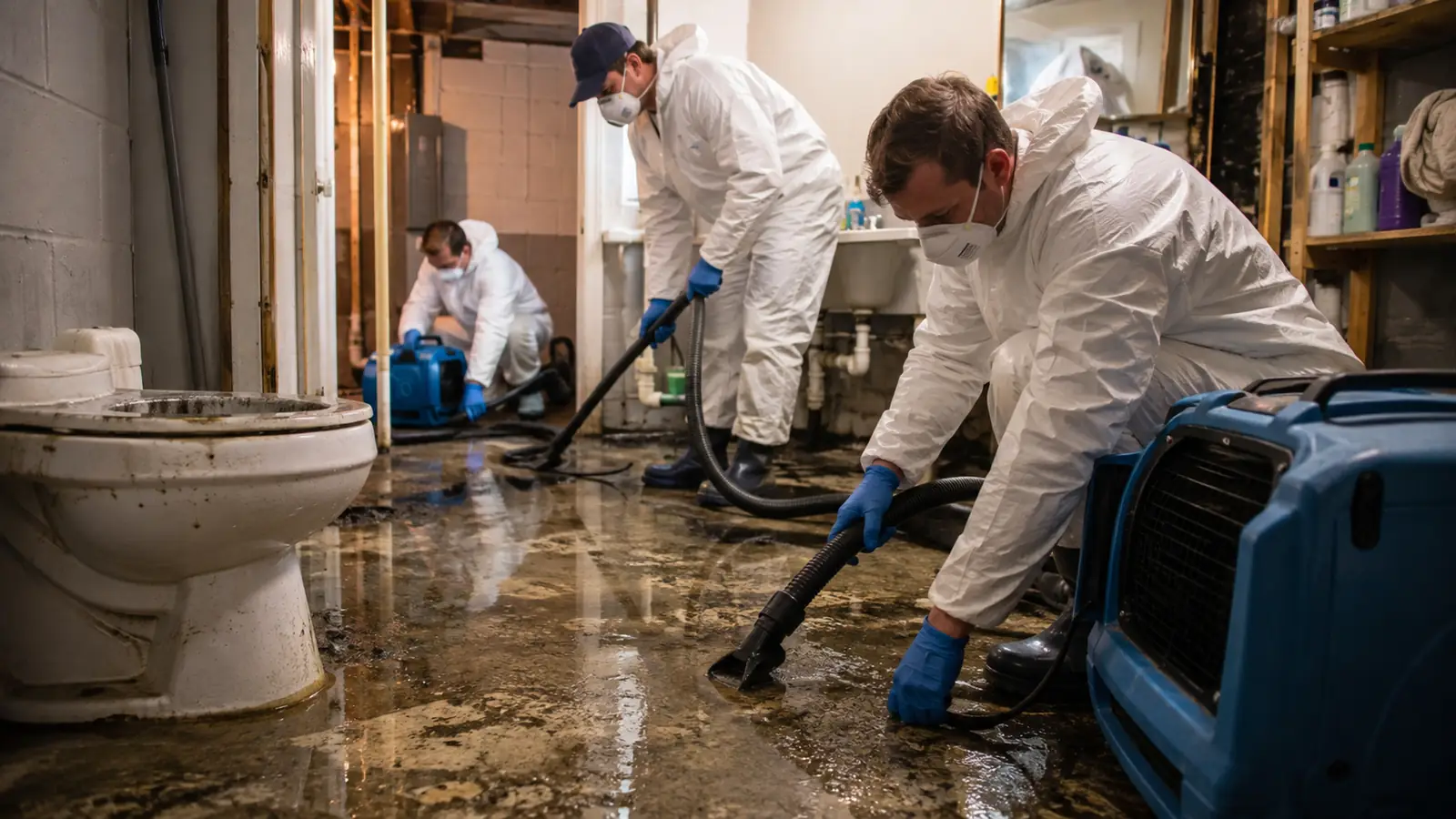
Sewage cleanup services can address standing wastewater, affected materials, drying, cleaning, and restoration needs after a backup.
How Sewage Cleanup and Restoration Decisions Change
The visible puddle is only one part of the loss because contaminated water can move into building materials and concealed spaces.
Follow the path of the water
Wastewater can spread beneath flooring, behind baseboards, under cabinets, and into wall materials. That is why the size of the visible wet area does not always represent the complete damage area.
The cleanup decision should reflect where the water traveled and what materials became wet. Guidance on safe sewage-backup cleanup decisions can help you understand why contaminated water needs more caution than an ordinary plumbing spill.
Separate plumbing repair from property restoration
Stopping the backup does not automatically resolve the building damage.
A plumber may need to diagnose or repair the drain or sewer problem. After wastewater enters the building, water damage restoration may also become relevant when floors, walls, lower-level rooms, or other materials have been affected.
Drying and restoration decisions should consider both moisture and contamination rather than simply whether the standing water is gone.
How to Reduce the Risk Before the Next Heavy Rain
Routine drainage awareness can help you identify developing problems before another wet-weather event exposes them.
Treat repeated drain problems as warning signs
One isolated slow sink may be a local clog. Several fixtures draining poorly together can suggest a larger problem.
Pay attention to repeated gurgling, wastewater odors, floor-drain changes, toilets that behave differently when another fixture runs, and recurring dampness around lower-level plumbing.
Keep inappropriate materials out of drains
Avoid flushing wipes, paper towels, hygiene products, and other materials that your plumbing system is not designed to carry. Keep grease and cooking oil out of sinks.
For older homes, rentals, and managed commercial properties, make recurring drainage complaints easy to report. A pattern is more useful when it is identified before the next prolonged rain event.
Investigate the cause after the immediate cleanup
Do not stop at removing visible water. Determine why the backup happened.
The cause may involve a blockage, damaged line, root intrusion, interior plumbing problem, sewer lateral, or drainage-system condition. Understanding the source helps you make better maintenance decisions and gives you clearer information when reviewing insurance coverage.
The Bottom Line
Insurance coverage and restoration needs are separate questions, and both deserve attention after a sewage backup.
So, does homeowners insurance cover sewage backup after heavy rain overloads a drain line? Sometimes, but not automatically.
Standard homeowners policies may provide limited or no sewer-backup protection, while an added water-backup endorsement may cover qualifying damage.
Flood insurance involves a different test and may cover a sewer backup only when a qualifying flood directly caused it.
Your safest approach is to identify the actual water source, stop additional wastewater from entering, avoid contaminated areas, document what you can safely observe, and read the exact policy language before assuming that coverage applies.
Frequently Asked Questions
Does homeowners insurance cover sewage backup after heavy rain?
It depends on your policy and the cause of the backup. Many standard homeowners policies provide limited or no sewer or drain backup coverage. A separate water-backup endorsement may provide coverage. Your insurer must determine whether your specific loss falls within the policy terms.
Does insurance cover sewage backup if the sewer system was overloaded?
Possibly, if your policy includes applicable water or sewer-backup coverage. The fact that an overloaded system caused the backup does not automatically create coverage. Your policy language, endorsements, exclusions, limits, and the documented cause of loss will control the claim decision.
Is a sewer backup caused by heavy rain considered flooding?
Not necessarily. Water backing up through a sewer or drain is different from exterior surface water entering a building. The distinction matters because homeowners coverage, water-backup endorsements, and flood policies can treat those causes differently.
Will flood insurance cover a sewage backup?
NFIP flood insurance can cover sewer-backup damage when the backup directly results from a qualifying flood. If the sewer backup results from another cause, such as a blockage or unrelated system problem, that backup is not covered simply because you carry flood insurance.
What should I do first when sewage backs up into my basement?
Stop using toilets, sinks, washing machines, dishwashers, and other drains that could add water to the system. Keep people and pets away from contaminated areas. Avoid wet areas involving electricity, and document visible damage only from a safe location.
Should I call a plumber or a restoration professional first?
The situation may require both because the two roles address different problems. A plumber can investigate the drain, sewer line, lateral, or connection causing the backup. Restoration becomes relevant when sewage has entered building materials, flooring, walls, contents, or other interior areas.
Can sewage spread beyond the visible puddle?
Yes. Wastewater can move beneath flooring, behind baseboards, under cabinets, and into other absorbent building materials. Base cleanup decisions on the water’s pathway and affected materials rather than assuming that the visible edge of the puddle marks the full damaged area.
Should I use fans after a sewage backup?
Avoid using ordinary fans across an unassessed sewage-contaminated area. Moving air through affected spaces can complicate contamination-control decisions.
Keep the area isolated as practical and let qualified professionals determine the appropriate cleanup and drying approach.
Can a drain backup lead to mold problems?
Any building materials that remain wet can create conditions that support mold growth. Sewage also adds contamination concerns that affect cleanup decisions. Address hidden moisture as well as visible wastewater, particularly in basements, wall cavities, flooring systems, and other areas that dry slowly.
What should property managers document after a sewage backup?
Record when the incident was discovered, affected rooms or units, visible water levels, drain behavior, tenant or occupant reports, and photographs that can be taken safely. Also document when water use stopped and when plumbing or restoration professionals were contacted.
How can I reduce sewage-backup risk during the wet season?
Pay attention to recurring slow drains, gurgling fixtures, wastewater odors, and lower-level drainage changes before periods of heavy rain. Avoid putting grease, wipes, paper towels, and unsuitable materials into drains, and have recurring sewer-line problems investigated instead of repeatedly treating symptoms.


