



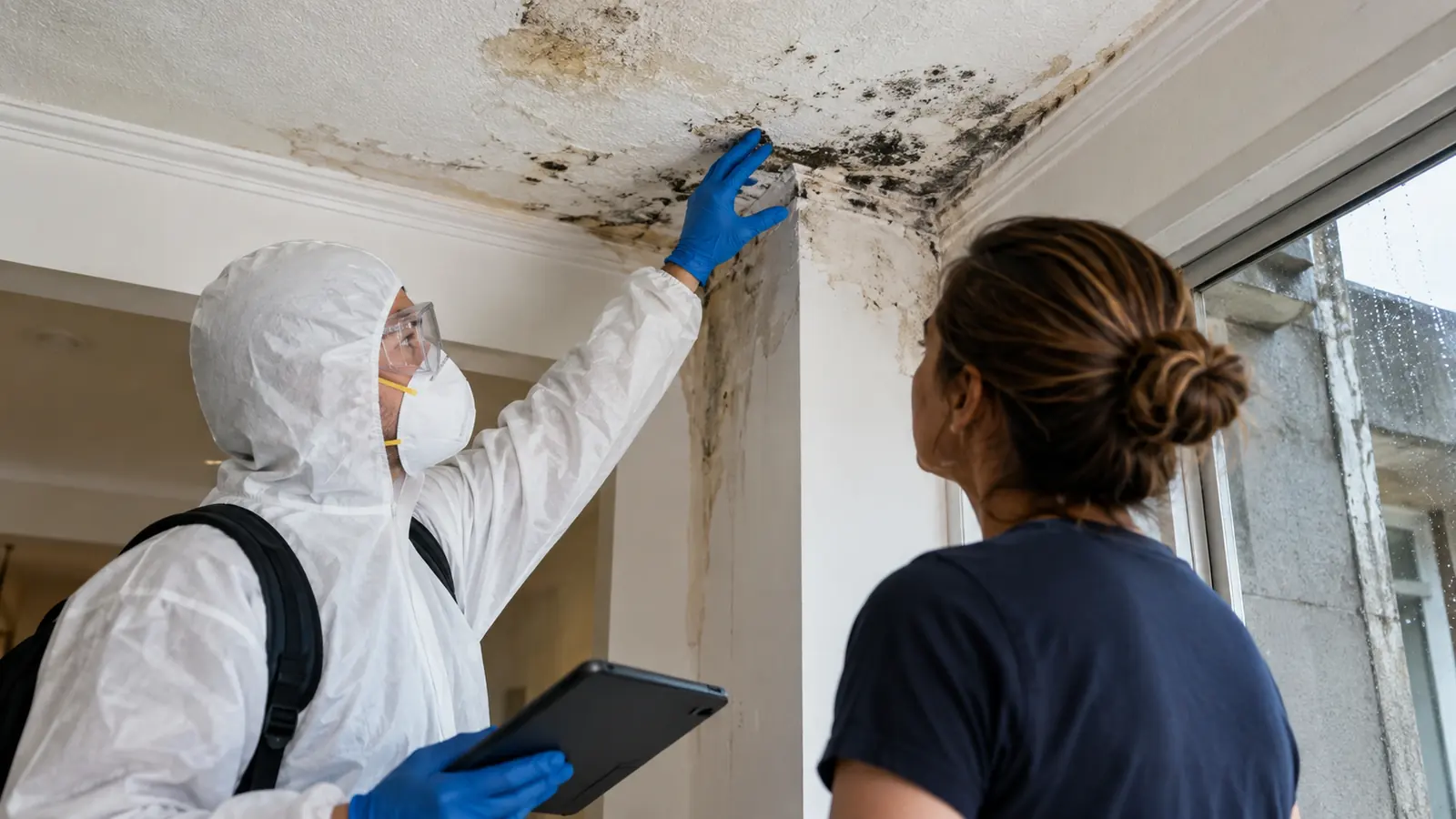
A ceiling stain appears after weeks of wet weather. The drywall feels damp. Then mold becomes visible inside your condo, but the moisture came from a shared roof, exterior wall, plumbing stack, or another common building element.
That creates a harder question than simply who owns the room where the mold appeared: who pays for mold remediation when the water source and the resulting damage fall on different sides of a condominium boundary?
For Portland-metro properties and other communities across the region, wet-season leaks, wind-driven rain, roof problems, hidden plumbing failures, and winter freeze events can expose this problem quickly. Moisture may travel through assemblies before appearing inside a unit.
In most cases, responsibility depends on the governing documents, the ownership boundary, the source of the leak, applicable condominium law, insurance coverage, and whether anyone failed to meet a maintenance obligation. The location of visible mold alone does not settle the bill.
Who Pays for Mold Remediation After a Common-Element Leak?
Start by separating responsibility for the water source from responsibility for the damaged materials.
The source of the leak matters
A roof, exterior wall, shared plumbing line, or other building component may qualify as a common element. If so, the condominium association may have responsibility for maintaining or repairing that component.
That does not necessarily mean the association automatically pays every expense inside your unit.
The governing documents may divide responsibility between common structures and unit interiors. Insurance policies can create another division between building components, improvements, personal property, deductibles, and excluded losses.
The location of the mold matters too
Mold may appear on drywall, flooring, cabinetry, or other materials located within your unit even though moisture entered from a common element.
That creates two separate questions:
- Who must repair the component that allowed water to enter?
- Who is financially responsible for drying, mold remediation, damaged finishes, and later repairs inside the unit?
A mold remediation project may therefore involve both the association and the unit owner even when only one leak started the problem.
Four Things Usually Decide Condo Mold Responsibility
Do not rely on assumptions about what an HOA “normally” covers. Your documents and policies control the specific loss.
1. Your declaration and bylaws
Your condominium declaration defines unit boundaries and common elements. The bylaws may assign maintenance and repair duties.
Oregon condominium law addresses association insurance and the allocation of responsibilities through condominium governing documents.
Washington law likewise generally assigns common-element maintenance to the association and unit maintenance to the owner, subject to the declaration and other statutory provisions.
For local properties, review the applicable Oregon condominium insurance provisions or Washington condominium maintenance provisions together with your recorded documents. These rules can be fact-specific, so legal advice may be appropriate when responsibility is disputed.
2. The exact moisture source
Find out whether the leak came from a shared pipe, roof, exterior envelope, limited common element, neighboring unit, or component serving only your unit.
Documenting the source matters because the visible damage may be several feet away from the actual failure.
3. The master policy and your unit policy
Condominium associations commonly maintain a master property policy, while individual owners often maintain separate unit coverage. What either policy pays depends on the actual policy language.
Coverage for mold, water damage, improvements, personal belongings, deductibles, and loss assessments can differ. Never assume that responsibility for maintenance and insurance coverage are identical.
A useful first step is reviewing how insurance can interact with water damage while checking your own policy terms directly.
4. Negligence or delayed action
Responsibility can become more complicated if someone knew about a recurring leak and failed to address it.
Keep written notices, photographs, maintenance requests, inspection findings, and dates. Good documentation helps establish when the water appeared, when the association or owner learned about it, and what happened afterward.
What Should You Do Before Anyone Decides Who Pays?
Protect the property first while preserving the evidence needed to resolve responsibility.
Document the loss
Photograph the leak location, staining, wet materials, visible mold, damaged belongings, ceilings, walls, and flooring. Keep emails and maintenance requests.
If water is actively entering, report it promptly to building management or the person responsible for the affected building component.
Stop the moisture problem
Mold remediation without correcting the water source can leave the underlying condition unresolved.
The EPA recommends addressing moisture promptly and drying water-damaged materials quickly. Hidden dampness can remain behind drywall, beneath flooring, around cabinets, and within shared wall assemblies.
Review these steps to take after water damage when organizing your immediate response.
Avoid unnecessary disturbance
Do not begin opening walls or aggressively disturbing visible growth simply to determine how far the problem extends. That can destroy documentation and complicate coordination between owners, management, insurers, and restoration professionals.
Wet electrical areas, contaminated water, unstable ceilings, or structural concerns require additional caution and appropriate qualified help.
If a common-element leak has left moisture or visible growth inside your unit, address the water damage and mold question before hidden deterioration expands.
Water damage restoration and mold remediation can address the affected property while you, building management, and the applicable insurers determine financial responsibility.
Call (503) 352-5209 to discuss the restoration needs associated with the loss.
How Costs May Be Split After a Condo Leak
One water event can create several categories of work with different responsible parties.
Repairing the common element
If the source is a building component assigned to the association, repairing that component may fall under association maintenance responsibilities.
For example, stopping a shared plumbing leak is different from repairing damaged flooring or interior finishes inside a unit.
Drying water-damaged materials
Water may migrate through ceilings, walls, insulation, flooring, and adjoining assemblies. Prompt water damage restoration helps address the physical water loss while coverage and responsibility are being evaluated.
Waiting for every financial question to be settled before addressing continuing moisture can allow the damage footprint to change.
Mold remediation and repairs
Who pays for mold remediation may depend on how the declaration defines the affected materials and how insurance applies to the event.
Drywall illustrates the problem well. A wall can include shared structural components while its finished surfaces fall within an owner’s unit boundary.
If moisture has affected wall materials, determining whether wet drywall needs replacement depends on the condition of the material and the extent of damage, not simply who ultimately receives the invoice.
Why Condo Mold Claims Become Complicated
Shared buildings allow one moisture problem to cross several ownership and insurance boundaries.
A common-element leak can travel behind finishes before you see the first stain. By then, the source may be in one responsibility zone while damaged materials sit in another.
A delayed response adds another layer. Mold after a leak is fundamentally a moisture-control issue. Drying the visible surface without addressing concealed moisture can leave the underlying problem unresolved.
Understanding the connection between mold and water damage helps you focus first on the moisture source and affected materials.
Property managers also need to consider adjacent units and common spaces. A single shared-system leak can disrupt residents, affect multiple interiors, and complicate repair coordination.
The Practical Answer: Responsibility Follows the Documents and Facts
Treat “who pays?” as a documentation question rather than making a decision based only on where mold is visible.
When mold appears inside your condo after a leak from a common element, the association may have responsibility for the failed common component.
The unit owner may still have responsibility for certain interior property, deductibles, improvements, or costs assigned by governing documents and insurance policies.
In other situations, the association’s policy, the owner’s policy, or both may become involved. Negligence, limited common elements, policy exclusions, and unusual boundary definitions can change the outcome.
Your safest sequence is straightforward: document the loss, stop ongoing water intrusion, address wet materials, notify the appropriate parties, review the declaration and bylaws, and read both insurance policies carefully.
The question is not simply where the mold grew. The real question is which component failed, who was responsible for it, what property was damaged, and what the governing documents and insurance contracts say about each part of the loss.
Frequently Asked Questions
Who pays for mold remediation if the HOA roof leaks into my condo?
A roof classified as a common element may fall under the association’s maintenance responsibility. However, interior mold remediation and repairs do not automatically follow the same allocation. Check the declaration, bylaws, master insurance policy, and your unit policy to determine how the specific damaged materials are handled.
Is the HOA responsible just because the mold is inside my wall?
Not necessarily. The location of the mold and the source of the moisture can fall into different responsibility zones. Determine whether the affected wall components belong to your unit, the common elements, or both before assigning responsibility.
What if a shared plumbing pipe caused the mold?
First, determine whether the pipe is actually classified as a common element under your condominium documents. A shared line may create association repair obligations, while damage to interior finishes or personal property may be handled differently.
Should I wait for the HOA to approve remediation?
You should promptly report the condition and preserve documentation, but continuing moisture should not be ignored while responsibility is debated. Coordinate access and emergency property-protection decisions with building management, insurers, and appropriate professionals when shared components are involved.
Does condo insurance always cover mold after a water leak?
No. Coverage depends on the cause of loss, individual policy language, exclusions, limits, and other conditions. Review your unit policy and the association’s master policy rather than assuming that water damage or mold is automatically covered.
What evidence should I save after discovering condo mold?
Photograph visible water damage, staining, mold, affected belongings, and the suspected entry point. Keep maintenance requests, emails, incident reports, repair records, inspection information, and a dated record of when you first noticed the problem.
What if wet-season rain keeps causing the same ceiling leak?
Repeated water entry may indicate that the underlying moisture source remains unresolved.
Document each occurrence and report it promptly. Repeated leaks can affect concealed ceiling and wall materials even when surfaces appear to dry between storms.
Can a frozen or burst shared pipe create the same responsibility problem?
Yes. Winter freeze events can create water losses that cross common and individual unit boundaries. Responsibility still depends on ownership of the failed pipe, the governing documents, insurance terms, and the specific property that sustained damage.
What happens if sewage contamination is involved too?
Treat a sewage event differently from an ordinary clean-water leak. Avoid unnecessary contact with contaminated materials and notify the appropriate property representatives. Professional water and mold response planning may be needed alongside decisions about the contaminated areas and responsible parties.
Can the HOA and unit owner both have costs from one leak?
Yes. A single water event can affect a common building component, unit finishes, improvements, and personal property at the same time. Different maintenance obligations, policies, deductibles, or coverage provisions can therefore apply to different portions of the same incident.
Who decides whether damaged condo drywall can stay?
That decision should be based on the material’s condition, moisture exposure, contamination, and the restoration needs of the affected assembly. The person responsible for paying for the work may be a separate question determined by the governing documents and applicable insurance.
What if the association and my insurer disagree about responsibility?
Keep the loss documented and request written positions explaining how each party reached its decision. Review the declaration, bylaws, unit boundaries, maintenance provisions, and relevant policies. A qualified insurance professional or attorney can address unresolved coverage or liability disputes.


