



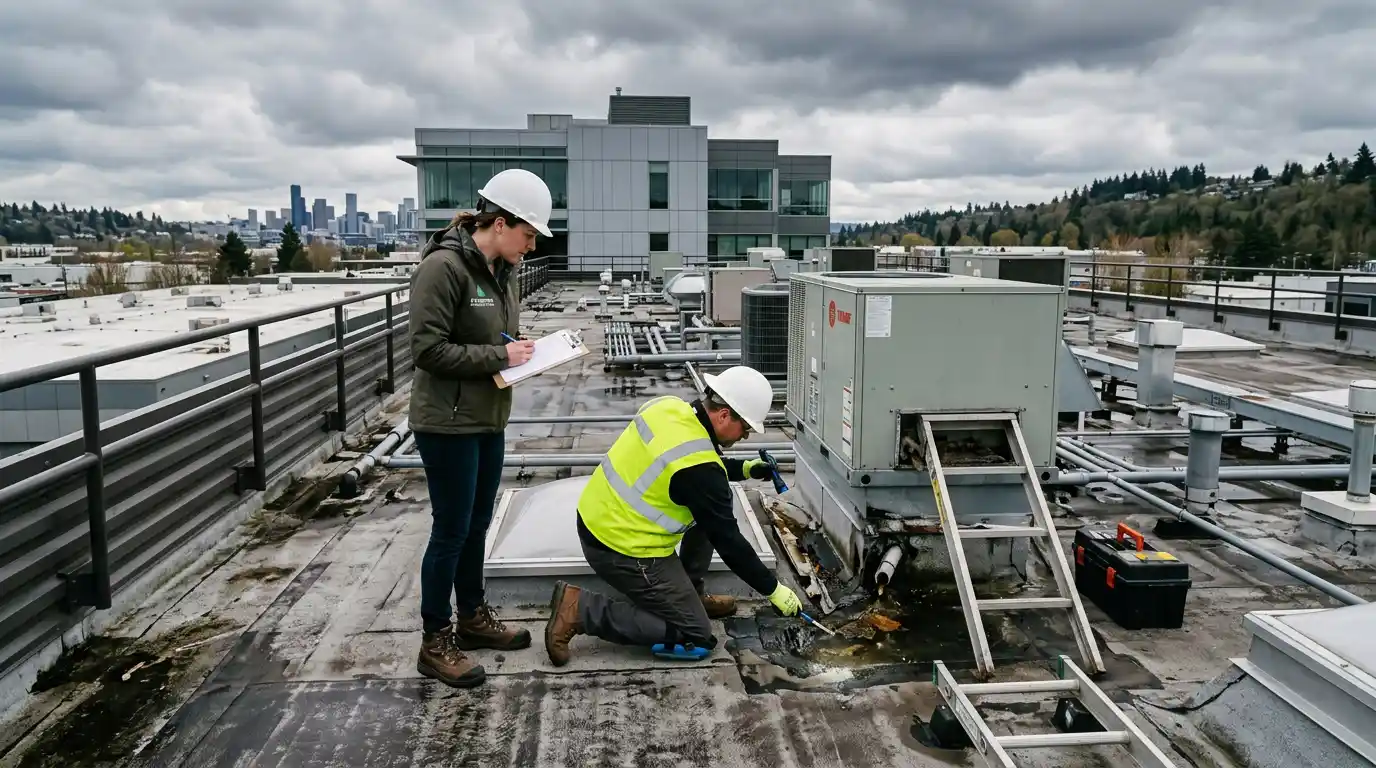
Winter does not always leave a commercial flat roof with an obvious opening or a dramatic ceiling collapse. More often, the trouble appears slowly. A tenant notices a ceiling stain. A maintenance worker finds a damp tile near a roof drain. After months of rain, wind, freezing nights, thaw cycles, clogged drains, and heavy roof traffic, these clues matter.
For property managers, the real issue is not only the roof surface. It is what winter roof damage can do below it: tenant disruption, wet inventory, ceiling leaks, electrical concerns, mold pressure, and repair planning.
Portland-metro properties, river-adjacent neighborhoods, lower-lying buildings, mixed-use corridors, and suburban commercial properties all face seasonal patterns that make post-winter inspections worth taking seriously.
Why Flat Roof Trouble Shows Up After Winter
Winter stress often exposes weak points that were already forming before anyone saw interior damage.
Freeze, Thaw, and Small Openings
Flat and low-slope roofs depend on tight seams, drains, flashing, and penetrations. Moisture can enter tiny gaps, freeze, expand, melt, and move again. That cycle can widen small defects around roof edges, vents, skylights, HVAC curbs, and patch areas.
A leak that appears in spring may have started as winter moisture trapped above the ceiling or inside the roof insulation. Treat a roof leak after winter as a building-envelope issue, not just a stain to repaint.
Ponding Water and Blocked Drainage
Flat roofs are not meant to hold water for long periods. If drains, scuppers, gutters, or downspouts clog with leaves, granules, ice, or storm debris, water can sit over seams and low spots. Repeated ponding adds weight, stresses membrane laps, and gives water more time to find a path downward.
Interior Warning Signs Property Managers Should Escalate
The first visible clue inside the building may appear far from the actual roof defect.
Ceiling Stains, Soft Tile, and Active Drips
Brown rings, swollen tile, peeling paint, bubbling drywall, and water near light fixtures can all point to roof-related intrusion. A ceiling leak can travel across decking, beams, insulation, and suspended ceiling systems before it shows itself.
If you see recurring stains after rain or thaw, treat the ceiling as part of a larger moisture map. Guidance on water leaking from the ceiling can help you recognize why the stain is only one part of the problem.
Musty Odor, Humidity, and Tenant Complaints
Odor matters. A damp smell in corridors, storage rooms, restrooms, offices, or utility spaces often means materials are holding moisture. Wet ceiling tile, insulation, drywall, carpet backing, and wall cavities can continue releasing moisture after the rain ends.
Drying water-damaged materials within 24 to 48 hours helps reduce mold risk, so delays after a roof leak can turn limited cleanup into a broader mold remediation concern.
Water Near Electricity or Contaminants
Do not ask staff or tenants to investigate wet areas around outlets, light fixtures, mechanical rooms, elevators, or electrical panels. Water near electrical systems requires caution. Floodwater, sewage, drain backups, contaminated roof runoff, and debris-filled stormwater can also change the cleanup approach.
Because six inches of fast-moving floodwater can knock over an adult, exterior flooding around loading areas, parking lots, drains, or lower entries should be treated as a safety issue, not routine maintenance.
Exterior Roof Clues That Point to Interior Risk
Roof-surface clues help you decide whether the building needs a roof contractor, restoration help, or both.
Repeating Puddles in the Same Places
If the same roof areas hold water after every storm, document them. Repeating puddles may signal blocked drains, compressed insulation, low spots, clogged scuppers, or settlement. Inside the building, those zones may align with ceiling stains, wet insulation, or damp walls.
Blisters, Bubbles, Splits, and Loose Seams
Raised blisters, wrinkles, cracked membrane, open laps, and soft areas underfoot can suggest trapped moisture or membrane fatigue. Do not cut, puncture, or “test” these areas yourself. Mark the location, photograph it from a safe distance, and bring in qualified roofing help for the roof surface.
Roof Penetrations and Mechanical Curbs
HVAC units, vents, pipes, drains, skylights, parapet walls, and access hatches create weak points. Winter movement can stress sealants and flashing. If interior water appears below a rooftop unit or curb, you may need roof repair plus interior commercial water damage in business properties support.
What to Do Before the Damage Spreads
A simple sequence helps protect people, preserve evidence, and reduce secondary damage.
Start With Safety and Access Control
- Restrict access under sagging ceiling tile, wet fixtures, or drips.
- Do not enter standing water near energized equipment.
- Treat moving water as unsafe; six inches is enough to knock an adult down.
Document the Pattern
- Record the date, weather conditions, affected rooms, tenant reports, ceiling stains, odors, damp flooring, and roof observations.
- Photograph water trails, stained tile, roof puddles, and damaged contents.
Documentation helps owners, managers, roofers, restoration teams, and insurers understand the sequence.
Avoid Quick Fixes That Hide Moisture
Do not paint over stains, replace ceiling tile, run heat only, or close the work order because the drip stopped. The 24 to 48-hour mold-risk window is a decision point. If materials stay wet, you still need to know what dried and what did not. Review what not to do after water damage before staff begin cleanup.
When Cleanup Becomes Repair and Reconstruction
Some roof leaks stop at drying. Others require removal, sanitizing, rebuilding, and coordination with roof repairs.
Drying Comes Before Cosmetic Repair
A commercial flat roof leak can soak insulation, drywall, ceiling systems, framing, flooring, and stored contents. Our water damage restoration services include inspection, water removal, area drying and dehumidification, cleaning and sanitizing, and restoration when those steps fit the loss.
Hidden Moisture Can Move Above the Ceiling
Do not assume the damage ends where the stain appears. Water can travel through roof assemblies, attic-like voids, utility chases, and wall cavities. If a building has upper-level storage, mechanical space, or concealed roof framing, attic water damage patterns offer a useful comparison for hidden moisture risk.
Rebuild Planning Matters for Occupied Properties
Once mitigation is complete, some commercial spaces still need ceiling repair, drywall replacement, flooring work, paint, or other reconstruction steps before normal use resumes.
If winter left your commercial flat roof leaking into occupied space, do not wait for the next rain to confirm the problem. Protect people first, limit access to unsafe areas, document what you see, and ask for qualified help before moisture spreads behind finishes.
Our team can help you assess the interior damage, dry affected areas, address cleanup needs, and plan the next repair step with less disruption to your property.
Frequently Asked Questions
1. What are the most common flat roof problems after winter?
Common post-winter issues include clogged drains, ponding water, cracked membrane, separated flashing, and leaks around rooftop equipment. Inside the building, these may show up as ceiling stains, damp tile, musty odor, or recurring drips after rain.
2. Why can a flat roof leak appear after the weather improves?
Water can enter during winter, then move slowly through insulation, decking, ceiling cavities, or wall assemblies. A thaw, new rain, or warmer interior conditions can finally make the hidden moisture visible inside the building.
3. Should you replace stained ceiling tile right away?
No. Replacing stained tile before checking moisture can hide an active issue. First, determine whether the roof leak is still active, whether surrounding materials are wet, and whether drying, removal, cleaning, or repair is needed.
4. When is ponding water on a commercial roof serious?
Ponding is more concerning when it repeats in the same areas, appears after most storms, or sits near seams, drains, curbs, or patched areas. It can indicate drainage problems, low spots, compressed insulation, or roof-system fatigue.
5. Can a roof leak cause mold in commercial spaces?
Yes, moisture from roof leaks can support mold growth when materials stay wet. Ceiling tile, drywall, insulation, carpet backing, and hidden cavities are common concern areas after delayed drying or repeated leaks.
6. What should property managers do first after finding an active ceiling leak?
- Protect people and limit access to the wet area.
- Keep occupants away from water near lights, outlets, equipment, or sagging materials.
- Then document the damage and bring in qualified help to evaluate the roof and interior moisture.
7. Is roof repair enough if water entered the building?
Not always. Roof repair can stop new water entry, but it does not automatically dry wet ceiling systems, insulation, wall cavities, flooring, or contents. Interior mitigation may still be needed to reduce secondary damage.
8. How can you tell whether a leak affected more than the ceiling?
Look for musty odor, soft drywall, damp carpet, swollen baseboards, recurring stains, humidity, or water trails away from the visible drip. Moisture can move along beams, pipes, insulation, and ceiling grids before it appears.
9. Are commercial flat roof leaks more disruptive than residential leaks?
They can be. A leak may affect tenants, employees, customers, inventory, lease obligations, access routes, and business continuity. Fast documentation and safety-led decisions help reduce confusion while repairs and cleanup are planned.
10. When does a roof leak become a contaminated cleanup issue?
Contamination may be a concern when water mixes with sewage, drain backups, floodwater, debris, chemicals, or unknown materials in building cavities. Avoid direct contact and consult qualified professionals before cleanup begins.
11. What should you avoid after winter roof water damage?
Avoid painting over stains, replacing materials before drying is verified, sending staff into unsafe wet areas, or assuming the leak is over because the rain has stopped. Also, avoid disturbing suspected mold or contaminated materials without proper guidance.
12. When should reconstruction be considered after mitigation?
Reconstruction may be needed when drying or removing leaves from ceilings, drywall, flooring, trim, or other unfinished interior areas. It becomes part of recovery when the space needs repair work before it can return to normal use.


