

A frozen pipe that splits inside a finished wall creates more than a plumbing bill. The line must be repaired, but escaped water may also require extraction, controlled drying, selective demolition, and reconstruction. A quote that covers only the pipe can therefore understate the full loss.
Current national cost guides put a typical burst-pipe repair at $200 to $3,000. Water damage restoration has a much wider range: Angi reports that most projects cost $1,383 to $6,369, with a broader range of $450 to $16,000.
Drywall and floor repair may be included in that restoration figure or priced separately. Taken together as overlapping planning ranges, these figures show why a finished-space loss can reasonably cost several thousand dollars and move into five figures if water crosses rooms, gets below the finished floor, or damages difficult-to-match materials.
These are planning figures, not a local quote. The useful question is not simply what a frozen pipe costs to fix. It is which building layers got wet and which parts of the estimate cover them.
The Total Cost Has Four Separate Parts
| Cost layer | 2026 national planning range | What changes the price |
| Burst-pipe repair | $200 to $3,000 | Pipe material, access, number of breaks, emergency labor, and whether a larger section must be replaced |
| Water damage restoration | $1,383 to $6,369 for most projects; $450 to $16,000 overall | Area affected, depth of saturation, drying time, and hidden moisture |
| Drywall repair | $300 to $850 | Size and location of the opening, insulation, texture matching, and painting |
| Flooring repair | $200 to $3,000 | Flooring type, subfloor condition, room continuity, and whether materials can be dried and saved |
A complete estimate should make each phase visible.
Plumbing and access
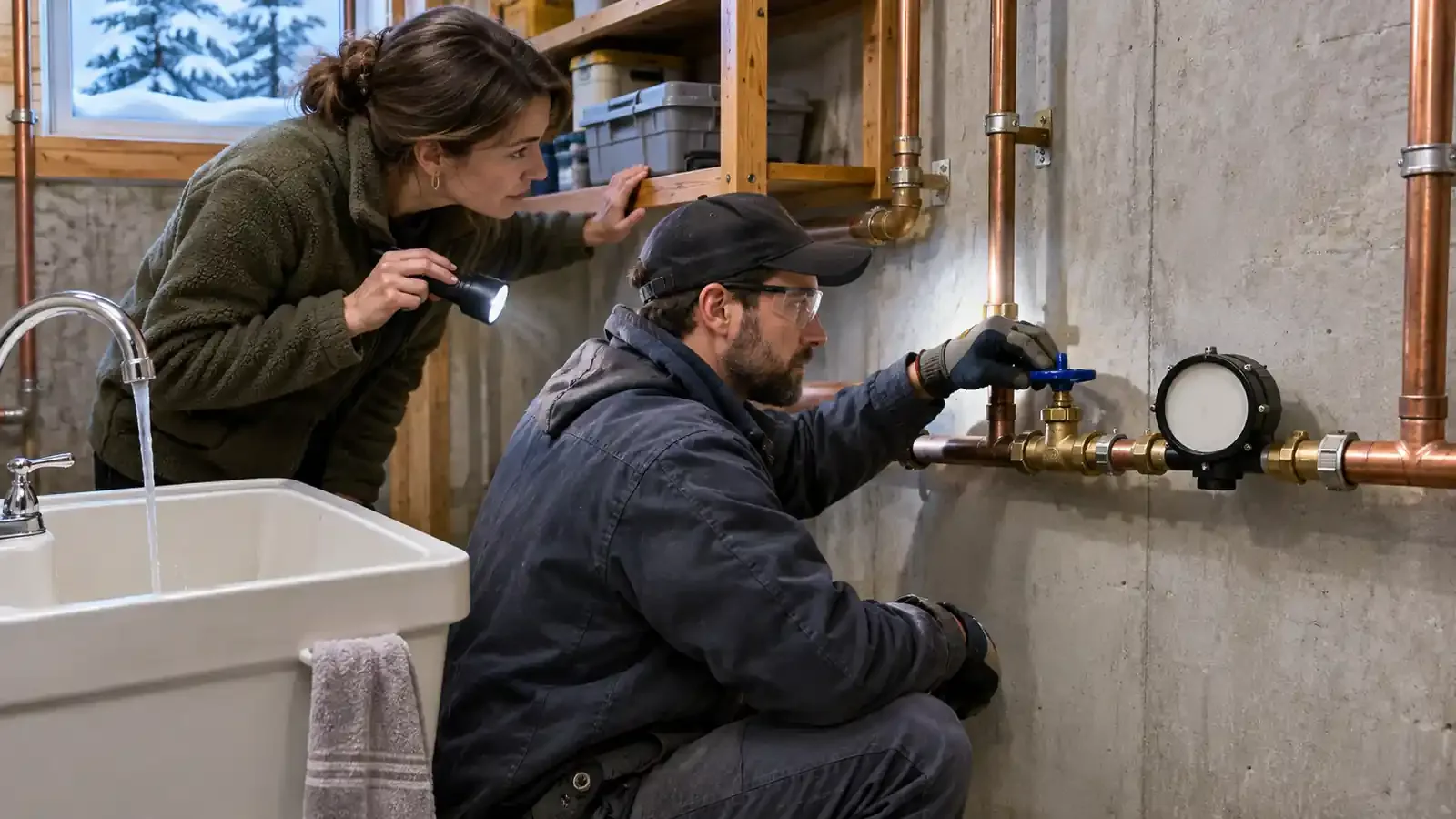
The plumber’s scope may include locating the split, opening a wall or floor, replacing the damaged section, and testing the line. A short, accessible repair usually costs less than a break behind tile, cabinetry, or a finished ceiling. Ask whether the quote includes closing the access opening. Often it does not.
Water removal and drying
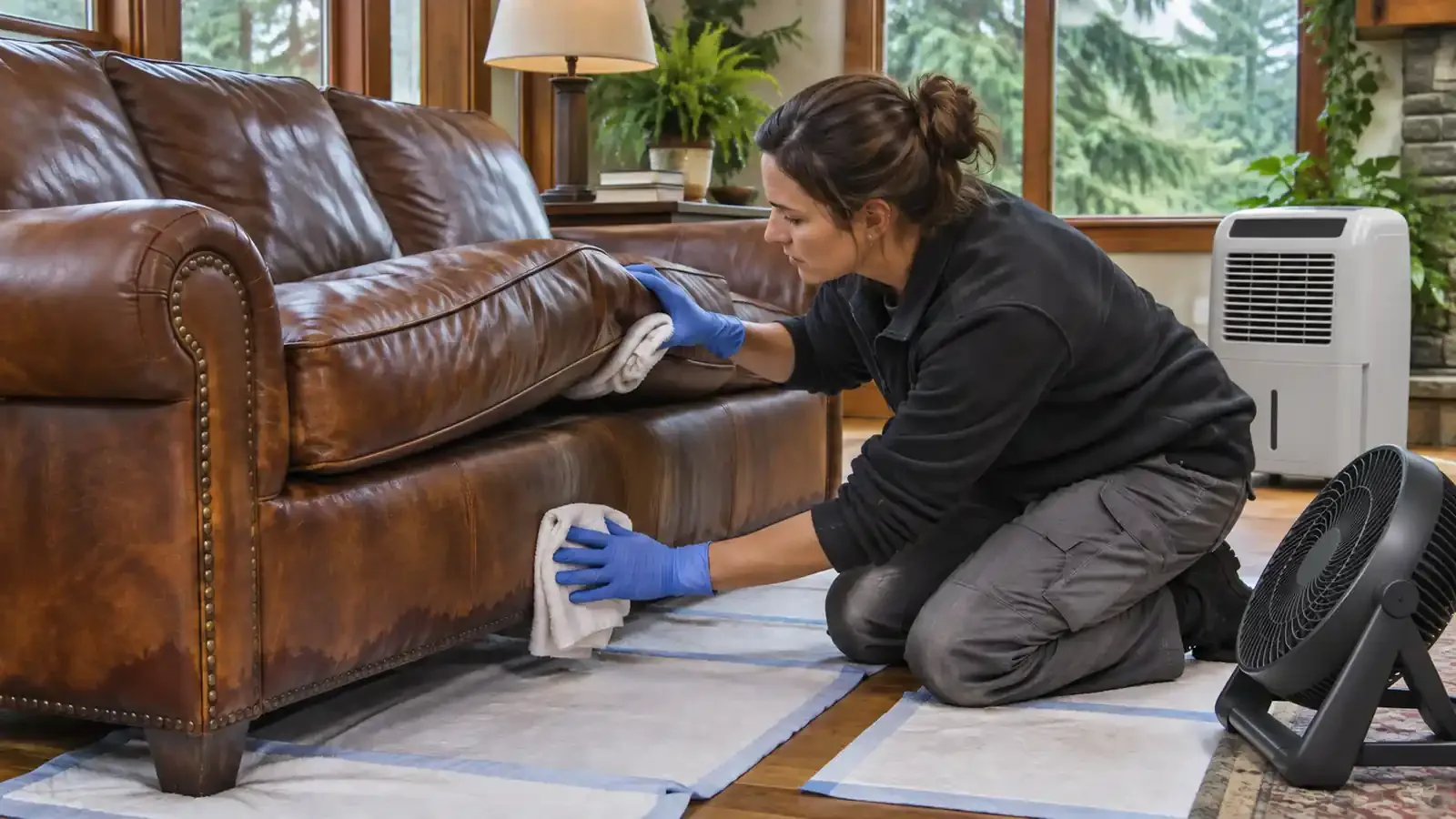
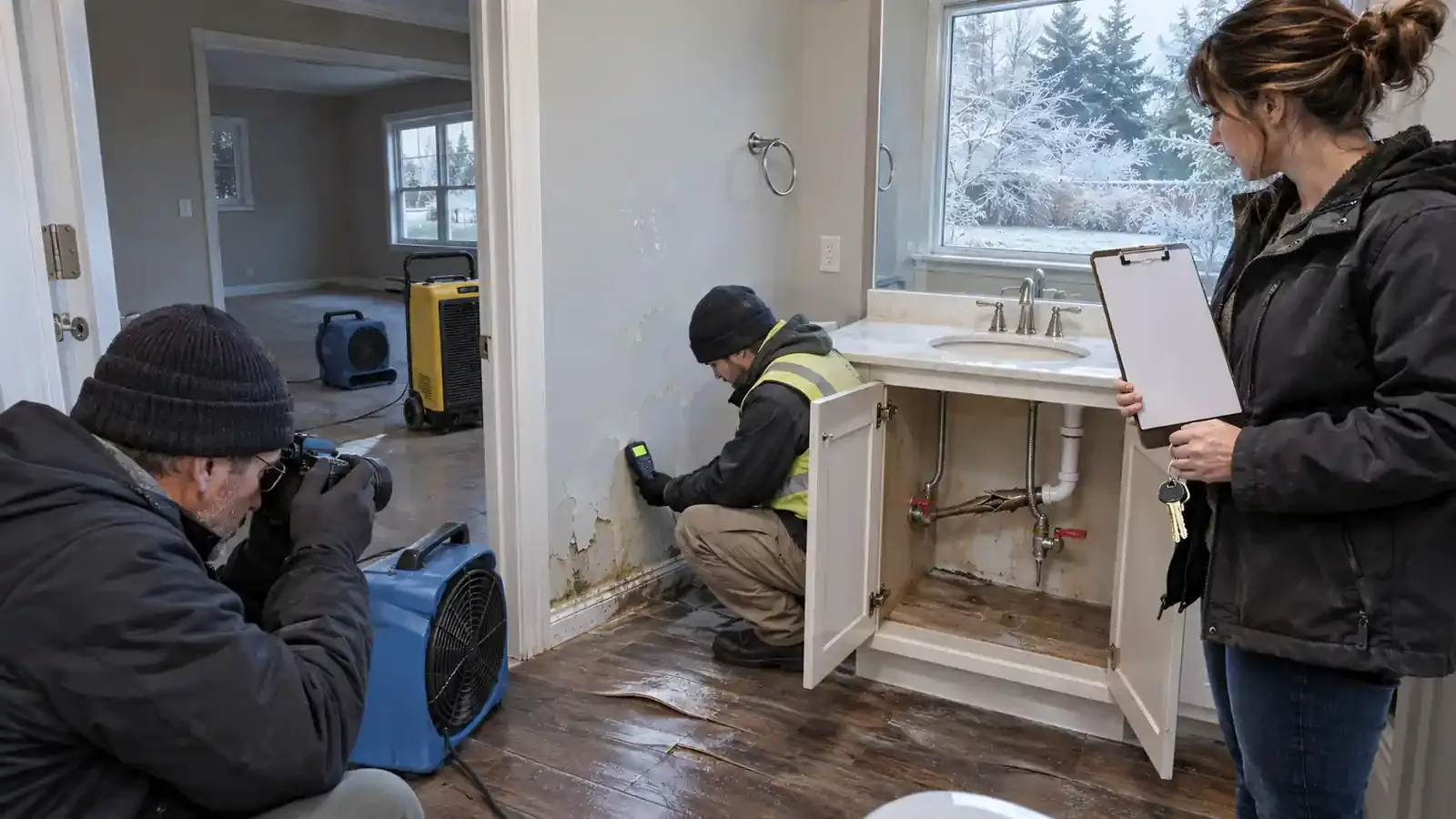
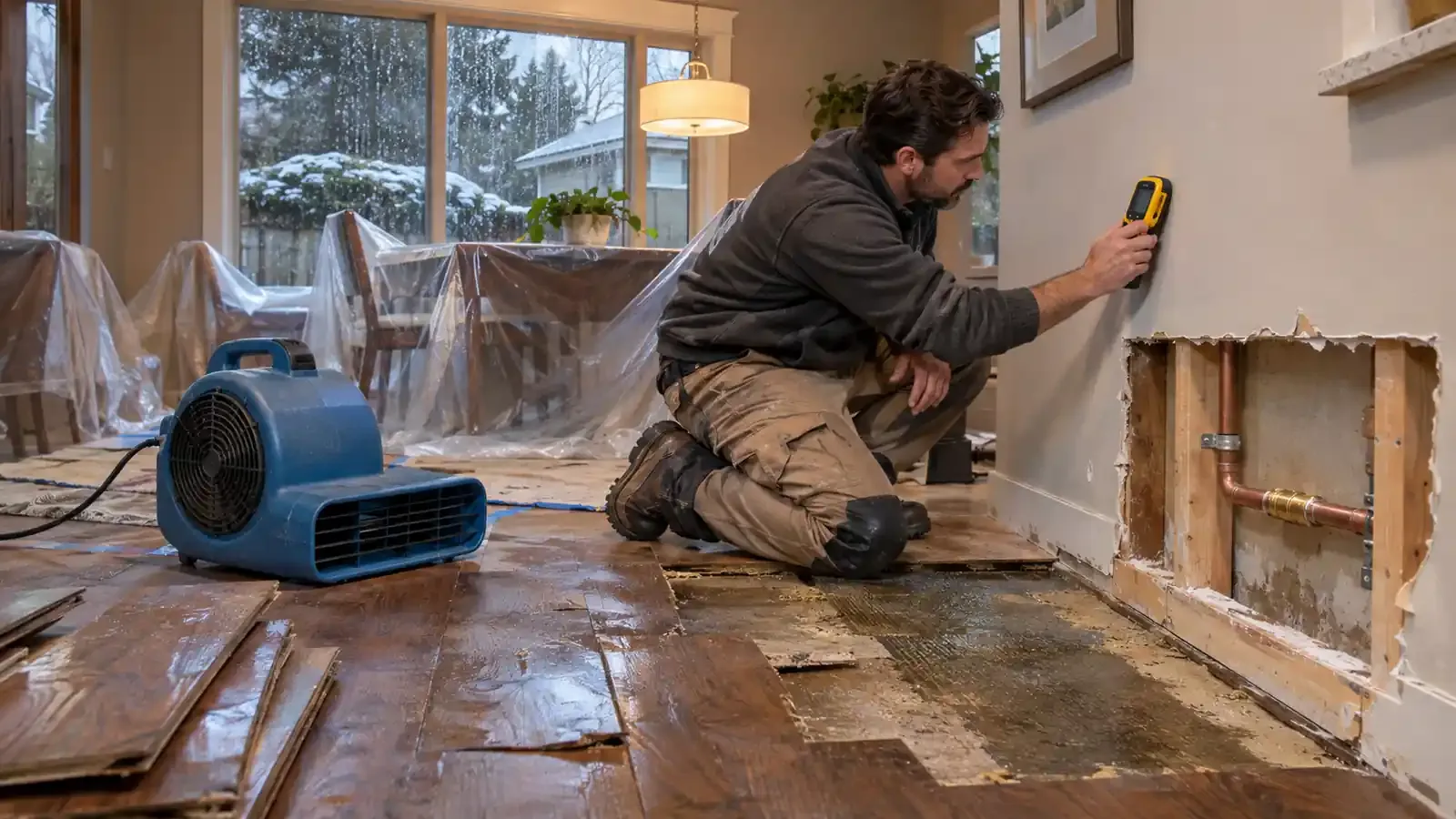
Surface water is only part of the loss. Water can move behind baseboards, into insulation, under floating floors, and through a subfloor to the level below. The mitigation scope may include extraction, moisture mapping, air movement, dehumidification, equipment monitoring, and removal of materials that cannot be dried in place.
The U.S. Environmental Protection Agency recommends addressing clean-water damage within 24 to 48 hours to reduce the chance of mold growth. That is a drying target, not a promise that every wet material must be discarded.
For example, the EPA notes that wallboard may sometimes be dried in place if it hasn’t swollen and its seams remain intact.
Walls and finishes
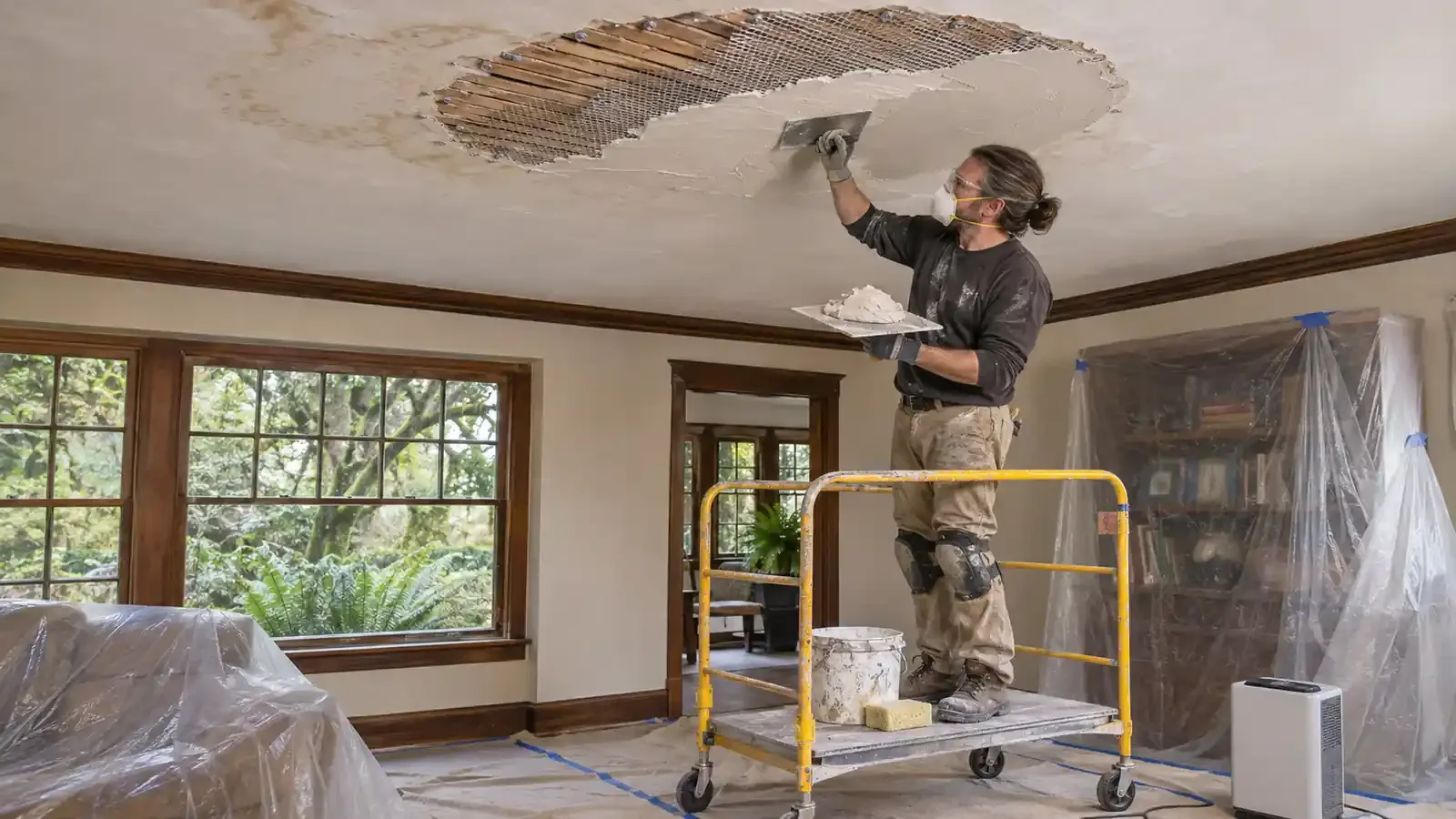
Wall repair is not just a new piece of drywall. The rebuild may also include wet insulation, baseboards, texture, primer, paint, and work in an adjoining room or ceiling below. A small access patch and a water-damaged wall cavity are different scopes even if the openings look similar.
Flooring and the layers below it
Flooring decisions depend on the material and what happened underneath. Carpet and pad can hold water. Laminate and some floating floors may swell or trap moisture. Hardwood may need time to dry before a repair decision is made, while buckled boards or a damaged subfloor can require removal.
The National Wood Flooring Association recommends evaluating water-damaged wood floors case by case rather than assuming every floor can be saved or must be replaced.
A Better Early Budget Starts With the Water Path
Two homes with the same split pipe can have very different totals. Work through these questions before relying on a broad online average:
- Did the pipe merely freeze, or did it split and release water after thawing?
- How long did water run before the supply was shut off?
- Did moisture remain in one wall cavity, or travel beneath floors and into adjacent rooms?
- Is the finished flooring isolated to one room, or continuous through several spaces?
- Are the subfloor, cabinets, insulation, ceiling below, or electrical components also affected?
- Does the estimate include both mitigation and reconstruction, or only one phase?
A contained loss with prompt shutoff and a small wall opening may stay near the lower end of the published ranges.
Multiroom damage, saturated subflooring, custom finishes, cabinetry, or work on the level below can push the project past $10,000. The difference is usually the water path and rebuild scope, not the length of pipe replaced.
If a frozen-pipe thaw has left walls or floors wet, contact PNW Restoration Services for an assessment of the water damage and reconstruction scope before finishes are closed back up.
Does Insurance Cover Frozen Pipes?
Homeowners insurance often covers resulting damage from a sudden and accidental discharge after a frozen pipe bursts, but coverage is never automatic. The cause, policy wording, deductible, limits, and steps taken to protect the home all matter.
What may be part of a covered loss
Depending on the policy, covered resulting damage may include:
- Water extraction and drying
- Damaged drywall, insulation, paint, trim, and flooring
- Damage to covered personal property
- Reasonable access needed to reach the failed line
- Additional living expenses when a covered loss makes the home uninhabitable
Oregon’s Division of Financial Regulation says homeowners policies generally cover accidental water discharge caused by freezing, while the pipe repair itself is usually the homeowner’s responsibility.
Washington’s Office of the Insurance Commissioner likewise says sudden, accidental water damage from a frozen burst pipe is often covered when the home was properly heated. Your own policy controls the result.
What can reduce or prevent payment?
Common sources of out-of-pocket cost include:
- The policy deductible
- The failed pipe itself when the policy covers only resulting damage
- Gradual leakage, wear, corrosion, or deferred maintenance
- A failure to maintain heat or drain plumbing in a vacant or unoccupied home when the policy requires it
- A water-damage sublimit that is lower than the dwelling limit
- Upgrades, elective replacements, or work outside the covered repair scope
- Depreciation when damaged property is settled at actual cash value rather than replacement cost
Do not assume that all water is treated the same. Groundwater, surface flooding, and sewer backup are different causes with different coverage rules.
Insurance changes who pays, not what the physical repair requires. A practical first calculation is:
Likely homeowner cost = deductible + uncovered pipe work + policy limits or depreciation + elective upgrades
Replacement-cost coverage generally pays to repair or replace covered property with materials of like kind and quality, subject to the policy.
Actual-cash-value coverage accounts for age and wear, which can leave a larger gap. Some replacement-cost policies also release part of the payment only after repairs are completed and receipts are submitted.
Ask the insurer or agent four specific questions:
- Is damage from this frozen-pipe event covered as sudden and accidental water discharge?
- Is the pipe repair, access work, drying, and reconstruction handled differently?
- What deductible, water-damage sublimit, depreciation, and matching provisions apply?
- What documentation or inspection is required before damaged materials are removed?
If the total loss appears only slightly higher than the deductible, discuss the implications of opening a claim before deciding. State regulators note that claim history can affect premiums or renewal decisions, while urgent drying should not be delayed. Take reasonable steps to limit further damage and keep records of emergency expenses.
Protect the Claim Without Delaying Drying
The first actions should preserve safety, limit additional water, and create a clear record of the loss.
- Shut off the main or branch water supply if a line has split or water is escaping. If water is near electrical equipment or you would have to stand in water to reach a breaker, stay out and call qualified help.
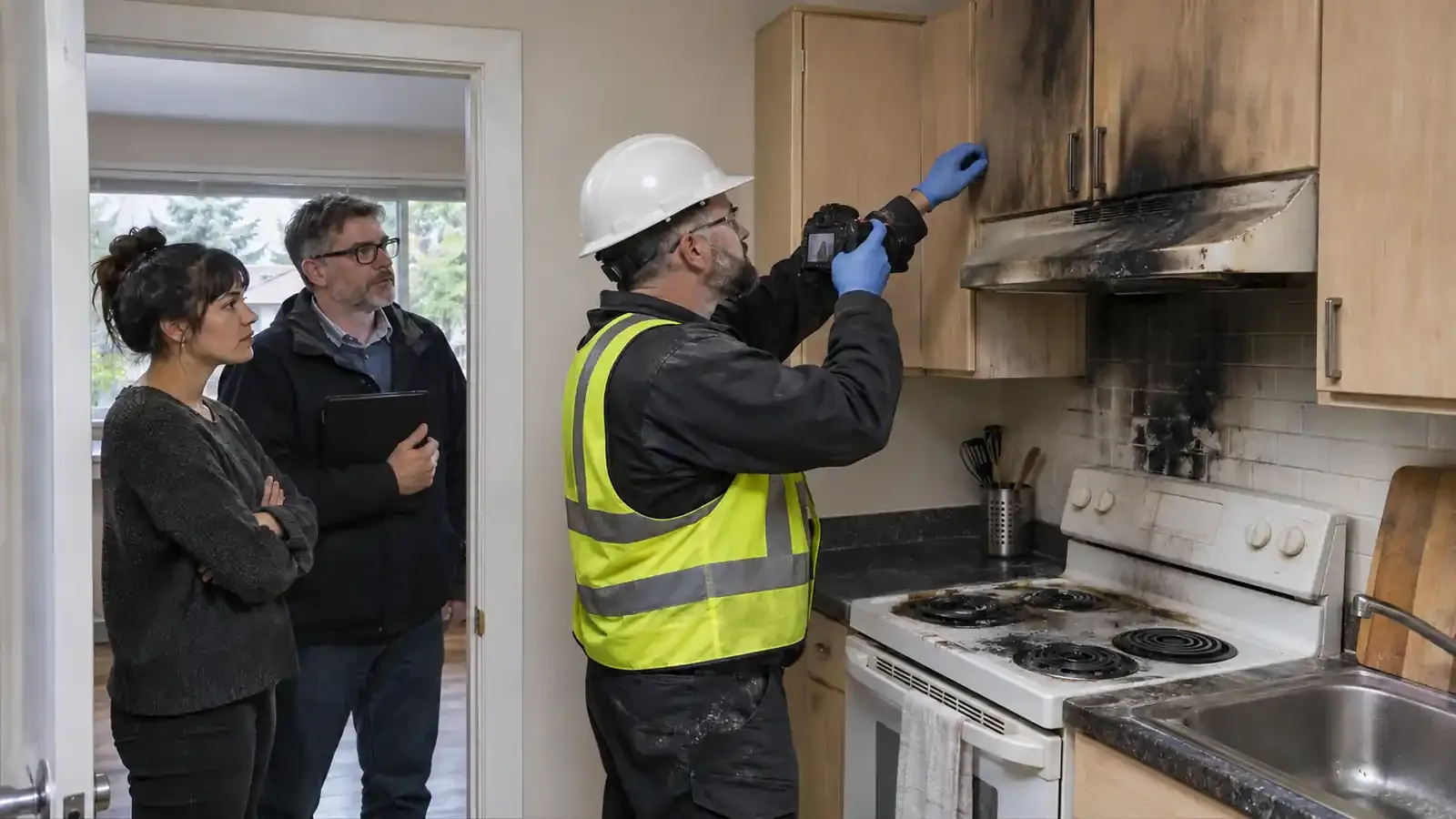
- Photograph and video the source, affected rooms, wet materials, and belongings before removal when it is safe to do so.
- Call a licensed plumber to repair and test the failed line. Keep the invoice and ask the plumber to identify the cause and location in writing.
- Notify the insurer promptly and ask what it needs to inspect. Do not wait for an adjuster before taking reasonable steps to stop additional damage.
- Start extraction and structural drying as soon as it can be done safely. Keep equipment logs, moisture records, estimates, invoices, and receipts.
- Rebuild only after the affected assemblies have been evaluated and the drying scope is complete.
If a pipe is still frozen but has not visibly leaked, use safe thawing methods. The American Red Cross advises keeping the affected faucet open, applying gentle heat to an accessible pipe, and never using an open flame. Call a licensed plumber when the frozen section is hidden, inaccessible, or will not thaw safely.
Compare Estimates by Scope, Not Just by Total
One estimate may look cheaper because it stops at drying while another includes putting the room back together. Before choosing, confirm whether each proposal identifies:
- Leak location, plumbing repair, and access work
- Extraction, drying equipment, monitoring, and moisture documentation
- Materials to dry, remove, or evaluate later
- Drywall, insulation, texture, paint, trim, and debris disposal
- Flooring, underlayment, subfloor, transitions, and baseboards
- Cabinets, contents, or work in adjacent rooms and lower levels
- Permit, testing, or specialty trade needs when applicable
- The boundary between insurance-covered work and owner-selected upgrades
The most reliable budget is a coordinated scope that follows the water from the failed pipe through every affected layer. A low plumbing quote is useful, but it cannot answer the full cost question when the thaw has already damaged walls and floors.
Frequently Asked Questions
How much does it cost to repair frozen pipes?
A frozen pipe that has not split may require only a service call and safe thawing. For a burst pipe, current national guides place the plumbing repair at about $200 to $3,000. When water has damaged finished walls and floors, mitigation and reconstruction can move the total into several thousand dollars or beyond $10,000, depending on the water path and materials affected.
Does insurance cover frozen pipes and the resulting water damage?
Homeowners insurance often covers sudden and accidental water damage from a frozen burst pipe when the property was reasonably maintained and heated. The pipe itself, gradual damage, neglected maintenance, or a freeze in an inadequately heated vacant home may be excluded. Check the exact policy, deductible, and any water-damage sublimit.
Will insurance pay to repair the broken pipe itself?
Not always. Oregon’s insurance regulator says the pipe repair is usually the homeowner’s responsibility even when resulting damage is covered. Other policies may handle access or pipe work differently, so ask the adjuster to separate the failed component, access, mitigation, and reconstruction in writing.
Should I file a claim if the repair is close to my deductible?
First, develop the fullest reasonable loss estimate, including drying and rebuild work, then compare it with the deductible and any uncovered items. Ask your agent or insurer whether a coverage inquiry will be recorded as a claim. Claim history may affect future premiums or renewal, so the decision should not be based on the plumber’s invoice alone.
Does wet drywall always need to be replaced?
No. EPA guidance says drywall may sometimes be dried in place after clean-water damage if there is no obvious swelling and the seams remain intact. Removal may be necessary when the material has deteriorated, cannot be dried promptly, contains contamination, or must be opened to reach wet insulation or the pipe.
Can water-damaged hardwood flooring be saved?
Sometimes. The decision depends on moisture levels, buckling, finish damage, subfloor conditions, and whether the boards return toward normal as they dry. The National Wood Flooring Association recommends case-by-case evaluation, so avoid sanding or replacing the floor before its moisture condition is understood.
Who should I call first, a plumber or a restoration company?
If water is actively escaping, shut it off and call a plumber to stop and repair the source. When walls, floors, insulation, cabinets, or a lower level are wet, a restoration assessment should follow promptly so drying can begin. The two scopes solve different parts of the same loss.
Can a frozen pipe start leaking only after it thaws?
Yes. Ice can temporarily block a split in the pipe. The leak may become visible only when the ice melts and water pressure returns. Watch the suspected route during thawing and be ready to shut off the supply if staining, dripping, hissing, or wet flooring appears.
Does Insurance Cover Frozen Pipes?
- What may be part of a covered loss
- What can reduce or prevent payment
Alt text: Comparison of potentially covered frozen-pipe water damage and common sources of homeowner expense.