

Yes, water can damage leather furniture. A brief spill on protected leather may leave little more than a temporary dark spot, while prolonged saturation can cause permanent tide lines, dye movement, stiffness, shrinkage, finish failure, mildew, and damage inside the cushions or frame.
The useful question is not simply whether the leather got wet. A sofa is a layered object: a leather cover sits over foam, batting, webbing, springs, wood, adhesives, and sometimes electrical components.
To judge whether it can be saved, you need to consider the water source, how deeply it traveled, how the materials behave while drying, and whether the piece is worth specialist work.
Start With the Water Source, Not the Stain
The same dark mark can represent very different problems. A glass of clean water spilled and blotted within minutes is not comparable to a sofa that stood in outdoor floodwater or received sewage-contaminated water.
For a small clean-water spill, prompt blotting and careful air-drying may be enough. If the source involved sewage, outdoor flooding, or unknown contamination, keep people and pets away from the piece.
Do not sit on it, press the cushions, or begin household cleaning. The U.S. Environmental Protection Agency recommends professional help when water or mold damage was caused by sewage or other contaminated water.
It is also worth photographing the furniture and the water source before moving or discarding anything. If an insurance claim may be involved, ask the insurer what documentation it requires.
Leather Is Only the Visible Layer
The most important salvage distinction is surface exposure versus interior saturation. Leather can look dry while foam or batting remains wet. Cleaning the hide cannot make contaminated padding clean or restore weakened frame joints.
The Leather Cover
Leather’s response depends on its tanning, finish, prior condition, and length of exposure. Pigmented or protected leather usually resists a brief spill better because its surface coating slows absorption.
Aniline leather, nubuck, suede, worn leather, and cracked finishes absorb moisture more readily and are more likely to show darkening, texture change, or permanent staining.
Water can also move dyes, tannins, or finish components toward a drying edge. That movement may leave a ring even after the center looks normal. Saturated leather can become weak while wet, then stiffen, shrink, or turn brittle as it dries.
The Upholstery Core and Frame
Foam, batting, burlap, and webbing can hold moisture out of sight. That retained moisture can support mildew, create a musty odor, corrode springs or fasteners, and affect adhesives. Wood parts may swell, warp, or loosen at the joints.
Recliners and powered sofas add motors, wiring, and controls that should not be energized after water exposure until they have been evaluated.
This is why appearance alone is a poor test of whether a leather sofa is dry. The salvage decision often changes at the upholstery core.
What to Do After Clean Water Reaches Leather Furniture
These steps are appropriate only when the source is clean, the area is electrically safe, and there is no visible mold or widespread saturation.
- Stop the source and document the loss. Photograph the furniture, nearby floor, and source before moving the piece if it is safe to do so.
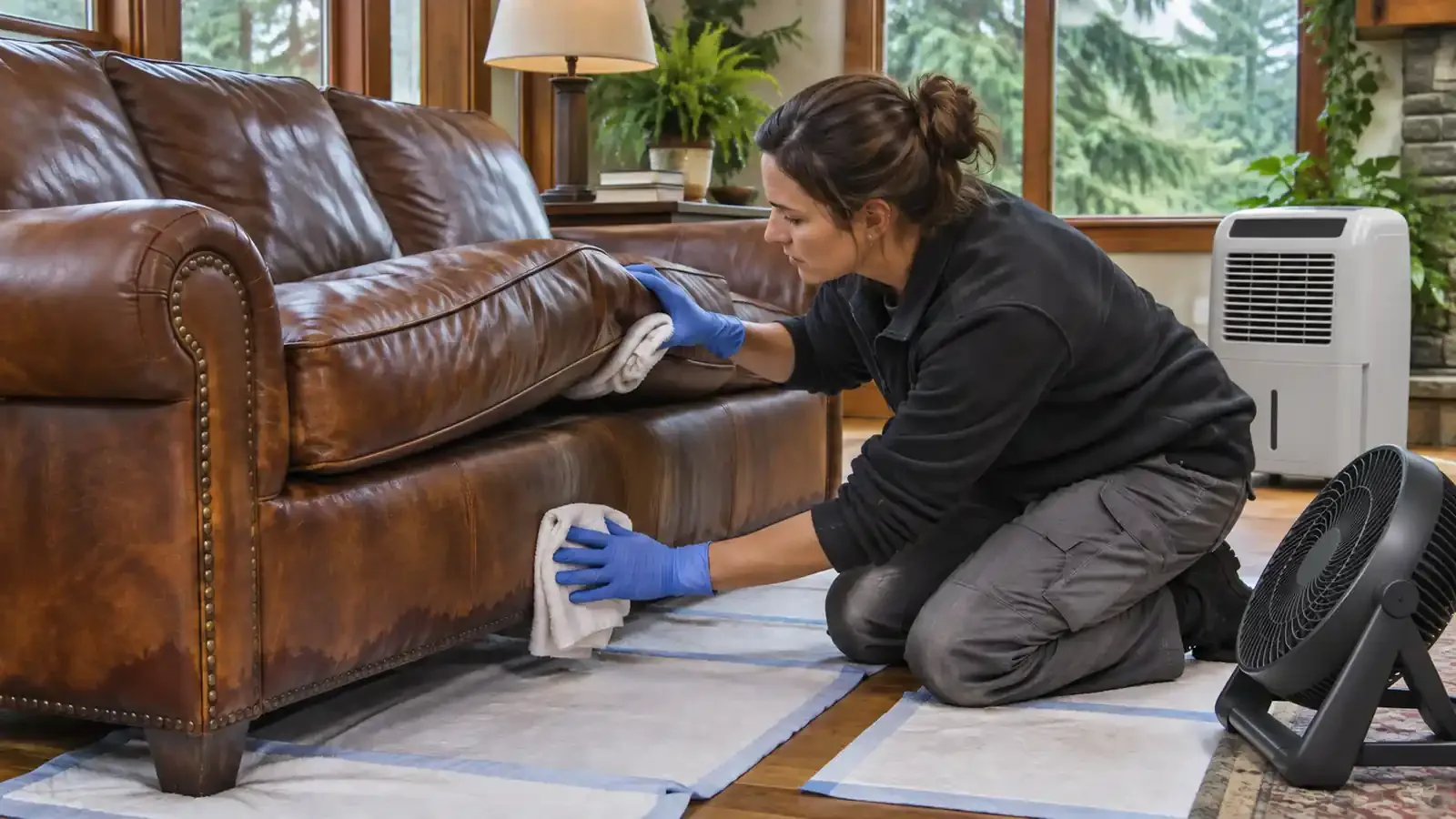
- Blot instead of rubbing. Use clean, absorbent white cloths and light pressure. Rubbing can spread a mark or abrade a softened finish.
- Remove only parts designed to come off. Separate removable cushions to improve airflow, but do not force zippers, seams, trim, or mechanisms.
- Use cool airflow and dehumidification. Let the leather air-dry away from direct sun, radiators, hair dryers, and other concentrated heat. Heat can produce uneven drying and additional finish or shape damage.
- Check the manufacturer’s care instructions. Do not improvise with saddle soap, bleach, ammonia, oils, furniture polish, or a general-purpose cleaner. Products that are safe for one leather finish may stain, strip, or soften another.
Do not apply conditioner while the piece is damp. Once it is fully dry, a leather-care specialist or the manufacturer can advise whether conditioning, color correction, or refinishing is appropriate. If water entered seams, the cushion interior, a wood base, or a power mechanism, move from home care to professional assessment.
Mildew on Leather Is a Depth Problem
If you are asking, “How do I remove mildew from leather?” first determine whether the growth is limited to a small, dry surface area. Mildew that returns after wiping, a persistent musty smell, damp padding, or spotting around seams suggests a deeper moisture problem.
For a few dry surface spots on a removable item, isolate the affected piece and use at least an N95 respirator, goggles, and protective gloves.
The Canadian Conservation Institute recommends removing dry growth with a HEPA-filtered vacuum and controlled suction. Work outdoors on a dry day, away from people and air intakes, when the item can be moved safely. Stop if the growth smears, because the material may still be damp. Follow the furniture maker’s instructions before applying any liquid cleaner.
Do not default to a homemade vinegar, alcohol, or bleach mixture. Leather finishes vary, and a chemical that reduces surface growth can still discolor the hide or leave mold in the padding. Surface treatment is not a reliable solution when:
- Growth covers more than a small area or is present in seams or cushion interiors.
- The sofa stayed wet long enough for the core to remain damp.
- Musty odor returns after the surface is dry.
- Anyone in the home has health concerns about mold exposure.
- The water came from sewage, outdoor flooding, or another contaminated source.
If mold also affects walls, floors, or other building materials, the problem is larger than furniture care. A qualified mold remediation assessment can address the moisture source and affected area rather than treating the sofa in isolation.
A Four-Factor Test for Restore or Replace
Use the same four questions for any water-damaged furniture: source, depth, material behavior, and value. They prevent a good-looking surface from disguising an unsalvageable interior.
| Condition | What it usually means | Practical next step |
| Brief clean-water spill; liquid stayed on the surface; no color transfer or odor | Often salvageable | Blot, air-dry, and follow the manufacturer’s care guidance |
| Clean-water leak reached seams or padding; piece was addressed promptly | May be salvageable | Have the interior moisture and leather finish assessed before use |
| Leather is stiff, shrunken, tacky, peeling, cracked, or transferring color | Finish or fiber damage has occurred | Seek a leather specialist’s opinion; complete restoration may require refinishing or reupholstery |
| Musty odor persists or growth is visible inside seams, foam, batting, or webbing | Surface cleaning will not resolve the affected core | Consider professional stripping and reupholstery only if the frame and value justify it |
| Sewage, outdoor floodwater, or unknown contaminated water soaked porous components | Cleaning and complete decontamination may not be practical | Avoid DIY handling; replacement is often the safer decision unless a qualified specialist confirms a viable process |
| Swollen composite wood, loose joints, rusted hardware, or wet electrical components | Damage extends beyond the leather | Compare structural repair and electrical evaluation with replacement |
Water-damaged furniture restoration is more likely to make sense for a well-built frame, high-quality or replaceable leather panels, an antique, or a piece with strong sentimental value.
Replacement often makes more sense when contaminated water reached absorbent filling, the frame has lost integrity, a persistent odor indicates hidden contamination, or repair would require rebuilding most of a readily replaceable sofa.
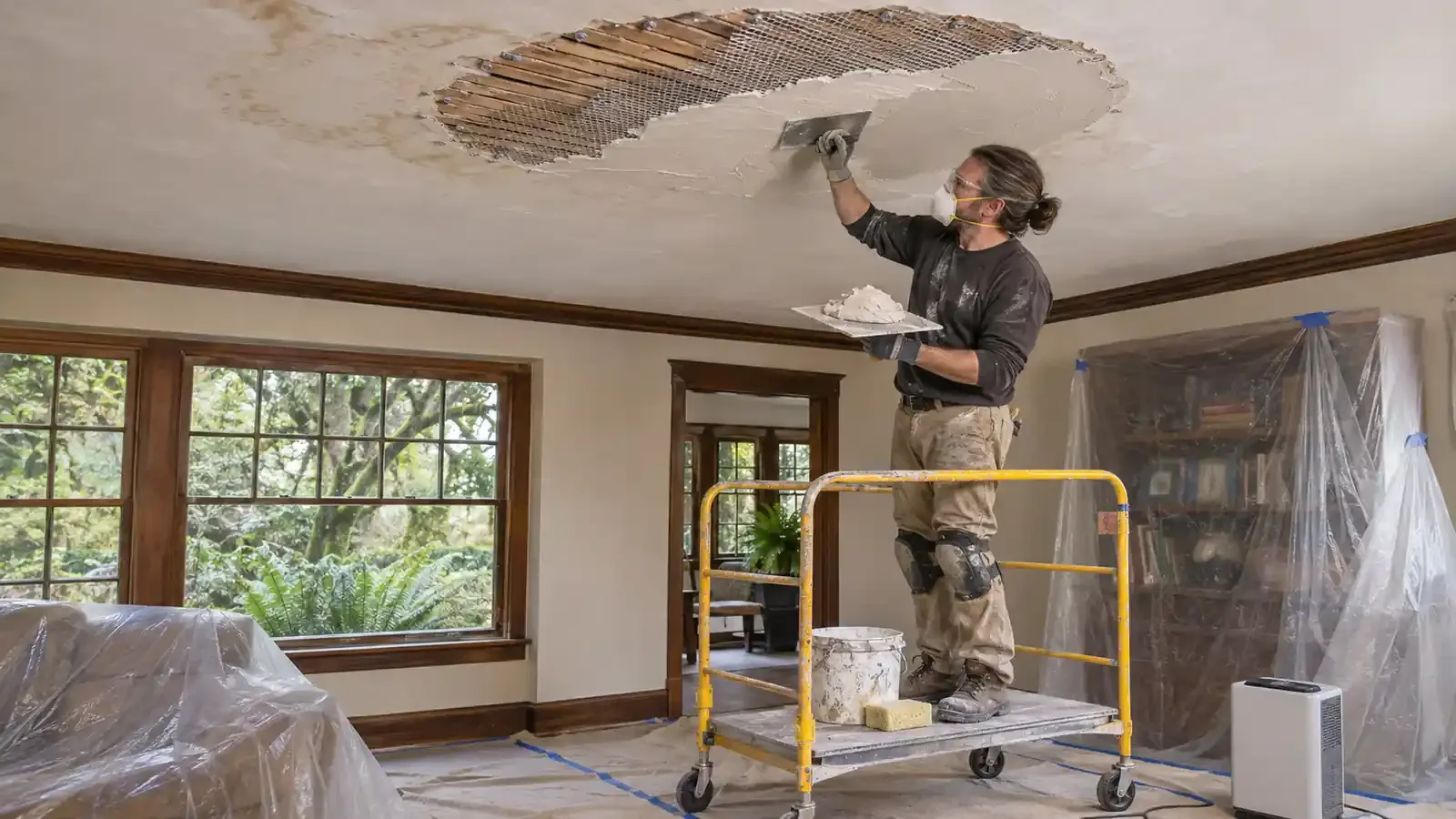
If a leak or flood affected both the furniture and the room around it, our water damage restoration team can assess moisture in the property and help define the wider restoration scope. Leather repair, recoloring, or conservation may still require a furniture or leather specialist.
The final decision should be based on the whole piece, not whether the leather surface can be made to look better. Clean-source water, shallow exposure, stable color, a dry core, and a sound frame favor restoration.
Contamination, saturated padding, recurring mildew, unstable finishes, damaged joints, or wet electrical parts move the decision toward specialist reconstruction or replacement.
Frequently Asked Questions
Does a small water spill permanently damage leather?
Not always. Protected leather may tolerate a brief spill if it is blotted promptly and allowed to air-dry. Open-pore, worn, aniline, nubuck, or suede surfaces are more likely to absorb water and retain a dark mark or texture change.
Why did leather turn stiff after it dried?
Wetting and drying can change how leather fibers, tanning materials, oils, dyes, and finishes are distributed. Some leathers shrink or stiffen after saturation. Avoid trying to soften the area with household oils; a leather specialist can determine whether controlled conditioning or restoration is suitable.
Can I use a hair dryer on wet leather furniture?
No. Concentrated heat can dry the surface unevenly and contribute to shrinkage, stiffness, color change, or finish damage. Use cool room air and dehumidification instead.
How quickly should wet leather furniture be dried?
Begin safe drying as soon as possible. CDC and EPA guidance emphasizes drying water-damaged items within about 24 to 48 hours when feasible to limit mold growth, but that window is not a guarantee. Thick cushions can remain wet inside even when the surface feels dry.
Can mildew be removed from a leather sofa?
A few dry surface spots may be removable with careful HEPA vacuuming and manufacturer-approved care. Widespread growth, damp padding, recurring odor, contaminated water, or mold inside seams and cushions calls for professional assessment and may make replacement more practical.
Should I use vinegar or rubbing alcohol on moldy leather?
Do not assume either is safe. Leather finishes and dyes react differently, and spot treatment can cause color loss or rings while leaving hidden growth untouched. Follow the furniture manufacturer’s instructions or obtain leather-specific professional advice.
Can a leather sofa be saved after a flood?
Sometimes, but the water source matters more than the outer material. A valuable piece exposed briefly to clean water may justify specialist drying and reupholstery. If contaminated floodwater soaked the foam, batting, webbing, or frame, discarding the piece is often the safer and more practical choice.
Does conditioning fix water-damaged leather?
Conditioner cannot reverse contamination, shrinkage, structural damage, peeling finish, or dye loss. It may be appropriate after complete drying for certain leather types, but only when the manufacturer or a leather professional recommends it.