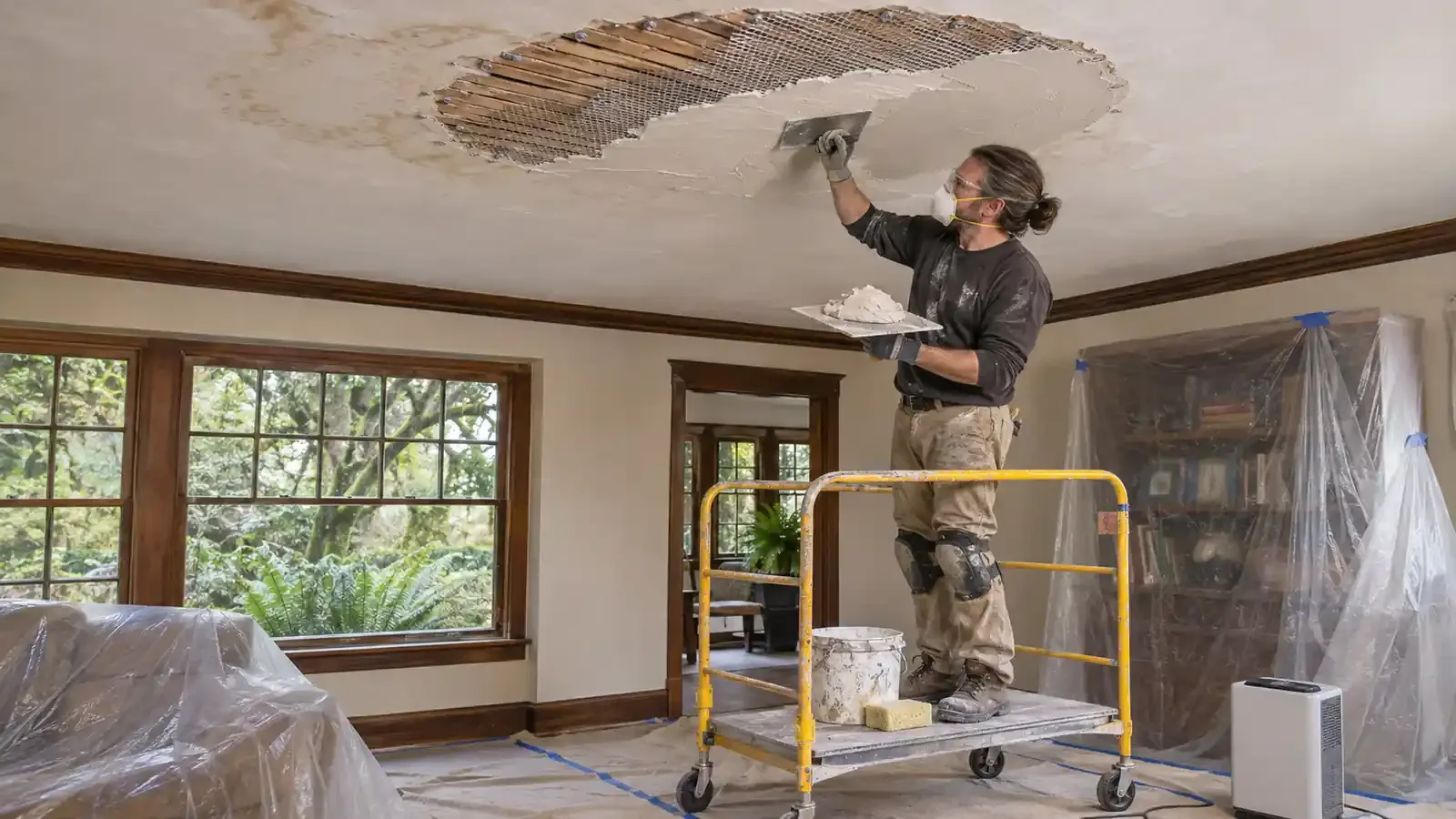


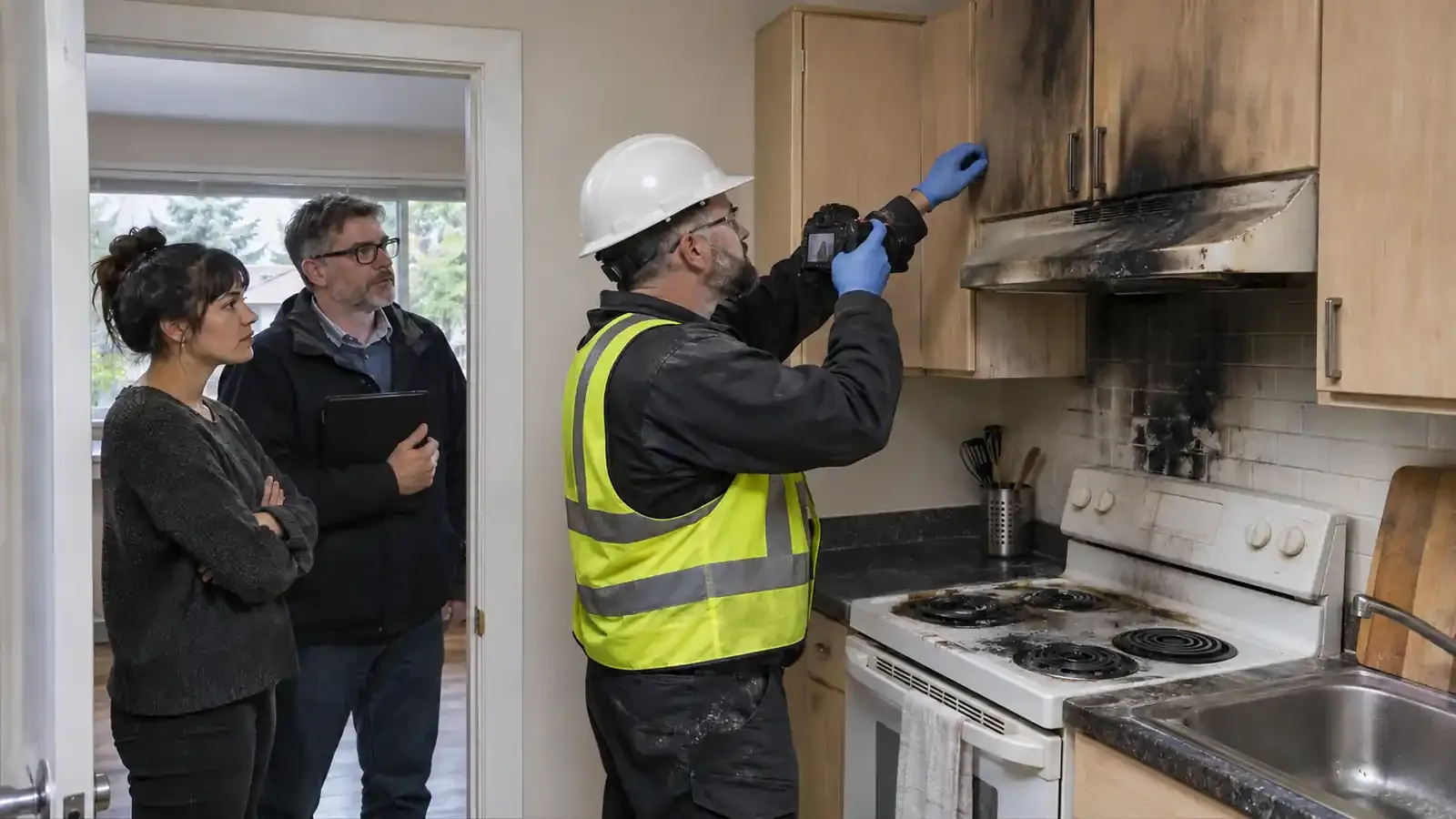
A fire can stay inside one apartment while smoke, soot, odor, and sprinkler water affect several others. This can make it difficult to determine who is liable for fire damage.
Liability does not automatically follow the unit where the fire began. The answer depends on what was damaged, what caused the fire, whether anyone failed a legal or lease-based duty, and which insurance policy covers that particular loss.
In Oregon and Washington, the lease can also affect whether a building insurer may later seek repayment from a tenant.
This article provides general information, not legal or insurance advice. A lawyer and the applicable insurers should review a disputed or high-value loss.
Start With Five Questions, Not One Assumption
The most reliable way to analyze a multifamily fire is to separate facts that often get blended together. Work through these questions in order:
- What was damaged? Separate the building, landlord-owned fixtures, each tenant’s belongings, temporary housing costs, business property, vehicles, and any injuries.
- Where did the fire and smoke travel? Identify the unit of origin, every affected unit, common areas, wall or ceiling cavities, and shared mechanical systems.
- What caused the fire? An origin-and-cause investigation may point to careless conduct, defective equipment, faulty wiring, poor maintenance, intentional conduct, or an undetermined cause.
- Who had the relevant duty? The answer may be a tenant, landlord, property manager, contractor, product manufacturer, utility, or another third party.
- What do the lease and policies say? Property coverage, renters insurance, liability coverage, deductibles, exclusions, waivers, and subrogation rights can change who pays first and who may ultimately bear the loss.
These questions prevent a common error: treating the address of the fire as proof of fault. Fire investigators determine origin and cause. Legal liability requires a separate analysis of duties, conduct, causation, damages, contract terms, and applicable law.
Match Each Loss to Its Usual First Claim
One fire can create several claims that move on different tracks. The party whose policy responds first is not necessarily the party ultimately found legally responsible.
| Loss | Usual first claim or decision path | What may happen later |
| Building structure and landlord-owned fixtures | The owner generally reports the loss under the building or landlord policy. | The insurer may investigate recovery from a responsible party, subject to the lease and state law. |
| A renter’s furniture, clothing, and electronics | The affected renter generally reports the loss under personal-property coverage. | The renter or insurer may pursue a negligent party when the evidence and law support it. |
| Temporary housing and extra living costs | The affected renter checks loss-of-use or additional-living-expense coverage. | Reimbursement depends on policy terms, limits, the unit’s condition, and the reason for displacement. |
| Smoke and soot cleanup inside the rental unit | Building surfaces usually fall within the owner’s restoration scope; tenant-owned contents usually follow the tenant’s claim. | Allocation can change for tenant improvements, deductibles, uninsured amounts, or proven negligence. |
| Sprinkler or firefighting water damage | The claim usually follows ownership of the wet property, much like the related fire loss. | A later recovery claim may include water damage that resulted from reasonable suppression efforts. |
| Injury or exposure claims | The injured person may make a liability claim against one or more allegedly responsible parties. | Fault, notice, code duties, medical causation, and policy limits require case-specific review. |
Oregon’s insurance regulator explains that a landlord’s policy generally protects the building, while renters insurance can protect a tenant’s belongings, liability, and qualifying extra living expenses.
Washington’s insurance regulator describes the same basic division and notes that sudden, accidental smoke from a neighbor’s fire may be covered even when flames never enter the affected unit.
The Responsible Party Depends on the Failure That Caused the Loss
Responsibility becomes clearer when the investigation connects the fire or its spread to a particular act, omission, product, or building condition.
A tenant may be responsible for negligent conduct
A tenant may face liability when evidence shows that the tenant, a household member, or in some circumstances, a guest carelessly caused the fire. Examples could include leaving cooking unattended, misusing an appliance, or disabling a required alarm.
An accidental fire is not automatically a negligent fire, however. The specific conduct and surrounding facts matter.
Both Oregon and Washington impose duties on tenants not to intentionally or negligently damage a rental. Both states also assign tenants certain responsibilities for maintaining smoke alarms after move-in. Those statutes help define duties, but they do not decide every disputed claim by themselves.
A landlord may be responsible for a property condition or maintenance failure
A landlord may face liability when a failure within the landlord’s control contributes to the fire, smoke spread, or resulting loss. Potential issues include unsafe wiring, a known defective heating appliance, uncorrected fire hazards in common areas, or failure to satisfy applicable alarm, structural, or maintenance duties.
Oregon law requires landlords to maintain habitable premises, including safety from fire hazards and working smoke alarms at the start of a tenancy. Washington law requires landlords to keep premises fit for human habitation, maintain structural components, and keep shared areas reasonably safe from defects that increase fire or accident hazards. Proof of a violation still must be connected to the claimed damage.
Another tenant or a third party may be responsible
The relevant defendant may be someone other than the affected tenant or building owner. A contractor’s work, defective product, utility event, visitor’s conduct, or fire in a neighboring property can create a separate liability path. Product, contractor, and utility claims usually require technical evidence and should not be assumed from the fire scene alone.
Sometimes no one is immediately proven liable
The cause may remain undetermined, evidence may conflict, or an accidental covered loss may occur without legally actionable negligence. Insurers can still process first-party property claims while responsibility remains unresolved. This is one reason affected renters and owners should promptly notify their own insurers instead of waiting for another party to accept fault.
Oregon and Washington Treat Tenant Recovery Differently
The Pacific Northwest distinction that matters most is subrogation. Subrogation is the process by which an insurer that paid its policyholder seeks repayment from a legally responsible party.
Oregon uses a lease-specific approach
In Koch v. Spann, the Oregon Court of Appeals rejected a blanket rule that every tenant is automatically a co-insured under the landlord’s fire policy. The court examined the rental agreement and allowed the building insurer’s subrogation claim to proceed where the lease did not require the landlord to maintain fire insurance for the tenant’s benefit and assigned the tenant responsibility for negligent damage.
That does not mean an Oregon tenant is always liable. Lease language, negligence, causation, statutory duties, insurance provisions, and defenses still matter. It does mean that a tenant should send any demand or subrogation letter to the renter’s insurer promptly and obtain legal advice rather than assuming the landlord’s policy ends the issue.
Washington generally starts with a co-insured presumption
Washington appellate decisions have generally treated a tenant as a co-insured under the landlord’s fire policy unless the lease clearly provides otherwise. That rule can block the landlord’s insurer from pursuing the tenant for a covered building loss in some circumstances.
The protection is not universal. Clear lease language may change the result, and the rule does not erase claims for another tenant’s belongings, injuries, uninsured losses, intentional conduct, or other liabilities outside the landlord’s property policy. A Washington tenant who receives a demand should still notify the renter’s insurer and have the lease reviewed.
Smoke Crossing a Wall Expands the Scope, Not Automatic Fault
Smoke can move through open doors, corridors, shafts, penetrations, pressure differences, and mechanical systems. NIST fire research shows that doors, windows, wind, and ventilation conditions can rapidly change smoke movement in multifamily buildings.
The current ANSI/IICRC S700 standard likewise treats a fire’s impact boundaries as an assessment question that may include building systems, contents, adjoining buildings, and odor.
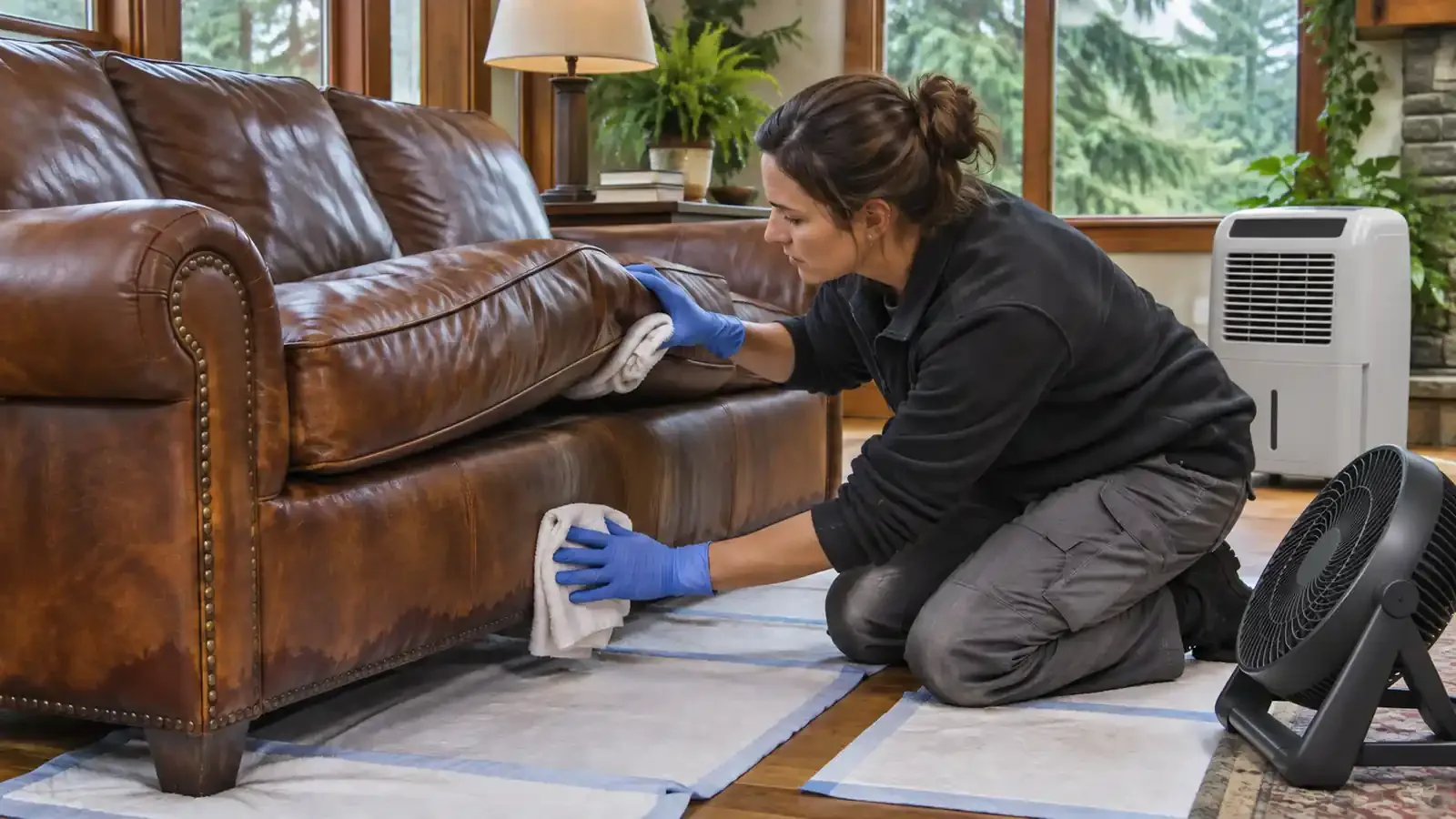
That means a unit without flame damage may still need a documented assessment. Building-owned surfaces, shared HVAC components, and tenant-owned contents should be evaluated separately. When sprinklers or hoses add moisture, the recovery plan may also need coordinated water damage restoration rather than smoke cleaning alone.
For persistent odor, smoke odor removal should address the affected material and smoke pathway, not merely mask the smell. Major losses may also require repairs or reconstruction after the investigation, mitigation, and coverage decisions permit that work to begin.
If a Portland-area rental or multifamily property needs a professional scope for structural surfaces, contents, soot, odor, or fire-suppression water, our fire and smoke damage team can help document the affected areas and plan appropriate restoration. We do not determine legal fault or insurance coverage.
Protect the Evidence While the Claims Develop
Early decisions can affect safety, insurance coverage, and later recovery. A practical sequence is:
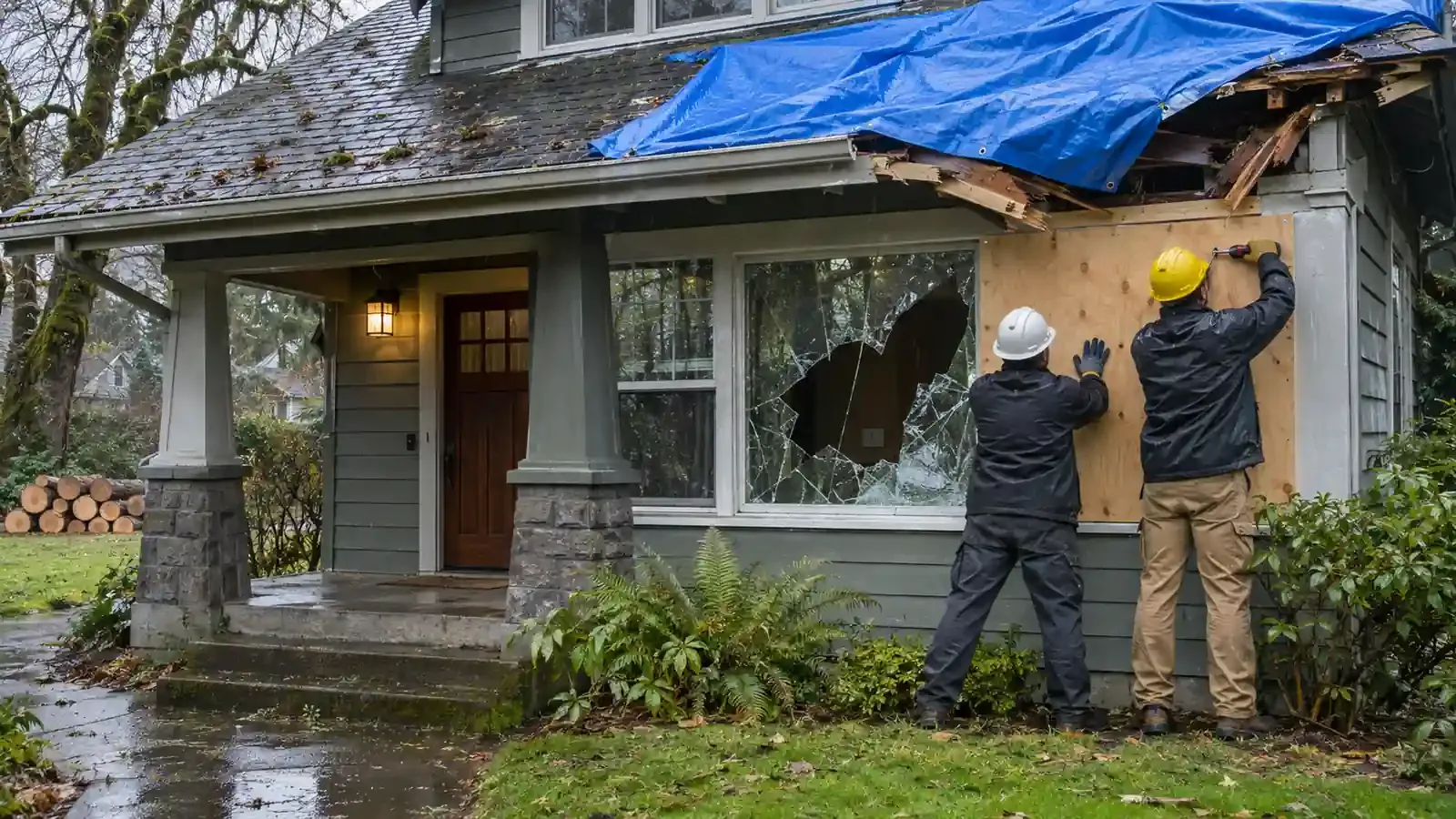
- Follow emergency instructions. Do not re-enter until firefighters or the authority having jurisdiction permits it. Do not energize damaged electrical or mechanical systems.
- Notify the right people in writing. Tenants should notify the property manager or landlord and their renters’ insurer. Owners and managers should notify the building carrier and relevant vendors.
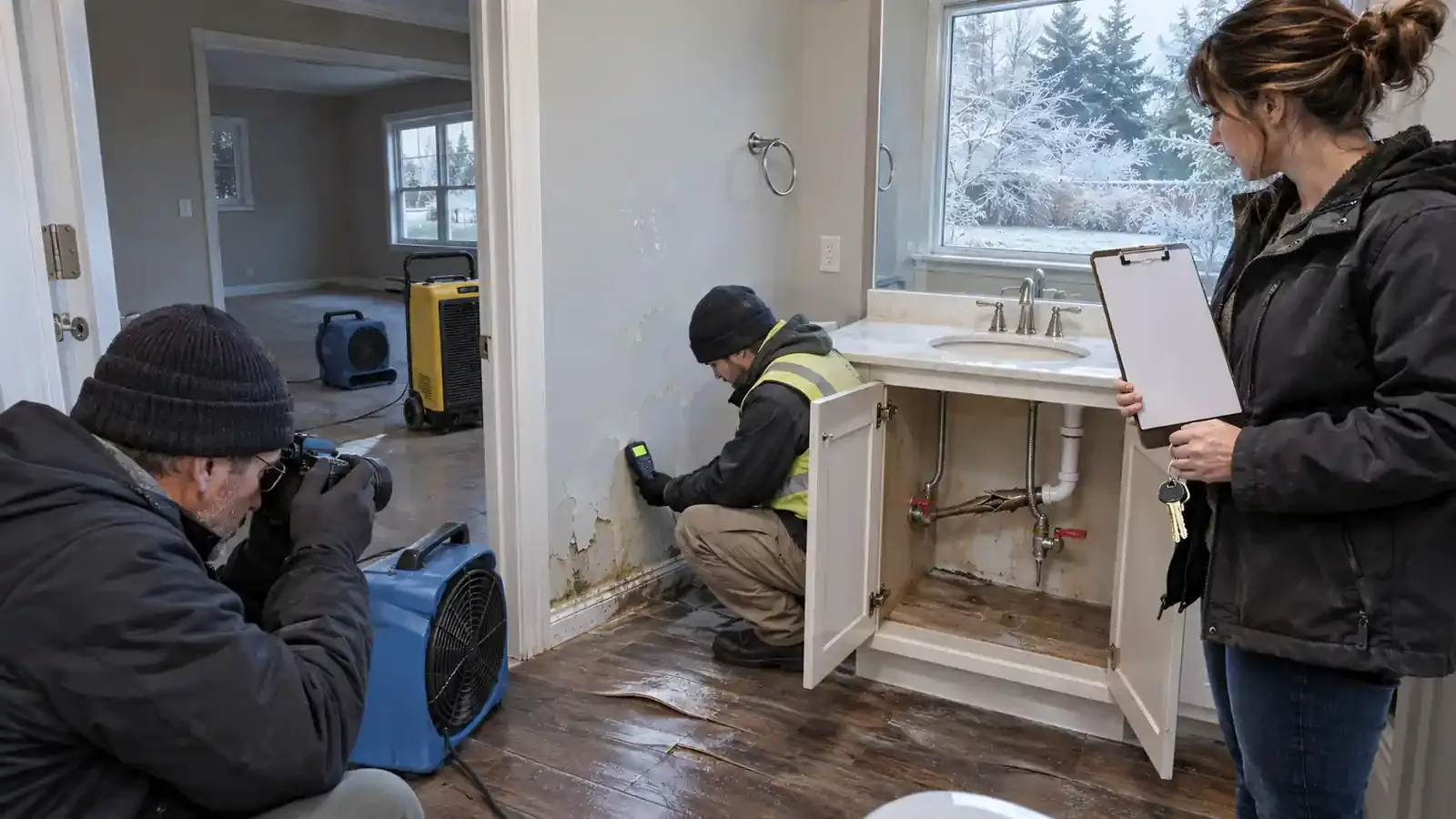
- Document before cleaning or moving items. Photograph rooms, surfaces, contents, smoke patterns, water damage, and temporary safety measures when access is authorized.
- Preserve potentially important items. Do not discard appliances, power strips, batteries, heaters, or other suspected ignition evidence without approval from investigators and insurers.
- Separate ownership and expenses. Maintain distinct inventories for building property and each occupant’s belongings. Save receipts for lodging, meals, transportation, storage, emergency work, and temporary repairs.
- Collect the controlling documents. Obtain the lease, addenda, policy declarations, relevant endorsements, incident report, official origin-and-cause findings when available, and written occupancy restrictions.
- Do not admit fault or sign a release casually. Give accurate facts, but let investigators, insurers, and counsel evaluate responsibility. Promptly forward demand letters, lawsuits, or subrogation notices to the appropriate insurer.
Portland Fire & Rescue advises renters to contact both the property owner and their insurer after a fire. It also cautions against throwing items away before the insurance company has approved disposal. This preserves both the claim record and possible evidence.
The Bottom Line
When smoke crosses units, there may be several payers and several potentially responsible parties. The owner typically handles the building claim. Each renter typically looks first to renters insurance for belongings and qualifying temporary living costs. Liability is then decided from cause, duty, negligence, lease language, policy terms, and state law.
The most useful rule is not “the unit where the fire started pays.” It is “separate every loss, identify the duty connected to that loss, and preserve the evidence before assigning fault.”
Frequently Asked Questions
Is the tenant automatically liable if the fire started in the tenant’s unit?
No. The location of origin does not by itself prove negligence. Investigators may find an equipment failure, building condition, intentional act by another person, or an undetermined cause. Liability depends on the cause, the tenant’s conduct, applicable duties, the lease, and state law.
Does the landlord’s insurance cover a tenant’s smoke-damaged belongings?
Usually not. Oregon and Washington insurance regulators explain that the owner’s policy generally protects the building, while renters insurance is designed to cover a renter’s personal property. An affected tenant may also have a claim against a negligent party, but that is separate from making a prompt claim under the tenant’s own policy.
Can a tenant be liable for smoke damage in other apartments?
Possibly. If a tenant negligently caused the fire, claims could involve building damage, other tenants’ property, or injuries. The lease, renters liability coverage, policy limits, state subrogation rules, and proof of causation all affect the result.
Who pays for smoke cleanup in an apartment that did not burn?
The answer usually turns on ownership. The landlord or building insurer generally handles building-owned surfaces and systems. The renter generally submits damaged belongings under renters insurance. Cost recovery from a negligent party may occur later.
Does renters insurance pay for a hotel after smoke damage?
It may. Additional living expense or loss-of-use coverage can help with qualifying extra costs when a covered loss makes the unit unlivable. Coverage, limits, duration, deductibles, and required documentation vary by policy, so the tenant should confirm requirements before incurring major expenses.
Can a landlord charge a tenant for the insurance deductible?
Sometimes, but not automatically. The answer can depend on proven liability, the lease, state law, the type of loss, and policy arrangements. A tenant should request an itemized explanation and send any demand to the renter’s insurer before paying or admitting responsibility.
What if the fire department says the cause is undetermined?
An undetermined cause can make a negligence claim harder to prove, but it does not prevent covered property claims from proceeding. Preserve the report and evidence, cooperate with authorized investigators, and avoid treating the absence of a cause finding as proof that any particular party is responsible or free from responsibility.
Should a renter stop paying rent when the unit is uninhabitable?
Do not assume so. Rights and procedures differ between Oregon and Washington and may depend on an official posting, the extent of destruction, repair duties, notices, and the lease. Washington’s current legal-aid guidance specifically cautions that rent may remain disputed when a tenant expects to return. Get any agreement in writing and seek local legal help before withholding rent or ending a lease.