



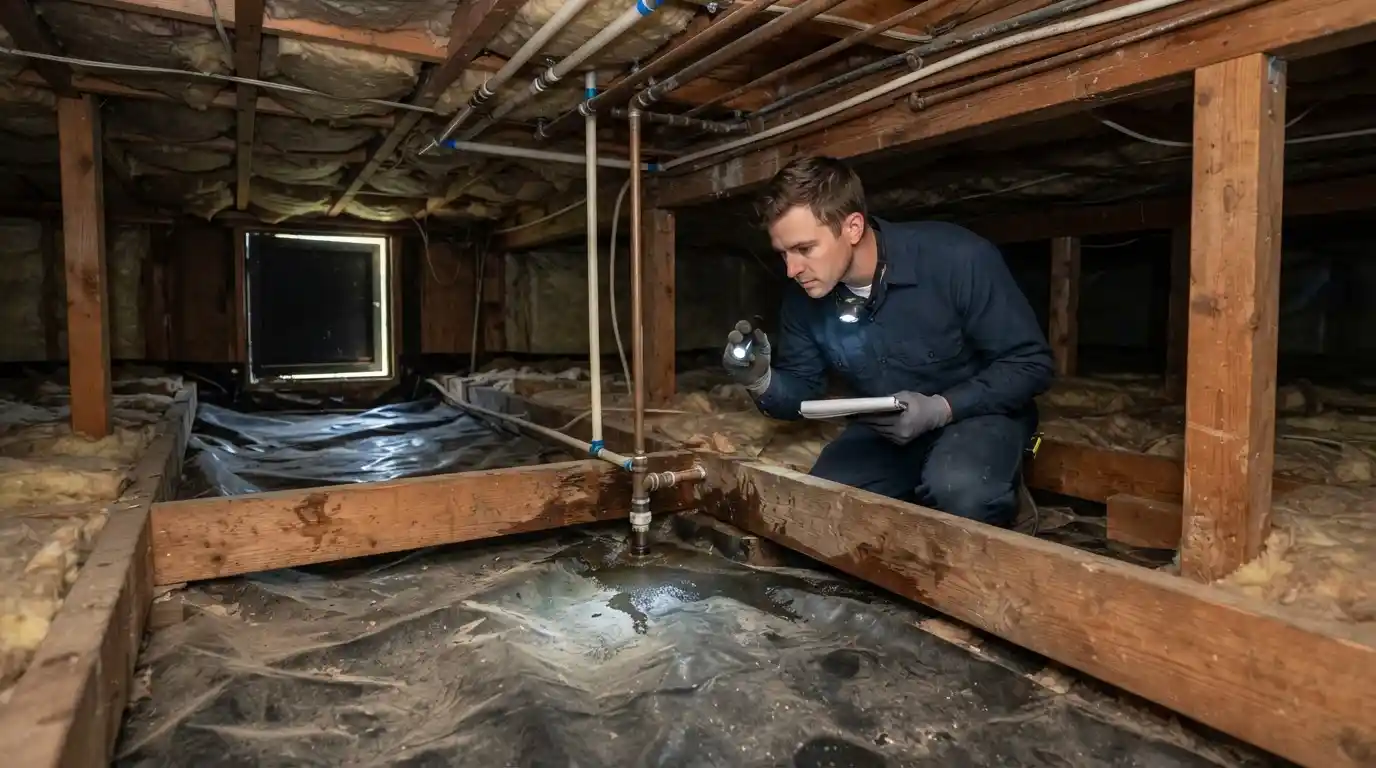
When the region shifts back toward steady rain, crawlspaces often become the first place moisture returns and the last place anyone checks. A dry-looking first floor can hide damp soil, torn vapor barrier, wet insulation, pipe sweating, or foundation seepage. For homeowners, renters, property managers, and facility teams, the useful question is whether the space is ready for the next stretch of fall moisture.
Why fall moisture finds crawlspaces first
Fall conditions bring water pressure back to the lowest, least visible part of the property.
Crawlspaces sit close to soil, foundation walls, vents, plumbing, and utility penetrations. When rain returns after a dry stretch, water can move toward the building faster than the crawlspace can release it. Regional hazard planning recognizes flooding along creeks, streams, and low-lying areas, but crawlspace moisture does not require a major flood. Repeated rain, clogged gutters, wind-driven storms, and saturated soil can be enough.
Fall also exposes problems that summer hid. A damaged vapor barrier may not look urgent when soil is dry. Loose insulation may seem harmless until it holds damp air against framing. If you have dealt with water in your crawlspace before, fall is the time to confirm that the source was corrected, not just that visible water disappeared.
If crawlspace moisture is already active, call our restoration team at (503) 352-5209. For crawlspace water, damp lower levels, odor, or mold concerns, PNW Restoration can help you decide the next safe step based on what is wet, contaminated, or damaged.
What to inspect before the rain pattern settles in
A short inspection can reveal whether you are facing prevention, cleanup, or restoration.
Start outside
Look for downspouts draining too close to the foundation, soil sloping toward the structure, clogged gutters, low spots beside the building, and splash paths near crawlspace vents. This matters for Portland-metro properties, river-adjacent neighborhoods, and lower-lying lots where soil can stay wet longer.
Check the access point safely
Look for standing water, shiny soil, condensation on pipes, water stains on wood, sagging insulation, torn plastic, exposed soil, rusted fasteners, pest debris, or a musty smell. If the space has electrical hazards, sewage odor, visible contamination, or deep standing water, stop and bring in qualified help.
Moisture control matters because mold needs water or moisture to grow. EPA guidance on moisture control is simple: fix the water problem, dry wet materials, and prevent moisture from returning. In crawlspaces, that usually means looking beyond the puddle.
The clues that your crawlspace is not ready
Small changes above the crawlspace can point to bigger problems below it.
A crawlspace problem often shows up in occupied rooms first. You may notice musty odors near floor registers, cold or clammy floors, cupping at wood flooring, damp baseboards, unexplained humidity, or recurring odor after rain. In rental or commercial properties, complaints may sound vague at first: “It smells damp” or “the room never dries out.”
Below the floor, wet insulation and damaged vapor barrier are key clues. Sagging, stained, compressed, or damp insulation can keep moisture against joists and subflooring. A torn, shifted, bunched, missing, or buried vapor barrier may stop controlling ground moisture. When both fail together, cleanup alone may not solve the problem. A wet crawlspace barrier and insulation review can help frame that decision.
Clean rain seepage, a supply-line leak, dirty stormwater, sewage backup, and debris-filled floodwater are not the same problem. Contaminated water can change cleanup, removal, and access decisions.
When crawlspace moisture becomes a restoration issue
The response changes when moisture has spread into materials, air, or property use.
A damp crawlspace is not automatically an emergency. It becomes more serious when water remains after rain stops, odor enters occupied areas, insulation holds moisture, wood looks stained or softened, mold-like growth appears, or water may be contaminated. It also becomes more urgent in tenant-occupied, mixed-use, or commercial properties where moisture can disrupt access, operations, or turnover schedules.
Restoration may involve source control, water removal, drying, selective material removal, odor evaluation, mold remediation services, sewage cleanup services, storm damage restoration, or follow-on repairs. The right path depends on damage type and scope. A small plumbing leak may call for targeted drying. A flood-affected crawlspace below multiple rooms may require broader documentation, drying, and repair planning.
Do not judge severity by surface dryness alone. Crawlspaces can look calm at the access opening while moisture remains under insulation, along sill plates, or under stored items. Spring crawlspace moisture often behaves the same way in reverse: soil and hidden materials dry slowly, even after weather changes.
Choosing help based on the actual damage
The best scope should match the moisture source, material condition, and risk level.
Match the service to the source
Water damage restoration may fit active leaks, wet framing, or spreading moisture. Basement water removal or flood damage restoration services may fit lower-level water. Sewage cleanup services fit sewage contact or drain backups. Mold remediation services fit mold-like growth after moisture. Storm damage restoration may fit wind-driven rain, roofing exposure, broken vents, or debris-related openings.
What to ask before you commit to a scope
- What is the suspected source: rain, groundwater, plumbing, sewage, storm opening, or condensation?
- Which materials are wet, contaminated, damaged, or still drying?
- Does the plan include photos, room-by-room notes, and visible damage mapping?
- Will the scope explain cleanup, drying, removal, odor control, repair, or reconstruction needs?
- How will unaffected rooms, contents, tenants, or business operations be protected?
Signs the cleanup plan may miss key issues
Pause if the plan focuses only on visible puddles, ignores odor, skips wet insulation, treats a torn vapor barrier as cosmetic, or assumes every crawlspace leak is “just rain.” Also pause if no one discusses contamination, electrical hazards, storage items, tenant disruption, or whether moisture moved into subflooring.
What a strong restoration plan should cover
A strong plan should explain what was found, what needs immediate attention, what can be monitored, and what may need repair after mitigation. Photos, notes, moisture observations, affected-area maps, and a written next-step plan reduce confusion when cleanup leads to repair or reconstruction. For a broader property check after wet weather, use hidden moisture checks after rain as a practical starting point.
Get the crawlspace ready before fall moisture wins
Early action gives you more control over cleanup, disruption, and repair decisions.
Fall crawlspace readiness is not about making the space perfect. It is about knowing where moisture could enter, where it could hide, and what would make the situation worse. Clear drainage, intact vapor barrier, dry insulation, safe access, and no persistent odor are all signs that the space is better prepared.
If you already see standing water, damp insulation, musty odor, staining, sewage concerns, or moisture affecting occupied rooms, do not wait for the next storm pattern to test the building again. For crawlspace water, mold concerns, lower-level water damage, or storm-related moisture, call (503) 352-5209. With PNW Restoration, our water damage restoration services can support cleanup, drying, and next-step planning when those services fit the damage.
Frequently Asked Questions
Why does crawlspace moisture get worse in fall?
Fall brings longer wet periods, cooler surfaces, and more saturated soil. That combination can push moisture toward foundations and make condensation more likely under floors. A crawlspace may feel dry in late summer but start showing odor, damp insulation, or visible water once rain returns.
What are the first signs that a crawlspace is holding moisture?
Common early signs include musty odor, cold floors, damp soil, condensation on pipes, staining on wood, sagging insulation, and torn vapor barrier. You may also notice higher indoor humidity or a room that smells damp after rain. These clues matter even when no standing water is visible.
Is a damp crawlspace always a restoration problem?
Not always. A small, short-term humidity issue may call for prevention and monitoring. It becomes a restoration concern when water remains, materials are wet, odors spread indoors, mold-like growth appears, or contamination may be present.
Can crawlspace moisture affect rooms above it?
Yes, moisture below the floor can affect subflooring, insulation, odors, and indoor comfort. You may notice clammy floors, cupped flooring, musty air, or persistent dampness near lower-level rooms. The issue may start below the building before it becomes obvious inside.
What should you check outside before checking the crawlspace?
Start with gutters, downspouts, grading, splash paths, and pooling near the foundation. Water should move away from the building instead of collecting near crawlspace vents or foundation edges. Exterior drainage problems often create the moisture pressure seen inside.
When should you avoid entering the crawlspace?
Do not enter if there is standing water near electrical components, sewage odor, unstable access, visible contamination, sharp debris, or suspected structural damage. Crawlspaces can be tight, poorly lit, and difficult to exit quickly. A safe inspection matters more than a fast inspection.
Does wet crawlspace insulation need to be replaced?
Sometimes. Insulation that is sagging, compressed, stained, mold-affected, or still damp after drying efforts may no longer perform properly. The decision depends on the water source, contamination risk, condition of the material, and whether the moisture path has been corrected.
Why does a vapor barrier matter in fall?
A vapor barrier helps reduce moisture moving upward from exposed soil. If it is torn, missing, bunched, or covered with debris, ground moisture can keep entering the crawlspace air. Fall rain makes those weaknesses more noticeable because soil moisture increases.
How does contaminated water change the cleanup plan?
Contaminated water can affect access, material removal, cleaning, and safety decisions. Sewage, dirty stormwater, and debris-filled floodwater should be treated more cautiously than clean-water dampness. The cleanup plan should identify the source before deciding what can stay.
What should property managers document before requesting a scope?
Document odors, tenant complaints, visible water, stained materials, damaged insulation, exterior drainage clues, and affected rooms above the crawlspace. Photos and room-by-room notes help clarify the scope. Good records also make follow-on repair decisions easier.
Can commercial properties have crawlspace moisture problems too?
Yes. Mixed-use buildings, older commercial spaces, rentals, and facility-managed properties can all have lower-level moisture issues. The bigger concern is disruption: dampness can affect storage, tenant access, odors, turnover schedules, and repair planning.
What should a crawlspace restoration plan explain?
It should explain the suspected source, affected materials, contamination concerns, drying or removal needs, documentation, and next steps. It should also clarify what can be monitored and what may need repair after cleanup. The goal is a scope tied to actual damage, not guesswork.


