



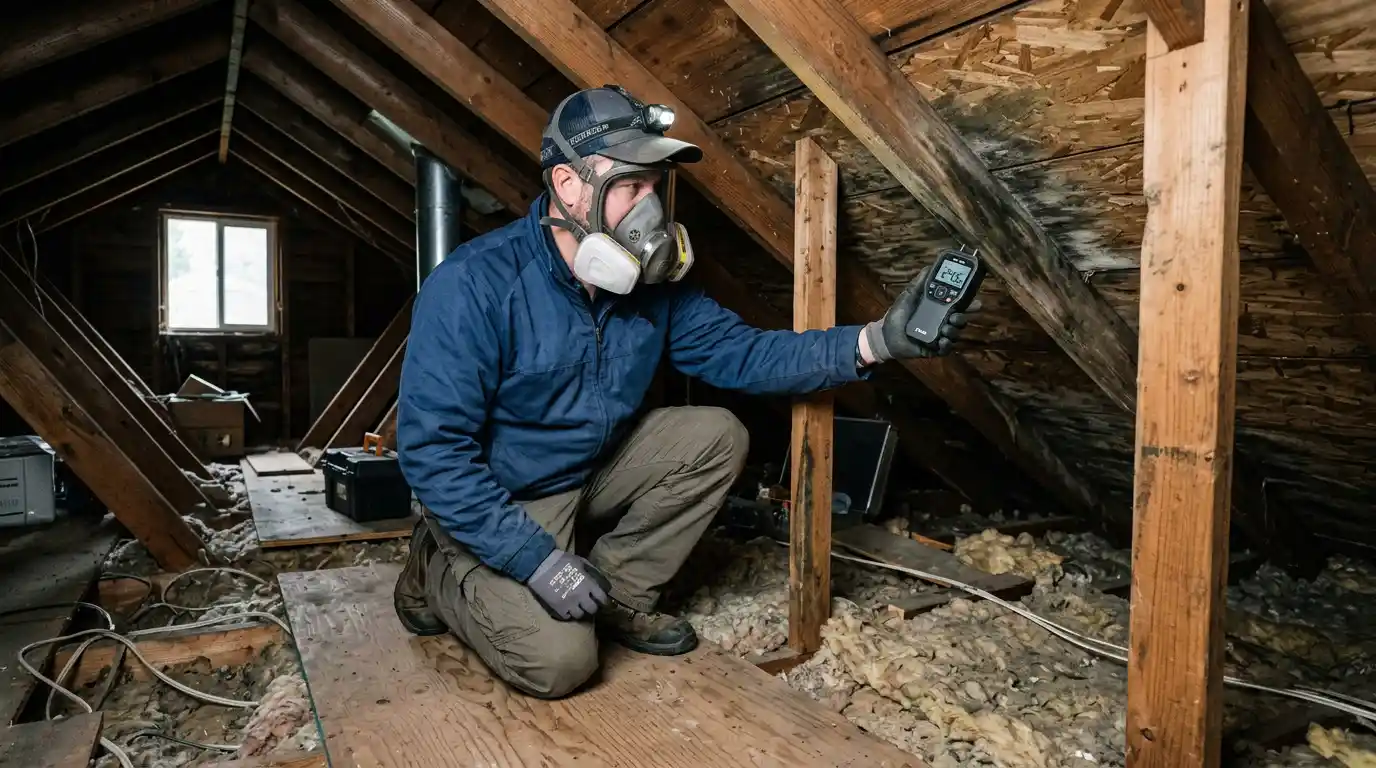
Attic mold often starts during the wet season, then becomes obvious when warmer weather exposes stains, odors, and damaged materials.
Winter brings wind-driven rain, roof and ceiling leaks, wet lower levels, freeze-thaw plumbing failures, and long stretches when building materials do not dry quickly. Summer feels drier, but it does not erase what happened above the ceiling.
If moisture is collected in the attic during winter, warmer months can turn a quiet moisture problem into visible attic mold.
That delay matters because an attic is not a daily-use room. You may not see wet sheathing, damp insulation, rusty nail tips, or a slow roof leak until a ceiling stain, musty odor, or summer check reveals the problem.
Attic mold in the Pacific Northwest is usually a moisture-path problem first. The better question is, “Where did the winter moisture come from, how far did it travel, and what materials stayed wet?”
How Winter Moisture Gets Into the Attic
Most attic mold problems trace back to a source that kept adding moisture or slowed drying during cold, damp months.
The roof leaks after storms and long periods of rain
Storms, clogged gutters, missing shingles, damaged flashing, and worn roof penetrations can send water into an attic before it reaches the living space. A roof leak may soak insulation, follow rafters, or drip onto the ceiling drywall far from the entry point.
A detailed guide to attic water damage explains why stains below the attic may be the only visible clue.
Condensation on cold roof materials
Warm indoor air rises. When that air finds gaps around attic hatches, bath fans, recessed lights, or poorly sealed mechanical openings, it can carry moisture into a cold attic. The moisture may condense on the roof sheathing, nails, and framing.
In winter, that condensation can look like frost or damp staining. Later, it can leave drip marks, rust, and mold-prone surfaces.
Plumbing and mechanical leaks
Not every attic moisture problem comes from the roof. Upper-floor plumbing, HVAC condensate lines, bath exhaust ducts, and appliance-related leaks can add moisture above ceilings or into cavities near the attic.
A spring ceiling stain may trace back to roof leakage, attic condensation, or plumbing, which is why spring ceiling stains need source tracing before repair.
Why Summer Makes the Problem Easier to Notice
Warm weather can reveal winter damage, even when the original leak has slowed or stopped.
Heat changes odor and airflow
Summer heat can make musty odors more noticeable. Air movement from fans, open windows, or HVAC operation can pull odor from attic-adjacent cavities into occupied spaces. That does not prove the mold is new. It may mean the conditions changed enough for you to notice what winter left behind.
Dry weather can hide the active source
A roof leak may not drip during summer. That can create a false sense of security. The attic may look dry during a quick glance, while staining, damaged insulation, or microbial growth remains on materials that stayed damp earlier. After any known leak, aim to dry water-damaged areas within 24 to 48 hours when conditions allow.
Summer repairs can miss hidden moisture history
Painting over a ceiling stain or replacing a small patch of drywall may not solve the attic problem above it. The better sequence is source control, moisture mapping, drying decisions, material removal when needed, and repair planning. Water damage restoration may be relevant before cosmetic repair.
What to Check Before the Next Wet Season
Use a summer attic review to separate cosmetic staining from an active moisture pattern.
Look at the roof deck and framing
- Use a bright flashlight from a safe access point.
- Look for dark patches, white or gray staining, rusty nail points, damp-looking sheathing, warped wood, or compressed insulation.
- Do not step onto ceiling drywall or unstable framing.
- If access is difficult or visibly contaminated, stay out and use qualified help.
Check vents, fans, and exhaust paths
Bathroom fans, dryer vents, and kitchen exhaust should not dump moist air into the attic. They should be discharged outdoors. Look for blocked soffit paths, crushed ducting, or insulation pushed against vents. Ventilation alone may not fix every Pacific Northwest attic issue, but blocked airflow and indoor moisture leaks can keep materials damp.
Read the ceiling and wall clues below
A stain below the attic is useful evidence.
- Note whether it grows after rain, appears during dry weather, sits below a bathroom or laundry area, or returns after repainting.
- Take photos before moving materials.
If water is near fixtures, wiring, or sagging drywall, keep people back.
Cleanup and Restoration Decisions That Matter
Attic mold decisions should focus on moisture control, affected materials, contamination risk, and the order of repair.
Do not disturb suspect growth unnecessarily
Scraping, brushing, vacuuming, or running fans across moldy materials can spread particles into other areas. Limit access, avoid storage disturbance, and do not use household fans to blow air through a contaminated attic. If sewage, floodwater, smoke residue, or storm debris is involved, treat the situation as more than routine cleaning.
Drying is more than adding airflow
Effective drying starts with stopping the source and removing bulk water where present. Then, humidity control can help materials release moisture. A simple fan may move air without removing moisture from the building. Learn more about what actually dries water-damaged areas before assuming the attic is dry.
Match the service to the damage
When visible growth is present, mold remediation may be part of the recovery plan. When attic moisture comes from roof leakage, plumbing failure, storm intrusion, or wet insulation, cleanup may also involve water damage mitigation, material removal, and repair coordination. If the source is still active, cleanup should not come before source control.
Prevention Priorities Before Rain Returns
The best summer work reduces the chance that winter moisture will restart the same attic mold cycle.
- Clean gutters.
- Review roof penetrations.
- Make sure exhaust fans vent outdoors.
- Seal obvious air leaks at attic access points when appropriate.
- Keep storage off insulation.
- Do not ignore small ceiling stains, especially if they return after rain or freezing weather.
For rentals, businesses, and older buildings, document visible staining, affected rooms, photos, and access limits before work begins. If you are unsure whether water is clean, contaminated, or tied to storm exposure, avoid assumptions.
After a leak or flood-related water event, try to dry water-damaged areas within 24 to 48 hours. If that window has already passed, shift from quick cleanup to careful assessment.
Mold prevention depends on moisture control, and attic moisture control depends on finding the path that winter water used before summer made the damage easier to see.
Frequently Asked Questions
1. Why does attic mold often show up in summer?
Attic mold may start during winter when roof leaks, condensation, or trapped humidity affect cold attic materials. Summer heat can make odors stronger and make old staining easier to notice. The visible problem may be new to you, even if the moisture event happened months earlier.
2. Is attic mold always caused by a roof leak?
No. Roof leaks are common, but attic condensation can create similar staining and moisture patterns. Plumbing lines, exhaust ducts, and mechanical leaks can also add moisture to attic spaces. The repair plan should start with source identification, not surface cleanup alone.
3. What attic signs should I look for after a wet winter?
- Look for dark staining on roof sheathing, rusty nail points, damp insulation, warped wood, or musty odors.
- Also check rooms below the attic for ceiling stains, bubbling paint, or repeated discoloration.
- Avoid unsafe access, unstable framing, and areas with visible contamination.
4. Can a dry attic still have a mold problem?
Yes. Materials can dry on the surface after the moisture source slows or stops. Staining, residue, damaged insulation, or growth may remain after the active dampness is gone. That is why summer checks should look for moisture history, not just active dripping.
5. What should I avoid doing if I find attic mold?
- Do not scrape, brush, or blow air across suspect growth.
- Do not use household fans to push attic air into occupied areas.
- Avoid disturbing stored items until you understand the extent of moisture, contamination, and material damage.
6. When does attic moisture become a restoration issue?
It becomes a restoration issue when moisture affects insulation, ceiling cavities, framing, contents, or multiple rooms. It also becomes more urgent when the source is unclear, the ceiling is soft, or water may be contaminated. The scope may involve drying, damaged material removal, cleanup, and repair coordination.
7. How does winter condensation happen in an attic?
Warm indoor air can rise through ceiling gaps and reach cold roof materials. When that air cools, moisture can condense on sheathing, framing, or nail tips. Over time, that dampness can stain materials and support mold growth if the moisture pattern continues.
8. Are ceiling stains connected to attic mold?
They can be. A ceiling stain may come from a roof leak, attic condensation, plumbing, or a combination of problems. The stain is often the endpoint of a moisture path, not the source. Check what sits above the stain before repainting or patching drywall.
9. Why are older buildings more complicated?
Older buildings may have layered insulation, past roof repairs, older ventilation paths, and previous ceiling patches. Those conditions can hide moisture movement and make the source harder to trace. Documentation, careful access, and staged cleanup decisions are especially important.
10. Can commercial properties have attic mold issues?
Yes. Commercial and mixed-use buildings can develop attic or ceiling-cavity moisture after roof leaks, storms, plumbing failures, or condensation. The concern often extends beyond cleanup because tenants, staff, customers, storage, and operations may be affected. Good documentation helps connect the damage, source, access limits, and repair needs.
11. What if the attic problem follows the wildfire smoke season?
Smoke odor and residue are separate concerns from moisture-driven attic mold. If smoke, soot, or odor is present with moisture damage, the cleanup decision may involve more than drying. Avoid assuming one service solves every condition until the source and materials are reviewed.
12. How can I reduce the chance of attic mold before the next rainy season?
- Review roof penetrations, clean gutters, check attic exhaust paths, and keep insulation from blocking vents.
- Watch for recurring ceiling stains after rain or freezing weather.
- Address small leaks early so wet materials do not sit through another damp season.


