


In the Pacific Northwest, water damage rarely happens “at a convenient time.” It spikes during stormy stretches and heavy rain, and it can also come from burst pipes, appliance malfunctions, roof intrusion, flooding, or sewage backups, exactly the kinds of events we see (and respond to) year-round.
Most homeowners know the priorities: stop the water, remove standing water, and start drying. But here’s the step that gets skipped too often, sanitization. And when sanitization is delayed (or done partially), the problems you don’t see can linger: contamination, odors, and microbial growth risks that can keep a home from truly recovering.
At PNW Restoration, we treat professional sanitization as a core part of water damage restoration, not an optional add-on, because restoration is more than “getting things dry.” Our work is about restoring a property safely and effectively, including cleaning, drying, and sanitizing the affected areas as part of the process.
Below is a clear, practical explanation of why sanitization matters after water damage, when it’s essential, and how professionals approach it.
What “sanitization after water damage” really means
Sanitization isn’t the same thing as drying, and it isn’t just “mopping with cleaner.”
At PNW Restoration, we consider water damage restoration as the process of cleaning, drying, sanitizing, and repairing a property damaged by water. That definition matters because it reflects the real sequence: even after the visible water is gone, the environment can still be compromised.
Sanitization typically includes:
- Cleaning affected surfaces and materials
- Applying antimicrobial/antimicrobial-style treatments where appropriate
- Addressing contamination risks (especially after sewage or flood events)
- Reducing odor sources tied to moisture and contamination
In our walls-and-ceilings guidance, we specifically describe “cleaning and sanitizing” as a step where contaminants or mold are thoroughly cleaned using antimicrobial solutions.
Why sanitization matters, even after “clean water.”
Not all water losses are equal. We categorize water damage by contamination level, and that category affects how aggressive sanitization needs to be.
Category 1 vs. Category 2 and 3: why the label changes the plan
Our water damage restoration page defines:
- Category 1: clean water source (examples listed include a tub/sink overflow, broken fresh water supply line, or appliance malfunction leakage).
- Category 2+3: water with significant contamination (examples listed include dishwasher/clothes washer discharge and toilet bowl overflow).
Even when a loss starts as Category 1, the longer moisture remains, the more likely secondary issues become, especially in porous materials and hidden cavities. That’s one reason we use professional drying and moisture control as part of preventing mold and mildew conditions.
A helpful public benchmark: the EPA notes it’s important to dry water-damaged areas and items within 24 to 48 hours to help prevent mold growth.
That guidance isn’t a “guarantee” in either direction, but it’s a practical reminder that time and moisture control matter, and sanitization is part of controlling what happens after the water event.
A room can look “fine” while moisture remains in places you can’t see, behind baseboards, under flooring, or inside wall cavities. We value the role of professional assessment and moisture mapping in locating moisture that isn’t obvious from a quick visual inspection.
When hidden moisture persists, it can create conditions that support mold and microbial growth, and it can trap odors that don’t disappear with surface cleaning. That’s why professional restoration focuses on both:
- Removing moisture thoroughly, and
- Sanitizing/cleaning where contaminants or microbial risks exist.
When professional sanitization is essential (not optional)
Some situations should immediately raise the bar for sanitization and professional handling.
Sewage backups and contaminated water losses
Sewage buildup is a serious health hazard due to pathogens, germs, and bacteria.
We don’t just remove sewage; we provide restoration that includes sanitization, along with drying and dehumidification to help eliminate bacteria and germs.
Our microbial contamination experts consider sewage as the most common microbial contamination and emphasize that sewage in liquid form can travel throughout a building if not stopped quickly, treating it as an emergency.
Hence, we provide a 24/7 emergency response team that is IICRC certified for microbial contamination remediation as well as biohazard and hazmat cleanup.
Flooding and “dirty water” conditions
Floodwater often carries debris and contaminants. In our flooded house guidance, floodwater can contain harmful bacteria, chemicals, and debris, recommending protective gear for anyone taking initial steps.
This is one of those scenarios where professional sanitization isn’t about “extra cleanliness”, it’s about addressing real contamination risk.
What professional sanitization looks like in a restoration workflow
While every job is different, our content consistently reflects a structured approach that goes beyond surface cleaning:
1) Inspection and assessment
We assess damage, identify affected areas, and determine what materials are impacted (including hidden moisture zones).
2) Water removal, drying, and dehumidification
Our sewage cleanup page describes drying and dehumidification as part of eliminating bacteria or germs after a sewage event.
More generally, drying and dehumidification are core steps used to remove moisture from structures and substructures.
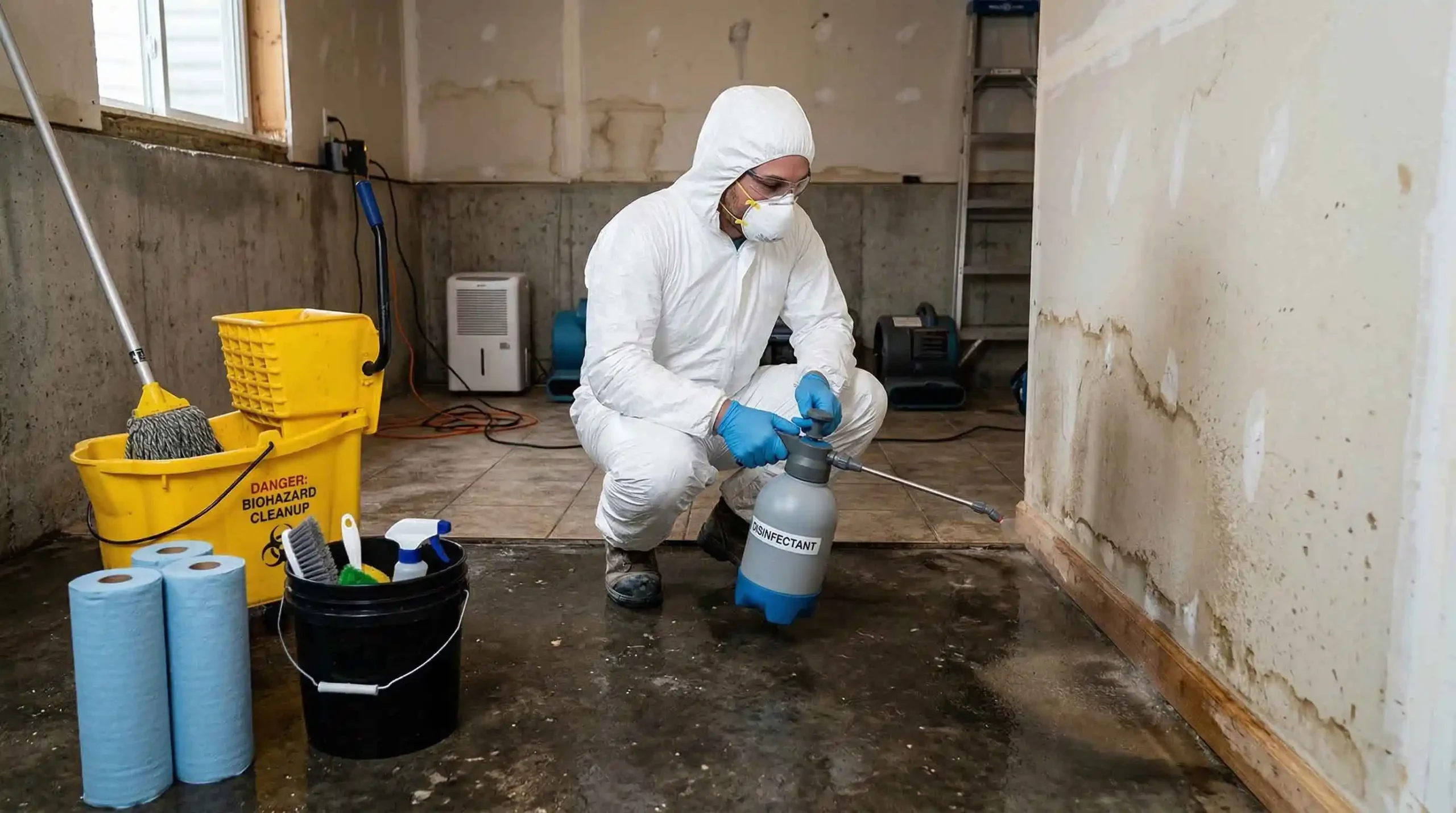
3) Cleaning and sanitizing with antimicrobial solutions where appropriate
We describe cleaning and sanitizing as thoroughly cleaning contaminants or mold using antimicrobial solutions.
4) Repairs and restoration
If materials are damaged beyond repair (or contamination requires removal), the rebuild phase follows. Drywall, insulation, or ceiling materials may be replaced or repaired depending on the scenario.
Practical checklist: what to do immediately (and what not to do)
If you’re in the first hours after water damage, these steps align with PNW Restoration’s guidance:
Do:
- Turn off electricity/gas if safe and relevant; prioritize safety first.
- Document damage (photos/video and item list) if insurance may be involved.
- Start removal and drying steps you can do safely, but recognize limits.
Don’t:
- Treat sewage/flood contamination as a standard DIY cleaning job; sewage is a serious hazard and requires proper handling and sanitization.
- Assume “dry to the touch” means the environment is clean or safe; hidden moisture can remain and requires proper assessment.
Insurance realities (helpful, not hype)
Insurance coverage varies by policy and the cause of loss. Many policies cover sudden incidents like burst pipes, but may not cover flooding from external sources, and it’s best to confirm coverage with your provider.
We also provide insurance assistance to help make the process smoother during a stressful time.
When to call PNW Restoration
If your water loss involves contamination (sewage, toilet overflow, dishwasher discharge, floodwater), if you’re seeing musty odors, or if you suspect water traveled into walls/floors, professional sanitization is one of the smartest “early” moves you can make.
At PNW Restoration, we provide 24/7 emergency response, and our restoration approach includes thorough cleanup and restoration for homes and businesses.
Frequently Asked Questions
1) What’s the difference between drying and sanitizing after water damage?
Drying removes moisture; sanitizing addresses contamination and microbial risk left behind. Water damage restoration involves cleaning, drying, sanitizing, and repairing the property, so sanitization is part of a complete restoration, not a “bonus.”
2) Do I need sanitization after a clean-water (Category 1) leak?
Sometimes, yes, especially if water spreads into hidden areas or sits long enough to create musty odors or microbial conditions. Category 1 improves the odds, but it doesn’t erase the need for professional assessment and proper cleaning of moisture-affected porous materials or cavities.
3) How quickly should water-damaged areas be dried to reduce mold risk?
The EPA recommends drying water-damaged areas and items within 24 to 48 hours to help prevent mold growth. That’s one reason the PNW Restoration team values fast action, professional drying, and thorough cleanup, especially when moisture is trapped.
4) Why are sewage backups treated so differently?
Sewage buildup is a serious health hazard because it can contain pathogens, germs, and bacteria. We provide sewage cleanup that includes drying/dehumidification and sanitization to help eliminate bacteria and germs, because it’s not a standard “wipe it down” situation.
5) Can I sanitize sewage-contaminated areas with household cleaners?
There are sewage hazards and the need for professional cleanup and restoration. Household products may not address contamination thoroughly, and improper cleanup can spread contamination into additional surfaces and materials.
6) What does PNW Restoration use to sanitize affected areas?
In our walls-and-ceilings guidance, we conduct cleaning and sanitizing by thoroughly cleaning contaminants or mold using antimicrobial solutions. The exact approach depends on the loss type and what materials are affected.
7) Why do odors sometimes remain after water damage cleanup?
Odors often come from moisture trapped in materials or contamination left behind. Drying the surface doesn’t always resolve hidden moisture, and sanitizing/cleaning is part of addressing the underlying source, not just masking the smell.
8) What’s “microbial contamination,” and why does it matter after water damage?
Microbial contamination includes microorganisms such as mold, bacteria, viruses, protozoa, and fungi that can affect a building and its occupants. Sewage is highlighted as a common microbial contamination and treated as an emergency due to health hazards and rapid spread.
9) Will insurance cover sanitization after water damage?
It depends on the policy and the cause of loss. Many policies cover sudden incidents like burst pipes, but may not cover external flooding; confirm details with your insurer. We also provide insurance assistance and documentation support.
10) When should I call PNW Restoration for sanitization help?
Call right away if you suspect sewage/contaminated water, if floodwater entered the property, or if you believe moisture spread into walls or under flooring. PNW Restoration offers 24/7 emergency response and comprehensive cleanup, drying, and restoration services.


