



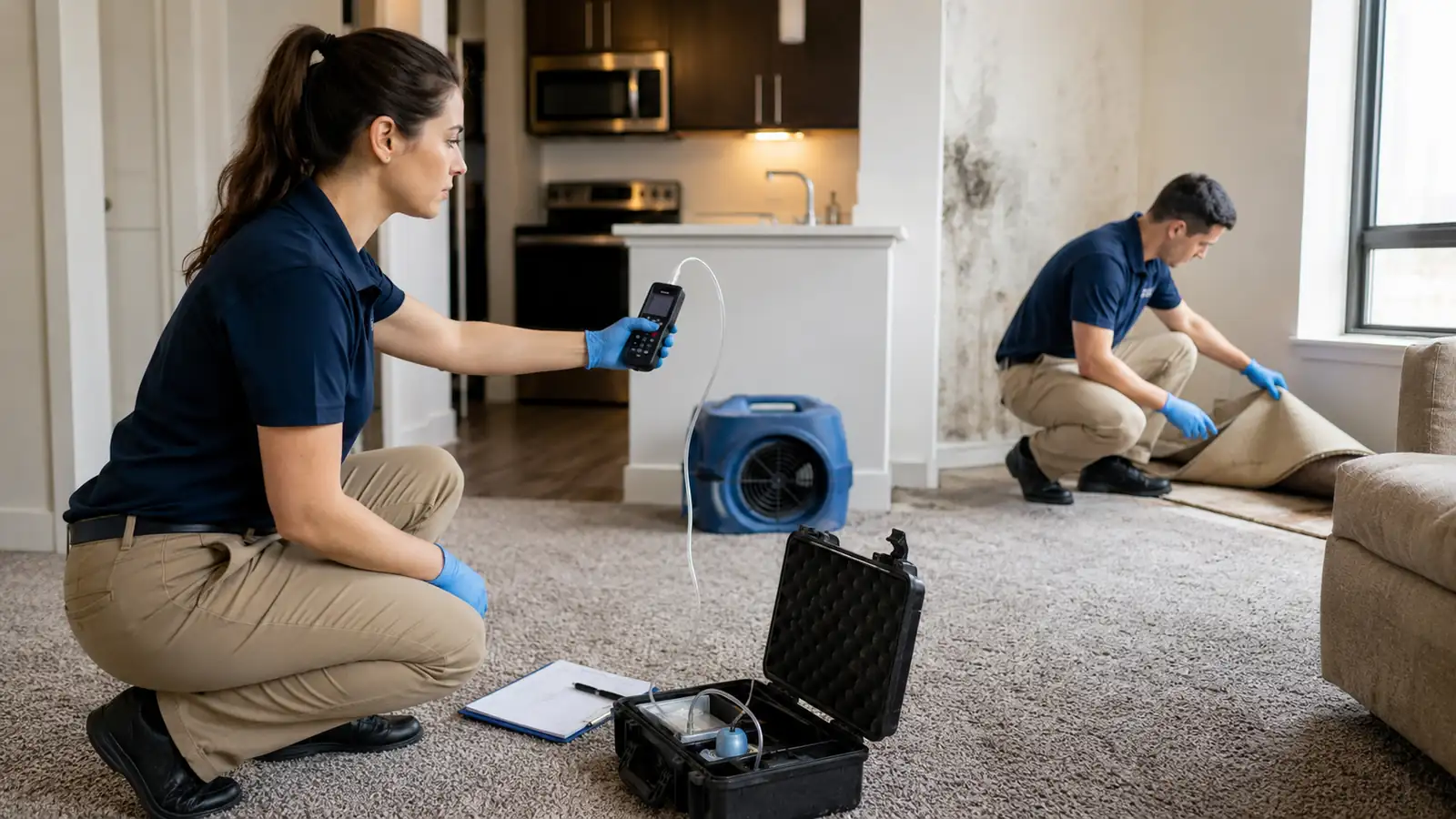
Property odors can turn a routine tenant complaint or turnover into a much larger property-management decision.
During wet months, moisture from roof leaks, plumbing failures, basement water, or storm-driven intrusion can combine with existing pet, smoke, or musty odors.
During smoke-prone periods, particles can settle into porous finishes and hidden spaces. Rental turnovers can also expose tobacco residue, pet contamination, sewage problems, or biological contamination that was not obvious while the unit was occupied.
A property management odor removal service becomes worth considering when the odor returns after ordinary cleaning, affects multiple materials or rooms, involves contamination, or points to damage beneath the visible surface.
The key question is not simply, “How do you make the building smell better?”
It is, “What is producing the odor, what has it affected, and what must be cleaned, removed, dried, or restored to address the source?”
Why the Odor Source Changes the Cleanup Decision
Different odors behave differently inside a property, so identifying the source should come before choosing a treatment.
Tobacco odor can extend beyond the air
Repeated indoor smoking can leave residue on walls, ceilings, cabinets, flooring, fabrics, and dust.
Tobacco smoke residue can remain on indoor surfaces after the visible smoke clears, which is why ventilation or fragrance alone may not solve a long-term problem.
Research on thirdhand tobacco smoke describes persistent chemical residue remaining on surfaces after smoking.
For property managers, severity matters. A short-duration odor affecting washable surfaces presents a different scope from years of smoking in a carpeted unit with upholstered materials, painted drywall, closets, and shared airflow pathways.
Professional smoke odor removal may become appropriate when smoke odor remains after ordinary cleaning or appears embedded in structural surfaces and contents. Our smoke odor services address persistent odors from sources that include cigarettes and cigars.
Pet odor often becomes a material problem
Pet odor is rarely uniform. Hair and general animal odor may respond to routine turnover cleaning, while repeated urine contamination can reach carpet backing, padding, baseboards, subflooring, or other porous materials.
The important distinction is whether you are cleaning a surface or dealing with an odor reservoir below it.
If the smell becomes stronger during humid conditions, returns after carpet cleaning, or concentrates near flooring edges and walls, assess the materials beneath the visible finish before repeating the same cleaning method.
Sewage odor requires a contamination-first approach
A sewage smell should not be approached as a deodorization project until the source is understood.
Backups and contaminated water can affect flooring, wall materials, cabinets, contents, and lower building assemblies.
The EPA advises caution around floodwater because it may contain bacteria, chemicals, or other hazards and emphasizes removing materials that cannot be adequately cleaned and dried.
Flood cleanup guidance also reinforces the importance of complete drying. If a tenant reports sewage odor after a plumbing event, document where the water traveled rather than focusing only on where it stopped.
Our guide to sewage backup cleanup explains why contaminated-water losses call for more caution than normal housekeeping.
Decomposition odor can indicate biological contamination
Decomposition odor after an unattended death or animal remains requires a different decision from smoke or ordinary pet odor.
The odor may accompany biological material that reached flooring, furnishings, wall assemblies, or other porous surfaces. Cleaning visible material without establishing the affected area can leave odor sources behind.
Biohazard cleanup is relevant when biological materials or other hazardous contamination are present. Our services include biohazard and hazmat cleanup, while related cleanup situations can include unattended deaths and other biological contamination.
Need help determining whether an odor is a cleaning issue or part of a larger restoration problem? PNW Restoration can help you evaluate water, mold, fire and smoke, sewage, and related property damage.
Call (503) 352-5209 to discuss the conditions affecting your property.
When Persistent Odor Becomes a Restoration Issue
Odor removal becomes more complex when the smell is being generated by damaged materials, contamination, moisture, or hidden residue.
The odor returns after cleaning
A smell that disappears briefly and then returns often means the source remains.
This happens when contamination reaches carpet pad or subflooring, smoke residue remains on porous materials, moisture remains inside building assemblies, or affected contents continue releasing odor.
Our guide to lingering odors after water damage explains how hidden moisture, contaminated materials, soft goods, and airflow pathways can keep odors active even after surfaces appear dry.
The odor crosses rooms or building systems
An odor that seems to migrate deserves closer investigation.
Document whether it changes when doors close, HVAC systems run, weather changes, or neighboring spaces become occupied. Shared corridors, ceiling cavities, utility penetrations, storage areas, attics, and crawlspaces can complicate odor tracing.
Smoke is a good example. It can settle in hidden building spaces instead of staying near the original exposure area. See how hidden smoke odors can remain in attics and crawlspaces when evaluating recurring smoke complaints.
Moisture and odor appear together
A musty, sour, or unusual smell after a leak should prompt investigation of the water source and affected materials.
For rental and commercial properties, record when the odor began, which rooms are affected, whether carpet or drywall feels damp, and whether previous leaks occurred nearby.
A structured landlord response to damp carpet, water spots, and odors can help keep the investigation focused on evidence rather than assumptions.
Choosing Help Based on the Actual Damage
The right property management odor removal scope should match the cause, affected materials, property use, and level of disruption.
Match the service to the underlying problem
Tobacco or fire residue may point toward smoke odor removal or fire and smoke damage services. Sewage odor can require sewage cleanup services.
Odor associated with persistent moisture or visible growth may lead to water damage restoration or mold remediation decisions.
Biological contamination can shift the scope toward biohazard and hazmat cleanup. Also consider scale.
One affected bedroom in a vacant rental is different from odor moving through multiple apartments, offices, common areas, or a mixed-use property.
What a strong restoration plan should cover
A useful plan should explain what appears to be causing the odor, which rooms and materials are affected, and what must happen before deodorization.
You should also understand what will be cleaned, what may require removal, whether water or contamination must be addressed first, and what follow-on repair or reconstruction decisions may remain.
Good communication includes room-by-room notes, photographs, affected-material observations, and clear next steps.
Signs the cleanup plan may miss key issues
Watch for a plan that:
- Treats fragrance or deodorization as the only step despite visible contamination.
- Ignores flooring layers, wall cavities, contents, or other likely odor reservoirs.
- Addresses sewage odor without investigating where contaminated water traveled.
- Promises an odor result without explaining how the underlying source will be addressed.
What to Ask Before You Commit to a Scope
These questions help separate a surface-cleaning proposal from a restoration plan tied to the actual cause.
- What appears to be creating the odor, and how was that conclusion reached?
- Which materials or rooms may be holding contamination or residue?
- Does anything need cleaning, drying, removal, or repair before odor treatment begins?
- Could airflow, moisture, flooring layers, or hidden building spaces be spreading the odor?
- How will the affected areas, observations, and next-step decisions be documented?
These questions matter especially in tenant-occupied buildings, commercial properties, and rental turnovers where a missed source can generate another complaint after the space is cleaned or reoccupied.
Make Odor Removal Part of the Recovery Plan
Persistent odor should be treated as evidence, not just an inconvenience.
For property managers, facility managers, owners, renters, and commercial operators, the right response begins with identifying the source.
From there, determine how far the problem traveled, what materials are affected, and whether the situation involves simple cleaning, smoke residue, moisture damage, sewage contamination, biological contamination, or reconstruction needs.
That approach helps you avoid repeatedly treating the air while the source remains inside the property.
If tobacco smoke, sewage, fire residue, water damage, mold concerns, or biological contamination has created a persistent odor, PNW Restoration can help you evaluate the restoration path.
Our services include water damage restoration, sewage cleanup, mold remediation, biohazard and hazmat cleanup, fire and smoke damage restoration, smoke odor removal, and reconstruction services. Call (503) 352-5209 to discuss the property and the next appropriate step.
Frequently Asked Questions
When does a rental property need professional odor removal?
Consider professional help when an odor survives normal turnover cleaning, keeps returning, affects several rooms, or appears connected to smoke residue, urine contamination, sewage, moisture, or biological material. The goal should be identifying and addressing the source rather than repeatedly covering the smell.
Can tobacco odor stay after walls and floors are cleaned?
Yes. Tobacco smoke can leave residue on surfaces and dust, and odor can persist in porous finishes, fabrics, cabinets, flooring, and other materials. The required scope depends on the length and severity of exposure and which building materials absorbed the residue.
Why does pet urine odor return after carpet cleaning?
Urine can travel below the carpet surface into backing, padding, flooring, baseboards, or nearby porous materials. Cleaning the carpet face may improve the smell temporarily while deeper affected materials remain. Persistent odor calls for evaluating the layers beneath the visible flooring.
Is a sewage smell just an odor-removal problem?
Not necessarily. A sewage odor may be associated with contaminated water or material affected by a backup. First determine and stop the source, establish where contamination traveled, and identify affected materials. Odor treatment should follow the cleanup decisions rather than replace them.
Should tenants stay away from a sewage-affected area?
Avoid unnecessary contact with areas affected by sewage or potentially contaminated water. Property managers should restrict access as appropriate and seek qualified help rather than assigning contaminated-water cleanup to occupants. Keep safety and source control ahead of deodorization.
What should a property manager document after an odor complaint?
Record when the odor was reported, where it is strongest, affected rooms, visible staining or residue, recent leaks or plumbing events, and whether the odor changes with HVAC operation or weather. Photographs and room-by-room notes make later restoration decisions easier to explain.
Can decomposition odor be removed with ordinary cleaning?
A decomposition situation may involve more than odor. Biological material can affect porous surfaces and hidden areas, making source removal and contamination cleanup the first decisions. Ordinary cleaning products should not substitute for qualified biohazard help when biological contamination is involved.
Why does an odor get stronger when the HVAC runs?
Air movement can redistribute odor from affected materials or hidden spaces into other rooms. Smoke residue, moisture-related smells, or contamination near airflow pathways can therefore seem stronger when the system operates. The odor pattern can help narrow down where investigation should focus.
Does a musty smell automatically mean mold?
No. Musty odors can also come from wet carpet pad, damp insulation, crawlspace moisture, or other water-damaged materials. Visible growth or persistent moisture changes the restoration decision, but odor alone should be treated as a clue that the moisture source deserves investigation.
Can odor removal require reconstruction afterward?
Sometimes. If contaminated or heavily affected materials must be removed, repair or reconstruction may become part of the recovery plan. Whether that is necessary depends on the source, material condition, extent of damage, and what must be removed to address the underlying problem.


