



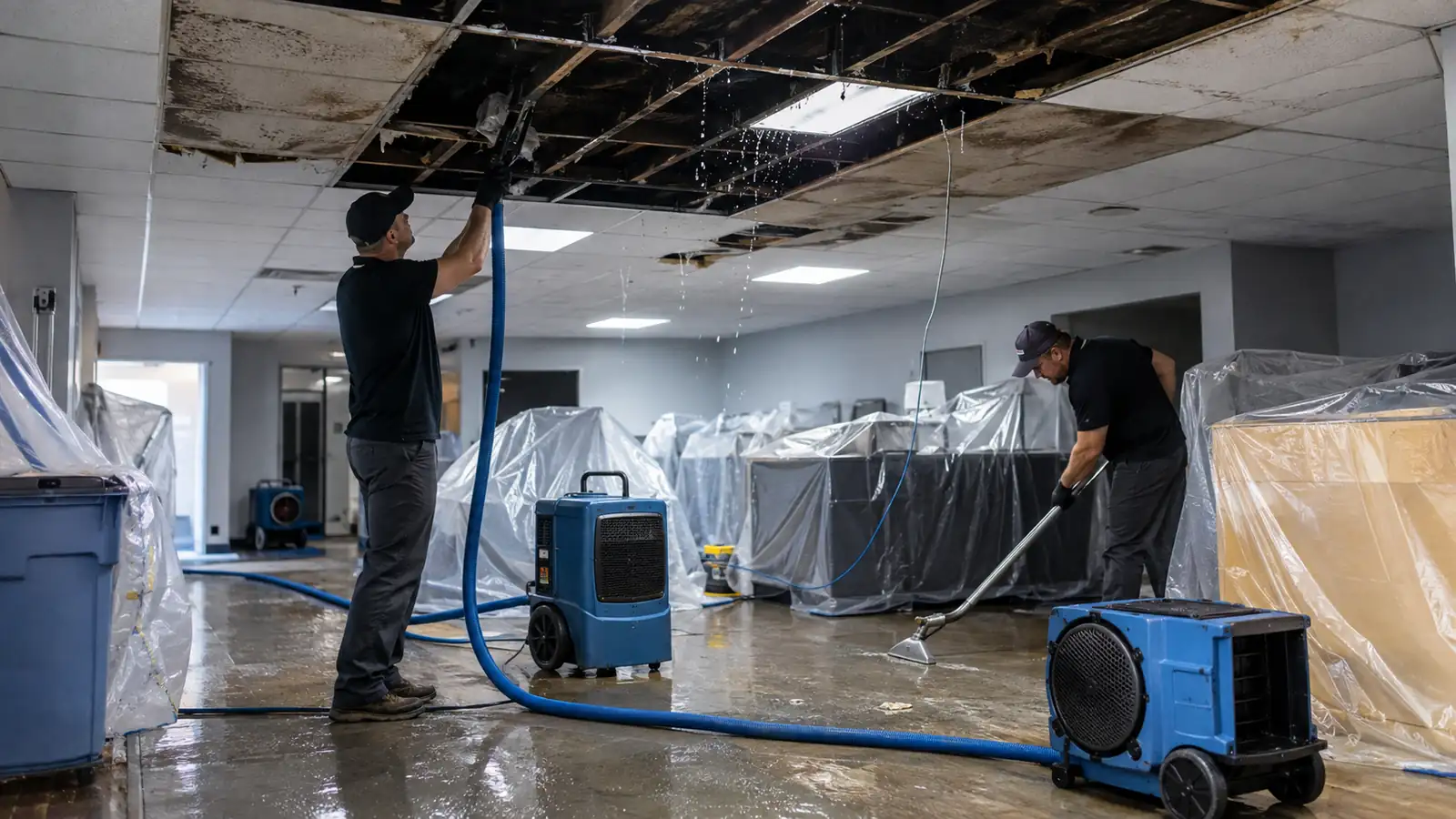
A roof leak in a commercial building rarely stays a roofing problem. During the region’s wet season, wind-driven rain and prolonged moisture can enter through a vulnerable roof area, travel above ceilings, and appear far from the original point of entry.
What starts as a ceiling stain can eventually affect offices, stockrooms, tenant spaces, flooring, wall cavities, equipment, and electrical areas.
The challenge is deciding what needs immediate attention. A facility manager may have employees working nearby, inventory beneath the leak, customers moving through the building, or electrical equipment in the water’s path.
Effective commercial water damage restoration therefore requires more than catching drips. You need to control the immediate risk, understand where the water traveled, and address moisture that may remain hidden after the visible leak stops.
Why Commercial Roof Leaks Become Interior Water Damage
A roof opening can allow water to move through multiple building materials before anyone sees a drip.
Water does not necessarily fall straight down from a roof defect. It can follow roof assemblies, framing, insulation, ceiling systems, utility pathways, and wall cavities before becoming visible indoors. That is why a stain in one office does not always identify the exact location where water entered.
Commercial properties also contain interconnected spaces. A leak above a hallway may spread toward an office wall. Water above a stockroom can affect cartons or stored materials before reaching the floor. Moisture can also remain above suspended ceilings after the active dripping ends.
Recognizing that hidden movement is an important part of dealing with commercial flat roof water intrusion. A restoration assessment should focus on the affected interior area, not simply the most obvious stain.
Offices and Occupied Areas
Office leaks can affect ceiling tiles, drywall, flooring, furniture, records, and normal employee access. Sagging or heavily saturated ceiling material deserves particular caution. Keep people away from questionable areas rather than assuming a stained ceiling is only cosmetic.
Stockrooms and Inventory Areas
Stockrooms create a different problem because water can move through shelving, packaging, flooring, and stored contents. Move unaffected items away from the wet area only when doing so does not expose you to electrical, structural, or other hazards.
Electrical and Equipment Areas
Water near panels, outlets, wiring, powered equipment, or electrical fixtures requires a safety-first response. Do not enter standing water or handle powered equipment when electricity could be involved.
Wet conditions can increase electrical hazards, so leave electrical evaluation and necessary power decisions to qualified professionals. Review established electrical hazard guidance when planning workplace precautions.
Need help with an active commercial roof leak? PNW Restoration can help with water damage affecting homes and businesses. If roof intrusion has reached ceilings, walls, flooring, or other interior areas, professional assessment can help you determine the appropriate next restoration steps.
What to Do When a Roof Leak Reaches the Interior
The first decisions should reduce exposure, protect unaffected property, and prevent unnecessary disruption.
Restrict Access to the Wet Area
Keep employees, tenants, customers, and vendors away from standing water, sagging ceiling materials, wet electrical areas, or other questionable conditions. Do not continue normal use of an area simply because the leak seems small.
Address the Source Without Taking Unsafe Risks
Stopping additional water entry matters, but climbing onto a wet or storm-damaged commercial roof can create additional danger.
Roof evaluation and repair should be handled by appropriately qualified professionals when the conditions are unsafe, or the problem is outside normal property-maintenance capabilities.
Regular roof, drainage, flashing, plumbing, and building-envelope attention can also help reduce future leaks in a commercial building.
Protect Unaffected Contents
When conditions allow, move dry inventory, files, portable electronics, furniture, and other movable contents away from the water’s path. Avoid disturbing wet building materials when electrical hazards, unstable ceilings, contamination, or structural concerns are present.
Look Beyond the Visible Stain
Water can remain inside insulation, drywall, ceiling cavities, flooring systems, and adjoining spaces. This is one reason a dry-looking surface does not automatically mean the interior assembly is dry.
For broader interior damage, water damage restoration can include inspection and damage assessment, water removal, area drying and dehumidification, cleaning and sanitizing, and restoration when those steps fit the loss.
Why Hidden Moisture Matters After the Leak Stops
Visible water may disappear while moisture remains inside building assemblies.
Commercial water damage can continue developing after someone places a bucket beneath the leak. Wet insulation, drywall, flooring, ceiling materials, and concealed cavities can hold moisture that is difficult to identify through visual inspection alone.
Signs that deserve further investigation include new staining, bubbling paint, sagging materials, persistent dampness, musty odors, or changes that appear after another rain event. The same principles apply when evaluating water-damaged walls and ceilings.
Moisture control also matters when mold becomes a concern. Fixing the water problem and drying wet materials are central parts of controlling indoor moisture and mold.
If you discover substantial mold growth or cannot determine how far moisture has spread, consult qualified professionals rather than disturbing affected materials unnecessarily.
Commercial Restoration Should Consider Business Disruption
The restoration decision should account for both property damage and how the affected space is used.
A leaking roof can create different operational problems depending on where water lands. An office may lose usable workspace. A stockroom may need inventory relocated.
A retail or mixed-use property may need to redirect customers or tenants. An electrical-area leak may require access restrictions until qualified professionals evaluate the hazard.
Property and facility managers should identify which rooms remain usable, which contents are threatened, and whether moisture could have moved into adjoining spaces.
Documenting the affected locations can also help you keep track of changes as the building dries and repairs move forward.
Do not mistake surface cleanup for complete drying. Secondary water damage can develop when moisture remains in walls, flooring, insulation, ceiling systems, or nearby materials after the visible water is gone.
From Roof Leak Cleanup to Repair Decisions
Once active water and moisture are addressed, damaged materials may still require repair or replacement.
Commercial roof-leak recovery can involve several separate decisions. The roof source needs attention. Interior water must be addressed. Wet materials need evaluation. Areas opened or materials removed during restoration, may then require follow-on repair.
Do not cover stains, replace ceiling tiles, or close wet cavities simply because dripping has stopped. Cosmetic repair performed before the underlying moisture problem is resolved can hide continuing damage.
You can also review the warning signs and recovery considerations associated with ceiling and roof-related water damage when water has moved through overhead building assemblies.
Get Help Before a Roof Leak Becomes a Building-Wide Problem
Early assessment can help you separate a contained roof leak from a wider interior water-loss event.
A commercial roof leak deserves more attention when water reaches occupied offices, stockrooms, ceiling cavities, walls, floors, electrical areas, or adjoining spaces.
The priority is protecting people first, preventing additional water entry where it can be done safely, and determining how far the moisture has traveled.
If your property needs commercial water damage restoration after a roof leak, PNW Restoration can assist with water damage restoration for commercial properties.
Our process can include inspection and damage assessment, water removal, drying and dehumidification, cleaning and sanitizing, and restoration when those services fit the damage. Contact us to discuss the affected areas and the next appropriate steps.
Frequently Asked Questions
What should I do first when a commercial roof starts leaking?
Keep people away from standing water, sagging ceiling materials, and wet electrical areas. Protect unaffected contents when you can do so safely. Arrange for the water-entry source and interior damage to be professionally evaluated when the leak extends beyond routine maintenance.
Can a small roof leak cause significant commercial water damage?
Yes. The visible drip may represent only one part of the affected area. Water can travel through insulation, framing, ceilings, walls, and other building assemblies before appearing inside an occupied room or storage space.
Why is the ceiling stain not always directly below the roof leak?
Water can move horizontally along framing, roof assemblies, insulation, and other concealed pathways. The first visible stain may therefore appear some distance from the original opening in the roof.
What should I do if roof water reaches electrical equipment?
Keep people away from the area and avoid handling electrical equipment, outlets, panels, wiring, or switches where water may be present. Electrical conditions should be evaluated by appropriately qualified professionals before normal use resumes.
Can employees continue working in an office with a roof leak?
That depends on the conditions. An area with standing water, questionable ceiling materials, electrical exposure, or other safety concerns should not remain occupied simply to avoid downtime. Restrict access when there is uncertainty about safety.
What happens when a roof leak reaches a stockroom?
Water may affect packaging, inventory, shelving areas, flooring, walls, and ceiling systems. Move unaffected items when it is safe, separate them from wet materials, and investigate whether water has spread beyond the immediately visible area.
Does stopping the roof leak finish the water-damage problem?
Not necessarily. Stopping new water entry addresses the source, but moisture may remain inside ceilings, walls, insulation, flooring, and other materials. Those areas may need further assessment, drying, or repair.
When should mold become a concern after a roof leak?
Any lingering dampness or repeated water intrusion deserves attention because moisture supports mold growth. Fix the leak and address wet materials promptly. If you find extensive or hidden mold, avoid unnecessary disturbance and consult qualified remediation professionals.
Can ceiling tiles simply be replaced after a roof leak?
Replacement should not be the first step when moisture may remain above the ceiling. Determine whether surrounding materials, insulation, framing, or adjacent areas are wet before treating the visible ceiling damage as a cosmetic problem.
What does commercial water damage restoration involve?
The scope depends on the loss. Our water damage process can include inspection and damage assessment, water removal, area drying and dehumidification, cleaning and sanitizing, and restoration when those steps are appropriate for the affected property.
Can water from a roof leak spread into neighboring tenant spaces?
Yes. Water may travel through shared ceilings, walls, utility pathways, and flooring systems. Property managers should watch adjoining areas for stains, dampness, odors, or other changes even when the original leak appears contained.
How can commercial properties reduce future roof-leak damage?
Routine attention to roof condition, drainage pathways, flashing, and known leak points can help identify problems before the next wet period. After any leak, confirm that the source has been corrected and monitor affected interior areas for recurring moisture.


