


When the rainy season ramps up and storms roll through the Pacific Northwest, water losses don’t always start with a “flood.” Sometimes it’s wind-driven rain finding a weak spot in the roof. Sometimes it’s a slow leak that finally shows up as a ceiling stain. Either way, the busiest weeks for restoration often share one theme: too much moisture, not enough time, and rushed drying decisions.
At PNW Restoration, we handle storm-related water intrusion and the “after” problems that come with it, because when water isn’t dried properly, the visible mess is only the beginning. Our storm restoration work includes debris removal and cleanup, structural repairs, and a final quality check to confirm the restoration is complete.
This article breaks down what can happen when water damage isn’t dried thoroughly, what early warning signs look like, and what proper drying should include, so you can protect your structure, finishes, and indoor environment.
Why “looks dry” isn’t the same as “is dry.”
Water moves. It wicks into drywall, travels under flooring, soaks insulation, and settles into hidden cavities, often beyond the area that feels damp by touch. PNW Restoration’s water damage process includes inspection and damage assessment, plus moisture detection and control using tools designed to locate and remove water so it doesn’t lead to mold/mildew growth or further damage.
That’s the big takeaway: drying isn’t just running fans. It’s a measured process aimed at the building materials you can’t see.
What happens if water damage is not dried properly?
1) Moisture spreads into hidden areas
When water remains in wall cavities, under trim, or beneath flooring, it can continue migrating, especially as humidity rises. Drying alone isn’t enough because evaporating water increases indoor humidity; without dehumidification, moisture can re-condense elsewhere and contribute to mold.
Result: the damage footprint grows beyond the original leak.
2) Materials weaken, warp, or fail
Building materials are sensitive to prolonged moisture:
- Drywall can soften and lose integrity
- Wood can swell, warp, or delaminate
- Flooring adhesives may break down
- Fasteners can corrode
For example, water can enter walls and weaken sheetrock, sometimes requiring removal and replacement as part of proper restoration.
Result: what could have been limited mitigation becomes reconstruction.
3) Odors and “damp building” conditions linger
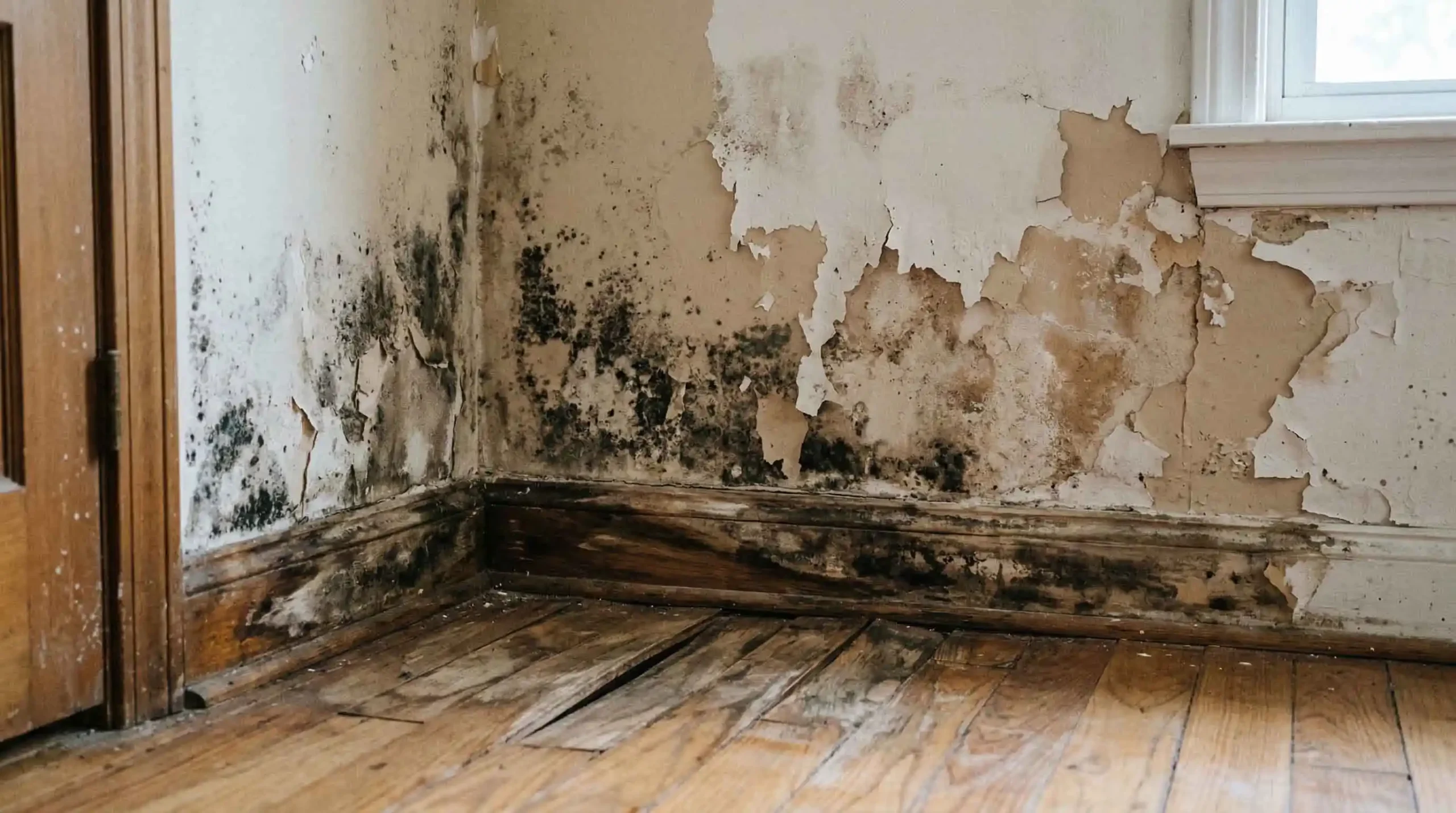
If humidity stays elevated, the home may never feel fully “normal”, even after surfaces appear restored. Musty or stale odors can be a sign that moisture remains trapped or that secondary issues have started.
We identify hidden moisture and use industrial-grade dehumidifiers and detection tools so “no moisture is left behind.”
Result: persistent odor complaints, comfort issues, and repeated callbacks.
4) Mold risk increases when moisture remains
No one can responsibly promise a home will “never” have mold, but we can say this: mold needs moisture, and the longer materials stay wet, the more likely growth becomes.
Two credible public health sources highlight the same window:
- EPA recommends drying water-damaged areas and items within 24 to 48 hours to help prevent mold growth, emphasizing moisture control as the key to mold control (see
- CDC similarly notes that if a flooded home and contents can’t be dried within 24 to 48 hours, you should assume mold growth and focus on thorough drying and fixing the moisture problem (see CDC’s mold cleanup guidance after disasters).
Drying and dehumidification work together, and skipping dehumidification can allow moisture to re-condense and contribute to mold.
Result: avoidable mold remediation risk and bigger scope.
5) Contamination problems can worsen in certain losses
Not all water is the same. Extensive water damage or situations involving sewage contamination, professional mitigation and restoration are highly recommended.
Result: improper handling can spread contamination and increase cleanup complexity.
6) Costs and downtime often increase
When drying is incomplete, secondary damage drives extra steps: removing more materials, expanding containment/cleaning areas, longer equipment runtime, and additional repairs.
The PNW Restoration team recommends acting fast because delays worsen water damage and increase risk.
Result: more disruption and a longer path back to “normal.”
What proper drying should include (in plain language)
Here’s the baseline you should expect from a professional approach, whether you hire us or any qualified restoration team.
Inspection + moisture mapping
A thorough assessment uses moisture detection tools to identify the true wet footprint (not just the visible stain). We use moisture detection tools and thermal imaging in professional assessments to evaluate intrusion and build a customized plan.
Water removal and controlled drying
Our service pages outline a sequence that includes water removal, then drying and dehumidification to remove moisture from the structure.
Dehumidification to prevent recondensation
Drying without dehumidification can leave moisture in the air that recondenses elsewhere.
Verification (not assumptions)
A proper job includes a final review of affected areas. For storm losses, PNW Restoration includes a final quality check and walkthrough before closing the case.
That same “verify before you close” mindset matters for water losses too.
Practical checklist: what to do now (and what not to do)
Do this immediately
- Stop the water source if it’s safe (shut off supply, contain the leak).
- Remove standing water if possible and safe.
- Begin ventilation and drying with fans/dehumidifiers for small, contained incidents.
- Document damage with photos for your records.
- If the loss is extensive or involves contamination, consult a professional.
Don’t do this
- Don’t cover wet materials with paint, flooring, or new drywall before drying is confirmed.
- Don’t assume one dehumidifier in a hallway dries a whole structure.
- Don’t delay calling for help if stains grow, odors appear, or humidity stays high.
How we help at PNW Restoration
At PNW Restoration, we focus on finding hidden moisture and drying the structure thoroughly, not just making things look better on the surface. Our water damage restoration process includes inspection, moisture detection/control, water removal, and drying/dehumidification using professional equipment and specialized techniques.
If you’re dealing with water damage now, start with our water damage restoration services page to understand what proper mitigation should include.
Frequently Asked Questions
1) What’s the biggest risk if water damage isn’t dried properly?
Hidden moisture can keep spreading through porous materials and cavities, expanding the damage footprint. We value moisture detection/control because the visible wet area is rarely the whole story. Secondary issues like odors and mold risk become more likely when moisture lingers.
2) How fast do I need to start drying after a leak?
As soon as it’s safe. Public health guidance commonly references a 24–48 hour window to help reduce mold risk; see EPA’s mold and moisture guidance and CDC’s mold cleanup guidance after disasters.
If you can’t get materials dry quickly, it’s time to consult professionals.
3) Why isn’t “just running fans” enough?
As water evaporates, indoor humidity increases; without dehumidification, that moisture can re-condense elsewhere and contribute to mold. Proper drying pairs airflow with dehumidification and targeted moisture control.
4) What are the signs that moisture is still trapped?
Musty odors, recurring stains, swelling at flooring edges, bubbling paint, or rooms that feel persistently humid can all be indicators. We advise finding hidden moisture and thoroughly drying using detection tools and dehumidifiers.
5) Can water damage get worse even after the leak stops?
Yes. Water can remain in assemblies and continue migrating or evaporating into indoor air, raising humidity. Drying must be paired with dehumidification to avoid moisture recondensing elsewhere.
6) What if the water came from a backup or could be contaminated?
PNW Restoration recommends professional water mitigation/restoration for extensive damage or situations involving sewage contamination. In these cases, cleaning and sanitizing steps may be more complex; consult qualified restoration professionals.
7) What should a professional water damage process include?
PNW Restoration has a process that includes inspection/assessment, water removal, drying/dehumidification, cleaning/sanitizing, and restoration/repairs, depending on the loss. You should also expect moisture detection/control to confirm the true wet footprint.
8) How do professionals find moisture behind walls or under floors?
We use moisture detection tools and, in professional assessments, thermal imaging to evaluate water intrusion and build a restoration plan. That’s how teams locate wet zones that don’t show visible staining yet.
9) Will you help with insurance paperwork?
Insurance outcomes depend on policy language and carrier requirements. For storm restoration, PNW Restoration assists with insurance claims by providing documentation and estimates and working with the insurance provider to streamline the process. For water losses, ask what documentation you’ll receive.
10) When should I call PNW Restoration?
If damage is widespread, drying isn’t progressing, humidity stays high, or you suspect hidden moisture, it’s worth getting help quickly. We recommend acting fast because delays worsen water damage and increase risk.


