



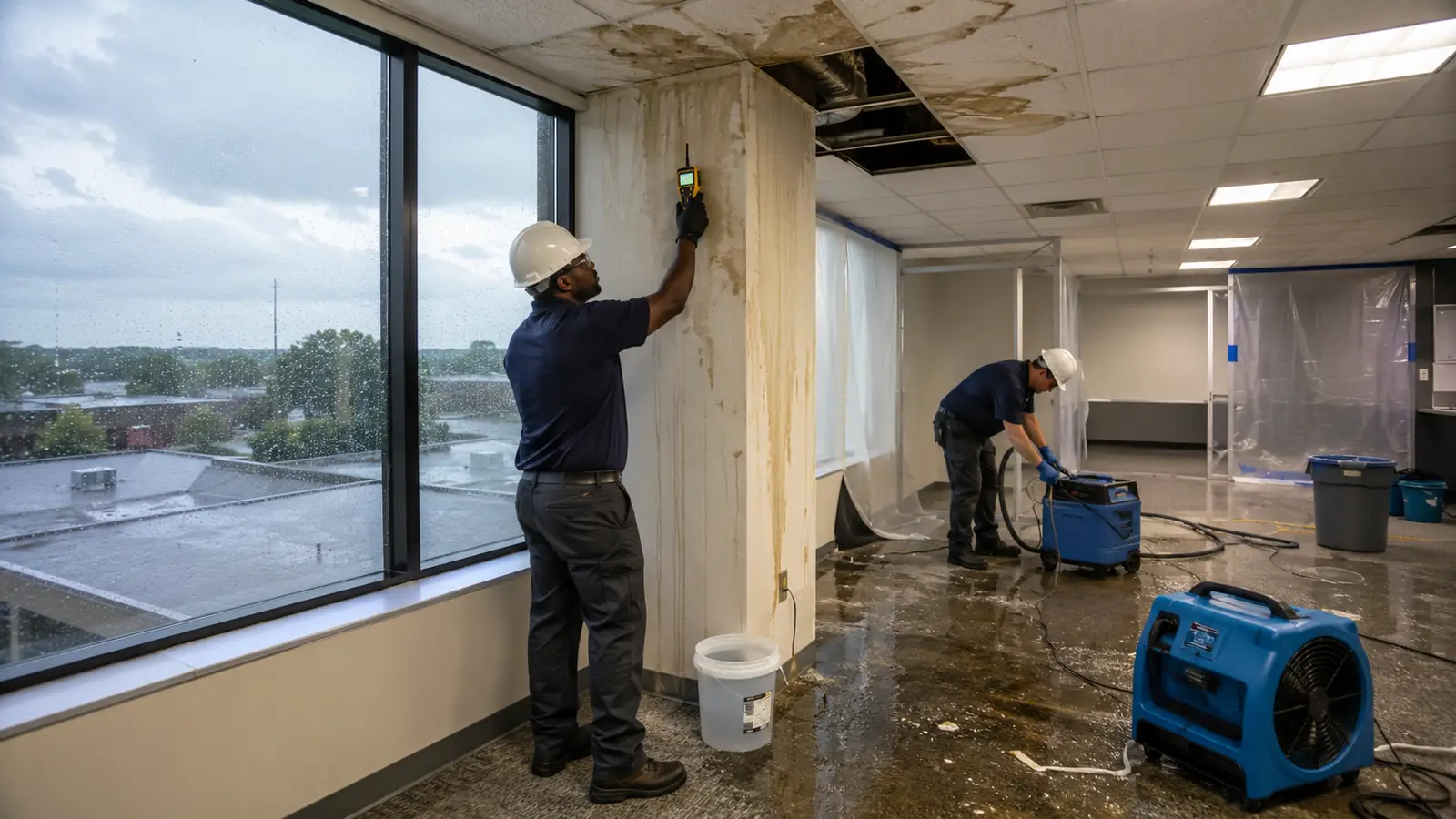
Commercial storms rarely create one isolated problem. Water can enter through a flat roof, follow decking or structural pathways, appear above a tenant space, and eventually reach flooring, inventory, electrical areas, or adjoining units.
At the same time, wind-driven rain and drainage problems can affect loading areas, customer entrances, and lower sections of a building.
For commercial property owners and facility managers, commercial storm damage restoration therefore involves more than addressing the place where water first appeared.
You also have to consider moisture migration, safe access, tenant disruption, deliveries, damaged materials, and what repairs may follow mitigation.
Wet-season roof leaks, windstorms, winter freeze events, localized flooding, and prolonged damp conditions make these decisions especially important for Portland-metro properties and surrounding commercial corridors.
Why Commercial Storm Damage Spreads Beyond the Roof
Flat commercial roofs and active loading areas create several paths for storm-related water to move from an exterior problem into occupied spaces.
Flat Roof Leaks Can Travel Before You See Them
A ceiling stain does not necessarily identify the exact point where water entered. Water can move beneath roofing components or through building materials before becoming visible inside.
Watch for new stains, damp ceiling tiles, peeling finishes, dripping water, unexplained moisture, or recurring leaks after rainfall.
Property managers can review additional commercial flat roof warning signs when deciding what deserves prompt investigation.
Standing water and blocked drainage can also increase the opportunity for water to reach vulnerable roof areas. Routine inspection of roof drainage and known trouble spots helps you identify developing problems before another storm adds more water.
Loading Areas Create a Different Water Problem
Loading docks, service entrances, roll-up doors, ramps, and low exterior areas can collect runoff during heavy rain. Water entering these areas may affect stored products, packaging, equipment, walls, flooring, or nearby tenant spaces.
Keep people away from standing water when electrical hazards, structural damage, contamination, or unstable materials may be present.
Federal flood safety guidance also recommends avoiding floodwater because flood conditions can create serious hazards.
Need help evaluating storm-related damage? PNW Restoration provides commercial storm damage restoration for commercial properties, including storm cleanup and restoration.
If roof leaks, debris, or storm-driven water are affecting your property, call (503) 352-5209 to discuss the affected areas and your next recovery decisions.
What to Do First After Storm-Driven Water Intrusion
Your first decisions should protect people while limiting unnecessary movement through damaged areas.
Restrict Unsafe Areas
Keep tenants, employees, customers, and vendors away from active leaks, fallen materials, visibly damaged ceilings, standing water, broken glass, or areas with possible electrical exposure.
Do not climb onto a wet or storm-damaged roof simply to locate a leak. Roof conditions can be difficult to evaluate safely during or immediately after severe weather.
Inside, place operational priorities around safe access. A small affected section may require different decisions than water spreading through multiple tenant suites or common areas.
Look Beyond the Visible Puddle
Removing visible water does not necessarily address moisture that has reached wall assemblies, flooring, ceiling cavities, or other porous materials.
EPA guidance emphasizes that moisture control is central to mold control. That becomes particularly relevant when stormwater remains inside materials after the visible leak stops.
If renovations, tenant improvements, or new finishes are planned soon, any unresolved moisture issues deserve attention before materials are covered.
Review how to catch moisture before commercial tenant improvements when planning the next phase.
Commercial Storm Damage Restoration Requires a Building-Wide View
Effective storm damage recovery considers water movement, affected materials, contamination concerns, and the repairs needed to return damaged areas to usable condition.
Address Water and Ceiling Damage
Storm-driven leaks often cause problems beneath the roof. Ceiling materials, drywall, flooring, fixtures, furnishings, stored products, and adjacent rooms may all require evaluation.
Do not assume that a dry-looking ceiling means the surrounding materials are dry. Repeated leakage can also complicate the picture because an older moisture problem may overlap with new storm damage.
Commercial managers can reduce future exposure by following practical steps to prevent leaks in commercial buildings, including routine attention to drainage and known water-entry points.
Consider Mold and Contamination Concerns
Delayed drying creates conditions where mold may develop. Recurring leaks are especially important because moisture can remain in materials even between visible dripping events.
Storm water entering through exterior openings may also carry dirt and debris. Water entering from flooding, sewage systems, or other contaminated sources creates a different cleanup concern than a straightforward roof leak.
Avoid direct contact with potentially contaminated water. Qualified professionals should evaluate situations involving sewage, hazardous materials, significant mold concerns, or other contamination.
Plan Repairs After Mitigation
Commercial storm damage recovery may continue after water removal and damaged-material cleanup.
Roof damage, ceiling openings, removed finishes, damaged walls, doors, flooring, or other building components may require repair or reconstruction.
Planning those steps early can help you understand which spaces may remain affected and how restoration work could interact with tenants and normal operations.
Reduce Tenant and Operational Disruption
The physical damage matters, but commercial recovery also depends on managing people, access, deliveries, and usable space.
Give Tenants Clear Area-Specific Information
Tell affected tenants which areas should be avoided and where access has changed. Keep instructions practical rather than speculative.
For mixed-use or multi-tenant properties, identify whether the problem affects one suite, a common corridor, shared utilities, or multiple floors. Water moving beyond the originally reported area can change operational decisions quickly.
Protect Loading and Customer Access
A damaged loading zone can interrupt receiving even when the main building remains open. Identify alternate delivery points when they can be used safely, and keep vendors away from standing water or unstable debris.
Customer-facing properties may need similar planning around entrances, parking areas, wet flooring, or temporarily restricted sections.
Seasonal preparation also matters. Water damage planning for commercial properties can help you think beyond a single storm and recognize recurring building vulnerabilities.
Seasonal Conditions Can Change the Type of Damage
Commercial properties face different restoration pressures as wet weather, freezing conditions, wind, and dry-season smoke affect the region.
Wet Weather Raises Roof and Drainage Concerns
Long periods of rain can expose weak roofing areas, drainage problems, exterior openings, and low sections of a property. Lower-lying and river-adjacent properties may also face localized flood concerns.
Repeated wetting deserves attention even when individual leaks appear minor.
Freezing Weather Can Create Interior Water Losses
Cold periods add another risk. Water may come from plumbing failures rather than directly from rainfall.
When storm conditions and freezing temperatures overlap, property managers should consider both exterior openings and interior water sources when investigating damage.
Wind Can Turn Exterior Damage Into Interior Damage
Wind-driven rain can enter through damaged roofing, windows, doors, and other exposed building areas. Debris may also affect exterior components or access routes.
After severe weather, inspect from safe locations and treat new interior water as a building problem that may extend beyond the visible entry point.
Know When Storm Damage Needs Professional Restoration
Professional evaluation becomes more important when water spreads, contamination is possible, building materials stay wet, or normal property use becomes difficult.
A minor, quickly contained leak is different from water entering multiple rooms, repeated roof leakage, widespread ceiling damage, sewage intrusion, contaminated flooding, or moisture affecting tenant operations.
The decision becomes more urgent when you cannot determine how far water has traveled or whether materials behind walls and ceilings remain damp.
Our services include water damage restoration, basement water removal, ceiling leak repair, flood damage restoration services, sewage cleanup services, mold remediation services, biohazard & hazmat cleanup services, fire and smoke damage, storm damage restoration, and smoke odor removal.
Storm damage does not have to shut down an entire property to create a serious operational problem.
If flat roof leaks, loading-area water, damaged ceilings, or tenant disruption are complicating recovery, contact PNW Restoration or call (503) 352-5209.
We can help you address storm-related property damage and determine which restoration services are relevant to the affected areas.
Frequently Asked Questions
What does commercial storm damage restoration address?
Commercial storm damage restoration focuses on property damage caused by severe weather. Depending on the loss, concerns may include roof-related water intrusion, damaged ceilings, wet materials, debris, flooding, and other interior or exterior storm effects. The scope depends on what areas and materials were affected.
Why can a flat roof leak appear far from the actual roof damage?
Water does not always travel straight downward. It can move across decking, building materials, or other pathways before appearing as a ceiling stain or drip. That is why the visible interior leak may represent only one part of the affected area.
Should I enter a commercial space with standing stormwater?
Avoid entering an area when electrical hazards, structural damage, contaminated water, unstable ceilings, or other unsafe conditions may be present. Restrict access until the conditions can be evaluated. Do not ask tenants or employees to cross standing water to retrieve property.
Can loading docks suffer water damage during storms?
Yes. Loading docks, ramps, service doors, and lower exterior areas can receive runoff or wind-driven rain. Water may then affect inventory, packaging, flooring, walls, equipment, or nearby interior areas. Keep unsafe loading zones closed until conditions are evaluated.
Can a small ceiling stain indicate a larger roof leak?
It can. Water may travel before reaching the visible ceiling surface, and materials above the stain may have been exposed to more moisture than the stain suggests. Recurring stains, soft materials, dripping, or expanding discoloration deserve further investigation.
How does storm damage affect commercial tenants?
Storm damage can restrict suites, corridors, entrances, loading areas, storage rooms, or shared spaces. Water can also interrupt normal customer and employee movement. Clear, area-specific communication helps tenants understand which locations should temporarily be avoided.
Should wet commercial building materials simply dry on their own?
That depends on the material, amount of water, source of the moisture, and extent of saturation. Materials can look dry at the surface while moisture remains elsewhere. Persistent dampness, recurring leaks, or widespread water intrusion may require professional evaluation.
When does mold become a concern after a roof leak?
Mold becomes a concern when building materials remain damp, or leaks recur without the moisture source being resolved. Mold concerns should be treated as both a moisture and cleanup issue. Significant or uncertain mold conditions should be evaluated by qualified professionals.
What if stormwater mixes with sewage or another contaminant?
Limit access and avoid direct contact. Water associated with sewage, hazardous materials, or other contamination requires different decisions than ordinary rainwater intrusion. Qualified cleanup professionals should evaluate contaminated areas before normal use resumes.
Can commercial storm damage require reconstruction?
Yes. Repairs may be needed when damaged ceilings, walls, flooring, roofing components, doors, finishes, or other materials cannot remain after mitigation or material removal. Restoration planning should account for those follow-on repairs as well as the initial cleanup.
How can property managers reduce tenant disruption during restoration?
Start by clearly identifying restricted and usable areas. Coordinate safe access routes for tenants, customers, deliveries, and staff where possible. Communicate changes as the affected area becomes clearer rather than making assumptions about when individual spaces can reopen.
When should I call for storm damage restoration services?
Consider professional help when water is spreading, building materials remain wet, ceilings are damaged, contamination may be present, debris affects access, or tenants cannot use parts of the property normally. Prompt evaluation can clarify the extent of damage and the appropriate next steps.


