



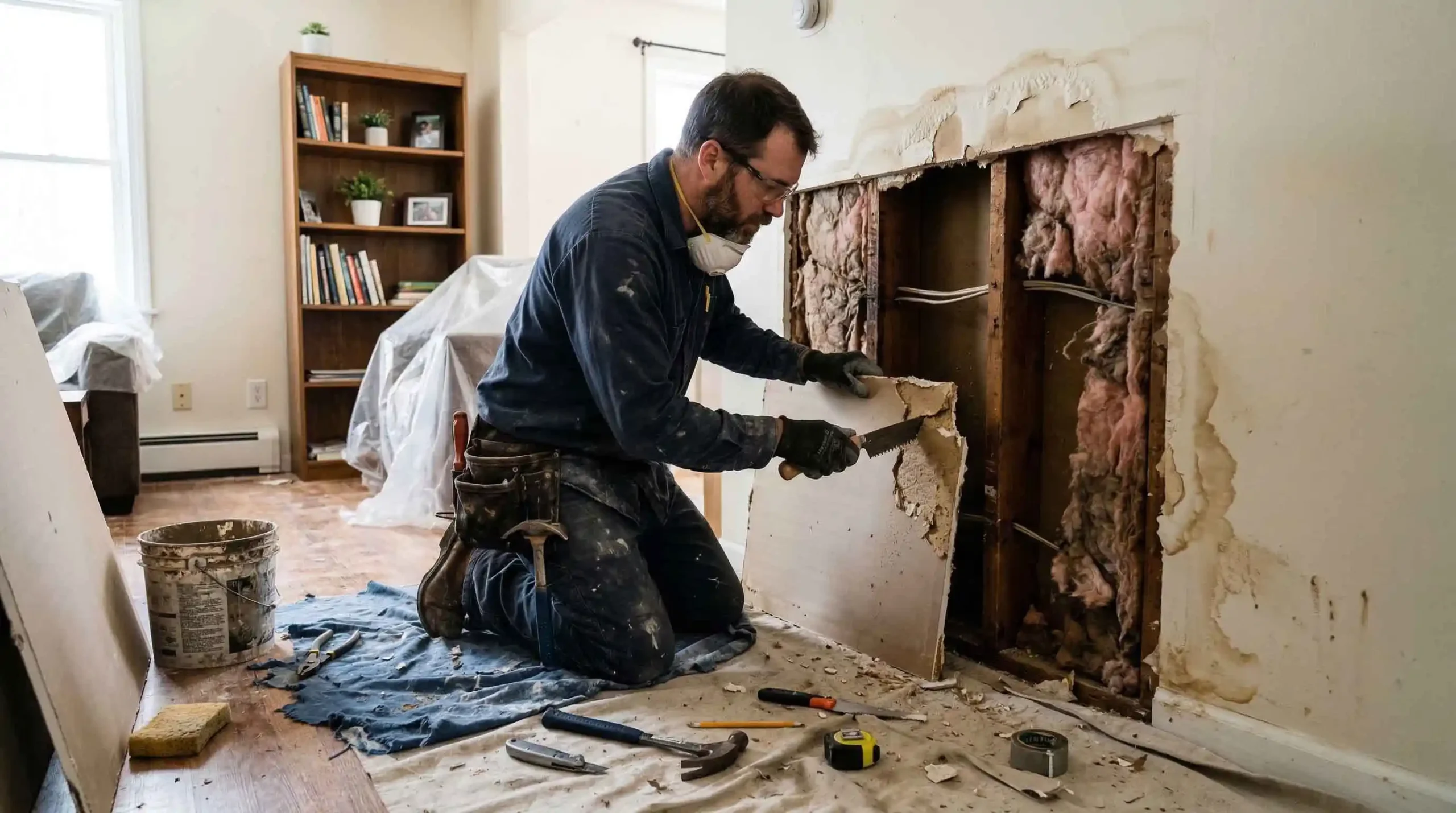
When local weather patterns shift into long stretches of rain and storms, or when a cold snap leads to burst pipes, water doesn’t just hit floors. It climbs into walls, wicks through drywall paper, and hides in cavities where you can’t see it. That’s why we get the same question over and over at PNW Restoration: Can water-damaged drywall be saved, or should it be replaced?
The honest answer: sometimes it can be saved, but not always. The decision comes down to three practical factors we look at on every job: what kind of water it was, how long the drywall stayed wet, and what condition the material is in.
Below is a homeowner-friendly guide to making that call, without guesswork, plus the situations where it’s smarter (and safer) to bring in a restoration pro early.
Why is drywall so vulnerable to water?
Drywall absorbs water quickly. Once saturated, it can soften, swell, crumble, and lose structural integrity, sometimes before the surface looks “that bad.” Drywall can deteriorate if not addressed promptly, and early recognition helps prevent bigger structural issues and potential mold problems.
Here’s the tricky part: drywall can look dry on the surface while moisture remains trapped inside the wall. That hidden moisture is why a professional assessment is often essential after a water event.
The decision in plain English
Think of this as a simple “save vs. replace” decision tree.
Drywall is more likely salvageable when…
Wet drywall may be salvageable when:
- The water source was clean water (Category 1)
- The drywall was wet for a short period
- There’s no swelling, crumbling, or sagging
- No mold growth has started
- Moisture levels can be returned to normal with professional drying
Drywall should be removed and replaced when…
Replacement is typically the safest option when:
- Drywall has been saturated for more than 24 to 48 hours
- It was exposed to contaminated water (Category 2 or 3), such as sewage or floodwater
- The drywall is swollen, soft, cracked, or falling apart
- Mold is visible or detected behind the wall
- Insulation behind the drywall is wet and contaminated
Step 1: Identify the water type (it changes everything)
At PNW Restoration, we categorize water damage by contamination level because the “right” next step is different depending on what the water carries. Their water damage restoration page defines:
- Category 1: Clean source (examples include tub/sink overflow, broken fresh water supply line, appliance malfunction, leakage)
- Category 2: Water with significant contamination (examples include dishwasher/clothes washer discharge and toilet bowl overflow)
- Category 3: (contaminated water that includes sewage/flood scenarios requiring removal)
Practical takeaway:
If drywall was hit by anything beyond clean water, especially sewage or floodwater, replacement is usually the correct call because the material can absorb contaminants that aren’t realistically “washed out.”
Step 2: Use the clock. How long was it wet?
Time is a real dividing line for drywall decisions.
Wet drywall must be removed if it has been saturated for more than 24–48 hours. And independent public-health guidance agrees: the EPA states it’s important to dry water-damaged areas and items within 24 to 48 hours to help prevent mold growth.
What this means for you:
If you’re unsure how long the wall has been wet (slow leaks, intermittent roof intrusion, hidden plumbing seepage), assume it may have crossed the threshold, and prioritize inspection instead of hoping it “air dries.”
Step 3: Look for the physical “tells” that replacement is needed
Some drywall damage is visible right away; other damage shows up after the water spreads behind the surface.
Common signs are:
- Discoloration/staining
- Soft or swollen drywall (bulging, bubbling, spongy feel)
- Peeling or bubbling paint/wallpaper
- Musty odor that suggests hidden moisture problems
From a practical standpoint, any of these signs means the gypsum core and paper face may already be compromised, and saving the drywall becomes less likely (or more expensive) than doing a controlled removal and rebuild.
Why “DIY drying” often fails inside walls
A big misconception is that a couple of fans in the room will solve the problem. Let’s understand why that’s risky: household fans and dehumidifiers might help in very minor cases, but they’re “usually not sufficient for wall cavities.”
Without removing baseboards or creating access, moisture can remain trapped behind drywall, leading to mold and long-term damage.
That’s why our approach at PNW Restoration focuses on measuring and verifying moisture conditions, not just drying what’s visible. Our professionals use tools like moisture meters, thermal imaging, and industrial drying equipment to determine whether drywall can safely remain.
A practical checklist: what to do immediately
If you discover wet drywall, here are safe, non-technical steps that align with PNW Restoration’s homeowner guidance:
- Stop the water source (or contain it if it’s weather-related).
- Document the damage for insurance (photos/video; item list).
- Start water removal and drying as soon as it’s safe.
- If drywall repair is appropriate, PNW Restoration’s sheetrock repair advises cutting out damaged sections, drying thoroughly, checking framing, then reinstalling and finishing.
If you suspect contaminated water, treat it seriously and don’t push DIY beyond surface-level safety steps.
Insurance realities (no promises, just what’s typical)
Coverage depends on the cause and policy language. Many homeowner policies cover sudden incidents like burst pipes, but may not cover flooding from external sources, and they advise confirming with your insurance provider.
At PNW Restoration, we also provide insurance assistance to help make the process smoother.
When it’s time to bring in PNW Restoration
If you’re deciding whether drywall can be saved, the highest-value step is getting a moisture-based assessment quickly, especially when water may have entered insulation or spread beyond the visible stain line. Early intervention is critical, and pros can determine if drywall can safely remain in place.
At PNW Restoration, we offer 24/7 emergency service and same-day response times, because water damage decisions don’t wait for business hours.
Call Now (971) 247-3597
Frequently Asked Questions
1) Can wet drywall dry out on its own?
Sometimes it may look dry on the surface, but moisture can stay trapped inside or behind the wall. Hidden moisture can lead to mold and long-term damage without professional drying.
2) How long can drywall stay wet before it needs replacement?
Drywall typically must be removed if it’s saturated for longer than 24 to 48 hours. EPA guidance also emphasizes drying within 24 to 48 hours to help prevent mold growth.
3) What’s the biggest sign that drywall can’t be saved?
Swelling, sagging, crumbling, soft spots, or visible mold are key indicators. Swelling/softness and related surface failures (bubbling paint, peeling) are common warning signs.
4) If the water came from a clean supply line, does that mean it’s safe to keep the drywall?
Clean water (Category 1) improves the chances of salvage, especially if action happens fast and there’s no physical breakdown or mold. A moisture check is still important.
5) Do I have to replace drywall after a sewage backup?
Drywall exposed to contaminated water (Category 2 or 3), including sewage or floodwater, generally needs removal and replacement.
6) Why aren’t fans and a dehumidifier enough for wet walls?
Typical household drying doesn’t fully address wall cavities unless access is created; moisture can remain trapped behind drywall.
7) What should I do first when I notice wet drywall?
Stop the leak/source, document damage, begin safe drying steps, and consider professional help if the loss is significant. The PNW Restoration team advises immediate-action and swift steps to minimize damage and prevent mold growth.
8) How do professionals decide whether drywall can stay?
Pros use moisture meters, thermal imaging, and industrial drying equipment to determine whether drywall can safely remain and to verify moisture returns to normal.
9) Can I cut out only the visibly damaged drywall?
Sometimes partial removal is possible, but PNW Restoration experts warn that water often spreads beyond what you can see, so surrounding areas should be checked for hidden moisture.10) Will insurance cover drywall replacement?
It depends on the cause and policy language. Many policies cover sudden incidents like burst pipes, but may not cover external flooding; confirm with your insurer.


